
 English
  Spanish
  Portuguese
  German
  Italian
  Japanese
  French
  Polish
  Russian
  Netherlands
  Hungarian
  Turkish
  Videos
  Thedink Pickleball

These are the pickleball mistakes a coach sees over and over again across six foundational shots. Fix even two of these and your game will look different by next week.
If you keep hitting the same shots wrong, it is almost never a mystery.
After thousands of hours of coaching, the same pickleball technique mistakes show up at every level, on every court, in every region.
The serve is too weak. The return pops up. The third shot drop flies long.The dink keeps getting attacked. Sound familiar?
This breakdown covers the top two technical errors across six foundational shots: the serve, the return of serve, the third shot drop, the third shot drive, dinks, and volleys.
This content comes straight from Coach Jess at Athena Pickleball on YouTube, built from real coaching sessions with real players who were making these exact errors.
Love pickleball? Then you'll love our free newsletter. We send the latest news, tips, and highlights for free each week.
The Serve: Two Fixes That Add Power and Consistency
Mistake 1: Facing the net head-on. This is the single biggest power killer on the serve.
When your hips point straight at the net, you have no kinetic chain to work with.
The kinetic chain means power travels from the ground up: legs push into hips, hips drive into core, core transfers into the arm.If your hips are locked forward, that chain breaks at the very first link.
The fix is a simple hip turn before you swing.
Imagine a tube on the ground pointing toward your target. Your hip points should align with that tube, creating a lane for your swing path.
From there, you can load your back leg, coil, and uncoil with real force.
Try this drill: stand facing the net and throw a ball with just your arm. Then turn your hips, load your back leg, and throw again. The difference in pace is immediate.Mistake 2: An inconsistent toss. The serve is the only shot you have total control over.
If the ball is dropping or flying to a different spot every time, your brain has to recalculate the swing path on every single serve.
A consistent toss means a consistent serve. Lock in your release point and keep it identical every time.Once you have that, you can start experimenting with spin and placement. For more on what kills serve power and depth, check out that breakdown.
The Return of Serve: Are You Standing in the Wrong Spot?
Mistake 3: Standing Too Close to the Baseline
This one is not really a swing flaw. It is a positioning problem, and it costs you in two specific ways.
- First, stepping back to handle a deep serve means your momentum moves away from the kitchen, not toward it.
- Second, a ball you are chasing backward is harder to hit with pace or lift.
The solution is simple: start a few steps further back than feels natural. Now your first move is always forward, and you arrive at the no volley zone faster.
That is your advantage as the returning team.
Mistake 4: A Huge Back Swing
The server is trying to give you pace. You do not need to generate your own. A giant back swing creates timing problems and usually results in hitting late or out.
Instead, turn your body into your dominant leg as soon as you read forehand or backhand. That turn alone puts your paddle back far enough.From there, push into the ball and keep moving toward the kitchen. Check out these three return of serve placement spots that consistently win points.
One more tip: you do not have to crush the return. Give it height, because a ball with arc and depth buys you exactly the time you need to get to the line.
💡
Need some new pickleball gear? Get 20% off select paddles, shoes, and more with code THEDINK at
Midwest Racquet SportsThe Third Shot Drop: Stop Rushing It
Mistake 5: Running Into the Ball
Players get anxious on the third shot drop and charge it.
That short hops the ball while it still has downward energy, which makes controlling a soft shot nearly impossible.
You want to feel the weight of the ball falling onto your paddle. Let it come up off the bounce, then come back down before you push into it.Slow your approach and let the ball do some of the work.
Mistake 6: Reaching for the Ball
The moment you reach, your wrist gets involved. And your wrist is not your friend on a drop shot.
Keep the ball in the same contact zone you would use for a dink: in front of your body, somewhere between your feet.
Use your footwork to get behind the ball rather than extending out to meet it.
A useful mental image: think of your feet on two rails of a track.You want to hit the ball in front of the foot on the right rail, for right-handers, without letting your arm jump the rail or fall behind your leg.
This third shot drop target drill is a great way to build that muscle memory.
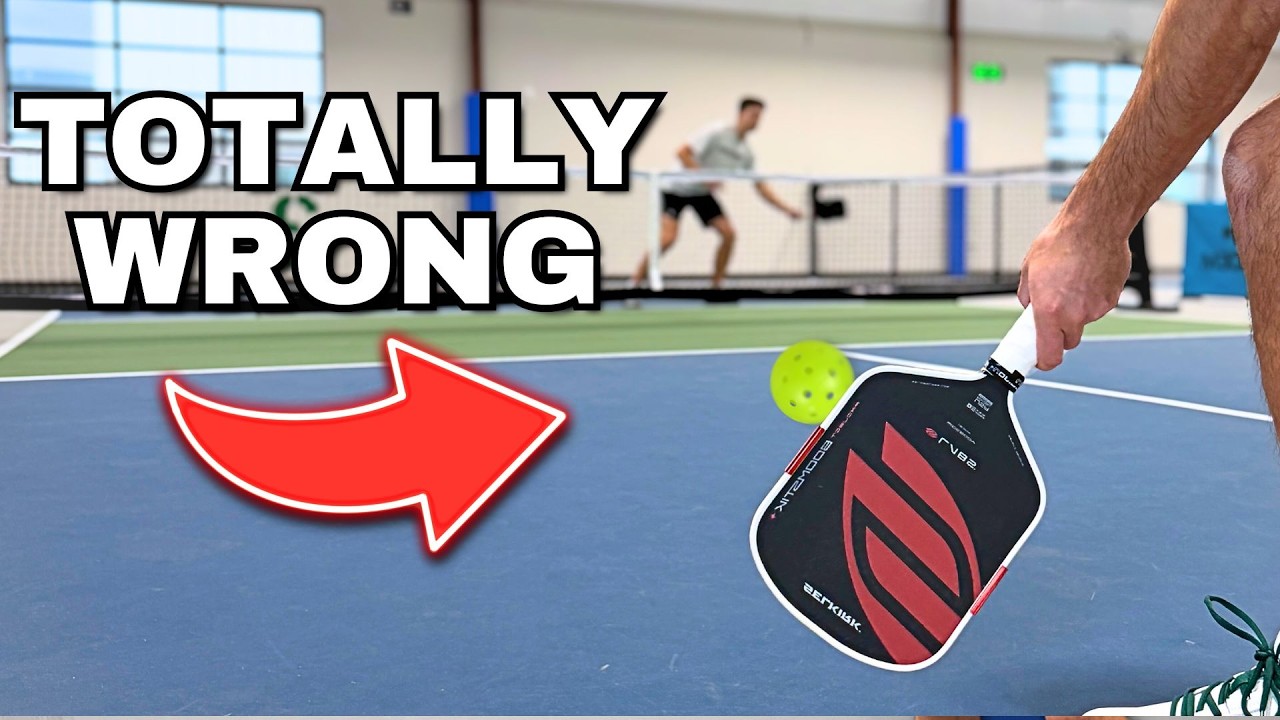
Simplifying the Third Shot Drop: Fix These 5 Common Mistakes
The third shot drop becomes consistent when players stop overthinking mechanics and focus on smart positioning and progression
 The Dink PickleballThe Dink Media Team
The Third Shot Drive: Why the Unit Turn Changes Everything
Mistake 7: Approaching the Ball Head-On
Just like the serve, facing the ball straight on kills your power source. You end up using mostly arm, and arm-only drives are weak and inconsistent.The fix is a unit turn. Think of your upper body locked inside a cast.
When someone turns your shoulders, everything rotates together: chest faces the sidewall, paddle comes back naturally, and your back leg loads with potential energy.That is where the power actually comes from.
You push off the back leg, the hips uncoil, the shoulder comes through, and the ball takes real pace.
Stay down through contact. Pull out of it early and the ball climbs.For more on fixing your forehand drive power and spin, that is worth a read.
Mistake 8: Losing Your Spacing
Rushing your drive crowds your contact point. When the ball ends up inside your body, your paddle face opens and your control disappears.
Do the unit turn early, hold your back leg, and make contact out in front of your non-dominant leg. For a right-hander, that is the left leg.From that position, you can even brush up and generate topspin.
Why the Third-Shot Drive Matters More Than Ever
The drive isn’t replacing the drop. It’s setting it up. In today’s ultra-fast-paced game, that matters more than ever.
 The Dink PickleballAndrei Daescu
Dinking: Slow Down More Than You Think
Mistake 9: Accelerating Into the Ball
Any acceleration at the kitchen line adds power you do not want.
Poking with the wrist or punching with the shoulder both send the ball up where it can get attacked.
You only have seven feet of net to work with on a straight dink. Slow, controlled, and low wins the exchange. Think of pushing your paddle through jello.When the incoming ball has pace, you need to get even softer, not match the energy.
Set your wrist and push forward from the shoulder, keeping those knuckles moving forward instead of flipping up.Any wrist flip and you have just offered up a popup.
This dinking technique fix goes deeper on that exact problem.
Mistake 10: Letting the Ball Get Behind Your Body
Footwork determines your dink quality more than your stroke mechanics.
When you shuffle late or let a ball drift past your hip, the only way to hit it is with wrist, which brings you straight back to the last mistake.Think of a half rainbow between your feet and get your belly button behind every dink.
Lateral shuffles keep the ball in front of you and your arms connected to your trunk.This lateral movement footwork drill is worth adding to your practice routine.
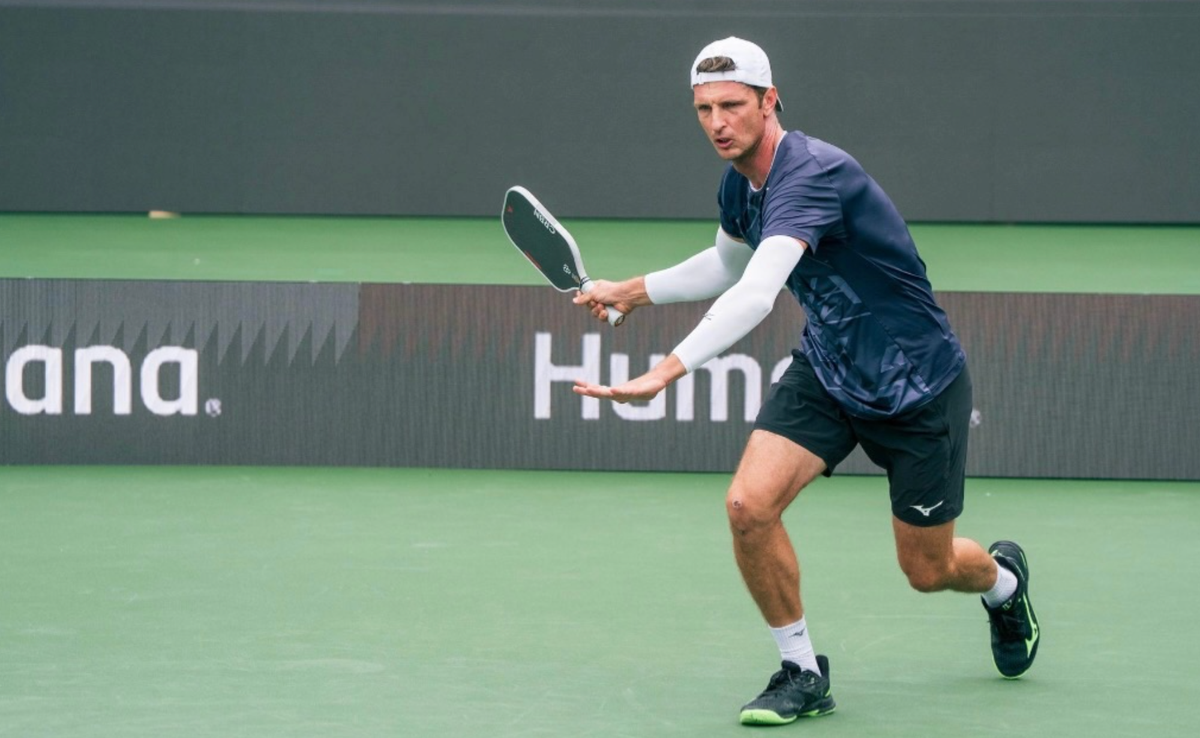
How Early Preparation Buys Time & Slows Down Pace of Play in Pickleball
When you’re prepared early, you’re not rushed. When you’re not rushed, you make better decisions. When you make better decisions, you win more points.
 The Dink PickleballThe Dink Media Team
Volleys: Is Your Elbow Costing You Points?
Mistake 11: Letting Your Elbow Drift Behind Your Body
On the forehand volley, when the elbow swings out and back, two things go wrong. The paddle tip drops, and you lose your connection to your core.
A ball hit with a dropped paddle face goes up. A ball hit from behind the body goes wherever it wants. Neither is useful.Keep your dominant elbow in front of you, comfortably to the right side of your body for right-handers, and lay your wrist back.
The paddle tip stays up and you can move through the ball cleanly.
For a high ball, you have the angle to put it away. For a low ball, you can drop the face, get under it, and push from low to high.
These five volley fixes for the kitchen line expand on this concept.
Between points, keep your paddle up around your midsection and do not let it dangle. Right-handers should aim for roughly 11 o'clock.That ready position protects the middle with a backhand and keeps you set for forehand volleys without any reset needed.
Mistake 12: Reaching In and Poking at the Ball
When players get anxious about pace coming at them, they lunge forward.
The second the arm extends out, the paddle face naturally opens toward the ceiling. The ball goes up.Let the ball come a little more into your body. Keep a stable base and angle the face forward or slightly down.
That way you have real control over where you direct the shot.
Here is the volley setup that actually works:
- Paddle up at midsection between every point, roughly 11 o'clock for right-handers
- Dominant elbow in front of the body, not floating behind it
- Wrist laid back on the forehand side before contact
- Let the ball travel into your body rather than reaching out to meet it
- Squeeze slightly at contact for stability, especially against pace
- Protect the middle with the backhand as the default
One detail that gets overlooked: elbow height matters. Do not let the elbow drop below the paddle.
A strong elbow position, with a slight squeeze at contact, gives you the stability you need when someone is driving at you hard.For more on handling drives at the kitchen, countering a drive instead of just blocking it is a useful read.
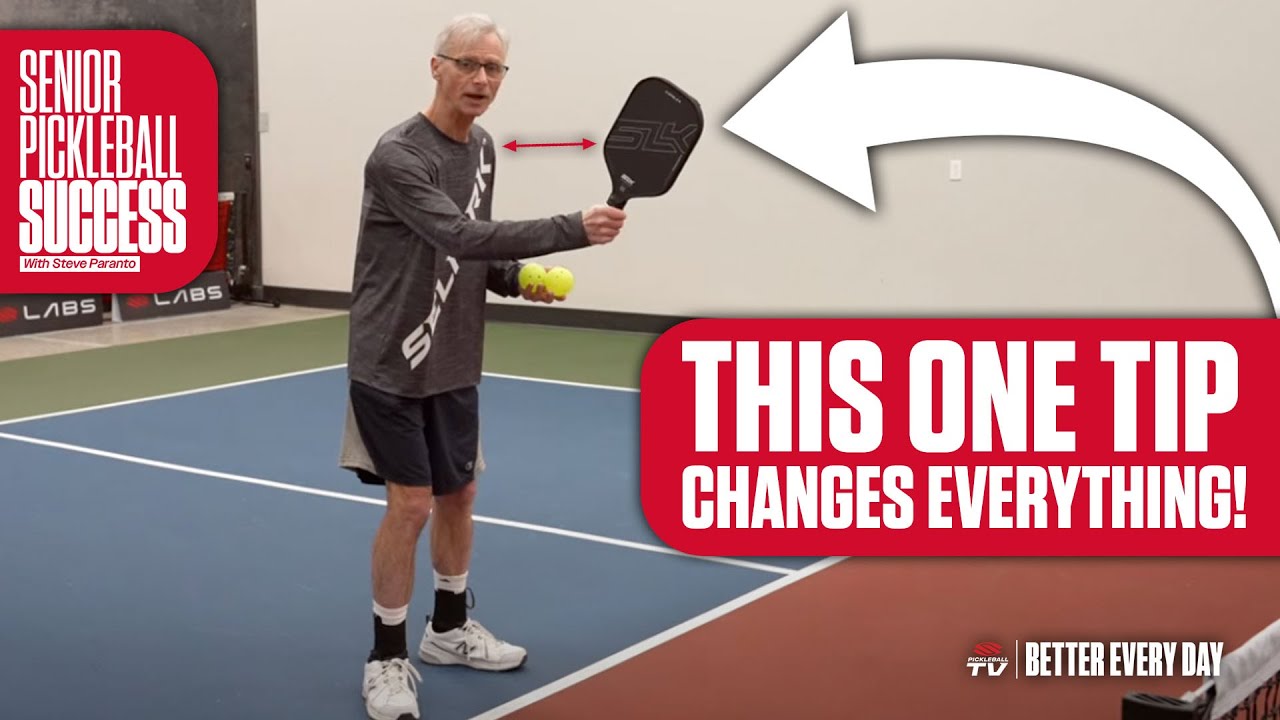
3 Pickleball Volley Mistakes and How to Fix Them
These three pickleball volley mistakes show up in almost every player’s game. Fix your targeting, your backswing, and your foundation and your volleys will look completely different.
 The Dink PickleballThe Dink Media Team
The Real Pattern Behind All 12 Mistakes
What looks like a paddle problem is almost always a body problem.
Your setup, your spacing, your contact point: these determine the outcome before your arm ever moves.Rushing is the single thread running through every one of these pickleball technique mistakes.
Players rush the serve, the return, the drop, the drive, the dink, and the volley.
Slowing down your approach to each shot is the fastest way to start hitting better ones.
Do not try to fix all twelve at once. Pick the two or three that felt immediately familiar and start there.These three tips for playing up a level pair well with this kind of technical cleanup.
If you want a smarter path to improvement, this smarter practice plan gives you a structured approach to drilling these fixes so they stick in match play.
💡
Heads up: hundreds of thousands of pickleballers read our free newsletter.
Subscribe herefor cutting edge strategy, insider news, pro analysis, the latest product innovations and more.
Frequently Asked Questions
Why does my third shot drop keep flying long?
The most common reason is rushing the shot and short hopping the ball while it still has downward energy. Let the ball rise and fall before you push into it, and slow your approach to the shot entirely. Reaching for the ball instead of using footwork to get behind it also opens the paddle face and adds unwanted loft.
What is a unit turn in pickleball?
A unit turn is when your shoulders, chest, and core all rotate together as one unit rather than just swinging the arm. On a forehand drive, this means your chest faces the sidewall and your paddle comes back naturally with the rotation. The power comes from pushing off the back leg and uncoiling through the hips, not from the arm alone.
Why do my dinks keep popping up?
Popups on dinks almost always come from accelerating into the ball, usually with the wrist. At the kitchen line, any extra speed on the paddle sends the ball upward where it can be attacked. Slow your swing down, set your wrist, and push forward from the shoulder instead of poking or flicking.
How far back should I stand to return serve?
Most players stand too close to the baseline and end up stepping backward on the return, which slows their path to the kitchen. Start a few steps further back than feels natural so your first move is always forward into the shot. Height on the return ball gives you the extra time to reach the no volley zone.
Why am I losing power on my forehand volley?
The most likely cause is your elbow drifting behind your body, which disconnects the shot from your core and drops the paddle tip. Keep your dominant elbow in front of you and slightly to your dominant side, with your wrist laid back. That position keeps you connected and lets you drive through the ball cleanly.
Anuncie Aqui / Advertise Here
Sua marca para o mundo Pickleball! / Your brand for the Pickleball world!




 English (US) ·
  Portuguese (BR) ·