
 English
  Spanish
  Portuguese
  German
  Italian
  Japanese
  French
  Polish
  Russian
  Netherlands
  Hungarian
  Turkish
  Videos
  Thedink Pickleball

The forehand push drop is the most consistent third shot in pickleball. Learn the exact technique Ben Johns and Andrei Daescu use to get to net almost every single point.
Your third shot drop keeps popping up, and you know exactly what happens next.
Your opponent attacks it shoulder height and you are stuck defending instead of advancing.
The forehand push drop is the fix.It is the specific shot that Ben Johns and Andrei Daescu leaned on throughout an epic 2.5-hour final, and according to observers watching that match, they barely missed a single one.
This breakdown covers the three mechanical keys that make this drop more consistent than almost any other third shot variation, plus why it works even when your timing is slightly off.
Love pickleball? Then you'll love our free newsletter. We send the latest news, tips, and highlights for free each week.
What Is the Forehand Push Drop and Why Does It Work?
The forehand push drop is a third shot technique where you push through the ball with a flat paddle face instead of slicing under it or driving through it with topspin.
The contact is simple and direct, which is exactly why it is so repeatable.Most recreational players struggle with the drop because they try to add spin or generate pace. Both of those choices require precision timing.
When your timing is even slightly off, the ball either goes into the net or floats up into an attackable position.
The push drop removes most of that timing pressure.Because you are going through the ball rather than under it, being a touch early or a touch late just means the ball lands a little deeper.
Your opponents might reach it out of the air, but they are reaching it at knee height, not shoulder height.That single distinction is everything. A ball attacked from below the net tape is far less dangerous than a ball your opponent can swing down on from shoulder height.
This concept is at the core of why kitchen arrival percentage defines your level more than any other stat.
This breakdown comes from 1971 LIVING on YouTube, who broke down this technique as part of a five-part series focused on simple, high-impact fixes for intermediate players.
What Is the Difference Between a Push Drop and a Slice?
This is the question that trips up a lot of players, and it is worth being specific about it.
A slice drop involves opening the paddle face backward and coming underneath the ball, generating backspin.It can be highly effective, but it demands that your paddle arrive at the contact point at exactly the right angle.
Early or late contact usually means a pop-up or a miss.
A push drop keeps the paddle face relatively flat and moves through the ball in a forward direction. There is no dramatic spin generation.The ball simply travels from your paddle into the kitchen in a controlled arc.
The push is more forgiving.
That forgiveness is what makes it the highest percentage third shot drop in pickleball and the shot of choice for the two most consistent droppers in the professional game right now.
If you want to understand how all six third shot drop techniques compare, that breakdown is worth reading alongside this one.💡
Need some new pickleball gear? Get 20% off select paddles, shoes, and more with code THEDINK at
Midwest Racquet SportsKey 1: Start With the Right Grip
The push drop works best out of a continental grip or an eastern grip.
Both are considered neutral grips, meaning the paddle face sits at a natural angle without requiring you to rotate your wrist dramatically to get flat contact.You do not need anything extreme here.
If you play with a strong western grip that you use for topspin forehand drives, you will want to adjust slightly toward neutral before attempting this shot.
The grip sets up everything else.
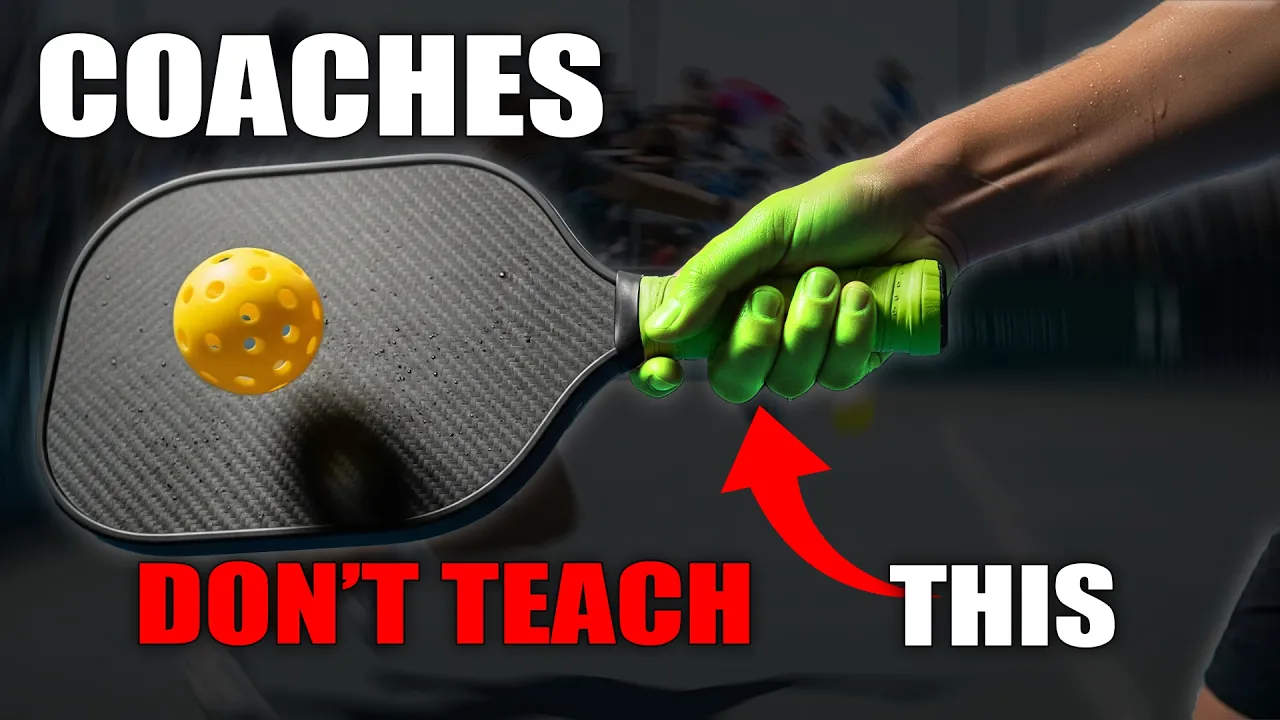
A neutral grip lets your paddle face stay flat through contact without any extra wrist manipulation, which is the whole point of the push drop.If grip pressure is something you have been ignoring, this breakdown on grip pressure and control is directly relevant to how cleanly you will execute this shot.
Modern Pickleball Grip Techniques for Better Control
High-level pickleball players are making subtle but impactful adjustments to their pickleball grip that separate them from recreational players. These modern techniques focus on choking up on the paddle, adjusting grip styles at the kitchen, and improving positioning for faster reactions.
 The Dink PickleballThe Dink Media Team
Key 2: Get Low and Stay Low
Getting low is not optional. It is the foundation the entire shot is built on.
When you bend your knees and drop your center of gravity, you accomplish two things at once.- First, you get your paddle to ball level naturally, which means you do not have to manipulate the angle of your wrist or arm to create the flat contact you need.
- Second, a low body position gives you a stable base to push from.
Most players who pop up their drops are not getting low enough.
They bend at the waist instead of the knees, which forces their paddle face to tilt upward to compensate. That tilt is what sends the ball skyward.Here is what getting low correctly looks like in practice:
- Knees bent so your hips drop toward court level
- Weight balanced and centered, not leaning back on your heels
- Chest up, not hunched forward over the ball
- Feet wider than shoulder width for a stable, athletic base
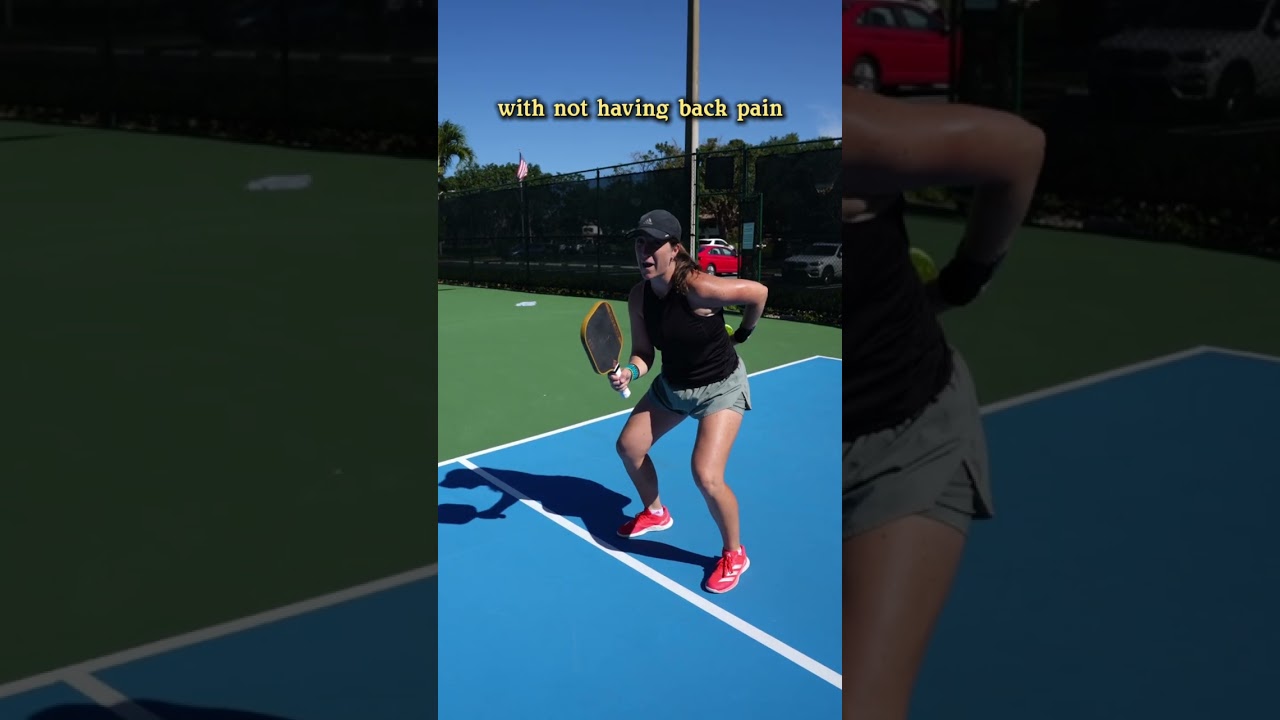
If knee bend is a challenge for you physically, this specific guide on proper knee bend mechanics covers how to get low without stressing your back.
Turn slightly into the shot as you drop.The body rotation is minimal compared to a full forehand drive, but a slight shoulder turn helps you position the paddle in the correct spot before the ball arrives.
Pickleball Knee Bend: Stop Bending Your Back to Get Low
Most players think they’re bending their knees in pickleball, but they’re actually just hunching their back. Fix your pickleball knee bend and you’ll move better, reach more, and stop hurting.
 The Dink PickleballThe Dink Media Team
Key 3: Keep the Paddle Inside Your Lead Leg
This is the mechanical detail most players have never heard before, and it is probably the biggest single fix for chronic pop-ups.
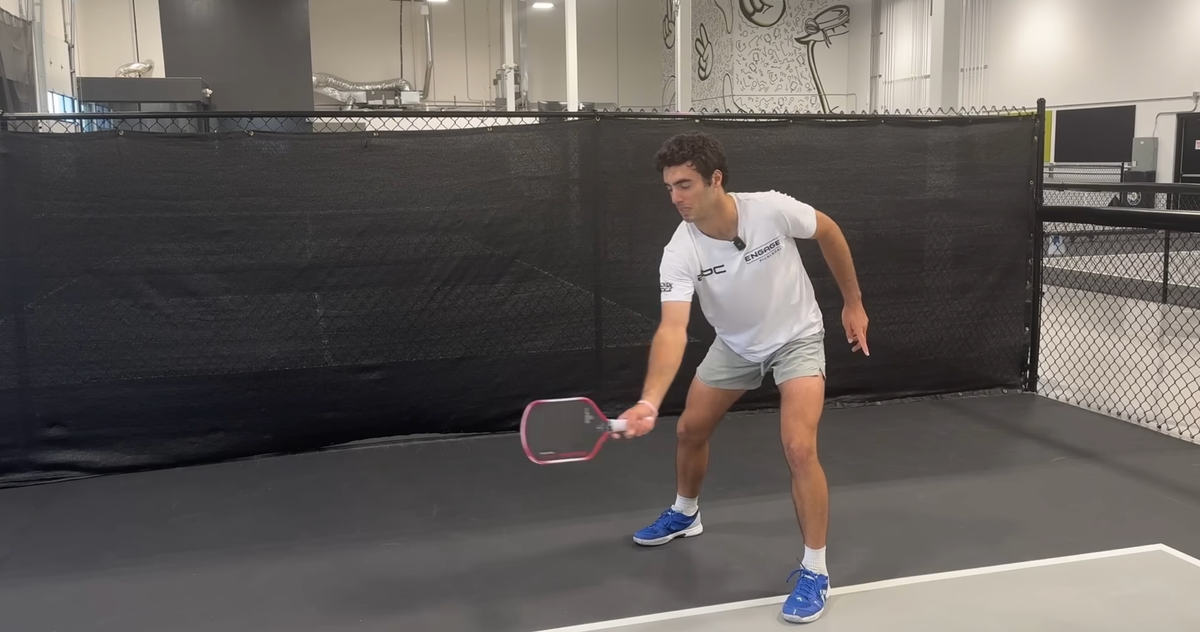
When you take your paddle back in preparation for the drop, it should stay inside your lead leg. Not behind it. Not outside it.Inside it.
Here is the distinction in simple terms.
If you draw an imaginary vertical line down through your front leg, your paddle should be on the same side of that line as your body.
The moment your paddle drifts behind that leg or outside of it, you are taking a backswing.
And a backswing on a drop shot is almost always a mistake.
A big backswing introduces timing variability.
It forces you to start your forward swing from an inconsistent position, which makes it nearly impossible to reliably produce flat contact.The paddle ends up arriving at the ball from slightly different angles on every single rep.
The push drop works because it keeps the motion compact. Your shoulder does not swing back. Your paddle does not travel wide.You are setting up with a flat face, staying inside your lead leg, and pushing forward through the ball.
Here is how to check your form on this key point:
- Take your ready position with knees bent and paddle in front of you
- Step into the shot slightly and turn your shoulders
- Without moving your paddle far, confirm it is inside your front leg, not outside or behind it
- Push forward through the ball with your paddle face flat, following through low and toward the kitchen
- Let your body weight shift forward as you complete the push, using that momentum to start moving toward the net
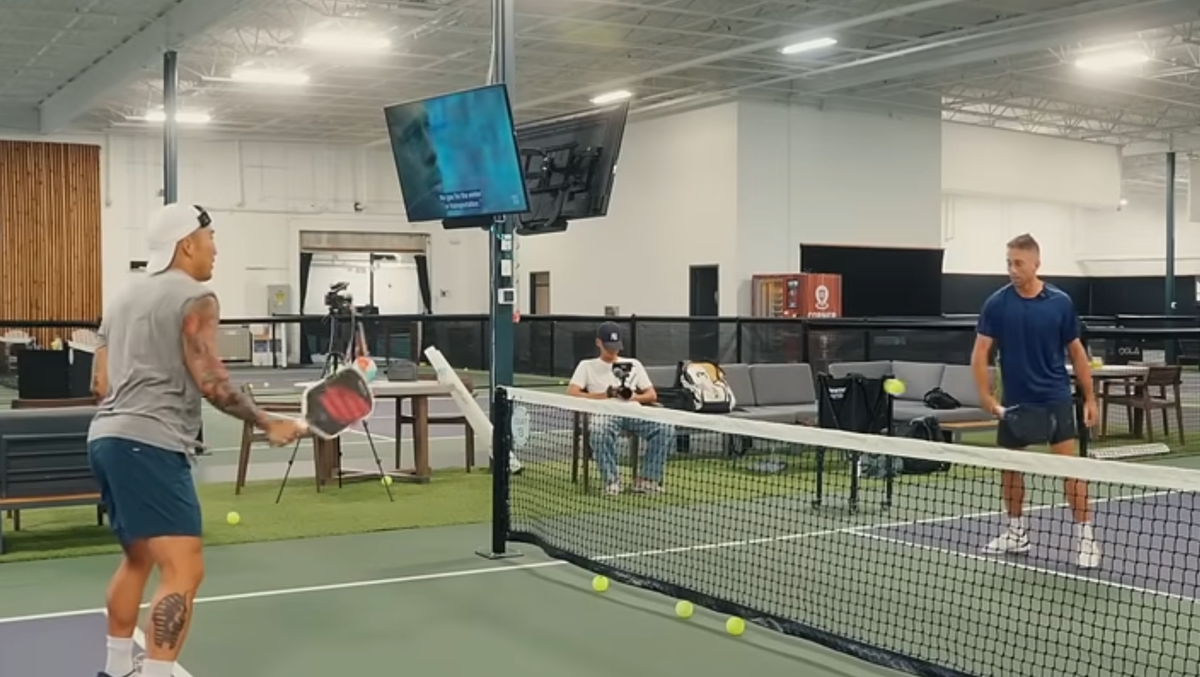
Stop Popping the Ball Up: Modern Pickleball Hand Speed and Paddle Positioning
Winning the kitchen today isn’t about swinging harder—it’s about creating space with your coil and controlling contact with smarter paddle positioning
 The Dink PickleballThe Dink Media Team
Why This Works Even Against High-Level Pressure
Ben Johns and Andrei Daescu are not executing this shot against pushovers.
They are hitting it against the best male players in the world, players who are positioned at the kitchen and actively reaching in to volley anything above net height.
The push drop keeps the ball low enough that even when pros reach it out of the air, they are attacking upward.That changes the geometry of the exchange entirely in your favor. You are already moving forward to the kitchen while they deal with a ball they cannot attack down on.
For recreational and intermediate players, the math is even better.Most of your opponents are not nearly as aggressive at the net as professionals.
A well-executed third shot drop in pickleball that lands in the back third of the kitchen is effectively unreturnable for a 3.5 or 4.0 player who has not yet gotten to the line.To understand exactly where to aim your third shot drop for maximum effect, that article gives you the placement targets that match this technique.
The three drop placement fixes in that breakdown also pair directly with the mechanics covered here.
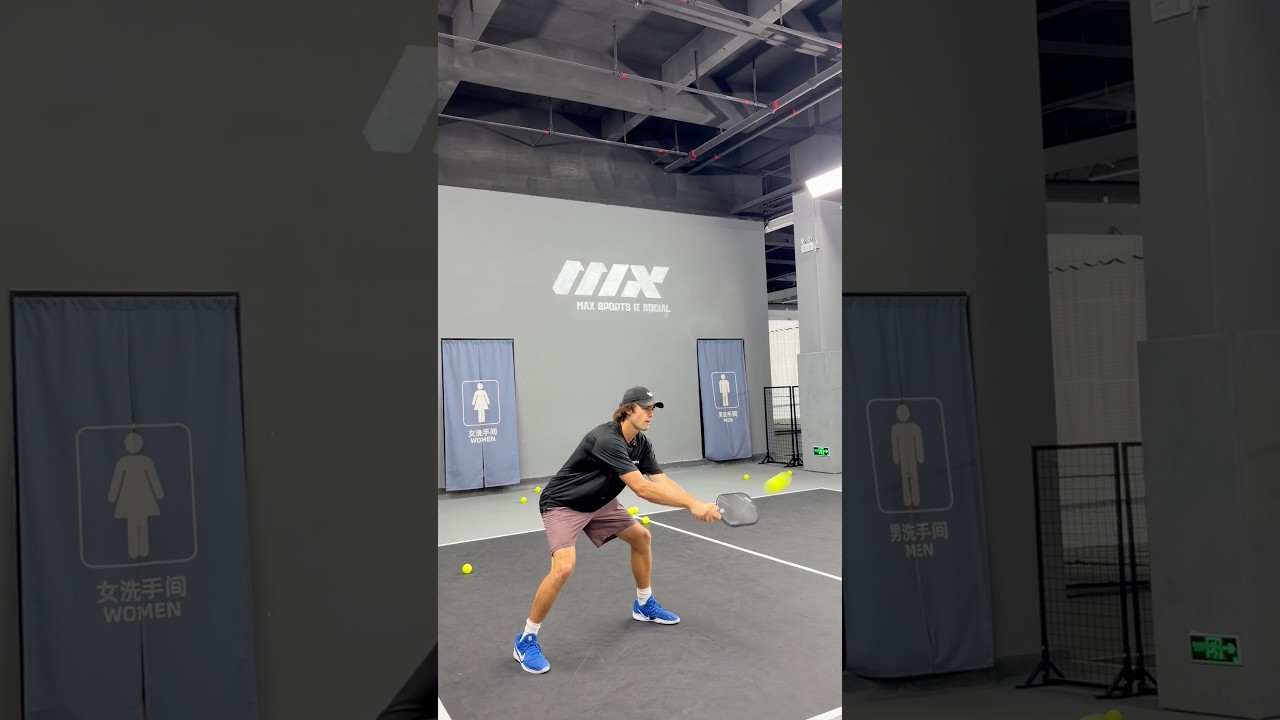
How to Hit Pickleball Resets Under Pressure
A pickleball reset is one of the most valuable shots in the game, but executing it under pressure separates good players from great ones. This drill teaches you to master the pickleball reset by alternating between aggressive attacks and defensive resets.
 The Dink PickleballThe Dink Media Team
Common Mistakes That Kill the Push Drop
Even with the right concept in mind, a few specific errors show up constantly when players first try this shot.
- Mistake 1: Taking a backswing. This is the most common one. The moment your shoulder goes back or your paddle travels outside your lead leg, you have converted a push into a mini drive attempt. The ball goes long or floats up.
- Mistake 2: Standing upright. If you do not get low first, you cannot push through a flat paddle. You end up flipping the face upward to make contact, which is the exact motion that sends the ball shoulder high.
- Mistake 3: Tilting the paddle face. The face needs to be flat, not angled back like a slice. Even a small tilt toward open sends the ball ballooning upward instead of clearing the net in a controlled arc.
- Mistake 4: Stopping the paddle at contact. The push requires follow-through. Let the paddle continue forward and low after the ball leaves it. Stopping abruptly at contact usually produces a dead shot that drops into the net.
These same errors appear across nearly every drop technique.
This breakdown on why the ball keeps popping up addresses them in detail with specific drills you can use to correct each one.
If you want to see how this push mechanic connects to your wrist position specifically, the wrist fix for a better drop is a natural companion read.
Master the Push Drop: The Simplest Pickleball Shot the Pros Use to Dominate
In a sport where everyone’s trying to hit harder, spin more, and execute increasingly complex shots, the push drop is a reminder that consistency and positioning often beat flash.
 The Dink PickleballThe Dink Media Team
How to Practice This Shot So It Actually Sticks
Knowing the mechanics and being able to execute them under pressure are two different things.
Here is how to build the push drop into a reliable weapon.
Start with slow feeds from a partner or a ball machine positioned at the kitchen line.
You stand at the baseline and practice nothing but the setup: low stance, neutral grip, paddle inside the lead leg, flat face.Hit the ball into the kitchen and watch where it lands.
Once that feels repeatable, move to live rally practice where your partner applies light pressure from the net.
They should reach in and volley anything that comes up.
That immediate feedback tells you whether your ball is staying low enough to be useful.
The reset mechanics covered here share the same low, soft contact foundation as the push drop and are worth drilling in parallel.For players who want to build full practice routines around these fundamentals, these five drills that raise your DUPR rating give you a structured weekly framework.
Consistency on this shot comes from repetition at slow speed first. Do not rush to full-pace rallies before the mechanics are automatic.
💡
Heads up: hundreds of thousands of pickleballers read our free newsletter.
Subscribe herefor cutting edge strategy, insider news, pro analysis, the latest product innovations and more.
Frequently Asked Questions
What is a forehand push drop in pickleball?
The forehand push drop is a third shot technique where you push through the ball with a flat paddle face instead of slicing under it or generating topspin. It is designed to keep the ball low over the net and land softly in the kitchen. Ben Johns and Andrei Daescu are considered the two most consistent practitioners of this specific variation.
Why is the push drop more consistent than the slice drop?
The push drop is more forgiving because being slightly early or late at contact only makes the ball land a little deeper, not pop up into an attackable position. A slice drop requires precise paddle angle at contact, and any timing error tends to produce a pop-up or a net miss. For most players below the 5.0 level, the push is the higher percentage choice.
What grip should I use for the forehand push drop?
A continental grip or an eastern grip works best for the push drop. Both are neutral enough to produce a flat paddle face without requiring extra wrist adjustment at contact. Avoid a strong western grip for this shot because it naturally tilts the paddle face upward.
How do I stop popping up my third shot drop?
The two most common causes of a pop-up drop are standing too upright and taking a backswing. Get your knees bent so your hips drop low, and keep your paddle inside your lead leg so there is no backswing. Keeping the paddle face flat rather than angled open is the third adjustment that eliminates most pop-ups immediately.
How can I tell if my push drop is working correctly?
A successful push drop should land in the kitchen and force your opponent to contact it below or at net height. If your opponent is reaching the ball at waist height or below, your drop is doing its job even if the placement is not perfect. The ball should never be reachable at shoulder height, which is the sign that you have popped it up enough to be attacked down on.
Anuncie Aqui / Advertise Here
Sua marca para o mundo Pickleball! / Your brand for the Pickleball world!




 English (US) ·
  Portuguese (BR) ·