
 English
  Spanish
  Portuguese
  German
  Italian
  Japanese
  French
  Polish
  Russian
  Netherlands
  Hungarian
  Turkish
  Videos
  Thedink Pickleball

Most players speed up without a plan and get burned. These 3 pickleball attack combinations teach you where to go and where to expect the ball back.
Most players speed up without a plan. They see a dead dink, they fire, and then they stand there flat-footed wondering where the counter is coming from.
That is exactly the problem this article fixes. A good pickleball attack combination is not just about hitting a hard ball.
It is about knowing where to hit it AND knowing where the next ball is going to come back before your opponent even swings.This breakdown comes from Briones Pickleball Academy on YouTube, where coach Jordan Briones walks through three specific attack combos with his 9-year-old son Josiah, showing how even young players can learn to attack smarter once they understand ball placement and probability.
Love pickleball? Then you'll love our free newsletter. We send the latest news, tips, and highlights for free each week.
Why Attacking Without a Plan Gets You Beat
At lower levels, you can get away with just banging the ball hard and hoping something good happens.
At higher levels, players counter that ball right back at you, and if you are not ready, you lose the point you started.
The fix is not to stop attacking. The fix is to attack with intention.That means picking a specific target, understanding why that target creates problems for your opponent, and then pre-setting your position to handle the likely counter.
This is what separates players who attack and win from players who attack and give the point right back.If you want to know whether your current attacking habits are costing you points, this breakdown on why your speed up keeps getting attacked is a good place to start.
What Is a Pickleball Attack Combination?
A pickleball attack combination is a two-shot sequence where your first shot (the speed up) is designed to create a specific, predictable counter, and your second position is set up to handle that counter before it arrives.
Think of it like chess, not checkers. You are not just making a move.
You are setting up the next move before your opponent responds.Each pickleball attack combination below pairs a specific ball position and target with a ready position you should move into immediately after the speed up lands.
💡
Need some new pickleball gear? Get 20% off select paddles, shoes, and more with code THEDINK at
Midwest Racquet SportsCombo 1: Outside Ball to the Chicken Wing Side
This combo starts when you receive an outside ball near the sideline and your opponent has a dead dink on their forehand side.
Your job is to attack straight on, directly into your opponent's chicken wing zone on their dominant side.
Here is why this works. When the ball is near the sideline, your opponent has to move laterally to cover their line first.That movement puts them in a compromised position.
Even if they get their forehand on the ball, contact is going to be late and awkward.
When you hit a perfect spot into that chicken wing, here is where the ball almost always comes back:
- Middle of the court toward the backhand side
- A weak floater somewhere near center
- A late forehand that sprays toward the middle
That is why you should immediately set up toward your backhand side after releasing this speed up.
You are not guessing randomly. You are making a high-probability read based on where you put the ball.Ready position after this speed up: shift your weight slightly toward your backhand, keep your paddle up, and expect the ball to come back somewhere in the middle third of the court.For more on how to disguise this kind of speed up, this article on faking the dink before the speed up adds another layer to this combo.
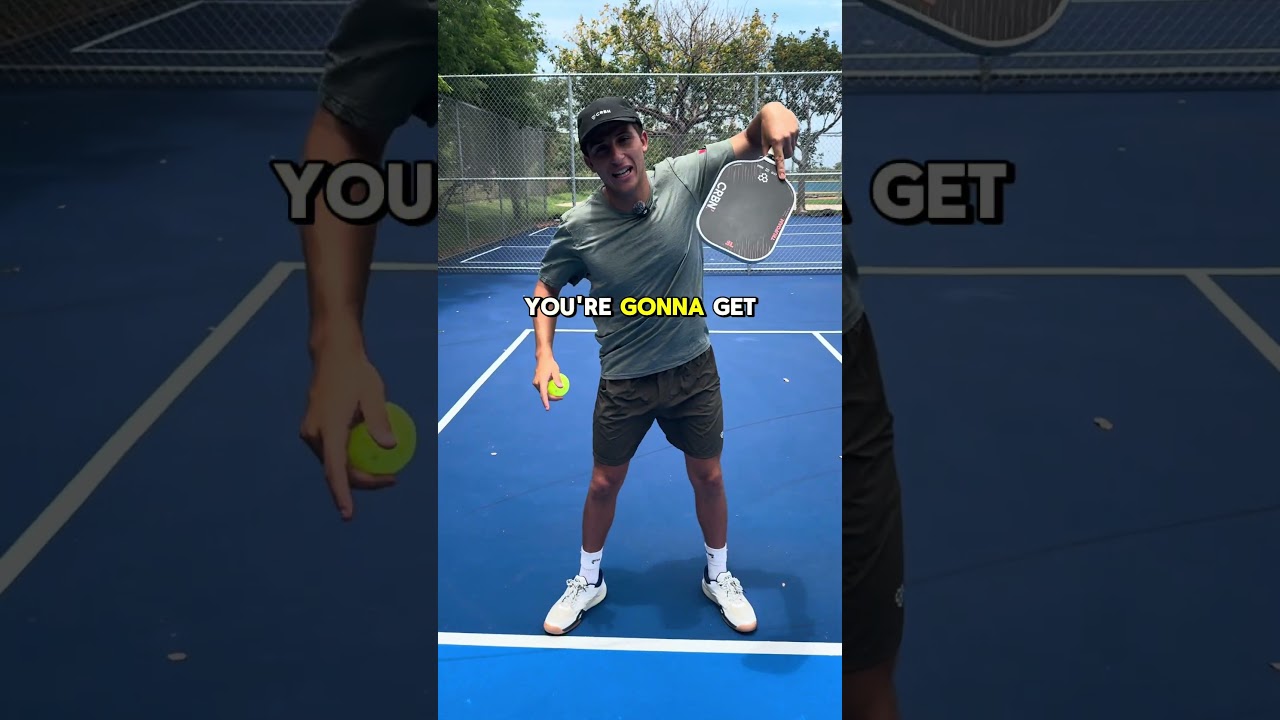
How to Fix the Chicken Wing Problem in Pickleball
The chicken wing in pickleball is not a reaction speed problem, it is a paddle position problem. These five fixes stop you getting jammed at the body for good.
 The Dink PickleballThe Dink Media Team
Combo 2: Middle Ball to the Backhand Stretch
This one is the mirror opposite of Combo 1. Here, you have more of a middle ball, and your opponent is shading toward the middle to take away that angle.
Your attack goes from your backhand across to their backhand, making them stretch and reach.The setup for this combo is critical. You want to use a two-handed topspin dink to keep your opponent honest in the middle.
That forces them to cover center, which opens up the stretch ball to their backhand side.
When you make someone reach across their body for a half volley or a tough low ball, their counter almost always goes one place: back down the line toward your forehand.So after you fire this speed up, your ready position should favor your forehand side.
You are not camping there blindly. You are reading the geometry of the court and trusting the math.Here is the full sequence for Combo 2:
- Use a topspin dink to threaten the middle and pull your opponent's attention center
- When you get the right ball, attack cross-court to their backhand, forcing a stretch or a low reach
- Immediately shift your ready position toward your forehand side after the speed up
- Expect the counter to come back down the line or toward your dominant side
This is one of the cleanest two-shot setups in the game because the first dink does the work before you ever speed up.
Understanding how two-shot combinations set up easy attacks will help you see how this fits into a broader offensive system.
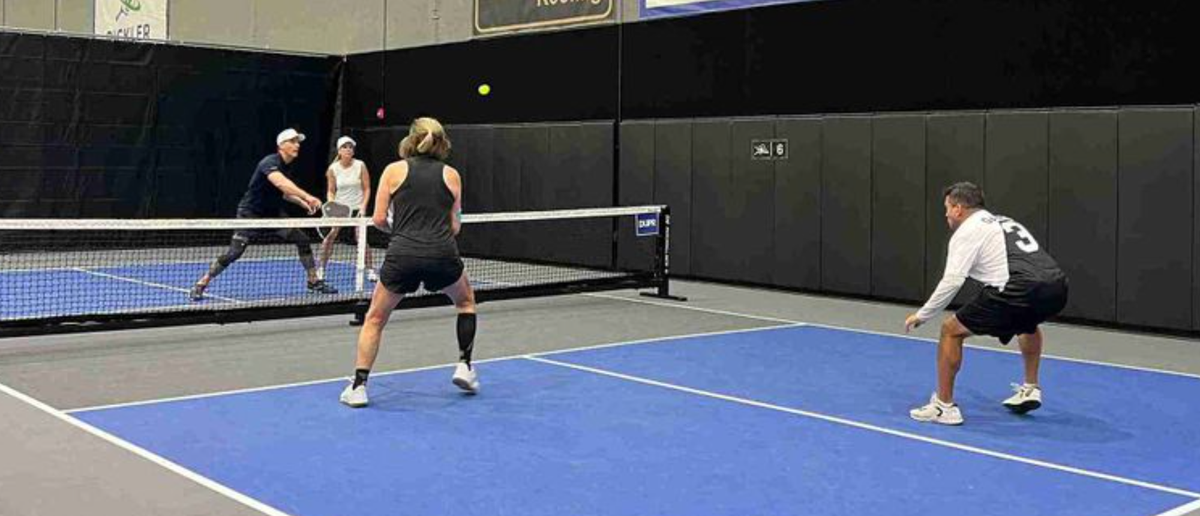
Who Covers the Middle Ball at the Pickleball Kitchen?
Knowing who covers middle kitchen pickleball is one of the most decisive tactical questions in doubles. This guide breaks down the rules of thumb, situational exceptions, and how the best players settle it automatically, no guesswork required.
 The Dink PickleballThe Dink Media Team
Combo 3: Backhand Speed Up Down the Middle
This is the simplest combo conceptually, but it requires the most precise execution.
You are attacking from your backhand, straight down the middle, targeting your opponent's dominant side.When you hit a good ball into the middle toward the dominant side, probability says the counter comes back toward the middle of the court.
So again, your ready position after this speed up is a slight shade toward the backhand.
But here is the key nuance Briones makes clear: it is not 10 out of 10. Sometimes the counter goes toward the sideline.Sometimes your opponent is in a great position and punishes you back the other way.
That is why you do not lock in, you pre-set with awareness.You are making an educated guess, not a commitment. Keep your feet light and your paddle up so you can adjust if the ball goes somewhere you did not expect.
For players working on how to handle the counter when your speed up does not land perfectly, these three fixes for resetting after a speed up are worth reading.
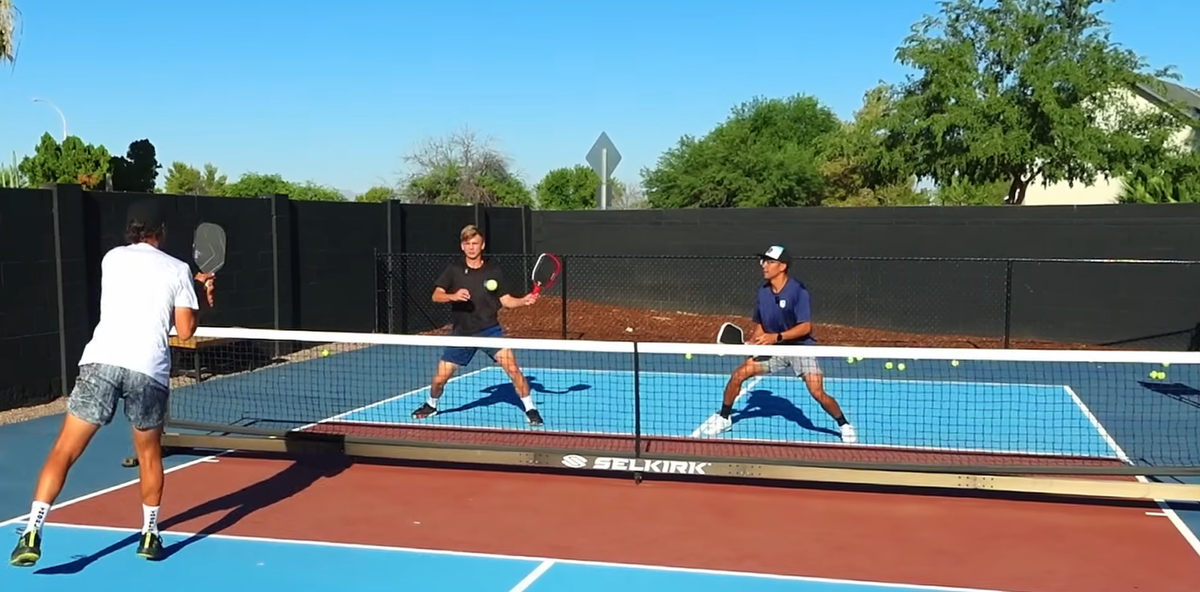
Pro Speed-Up Strategy: Master the Kitchen Line Attack Like a 5.0+ Player
Connor Garnett shows that winning kitchen battles isn’t about raw power, but about positioning, psychology, and reading opponents in real time
 The Dink PickleballThe Dink Media Team
How Do You Know Where the Ball Is Coming Back?
This is the question most players never ask, and it is the most important one. The answer comes down to court geometry and body position.
When you attack a specific spot, you are limiting your opponent's options.A player who is jammed, stretched, or off balance does not have five good choices. They usually have one or two.
And if you know what those one or two choices are before they hit the ball, you are already ahead.Here is a simple framework to build that read:
- Jammed ball (chicken wing): Counter most likely comes back middle or weak toward the center
- Stretched backhand: Counter most likely comes back toward your dominant side or down the line
- Middle attack on dominant side: Counter most likely comes back middle, occasionally toward the sideline
None of these are guarantees. But playing the percentages consistently is what separates 4.0 players from 4.5 and above.
If you want to understand how shot selection rules like low forehand and high backhand connect to this kind of reading, that article fills in the gaps.
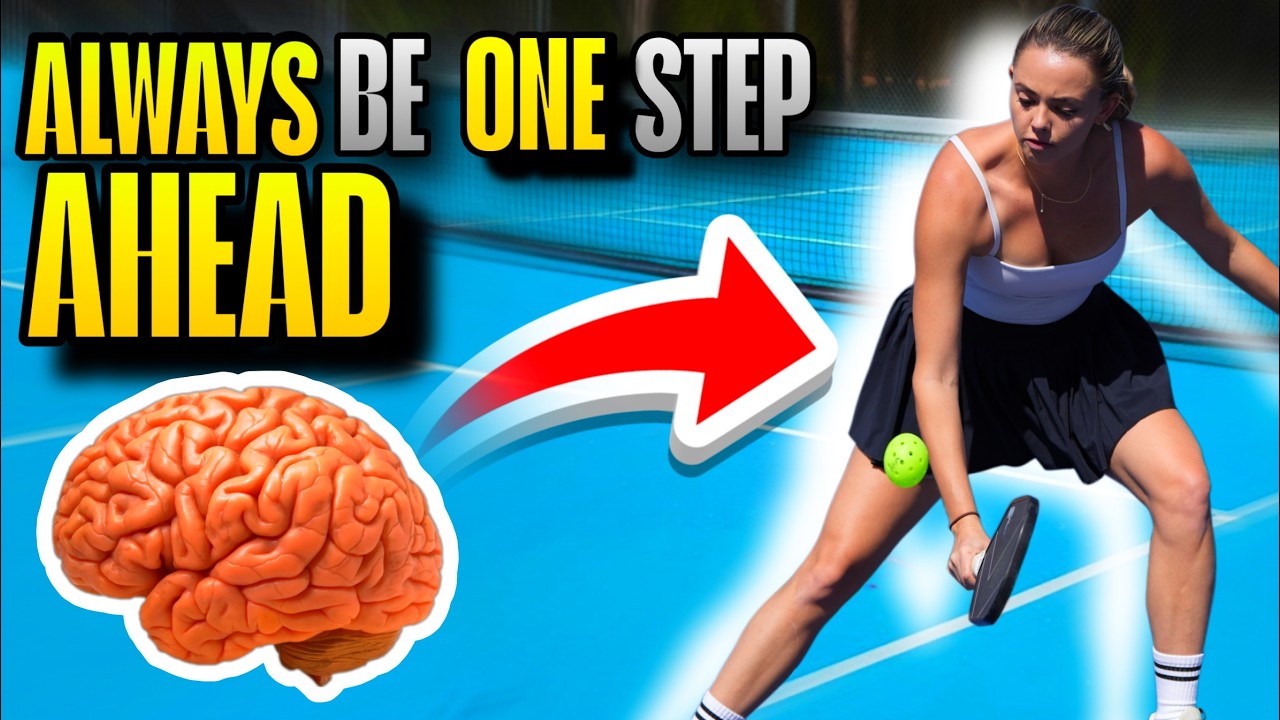
How to Master Pickleball Anticipation Like a Pro
Professional pickleball players seem to know where every shot is going before it happens. By mastering pickleball anticipation through reading body language, paddle positioning, and shot patterns, you can start seeing the game like the pros do.
 The Dink PickleballThe Dink Media Team
Ready Position After the Speed Up Is Non-Negotiable
One of the biggest things Briones emphasizes is readiness immediately after the speed up.
Most players watch their attack land and then react too late to the counter.
The instant your paddle finishes the speed up, your job is to reset your position and get your paddle back in front of you.You should be moving into your pre-set position while the ball is still in the air.
That is not a passive wait. It is an active, intentional shift based on where you put the ball and where you expect it back.If your footwork is not there yet, fixing your split step timing is the foundation that makes all of this possible.
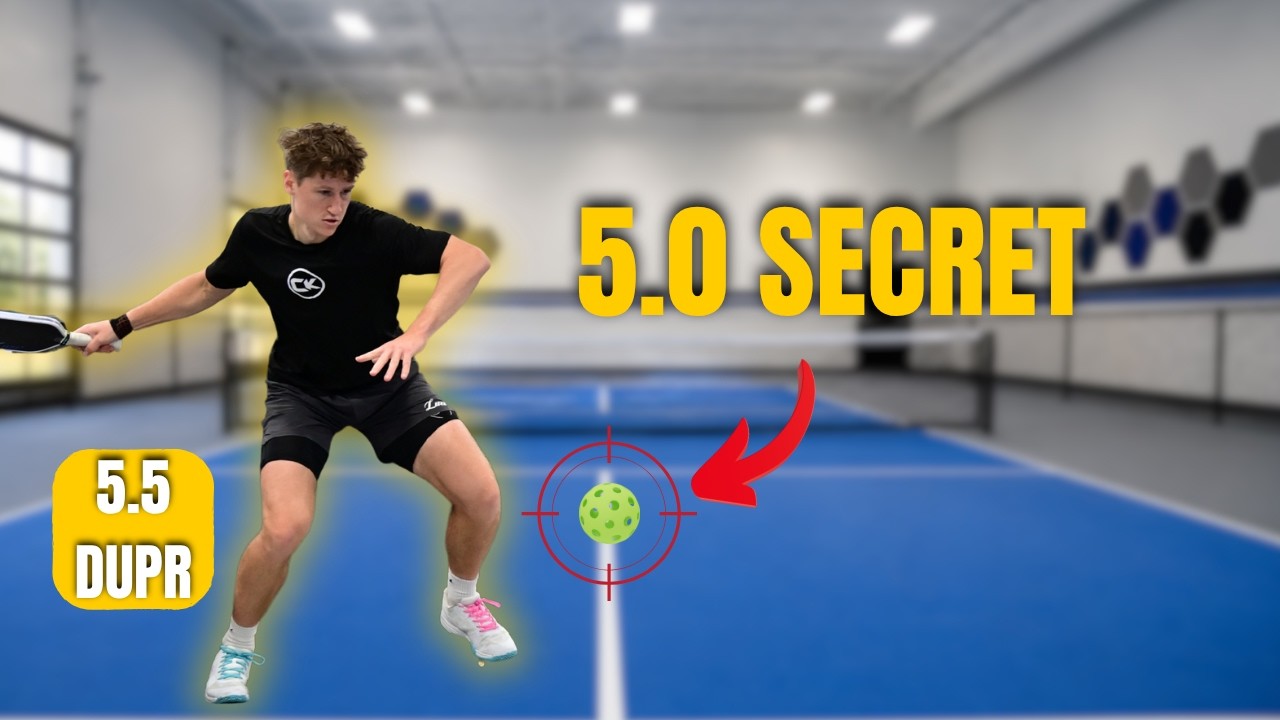
3 Pickleball Speed Up Patterns Every 5.0 Player Uses
Most players speed the ball up hoping to end the point right there. Here are three pickleball speed up patterns that force a predictable response so you can finish on the very next shot.
 The Dink PickleballThe Dink Media Team
Putting the Combos Into Live Play
Drilling these combos in isolation is step one. But they only become real weapons when you can execute them in live dinking exchanges where you have to read the ball AND choose the right combo on the fly.
The way to practice this is to hit normal dink rallies and give yourself one rule: when you get a dead dink, you have to commit to one of these three combos before you speed up.
Pick the target, execute, and then immediately move to the correct ready position.
You will not win the point every time. That is not the goal.The goal is to train your brain to pair the attack with the next position so that it becomes automatic under pressure.
If you want to stress-test your attacking under real conditions, understanding why you keep losing to bangers gives you a useful perspective on reading and reacting under pressure.
And when you are ready to expand your offensive options, this breakdown on roll vs flick attacks at the kitchen adds two more tools to your arsenal that pair well with these combos.The last piece is trust. You have to trust your read even when it is wrong sometimes.
Players who second-guess their pre-set position end up getting caught between two positions and lose points they should have won.
Pick a spot, attack it cleanly, move to your position, and stay ready. That is the whole system. It sounds simple because it is.The hard part is being disciplined enough to do it consistently.
For a complete look at how attacking fits into your broader 3-step formula for winning more rallies, that resource pulls all of these concepts together at the strategic level.
💡
Heads up: hundreds of thousands of pickleballers read our free newsletter.
Subscribe herefor cutting edge strategy, insider news, pro analysis, the latest product innovations and more.
Frequently Asked Questions
What is a pickleball attack combination?
A pickleball attack combination is a two-shot sequence where you speed up to a specific target to create a predictable counter, then pre-set your position to handle that counter before it arrives. It is the difference between attacking randomly and attacking with a plan. The goal is to use your first shot to limit your opponent's options and your second position to capitalize on that.
Where should I attack from the kitchen line to get the best results?
The three highest-percentage targets are the chicken wing on the dominant side when your opponent is pulled wide, the backhand stretch when they are covering the middle, and a middle attack on the dominant side from your backhand. Each of these creates a predictable counter you can prepare for. The outside-to-chicken-wing combo and the backhand stretch are the most reliable starting points for most players.
How do I know where the ball will come back after I speed up?
You read the court geometry and your opponent's body position at contact. A jammed player hitting a chicken wing usually sends the ball back middle or weak toward center. A stretched player reaching across their body almost always counters back toward your dominant side or down the line.
These are probabilities, not guarantees, but playing the percentages consistently is what builds smart attackers.
What should my ready position be after I speed up?
You should be shifting into your ready position while the ball is still in the air, not after you see where the counter is going. For the chicken wing attack, shade toward your backhand side. For the backhand stretch, favor your forehand side.
Keep your paddle up in front of you and stay on the balls of your feet so you can adjust if the ball goes somewhere unexpected.
How do I practice pickleball attack combinations?
Start with live dinking rallies and add one rule: any time you get a dead dink, commit to one of the three combos before you speed up. Practice the full sequence including the target selection, the speed up, and the immediate position shift. Over time your brain will start to pair the attack and the ready position automatically, which is exactly what you need under match pressure.
Anuncie Aqui / Advertise Here
Sua marca para o mundo Pickleball! / Your brand for the Pickleball world!




 English (US) ·
  Portuguese (BR) ·