
 English
  Spanish
  Portuguese
  German
  Italian
  Japanese
  French
  Polish
  Russian
  Netherlands
  Hungarian
  Turkish
  Videos
  Thedink Pickleball

Your pickleball footwork is deciding more points than your paddle ever will.
Coach Ty Woody puts it bluntly at the end of his latest breakdown: "a lot of those shots and mechanics will clean up if you spend time really focusing on your movement."
That breakdown covers the three court situations where movement falls apart: driving from the baseline to the kitchen, tracking down a lob, and getting around the ball in a dink rally.
Each one has a signature mistake, and each one has a fix you can practice this week.
Love pickleball? Then you'll love our free newsletter. We send the latest news, tips, and highlights for free each week.
Mistake 1: Crab Walking From the Baseline to the Kitchen
The first mistake is moving forward with your feet spread wide, shuffling sideways like a crab while facing the net.
It feels stable, but it is slow, and slow gets you stuck in the transition zone where most pickleball mistakes happen.
Two close cousins of the crab walk: pointing your knees outward at 45 degrees while you run, and taking lots of tiny choppy steps with no real extension.
Coach Ty Woody's response to the knees out crowd is hard to argue with: if angling outward made you faster, track runners would run that way.They do not.
The fix is one idea: aim your feet, hips, and body in a straight line toward where you want to go, then drive through your back leg.
In the video, two committed strides cover two thirds of the court. His benchmark is to cover any distance on the court in two to three steps.
Proper court movement starts long before the ball is hit.How you prepare early directly determines whether you arrive in balance or on your heels.
That split second of early preparation is what separates players who get there in time from players who are always a step late.
Mistake 2: The Banana Peel Lob Chase
When a lob goes over your head, the point is usually lost in your first half second.
Open your shoulders without lining up your hips and you are forced into what Coach Ty Woody calls "the banana peel": an outward step, a course correction, and a curved sprint that arrives late.
The other version is just as common. You pivot, turn your back to everything, and run blind, or you stand tall and chop your way backward.
Standing tall and backpedaling is also how players get hurt; it tops the list of pickleball footwork safety tips for a reason.
The fix comes down to one phrase he repeats twice: "get your hips parallel with the ball path." Then three details make it work:
- Open your hips first, pivoting on the balls of your feet.
- Get your back foot out of the way of your front leg.
- Use a crossover step and extend through your leg, leaning the direction you want to go.
Yes, a crossover step.
Coach Ty Woody knows someone told you never to cross over, and he respectfully disagrees: tracking a lob is exactly the situation where you want it.
Once you reach the ball, our guide to lobbing in pickleball covers what to hit next, and your recovery position determines whether you survive the next ball.
Understanding lob strategy from both sides of the net is one of the fastest ways to stop getting burned.The pickleball lob strategy breakdown covers when to use it, how to chase it, and where to put it when you do get there.
If you are over 50 and the lob is killing you specifically, this defensive technique guide was written exactly for you.
💡
Need some new pickleball gear? Get 20% off select paddles, shoes, and more with code THEDINK at
Midwest Racquet SportsMistake 3: Letting the Ball Jam You at the Kitchen
At the kitchen line, the third mistake is standing flat footed and letting the ball get into your body.
Jammed at the chest, you either pop it up or dump it in the net, and the point is over.
It shows up most in crosscourt dink rallies when the ball comes at your right foot.
Stay square and open to the ball and you have nothing: no backswing, no angles, no pressure.
Good kitchen positioning starts with refusing to reach from a frozen stance.
The fix is to get around the ball.
Take a small step back if you need to, turn your hips, pivot on the balls of your feet, and move "one, two": right foot first, left foot forward.Now the ball is beside you instead of inside you, and you can step in on dinks and apply pressure instead of just surviving.
In his words, this is what separates a reactive player from one who dictates the point.There are two essential techniques most players skip entirely at the kitchen line, and this breakdown identifies exactly what they are.
Getting your footwork right is only half the equation; knowing five tips to level up your kitchen play locks the advantage in.
Kitchen Control in Pickleball: 3 Keys to Dominate
Nearly 70% of professional pickleball points are won by the returning team, yet most players squander this advantage in the first two shots. Master kitchen control pickleball with these three proven techniques from PPA pro Connor Garnett.
 The Dink PickleballThe Dink Media Team
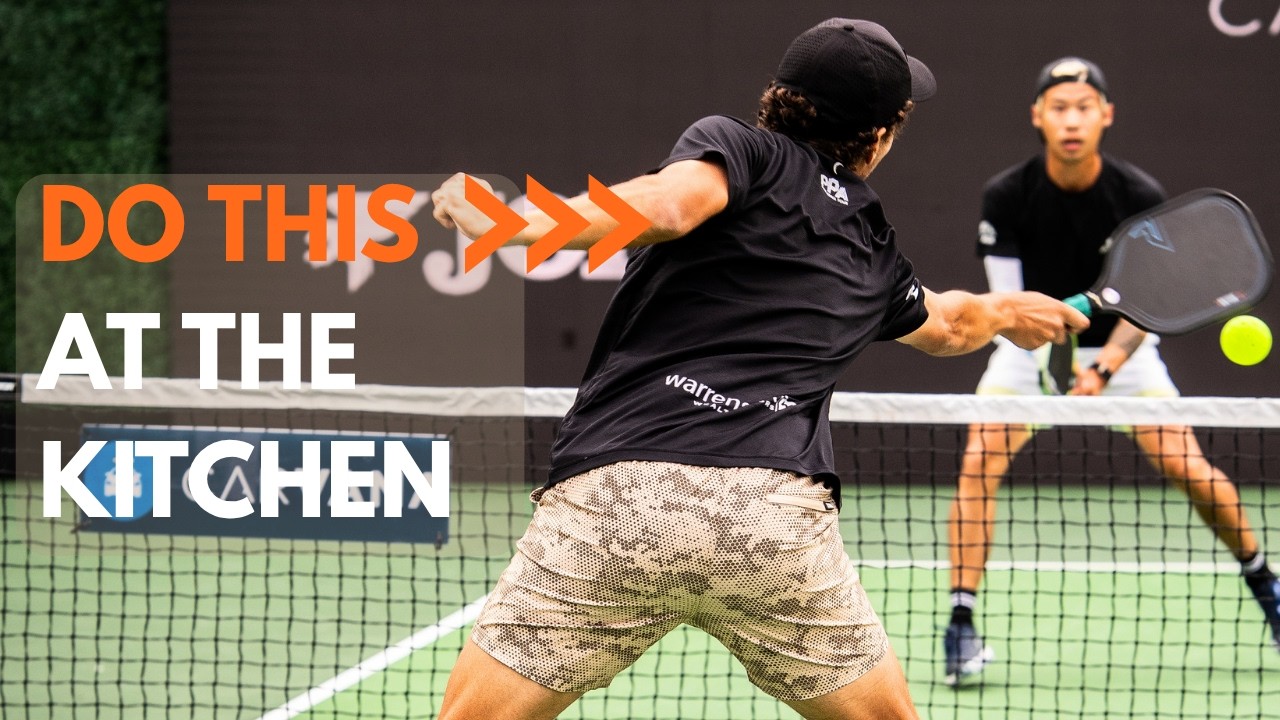
Good pickleball footwork means covering any ball in two to three steps with your hips aimed at the target, according to Coach Ty Woody's framework.
Every fix in the video collapses into four habits:
- Straight lines. Aim your feet, knees, and hips exactly where you want to go.
- Hips parallel with the ball path. On lobs, wide balls, everything.
- Drive through the back leg. Extension covers space; choppy steps just burn time.
- Balls of your feet. Flat feet are where jams, pop ups, and slow starts begin.
Fewer, bigger, better aimed steps beat happy feet every time.
Your ready position sets everything in motion before the point even starts.
Your ready position is costing you points explains why most players are already behind before the ball leaves the paddle.
If your court movement is costing you points, the modern pickleball strategies to winning in 2026 are built around exactly this kind of movement-first thinking.
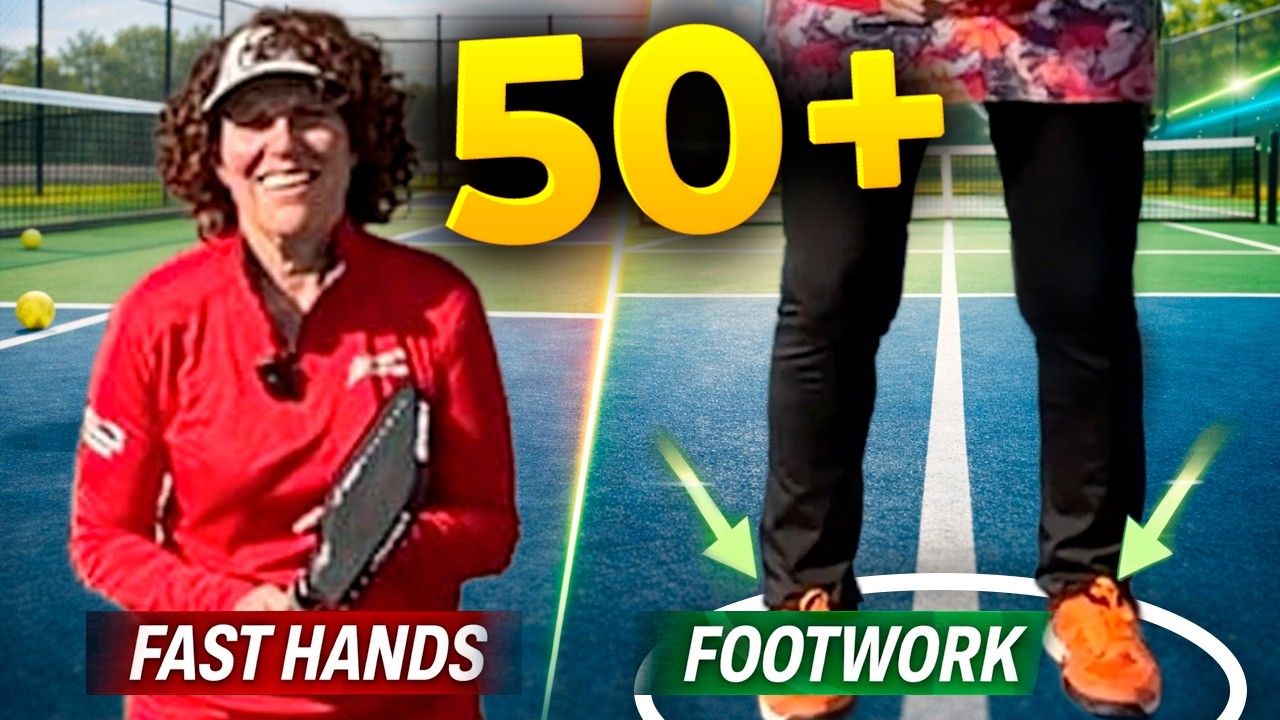
Split Step Pickleball: Footwork Tips for Seniors
By mastering this simple footwork move, you’ll stop your forward momentum and give your brain the split second it needs to read your opponent’s paddle.
 The Dink PickleballThe Dink Media Team
How Do You Train Pickleball Footwork Without a Partner?
You can train pickleball footwork alone with shadow work: no ball, no partner, just the patterns.
Set two cones (or water bottles) and rehearse each situation for five minutes: baseline drives in a straight line, the pivot and crossover for lobs, and the "one, two" around the ball move at an imaginary kitchen line.
Then layer in these 12 drills to play your best pickleball in 2026 and a stretching routine for better court movement so your hips can actually do what the framework asks.
Quick feet without mobile hips is just fast shuffling.If you want to build explosive legs specifically for court coverage, the 8 lower body exercises for explosive pickleball legs require no gym and directly translate to the three movement patterns in this article.
And if you think your hands are the problem, check your feet first.
Reaction time matters, but most "slow hands" are really late feet that never put you in position to use them.
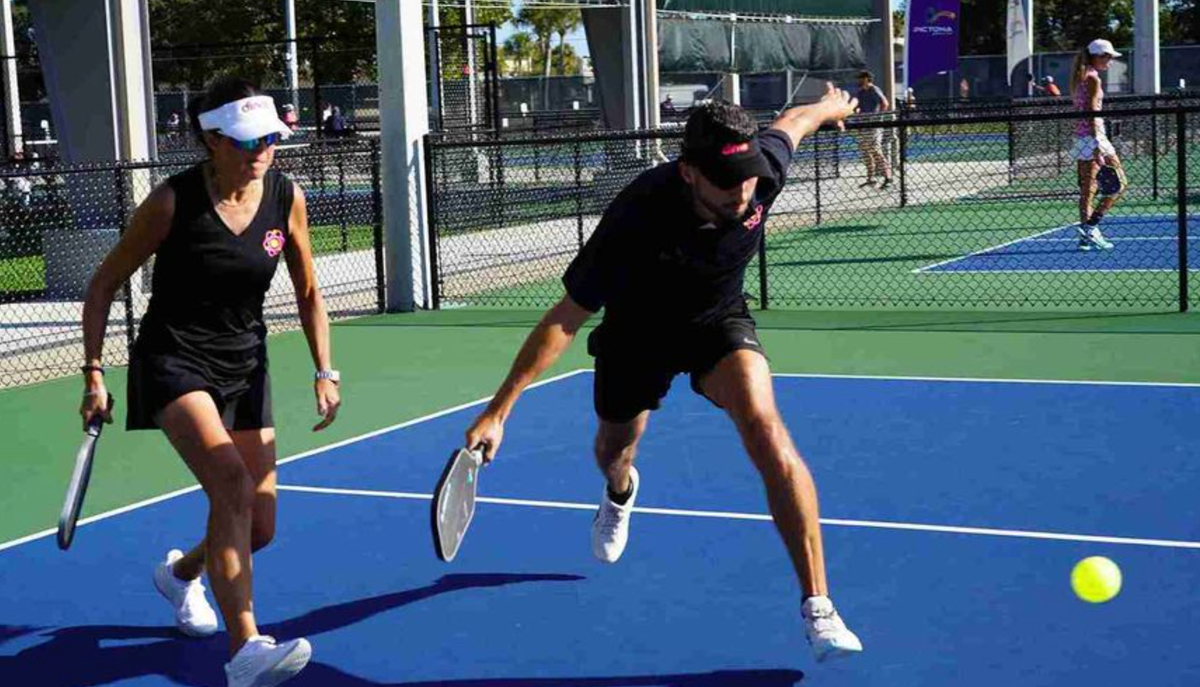
How to Improve Pickleball Footwork: 5 Pro Drills
Pickleball footwork drills are the fastest way to close the gap between your shot-making ability and your actual on-court results. Here are five drills that competitive players use to move faster, recover quicker, and stop giving away free points.
 The Dink PickleballThe Dink Media Team
Fix Your Feet, Fix Your Game
Bad movement habits hide inside every level of play. They show up in beginner mistakes and they linger in the errors 4.0 players repeat for years.
The difference between those players and the ones who keep climbing is rarely a new paddle or a new serve.
It is two to three committed steps, hips parallel with the ball path, in a straight line.Boring? Maybe. But as Coach Ty Woody says, fix the movement and the shots clean themselves up.
The 4-step system to win more pickleball games in 2026 builds on exactly this movement foundation.
And if you want to know which pickleball footwork upgrades also demand better footwear, the best men's pickleball shoes of 2025 and the best women's pickleball shoes of 2025 are where to start.
💡
Heads up: hundreds of thousands of pickleballers read our free newsletter.
Subscribe herefor cutting edge strategy, insider news, pro analysis, the latest product innovations and more.
Frequently Asked Questions
Taking lots of small, choppy steps instead of driving through the back leg. Coach Ty Woody's benchmark is covering any distance on the court in two to three steps. Choppy steps waste time, leave you off balance at contact, and make every shot late.
Should you use a crossover step in pickleball?
Yes, when tracking down a lob. Open your hips parallel to the ball path, pivot on the balls of your feet, get your back foot out of the way, and cross over while driving through your leg. The "never cross over" rule does not apply to chasing lobs.
How do I stop getting jammed at the kitchen line?
Get around the ball instead of letting it come into your body. Step back slightly if needed, turn your hips, and move right foot then left foot so the ball sits beside you rather than at your chest. From there you can attack or place the dink instead of popping it up.
Shadow the three patterns without a ball: straight line drives forward, the pivot plus crossover for lobs, and the "one, two" pivot at an imaginary kitchen line. Five focused minutes per pattern, a few times a week, builds the habits faster than rec games ever will.
Why does footwork matter more than shot technique?
Because most mishits are positioning errors, not swing errors. If your feet put you in a balanced, semi closed stance with the ball in front of you, an average swing produces a good shot. Great technique from a jammed, flat footed position still produces a pop up.
Anuncie Aqui / Advertise Here
Sua marca para o mundo Pickleball! / Your brand for the Pickleball world!



 English (US) ·
  Portuguese (BR) ·