
 English
  Spanish
  Portuguese
  German
  Italian
  Japanese
  French
  Polish
  Russian
  Netherlands
  Hungarian
  Turkish
  Videos
  Thedink Pickleball

Most pickleball mistakes aren't about bad shots. They're about what happens before and after the shot, and three specific habits keep showing up in almost every rec game.
Most pickleball mistakes don't happen during the swing. They happen right before it, and right after it.
You've probably been told to keep your paddle up, move your feet, and stay ready. But those cues are too vague to actually change anything in your game.What you need are the specific habits that are breaking down your rallies right now.
These three fixes come from tanner.pickleball on YouTube, who breaks down the exact mechanical errors most rec players repeat over and over without realizing it.
Here's what they are and how to stop them.
Love pickleball? Then you'll love our free newsletter. We send the latest news, tips, and highlights for free each week.
Pickleball Mistake 1: Dropping Your Paddle After Every Shot
This is one of the most common pickleball mistakes you'll see at every skill level, and most players doing it have no idea it's happening.
Here's the pattern: you hit the ball, your paddle drops toward your hip or side, and then you reset it before the next shot.That fraction of a second costs you everything at pace.
Your opponent isn't waiting for you to get ready.
The ball comes back fast, especially at the kitchen line, and a paddle that drops after every swing is a paddle that's always late.
What should you do instead of this pickleball mistake?
Stay out front. After you make contact, your paddle should stay elevated and in front of your body, not fall back to your side.
Think of it as maintaining a threat position. When your paddle is out front, you're putting pressure on your opponent.When it drops, you're giving them a free window to attack. That's the entire trade you're making, every single rally.
This habit also has a psychological effect on the other side of the net.
A player whose paddle is always up looks ready, and that alone can change where and how your opponent decides to hit.
If you want to see what this looks like at a high level, watch how quickly players like Anna Leigh Waters reset their paddle face after every dink.
There's almost no drop at all.
The paddle stays loaded and forward through the entire exchange.
Work on this during drilling, and after every rep, freeze for a second and check: is your paddle still out front?Coaches fix this one over and over because it keeps coming back without deliberate repetition.
💡
Need some new pickleball gear? Get 20% off select paddles, shoes, and more with code THEDINK at
Midwest Racquet SportsPickleball Mistake 2: Running Through the Ball Instead of Stopping
This pickleball mistake is especially common when players are transitioning toward the kitchen.
You see the ball coming, you're moving forward, and you hit it on the run without ever planting.The result is almost always a pop-up, a shot with no direction, or an error into the net.
Moving while you hit destroys your accuracy.
You need a stable base to control where the ball goes, and that's not optional under the non-volley zone constraints laid out in USA Pickleball's official rules.Why does this pickleball mistake keep happening?
Players get excited to get to the kitchen.
The urgency of approaching the line takes over and they forget that being at the line means nothing if they can't control the ball when they get there.
The fix is to arrive early and be still. As you approach the kitchen line, get low and anticipate the ball before it gets to you.When it does arrive, your feet should already be stopped and set.
Here's the sequence that actually works:
- Move toward the kitchen with purpose
- Slow down a few feet before you arrive
- Get low, knees bent, weight forward
- Be completely still at the moment of contact
- Then continue moving as needed after the shot
That brief moment of stillness is what separates a clean, controlled shot from a ball that floats up and begs to be attacked.
This is closely related to why rushing the kitchen is one of the most costly transition zone habits you can have.If you want a structured way to practice it, the three-drop strategy for the transition zone is a solid place to start.
It forces you to slow down and make controlled decisions before you ever reach the line.
3 Pickleball Volley Mistakes and How to Fix Them
These three pickleball volley mistakes show up in almost every player’s game. Fix your targeting, your backswing, and your foundation and your volleys will look completely different.
 The Dink PickleballThe Dink Media Team
Pickleball Mistake 3: Skipping the Split Step
This is the biggest pickleball mistake most players are making, and it affects every single shot in the game, not just your dinks.
A split step is a small, athletic hop or weight reset you do every time your opponent hits the ball. It primes your body to move in any direction instantly.Without it, you're flat-footed and reactive instead of loaded and ready.
What does a split step actually look like?
It's not a big jump. It's a small reset, both feet leave the ground briefly as your opponent contacts the ball, and you land with your knees slightly bent and your weight balanced.
That landing position is what lets you push left or right immediately. If you're flat on your heels when the ball comes, you lose that first step entirely.The timing matters a lot. Your split step should happen as your opponent hits, not before and not after.
If you go too early, you've already landed and your feet are stuck. If you go too late, you've missed the moment entirely.
Watch what tanner.pickleball demonstrates in the video. When he dinks without a split step, his feet are static and he's moving reactively to every ball.
When he adds the split step, his weight resets between every dink and his movement becomes instant and controlled.This applies everywhere on the court, not just at the kitchen.
Whether you're in the transition zone, at the baseline, or caught mid-court, your split step is what keeps you athletic and responsive.
The footwork drill that fixes lateral movement is one of the best ways to make the split step automatic.
You practice the timing until it becomes reflex, and then you stop thinking about it during actual play.
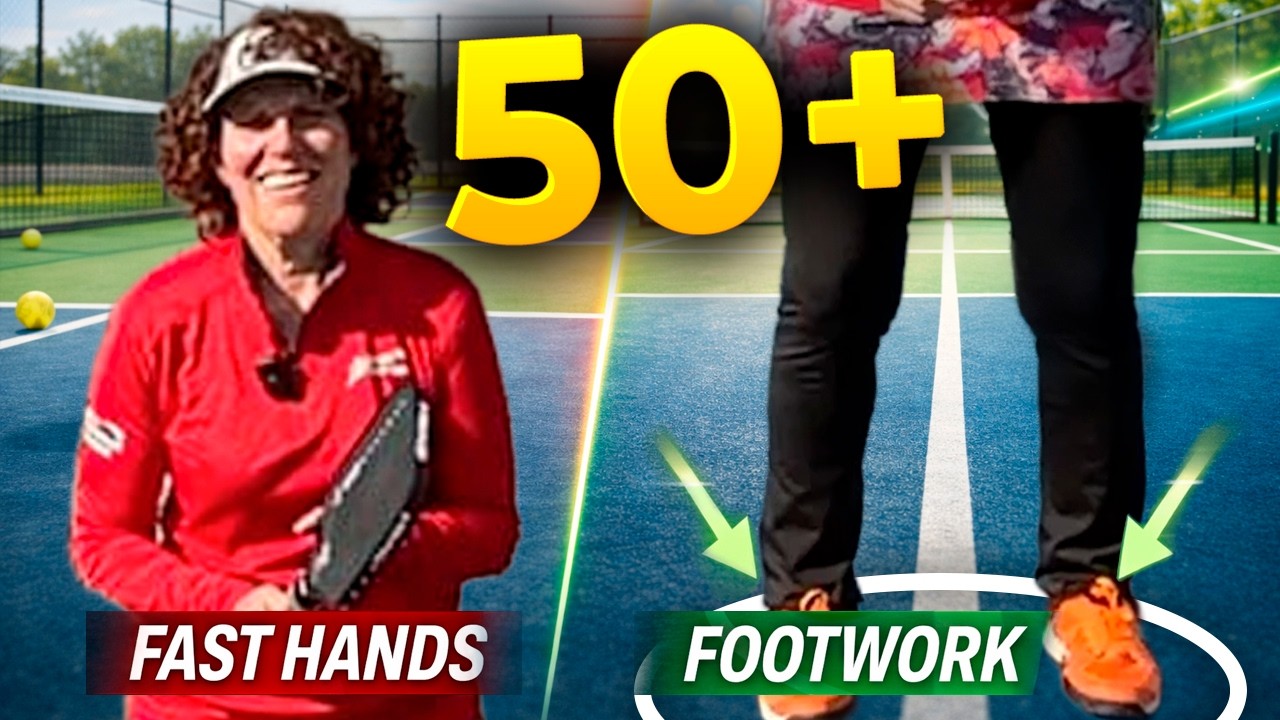
Split Step Pickleball: Footwork Tips for Seniors
By mastering this simple footwork move, you’ll stop your forward momentum and give your brain the split second it needs to read your opponent’s paddle.
 The Dink PickleballThe Dink Media Team
How These Three Mistakes Connect
These aren't three isolated problems. They're all part of the same underlying issue: your body isn't in a ready state between shots.
A dropped paddle means your upper body isn't ready.
Running through the ball means your lower body isn't ready. Skipping the split step means your whole body isn't ready.Every mistake on this list is a readiness failure. That's the real pattern.
The good news is that fixing one often accelerates the others.
When you start split stepping consistently, you naturally arrive at shots with more control, which makes it easier to keep your paddle up, which makes the next exchange cleaner.Here's a simple checklist to run through during your next session:
- After every shot: paddle stays out front, not dropped to your side
- Approaching the kitchen: slow down early, be still at contact
- Every time your opponent hits: small split step to reset your weight
That's it. Three checkpoints. You don't need to overhaul your entire game.
You just need to build these habits one rally at a time.
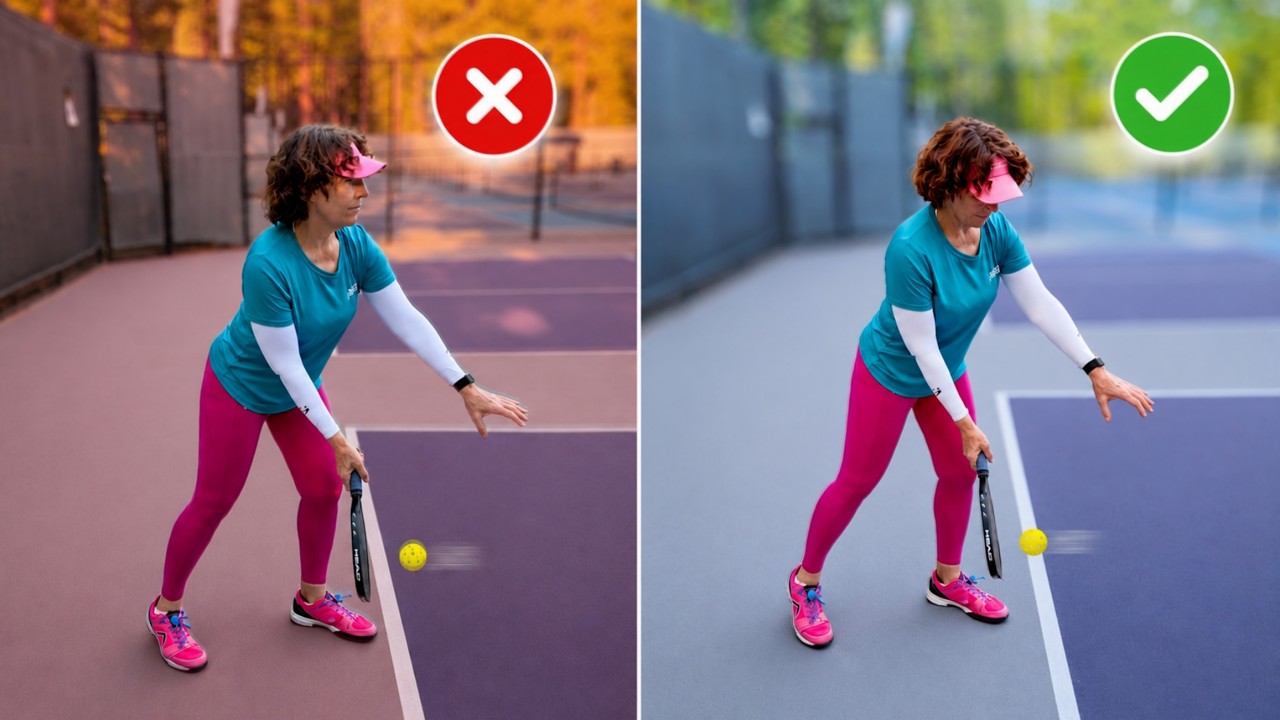
3 Pickleball Serve Mistakes Costing You Points
Most pickleball serve mistakes don’t miss the court. They just give your opponent a quiet advantage every single point. Fix these three and start every rally on your terms.
 The Dink PickleballThe Dink Media Team
Getting These Pickleball Mistake Fixes to Stick
Knowing what to fix and actually fixing it are two very different things.
Most players watch a tip video, nod, go out and play, and revert to old habits within ten minutes.
The reason is that your current habits are automatic. The only way to replace them is through deliberate repetition, not just awareness.How do you drill a pickleball mistake out of your game?
Pick one of these three mistakes to focus on per session. If you try to fix all three at once, you'll end up fixing none of them.
Focused attention on a single habit change is how real improvement stacks up over time.
If you want to understand what separates players who improve quickly from those who plateau, this breakdown of the habit that separates 4.0 players is worth reading.It gets at the same idea: small mechanical habits compound into large skill gaps.
You should also look at your dinking technique for popup errors, because a lot of the popups you're giving up aren't about your swing.
And if you want to build better dink consistency overall, the split step and paddle position habits feed directly into it.
For players working on their footwork in a more structured way, these three footwork drills train the same readiness principles from a different angle.Finally, using the kitchen line as a target instead of a rule is a useful mental shift that builds on everything covered here.
Fix the paddle drop. Stop running through the ball. Start split stepping every single time.
Those three changes alone will make you a noticeably harder player to beat.
💡
Heads up: hundreds of thousands of pickleballers read our free newsletter.
Subscribe herefor cutting edge strategy, insider news, pro analysis, the latest product innovations and more.
Frequently Asked Questions
What is a split step in pickleball and why does it matter?
A split step is a small weight reset you do every time your opponent contacts the ball, both feet briefly leave the ground and you land in an athletic stance ready to move in any direction. It matters because it removes the flat-footed delay that costs you the first step on almost every shot. Without it, you're always reacting late.
Why does dropping my paddle after a shot cause problems?
When your paddle drops to your side after contact, you lose your ready position and give your opponent a larger window to attack before you can respond. At kitchen pace especially, that fraction of a second is enough to get caught off guard. Keeping your paddle out front maintains pressure and cuts your reaction time.
How do I stop running through the ball when approaching the kitchen?
The key is to arrive at the kitchen line slightly before the ball does so your feet are already planted at contact. Practice slowing your approach a few feet before the line, getting low, and being completely still when you swing. Movement during contact is the primary cause of unforced errors in transition.
Can these three mistakes really affect my rating or skill level?
Yes, and they affect it more than most players expect. These are the kinds of mechanical habits that separate 3.5 players from 4.0 players, not shot selection or power. Fixing them shows up immediately in rally length, shot accuracy, and how often you get attacked at the kitchen.
How long does it take to build these habits?
Most players start seeing improvement within a few focused sessions if they work on one habit at a time. Trying to fix all three at once slows the process because your attention gets split. Pick the worst offender first, drill it deliberately, and then move to the next one.
Anuncie Aqui / Advertise Here
Sua marca para o mundo Pickleball! / Your brand for the Pickleball world!





 English (US) ·
  Portuguese (BR) ·