
 English
  Spanish
  Portuguese
  German
  Italian
  Japanese
  French
  Polish
  Russian
  Netherlands
  Hungarian
  Turkish
  Videos
  Thedink Pickleball

Most players make the forehand drive harder than it needs to be. These three mechanics fixes will stop the misses fast.
The forehand drive should be one of the most reliable shots in your game.
But for most players, it becomes a source of frustration, popping out of bounds or dumping into the net at the worst possible moment.
The problem is almost never effort. Players are swinging hard enough. They just skip the fundamentals that make the shot actually work.
This breakdown comes from Cori Elliott on YouTube, who boiled the forehand drive down to three things you can fix today.Here is exactly what she covers.
Love pickleball? Then you'll love our free newsletter. We send the latest news, tips, and highlights for free each week.
Why Most Players Keep Missing the Forehand Drive
Most forehand drive errors come from the same three places: rushed footwork, late contact, and a flat swing.
Fix those three things, and the shot becomes far more consistent.The frustrating part is that players usually blame their paddle, their timing, or even the wind.
The real issue is almost always mechanical, and it happens before the swing even starts.
When you understand what is actually breaking down, the fix is not complicated. You just need to be intentional about it until it becomes habit.
Fix 1: Get Your Feet Set Before You Swing
Footwork is the foundation of every clean forehand drive.
If your feet are still moving when you make contact, you lose the stable base that transfers power into the ball.
A lot of players chase the ball and swing at the same time. That is a recipe for inconsistency.You want to arrive at the ball first, get your feet planted, and then swing.
Think of it like a baseball hitter. Nobody swings while still mid-stride. They step, plant, and rotate.
Your forehand drive works the same way.
Why the Third-Shot Drive Matters More Than Ever
The drive isn’t replacing the drop. It’s setting it up. In today’s ultra-fast-paced game, that matters more than ever.
 The Dink PickleballAndrei Daescu
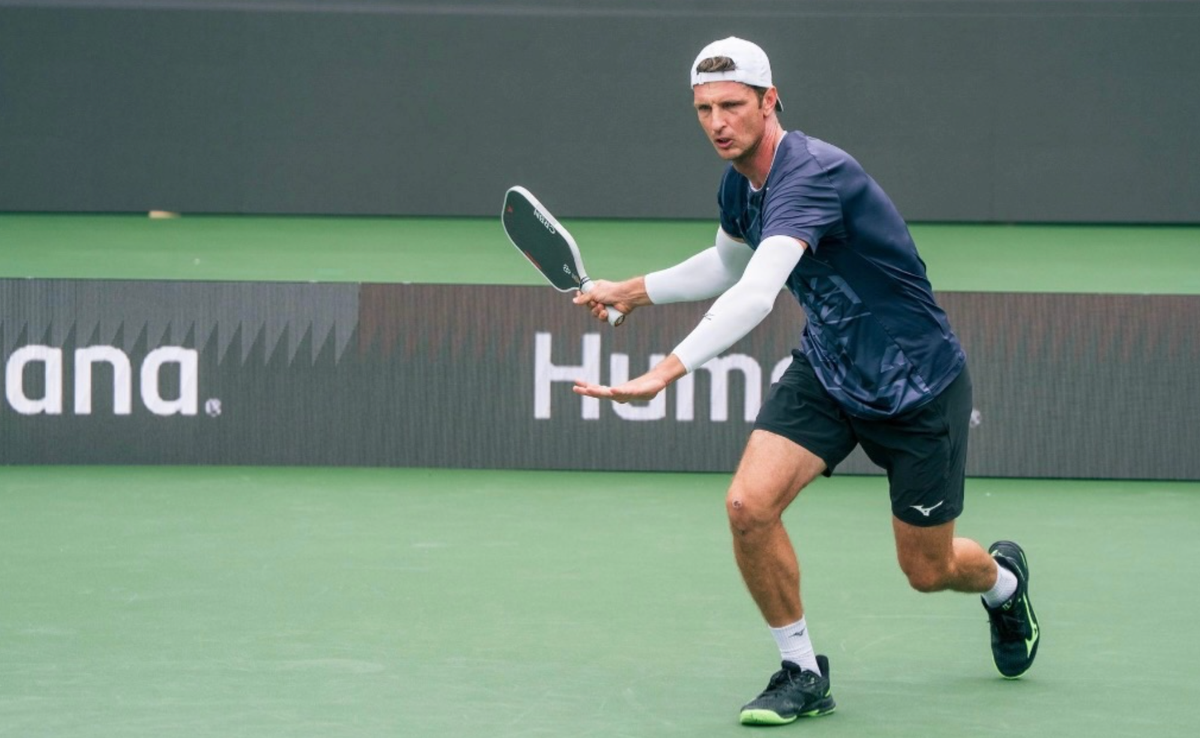
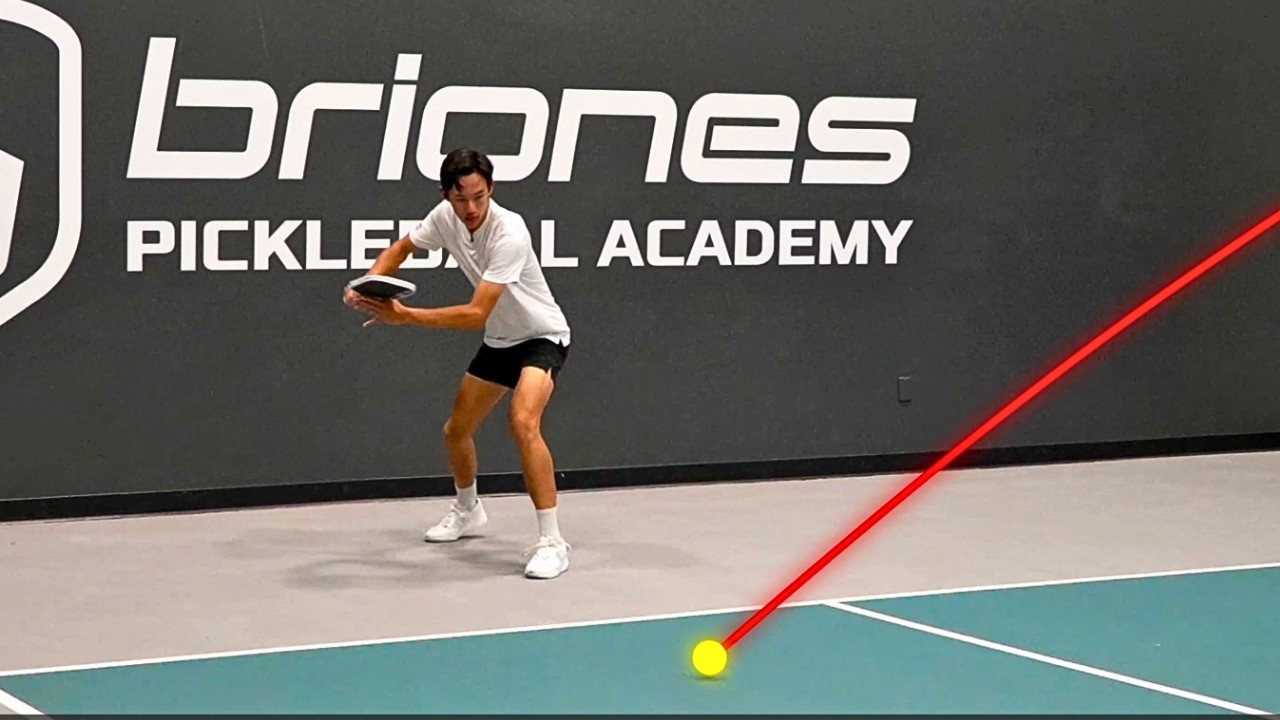
Here is what proper footwork looks like on the forehand drive:
- Move to the ball early, not at the last second
- Get your feet shoulder-width apart before your swing starts
- Point your front foot slightly toward the target
- Keep your weight loaded and ready to transfer through contact
When your feet are set, your hips and shoulders can rotate properly.
That rotation is where your real power comes from, not arm speed.If you find yourself constantly off-balance during drives, check out this breakdown on why your forehand drive keeps flying long for more on what causes that loss of control.
💡
Need some new pickleball gear? Get 20% off select paddles, shoes, and more with code THEDINK at
Midwest Racquet SportsFix 2: Make Contact Out in Front of Your Body
Contact point is probably the single biggest reason forehand drives miss. If the ball gets too close to your body before you swing, you lose both power and control instantly.
When the ball is too close, your elbow jams into your side. Your swing gets cramped, you lose your swing path, and the shot goes nowhere useful.Contact out in front means the ball is roughly arm's length away when you hit it. Your elbow has room to extend. Your paddle face is square to the target.
The swing has somewhere to go.
Cori Elliott uses a specific cue here that is worth copying: she tracks the ball with her non-dominant hand as it comes toward her.
The Best Pickleball Players Aren’t Following the Rules Anymore
Modern pickleball isn’t won by coloring inside the lines. More and more, the most successful players are also the most creative.
 The Dink PickleballZoey Weil
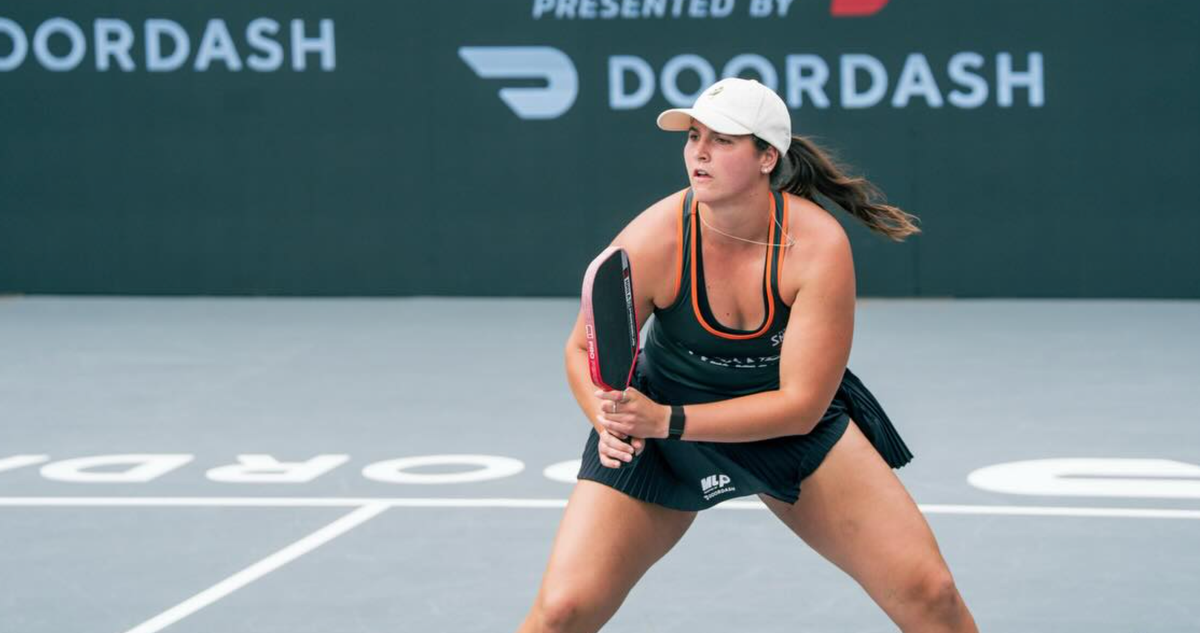
That hand acts like a guide, pointing at the ball and helping her feel how far away it is before she swings.
Try it in your next session. Keep your off-hand raised and pointing at the incoming ball. When it reaches the right contact zone, swing.
It sounds simple because it is, and it works.This is similar to how good players handle speed-up situations. The contact point stays out front whether the ball is coming slow or fast.
Here is a quick checklist for your contact point:
- Watch the ball all the way to your paddle face
- Keep your non-dominant hand up as a tracking guide
- Make contact when the ball is in front of your lead hip, not beside it
- Feel your arm extend through the ball, not stop at it
Master the Third Shot Drop in Pickleball
The third shot drop is one of pickleball’s most critical shots, and most players are making a fundamental mistake. Richard from Engage Pickleball reveals the contact point hack that will transform your consistency and get you to the kitchen line every time.
 The Dink PickleballThe Dink Media Team
Is Topspin Really Necessary on a Forehand Drive?
Yes, and here is why: topspin is what keeps the ball in the court. A flat drive with no spin has no margin.
It either clips the net or sails long. Topspin gives you a buffer.
When you swing low to high and brush up the back of the ball, you create topspin.That topspin makes the ball arc over the net and then drop back down into the court. It is physics working for you instead of against you.
A flat slap at the ball has no such safety net. It also telegraphs to your opponent exactly where the shot is going.
Topspin adds unpredictability on top of control.If you want to see how topspin works across different shot types, the principles in how to hit a roll shot with fast topspin apply directly to your forehand drive mechanics.
Pickleball Topspin: Master the Easiest Spin Technique
Pickleball topspin doesn’t have to be complicated. Professional player Ava Ignatowich reveals the simple wrist mechanics and paddle positioning that make pickleball topspin easier to learn than most players think.
 The Dink PickleballThe Dink Media Team
Fix 3: Swing Low to High and Finish Through the Ball
Your swing path is everything when it comes to forehand drive consistency.
Low to high is not just a coaching phrase. It is a description of exactly what creates topspin and keeps shots in the court.Start your paddle below the ball. Swing upward through contact. Finish with your paddle above your shoulder on the follow-through.
That full motion is what produces a controlled, heavy drive.
A lot of players stop their swing at contact. That is like throwing a punch and pulling it at the last moment. The power never fully transfers.Keep swinging through the ball, not at it.
The finish also tells you a lot about whether your swing path was right. If your paddle ends up high and out in front, you swung through correctly.
If it stays low or swings wide, you flattened out somewhere in the middle.
Here is what a proper low-to-high swing looks like broken down:
- Paddle starts below the incoming ball
- Hips rotate first, pulling the paddle through
- Contact happens out in front with an upward brush on the ball
- Follow-through finishes above shoulder height
- Your chest faces the target at the end of the swing
This is exactly why players who struggle with creating topspin on drives keep hitting flat shots.
Their swing path never gets steep enough to brush up the ball properly.
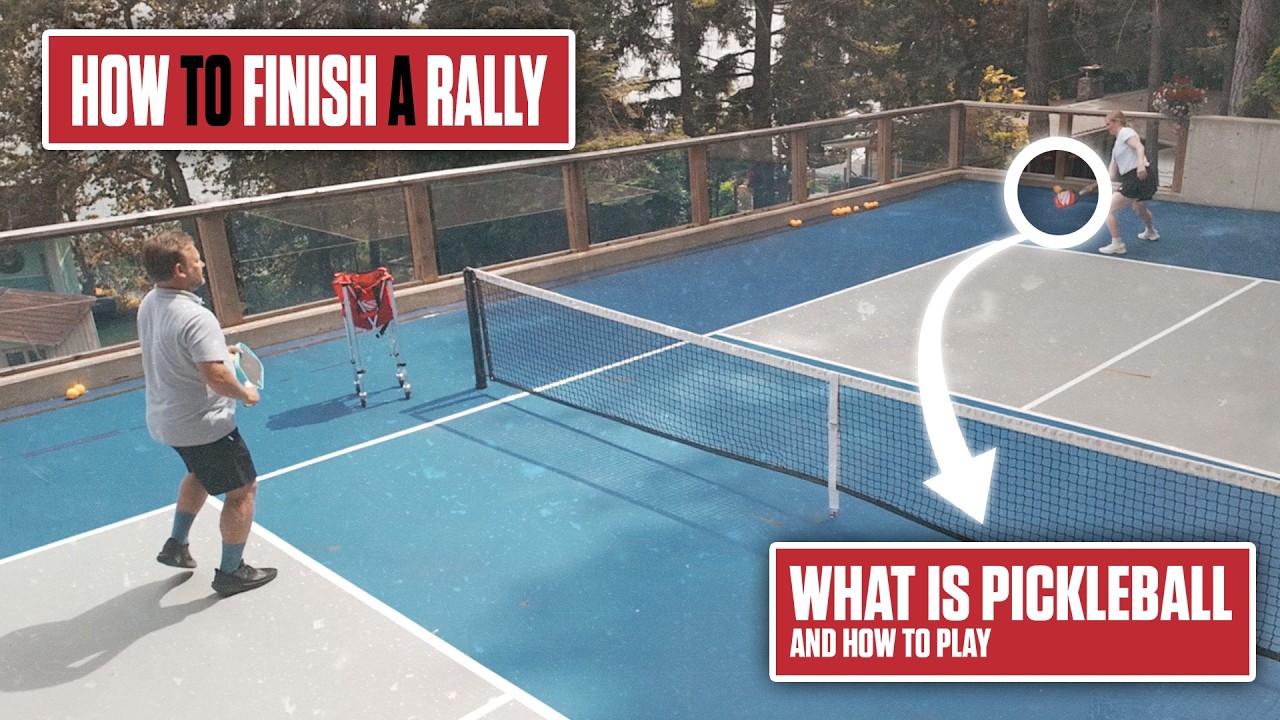
How to Close Out Rallies in Pickleball: 3 Finishing Techniques That Win Points
The best players aren’t just steady. They’re hunters. They recognize when the moment arrives to put the ball away, and they know exactly how to do it.
 The Dink PickleballThe Dink Media Team
How Does the Forehand Drive Connect to the Rest of Your Game?
A reliable forehand drive changes every other shot decision you make.
When your opponent knows you can rip the ball, they play more cautiously on their returns. That opens up angles and softer shots you would not have otherwise.
Most players who struggle with the forehand drive also struggle with third shot decisions.
They default to the drop every time because they do not trust their drive. When you fix the drive, you suddenly have both options available.
That pressure is what separates players who get stuck at one level from those who keep moving up.
If you want to understand the full picture, see why players get stuck at 4.0 and what habits actually move the needle.
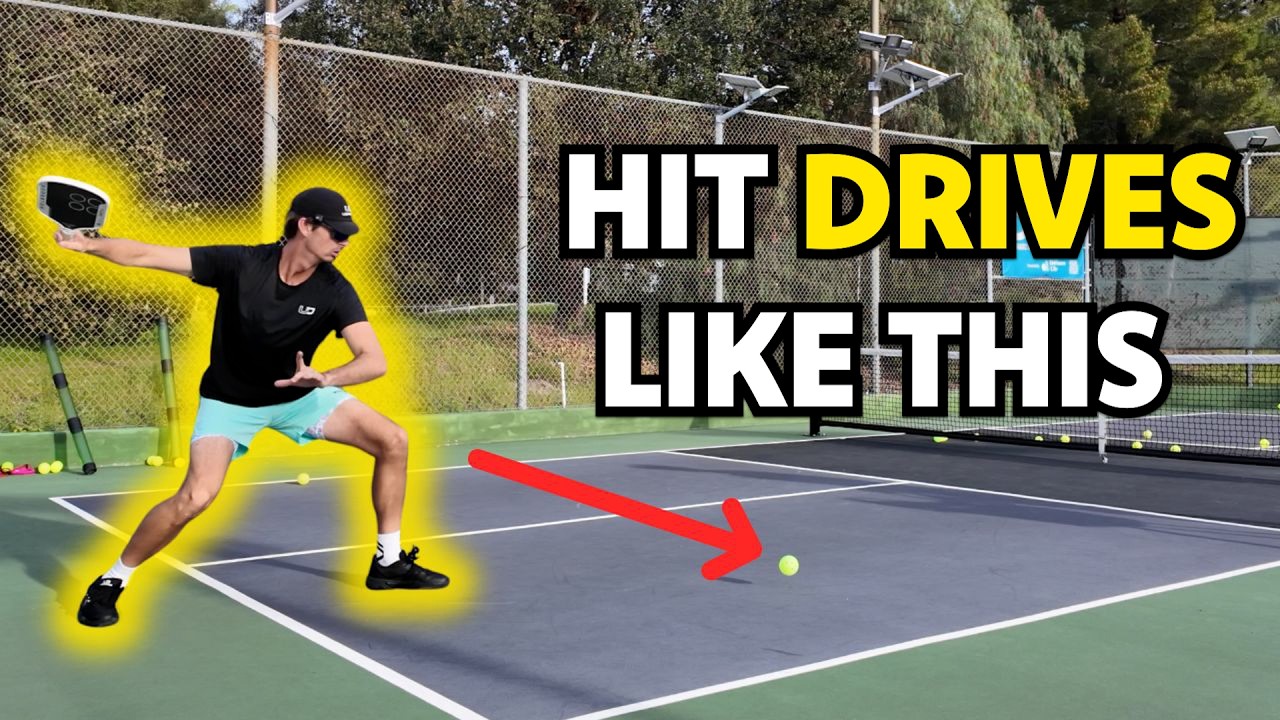
Why Your Forehand Drive in Pickleball Keeps Flying Long
Most forehand drive problems in pickleball aren’t about power, they’re about spacing and contact point. Here’s the exact system to fix both.
 The Dink PickleballThe Dink Media Team
Putting All Three Fixes Together
None of these three fixes are complicated on their own. The challenge is doing all three at once, consistently, in real game situations.
Start by working on one at a time. Spend a full practice session just focused on getting your feet set before every swing.Once that feels natural, add the contact point focus.
Then layer in the swing path.
Building the habit in pieces means each element gets real attention. Trying to fix everything at once usually means fixing nothing.
If you want to take your overall driving game further, check out drive techniques that force easy pop-ups and drills that turn weak shots into weapons.
Both build directly on the foundation Cori lays out here.
The forehand drive is not a flashy shot. But when it works, it applies real pressure and opens up the court.
Three things: feet set, contact out front, swing low to high.That is the whole formula.
Simple mechanics. Big results. Get to work.For players who want to keep building on solid fundamentals, understanding the root causes of unforced errors is the next logical step.
Most errors trace back to the same mechanical breakdowns described here.
💡
Heads up: hundreds of thousands of pickleballers read our free newsletter.
Subscribe herefor cutting edge strategy, insider news, pro analysis, the latest product innovations and more.
Frequently Asked Questions
Why does my forehand drive keep going into the net?
Your swing path is probably too flat or you are making contact too close to your body. Swing low to high and make sure the ball is out in front of you at contact. Those two fixes solve most net errors on the forehand drive.
How do I stop my forehand drive from sailing long?
A flat swing with no topspin is the most common reason drives sail long. Brush up the back of the ball on your swing path to create topspin, which pulls the ball down into the court. You can also read more about this at why your forehand drive keeps flying long.
What does it mean to make contact out in front in pickleball?
Contact out in front means the ball is roughly arm's length from your body when you swing, positioned in front of your lead hip rather than beside or behind it. This gives your arm room to extend and your paddle face room to stay square to the target. When the ball gets too close to your torso, your elbow jams and you lose both power and accuracy.
Should I use topspin on every forehand drive?
Yes, in almost every situation. Topspin gives your drive margin over the net and brings it back down into the court, making it far more consistent than a flat shot. A flat drive has no safety buffer, which means small timing errors become outright misses.
How important is footwork compared to swing mechanics on the forehand drive?
Footwork comes first because without a stable base, your swing mechanics cannot function correctly. If you are still moving when you make contact, your hips cannot rotate properly and your power gets cut in half. Get your feet set before you swing, every time.
Anuncie Aqui / Advertise Here
Sua marca para o mundo Pickleball! / Your brand for the Pickleball world!




 English (US) ·
  Portuguese (BR) ·