
 English
  Spanish
  Portuguese
  German
  Italian
  Japanese
  French
  Polish
  Russian
  Netherlands
  Hungarian
  Turkish
  Videos
  Thedink Pickleball

Like this one: enter a tournament or league within the next 60 days. After all, if you don't have a test coming up, you won't study as hard.
Kyle Koszuta has a message for pickleball players stuck at the 4.5 level: you're probably working on the wrong things.
In a recent video with paddle reviewers Pickleball Effect, Koszuta breaks down the three skills that actually matter when you're trying to jump to 5.0. Spoiler alert: it's not about perfecting your flick.
Love pickleball? Then you'll love our free newsletter. We send the latest news, tips, and highlights for free each week.
Stop Chasing the Wrong Improvements
Here's the thing about improvement: most players think they know exactly what's holding them back. Koszuta has talked to over a thousand pickleball players, and about 80% of them will tell him what they need to work on to reach the next level.
But almost 90% of the time, they're wrong.
It's the classic "you don't know what you don't know" problem. A player walks in convinced their flick needs work. Then Koszuta watches them play a few points and realizes they haven't even gotten to the kitchen yet. You can't flick if you're not at the net.
Skill #1: Shot Quality on the Fundamentals
The first skill is all about improving the quality of your foundational shots: your serve, your third shot, and your transition game. This might sound basic, but here's why it matters so much.
As you move up in levels, the quality of shots coming at you gets dramatically better.
- At 3.5, a hard drive might scare your opponent.
- At 4.5, they're handling it fine.
- At 5.0, they're hitting it back with serious pace and spin, and suddenly your transition game feels broken.
But it's not really broken. You're just facing better opponents.
💡
Need some new pickleball gear? Get 20% off select paddles, shoes, and more with code THEDINK at Midwest Racquet Sports
The fix? Go back to basics. Focus on these shots in order:
- Your serve: Make it more aggressive and consistent so everything else gets easier.
- Your third shot: This is the return after your opponent's drop. Quality here sets up the entire rally.
- Your transition: The movement and positioning as you come to the net matters more than you think.
Koszuta recommends practicing these with intention. Play rec games but pick one focus for the day. Maybe it's just serve, third, and fifth shots. Keep your brain locked in on that one track, and you'll get way more reps in the areas that actually matter.
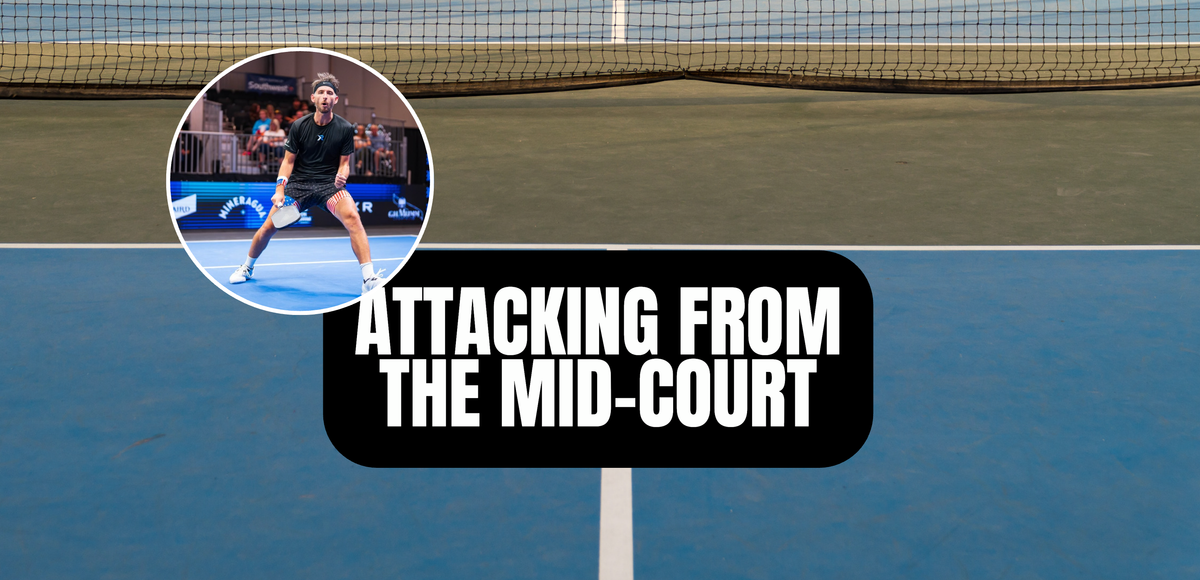
How to Attack (and Dodge Attacks) from the Pickleball Transition Zone
Due to technological advancements and pickleball athletes getting better and better, certain shots that were once rare or even considered taboo are now at the forefront of the game.
 The Dink PickleballEric Roddy
Skill #2: Decision-Making and the Advantage Scale
The second skill is decision-making, and this is where things get interesting. Most players think about pickleball in terms of shots. Koszuta thinks about it in terms of positions and situations.
He uses a framework called the advantage scale, which breaks every rally into three phases: neutral, advantage, and disadvantage. Understanding where you are in that scale changes everything about how you should play.
✅ Neutral is when all four players are at the kitchen and nobody has a clear edge yet. Someone's trying to create an opening, but it's even.
✅ Advantage is when you've created a situation in your favor. Maybe your opponent is off the line, or they're stretched out, or they just hit a weak dink. You have the upper hand.
✅ Disadvantage is when you're off balance, outstretched, or out of position. Your job here is simple: hit a neutralizing shot and get back to neutral. Don't try to win the point from disadvantage.
Here's the mistake most 4.5 players make: they try to go from disadvantage straight to winning the point. It almost never works. Instead, the path should be disadvantage to neutral, then neutral to advantage, then advantage to a winner.
And here's the thing about advantage: you don't always need to end the rally immediately. Koszuta talks about "extending advantage" rather than going for the putaway every time. Hit a slightly more aggressive dink. Get your opponent off the line a little more. Turn a small advantage into a bigger one. Then finish it.
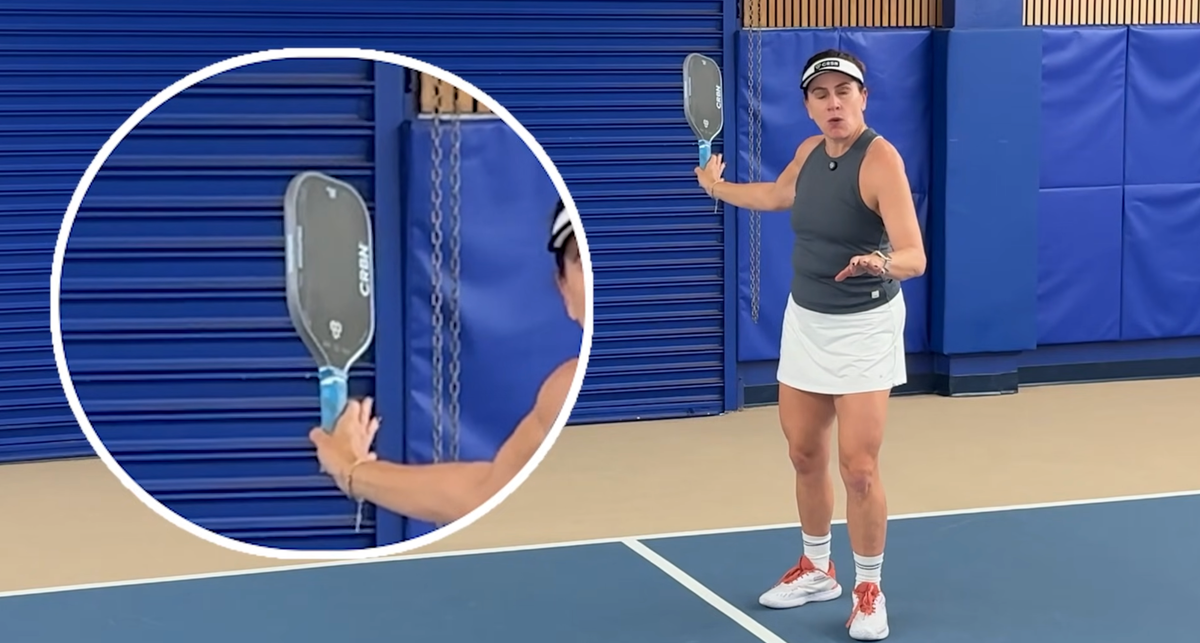
Topspin in Pickleball: The Complete 3-Step Progression Guide
It’s one of those shots that looks effortless when done right, but feels impossible when you’re the one holding the paddle
 The Dink PickleballThe Dink Media Team
Skill #3: Put Something on the Books
The third skill might sound simple, but it's powerful: enter a tournament or league within the next 60 days.
If you don't have a test coming up, you won't study as hard. It's like high school all over again. But when there's a tournament on the calendar, something shifts.
Koszuta feels real pressure when a tournament is a week or two away, and that pressure drives him to sharpen his game in ways that casual rec play never will.Tournaments force you to apply everything you've learned under real conditions. You learn more from one tournament than you'll learn from weeks of rec games. There's emotional investment. You paid money. You have a partner counting on you. People are watching. That matters.
It doesn't have to be a big event. A cash game, a local league, anything with stakes will push you to the next level of improvement.
Heads up: hundreds of thousands of pickleballers read our free newsletter. Subscribe here for cutting edge strategy, insider news, pro analysis, the latest product innovations and more.
The Framework That Changes Everything
Most players work backwards. They drill execution first and hope it transfers to matches. But if you don't know when to hit that backhand flick, or why you're hitting it, or what situation calls for it, all that drilling is wasted energy.
Instead, learn to recognize the situation, decide what shot you need, then execute it. That's the order that actually works. And once you understand the framework, the specific shots you need to improve become obvious.
The path from 4.5 to 5.0 isn't about finding some secret technique. It's about getting the fundamentals sharp, understanding the advantage scale, and putting yourself in situations where you have to perform. Do those three things, and you'll be surprised how fast you improve.
Anuncie Aqui / Advertise Here
Sua marca para o mundo Pickleball! / Your brand for the Pickleball world!




 English (US) ·
  Portuguese (BR) ·