
 English
  Spanish
  Portuguese
  German
  Italian
  Japanese
  French
  Polish
  Russian
  Netherlands
  Hungarian
  Turkish
  Videos
  Thedink Pickleball

The poke, the roll, and the flick are the three pickleball volleys that decide hands battles at the kitchen line. Here is how to hit each one, when to use it, and the drills that make them automatic.
Your pickleball volley is the shot that decides who wins the hands battle and who gets handcuffed at the kitchen line.
When four players are trading rapid-fire shots two feet from the net, the person with cleaner volleys almost always comes out on top.
Here is the good news: every pickleball volley comes down to three core techniques, the poke, the roll, and the flick.
Once you know when to use each one, you stop guessing in firefights and start dictating them.
This breakdown comes from Austin Hardy of PickleballPlaybook, who walked through how to hit every pickleball volley in the game plus the patterns and drills that make them stick.
As he puts it, "the importance of learning every volley in pickleball cannot be overstated."Love pickleball? Then you'll love our free newsletter. We send the latest news, tips, and highlights for free each week.
The Three Pickleball Volleys Every Player Needs
A volley is any ball you hit out of the air before it bounces, and at the kitchen line you have exactly three ways to do it. Each one is built for a specific height of ball.
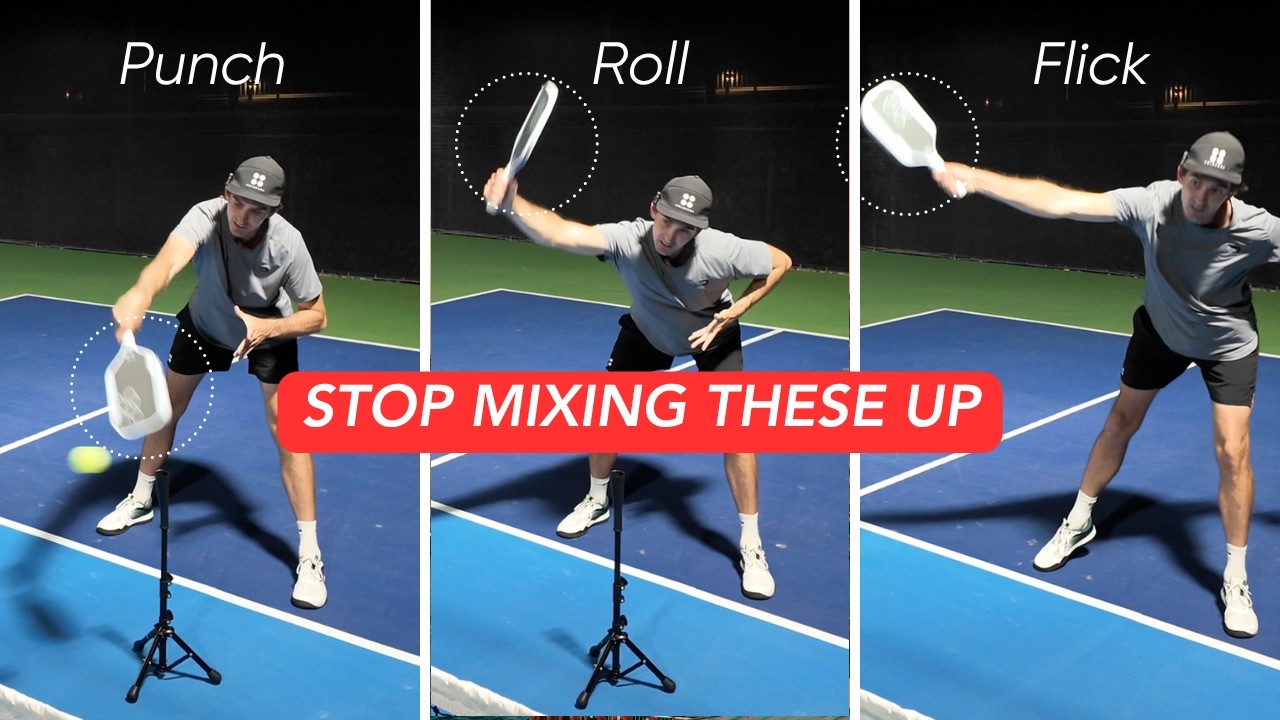
- The poke: for balls that stay low, when you are reaching into the kitchen.
- The roll: for balls around net height that you want to drive with topspin.
- The flick: for balls at or above the net tape that you can attack downward.
Get these three right and you cover almost every situation you face at the net.
Most amateurs blur them together, which is exactly why they cough up so many free points.
If that sounds like your game, the volley mistakes amateurs make are worth reading up on before you drill.
How Do You Hit a Poke Volley?
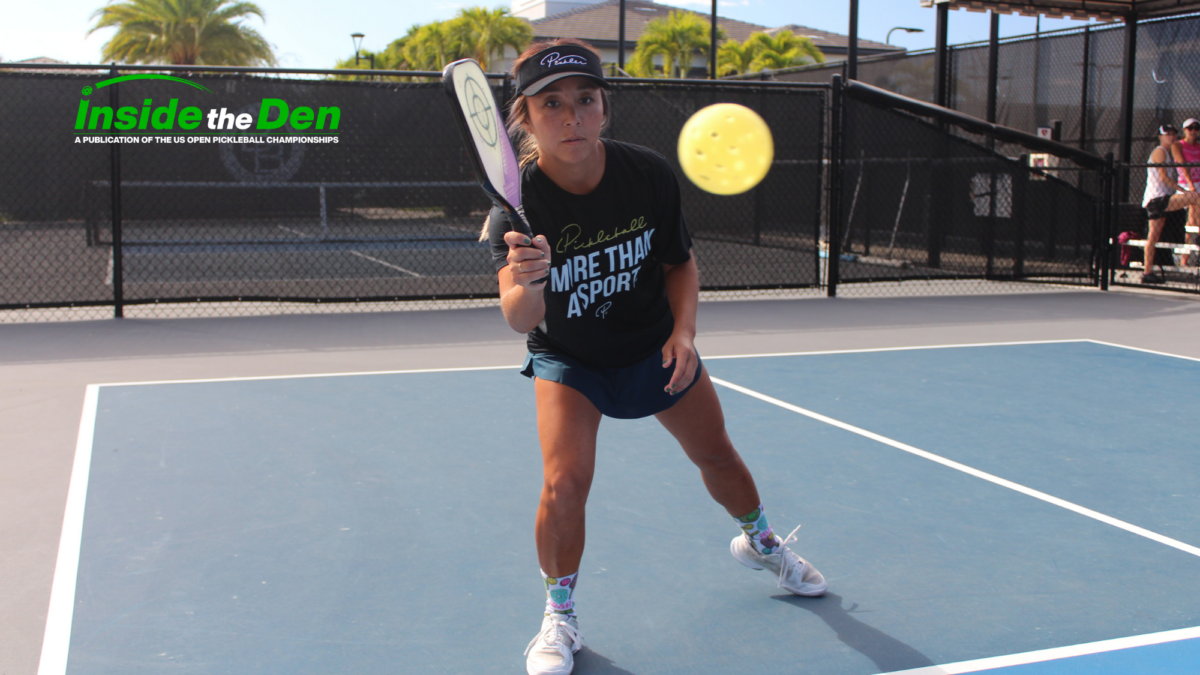
You hit a poke when the ball is low and you are reaching into the kitchen with a short, concise motion.
That is the whole shot. No backswing, no follow through, just a firm punch that redirects the ball.
The poke is your safest offensive touch. Because the ball is below the net when you contact it, you are not trying to end the point.
You are keeping pressure on and pushing your opponent off balance until they hand you something better.
Keep everything out in front of your body.
The moment you let a low ball drift behind you, the poke turns into a pop up, and popping the ball up is the fastest way to lose a kitchen exchange.
If that is a recurring problem for you, fixing your pop ups applies directly to your volley too.💡
Need some new pickleball gear? Get 20% off select paddles, shoes, and more with code THEDINK at
Midwest Racquet SportsThe Roll Volley Is Where Your Power Comes From
The roll volley uses your shoulder to create the shot with just a little help from the wrist.
This is the difference between a soft block and a ball that dips hard at your opponent's feet.
Think of the roll as the middle gear between the poke and the flick.
The ball is a little higher than poke height, so you can add topspin and drive it, but it is not high enough to swing down on.
You brush up the back of the ball and let the shoulder carry the motion.
This is the shot that turns a neutral rally into offense.
When you take the ball out of the air with a roll instead of letting it bounce, you steal time from your opponent and force a rushed reply.
Punch, Flick & Roll: A Complete Pickleball Volley Guide
The backhand volley is actually three distinct shots, each with different setups, mechanics, and strategic applications
 The Dink PickleballThe Dink Media Team
When Should You Flick Instead of Poke?
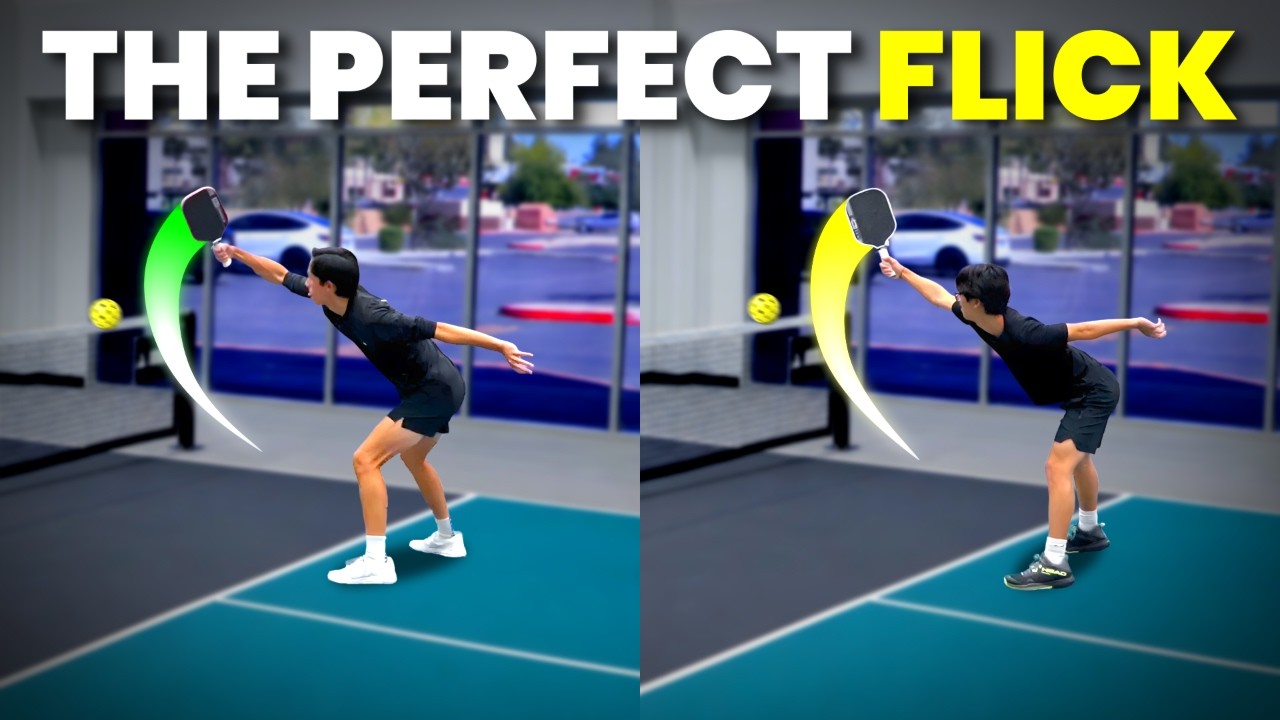
You flick when the ball is at or above the net tape, because that is the only time you can safely come over the ball and hit down on it.
Hardy's rule is simple: recognize the ball is equal to or above the net tape, then attack it.
The mechanics are a fast forearm rotation. On the forehand you go from forearm closed to forearm open.
On the backhand it is the reverse, forearm down to forearm open.
It is a quick, compact move, not a big swing, and everything stays in front of you. Where do you aim?
"My whole goal is to get it at the shoelaces of my opponent," Hardy says, "because that's the trickiest spot for them to have to cover."A ball at the feet forces your opponent to either move their feet fast or take it out of the air awkwardly, and that usually produces the next pop up.
The backhand flick is the shot most players neglect, and it is worth dedicated reps.
Studying a full backhand flick breakdown and fixing your flick will help if yours keeps dumping into the net.
One reminder: do not flick balls that are still low. Keep those as pokes and you will win far more points.
Master the Pickleball Flick: Complete Technique Guide
The pickleball flick is one of the most effective attacking shots in the game, allowing you to generate topspin and catch opponents off guard. Master both backhand and forehand variations with this comprehensive technique breakdown.
 The Dink PickleballThe Dink Media Team
The Swinging Pickleball Volley That Wins Transition
When you are moving forward through the transition zone and the ball comes back above waist level, take it out of the air with a swinging volley.
This is a major tactical advantage most players leave on the table.
The motion starts out in front and finishes out in front. No huge backswing, no long follow through, so you are ready for the next ball.
If it is above your waist and clearly not sailing out, you swing.
Getting comfortable attacking on the move is what separates players who reach the kitchen with control from players who float shots.
Since so many errors happen in transition, passive footwork here is a habit worth breaking.
Struggling With Pickleball Volleys? Focus on Your Grip and Positioning
Volleying is about more than just hitting the ball out of the air. It’s about understanding the rules, using the right grip, positioning yourself correctly, and practicing with intention.
 The Dink PickleballThe Dink Media Team
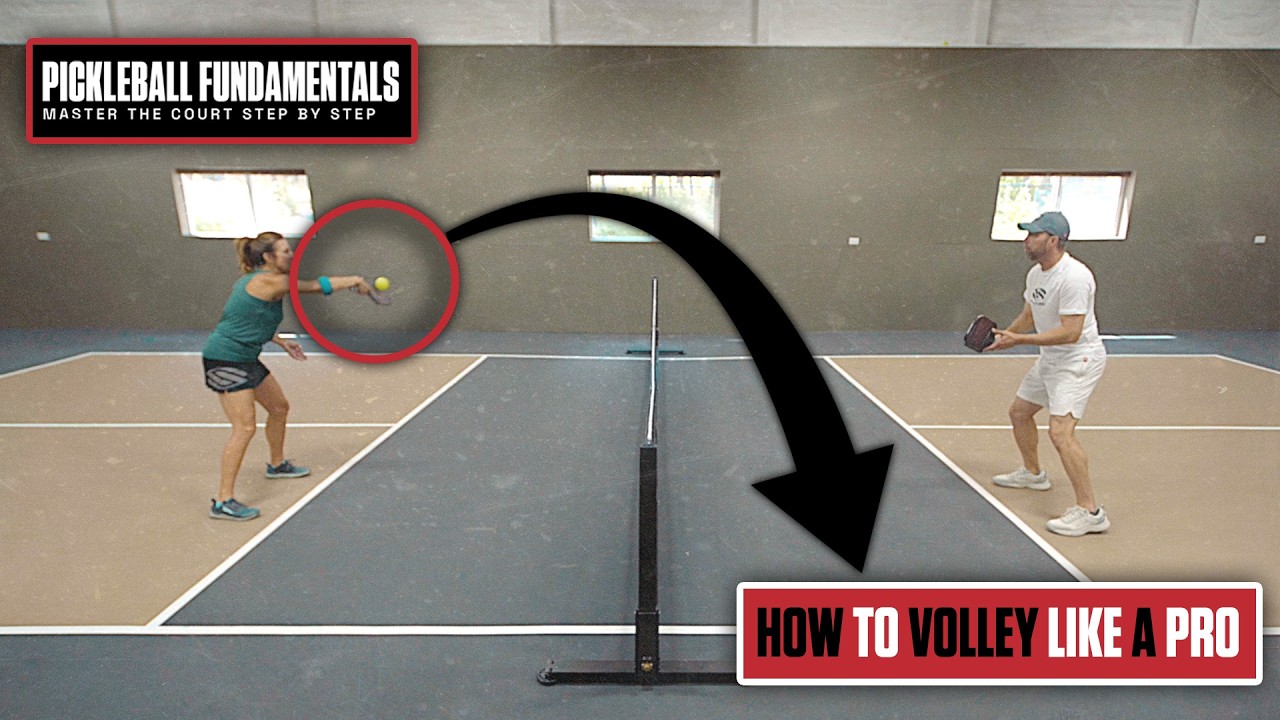
Read Your Opponent Like a Wall
Here is the pattern that ties every pickleball volley together: you can predict where the ball comes back roughly 90% of the time based on where you hit it.
Hardy's phrase is to "treat your opponent like a wall."
Hit it across their body and it comes back in the opposite direction. Hit it straight at them and it comes right back at you.
That means the crossbody speed up is not a gamble.
When you speed up across your opponent's body, the reply naturally travels back into the opposite triangle, so you shift that way and sit on the counter.
Anticipation, not raw reflex, wins most hands battles.
This is exactly the read that separates the best players. Ben Johns, widely considered the greatest player in pro pickleball, is praised by partner Anna Leigh Waters for knowing "when to speed it up" and when to dink.
That instinct is trainable, and it starts with knowing your own targets. Before you press the trigger, get clear on when to speed up.
How to Read Your Opponent’s Eyes and Poach More Balls in Doubles Pickleball
The key to winning many pickleball points isn’t just quick reflexes; it’s reading what your opponent is about to do before they do it
 The Dink PickleballThe Dink Media Team
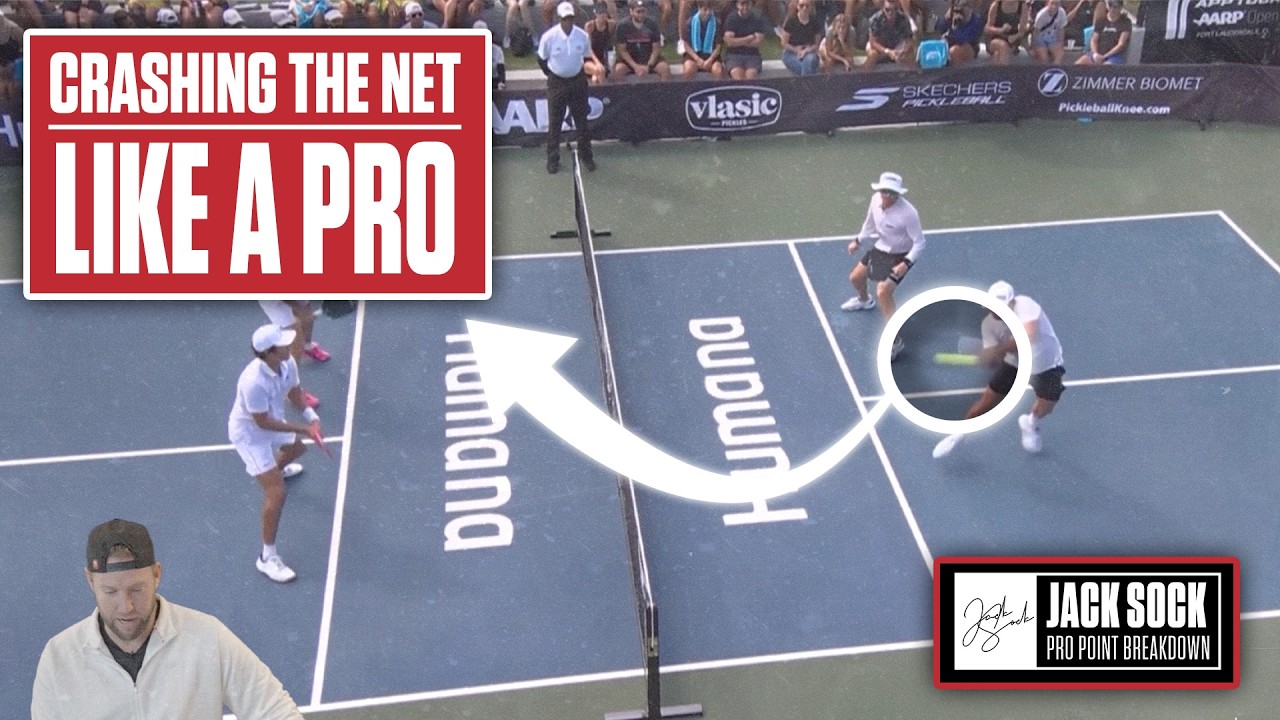
The Drop Volley That Keeps You in the Point
Not every ball should be attacked.
When a speed up comes in low and difficult, the smart play is a drop volley that resets the ball back into the kitchen and gets you back in the point.
You concede the kitchen line for a moment, absorb the pace with soft hands, and drop the ball short. It is the same soft-hands skill that keeps you from getting attacked at the kitchen in the first place.
Knowing when to reset instead of counter is a hallmark of a controlled, high-level pickleball volley game.
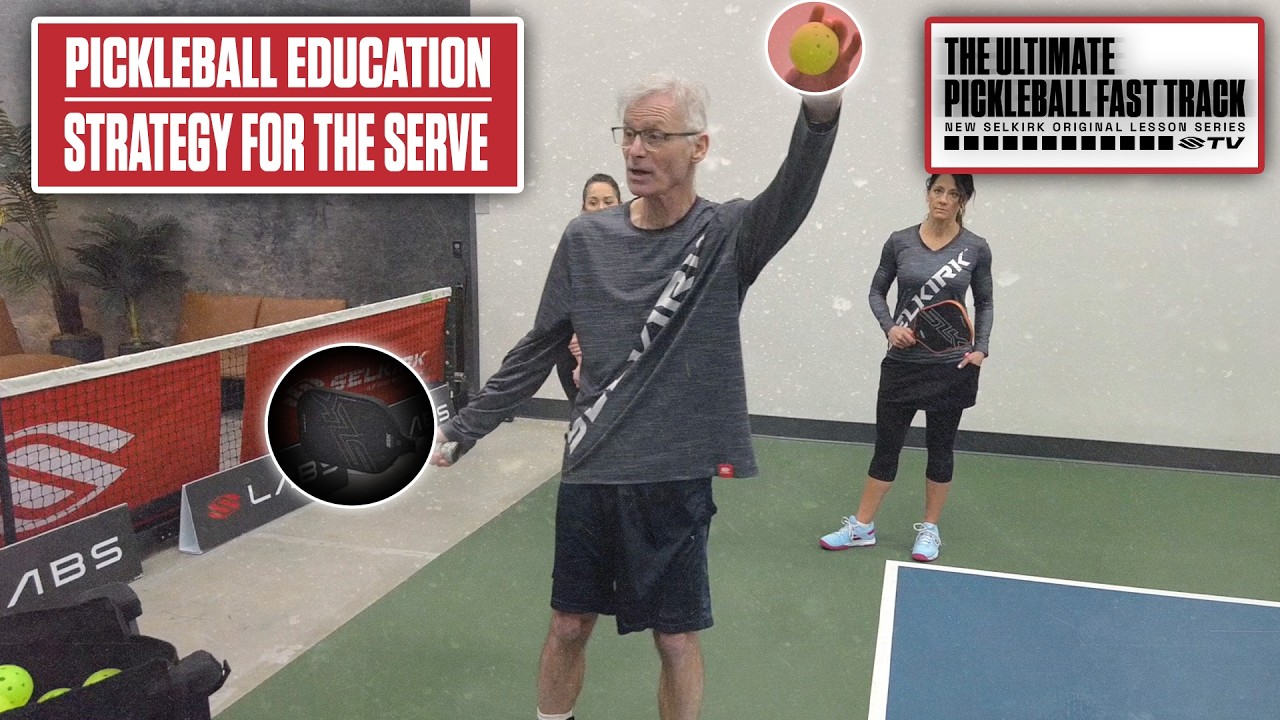
Master the Pickleball Serve: Drop vs. Volley Infographic
The pickleball serve is the foundation of every point, and mastering it separates beginners from competitive players. Whether you’re learning the beginner-friendly drop serve or advancing to the more aggressive volley serve, understanding the rules and mechanics will transform your game.
 The Dink PickleballThe Dink Media Team
Three Drills That Make Your Pickleball Volley Automatic
Technique means nothing without reps, and the best way to build reps is a cooperative to competitive progression.
Hardy structures his drilling in three stages: cooperative, then cooperative competitive, then fully competitive.
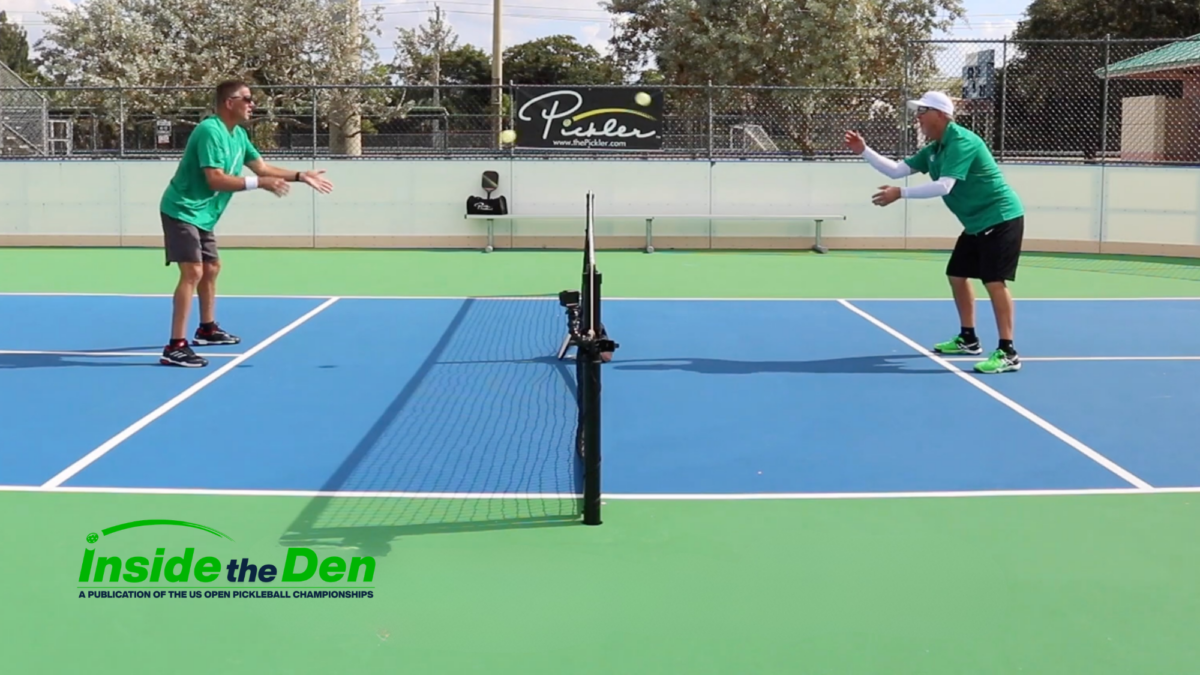
- Cooperative: both players keep the ball alive at a controlled pace so you groove the poke, roll, and flick without pressure.
- Cooperative competitive: add a target or a mild stakes element so you start reading the ball while still building volume.
- Competitive: keep score and play out the speed ups, so the shot holds up when it actually matters.
You can build fast hands without a partner, too.
A wall is one of the most underrated tools in the game, and this Yahoo Sports guide to wall drills for faster hands lays out speed up and counter patterns you can do solo.
Pair that with a step-by-step hand speed drill and your reaction time at the net will climb fast.
💡
Heads up: hundreds of thousands of pickleballers read our free newsletter.
Subscribe herefor cutting edge strategy, insider news, pro analysis, the latest product innovations and more.
Frequently Asked Questions
What is the most important pickleball volley to learn first?
Start with the poke, since it's the lowest risk pickleball volley of the three and the one you'll use most at the kitchen line. Once it's clean and stays in front of you, add the roll and then the flick.
How do I stop popping up my pickleball volley?
Keep contact out in front of your body and shorten your motion, since most pop ups happen when the ball drifts behind you. If the ball is low, poke it, and save the aggressive over-the-ball motion for balls at or above the net tape.
What is the difference between a poke, a roll, and a flick?
Ball height decides all three: you poke a low ball with a short punch, roll a net-height ball with your shoulder to add topspin, and flick a ball at or above the net tape by coming over the top. Same net position, three different tools.
Where should I aim my flick?
Aim at your opponent's feet, or as Austin Hardy puts it, their shoelaces. It's the hardest spot to defend, since your opponent has to move fast or take it out of the air awkwardly, and both often produce a weak pop up you can put away.
When should I reset instead of speeding up?
Reset when the incoming ball is low and difficult, and only speed up when the ball is high enough to attack cleanly. A drop volley that lands in the kitchen keeps you neutral and alive for the next exchange.
Anuncie Aqui / Advertise Here
Sua marca para o mundo Pickleball! / Your brand for the Pickleball world!





 English (US) ·
  Portuguese (BR) ·