
 English
  Spanish
  Portuguese
  German
  Italian
  Japanese
  French
  Polish
  Russian
  Netherlands
  Hungarian
  Turkish
  Videos
  Thedink Pickleball

The two handed backhand roll is one of the most effective third shot weapons in pickleball. Here are five keys to hitting it with topspin, accuracy, and consistency.
The two handed backhand roll is the shot that separates players who grind out neutrals from players who actually create offense on their thirds.
If you have been relying on a slice third shot drop, you already know the problem.The ball arrives soft and dead, your opponent reads it immediately, and suddenly you are defending instead of advancing.
This breakdown covers every piece of the two handed backhand roll, from grip to swing path to shot selection, based on the full instructional breakdown from Richard Pickleball on YouTube.
Love pickleball? Then you'll love our free newsletter. We send the latest news, tips, and highlights for free each week.
Why Most Players Get the Grip Wrong
The first thing you need to fix is your right wrist position.
Most players coming from a tennis background will pronate their right wrist, turning the paddle face over before contact.
That technique works, but it comes with a major cost. Your contact zone shrinks dramatically.
If the ball is even slightly behind you, you are stuck with nowhere to go.The better approach is to keep your right wrist neutral, pointing the paddle straight forward.
Your paddle face stays more open, your contact window gets much bigger, and you can handle balls that are out front or pushed back on you without panicking.Here is exactly how to set up the grip:
- Right hand: neutral wrist, paddle pointed forward, no pronation
- Left hand: one finger behind the paddle face for support, two to three fingers plus thumb wrapped around the grip
- Right hand sits slightly higher on the paddle to accommodate hand size
- Left hand placement is what generates the spin, not the right hand
This grip setup lets you get around the outside of the ball no matter where it arrives.
Whether you are going cross court or down the line, your paddle angle already sets you up to brush the outside of the ball consistently.
What Does "Left Hand Acceleration" Actually Mean?
Left hand acceleration is the entire engine of this shot.
When you hit the two handed backhand roll, your right hand is essentially just carrying the paddle along for the ride.
Think of it this way: your right arm can only pull back. It cannot generate topspin on its own.The more you rely on your right hand, the flatter and more predictable your ball becomes.
Your left hand, on the other hand, can drive upward and forward at the same time.
That is what puts heavy topspin on the ball and lets you hit it high over the net while still getting it to dip into the kitchen.
The mental cue is simple. Take your left hand fast to your shoulder.That single thought handles your follow-through, your spin rate, and your accuracy at the same time.
If you find yourself popping balls up on your third shots, this is almost always the issue.
Check out these 3 fixes that stop you from popping up dinks for more context on why the arm swing direction matters so much.
💡
Need some new pickleball gear? Get 20% off select paddles, shoes, and more with code THEDINK at
Midwest Racquet SportsHow Should Your Legs Move During the Swing?
Your legs should not move at all once you have set up for the shot. This is one of the most common mistakes players make on the two handed backhand roll.
Pushing up with your legs as you swing adds power you do not need and destroys your contact consistency. This is a drop or a hybrid, not a drive.Extra leg drive is leaving your mechanics exposed.
Get low before you swing. Stay low through the swing. Let your left hand do the accelerating while your lower body stays planted and stable.
This is what gives you repeatable contact point after contact point.
If you want to aim better, point your feet at your target when you are still learning.Eventually you can take the ball cross, line, or anywhere in between from the same stance, but the foot pointer is a reliable training cue while the mechanics are still being built.
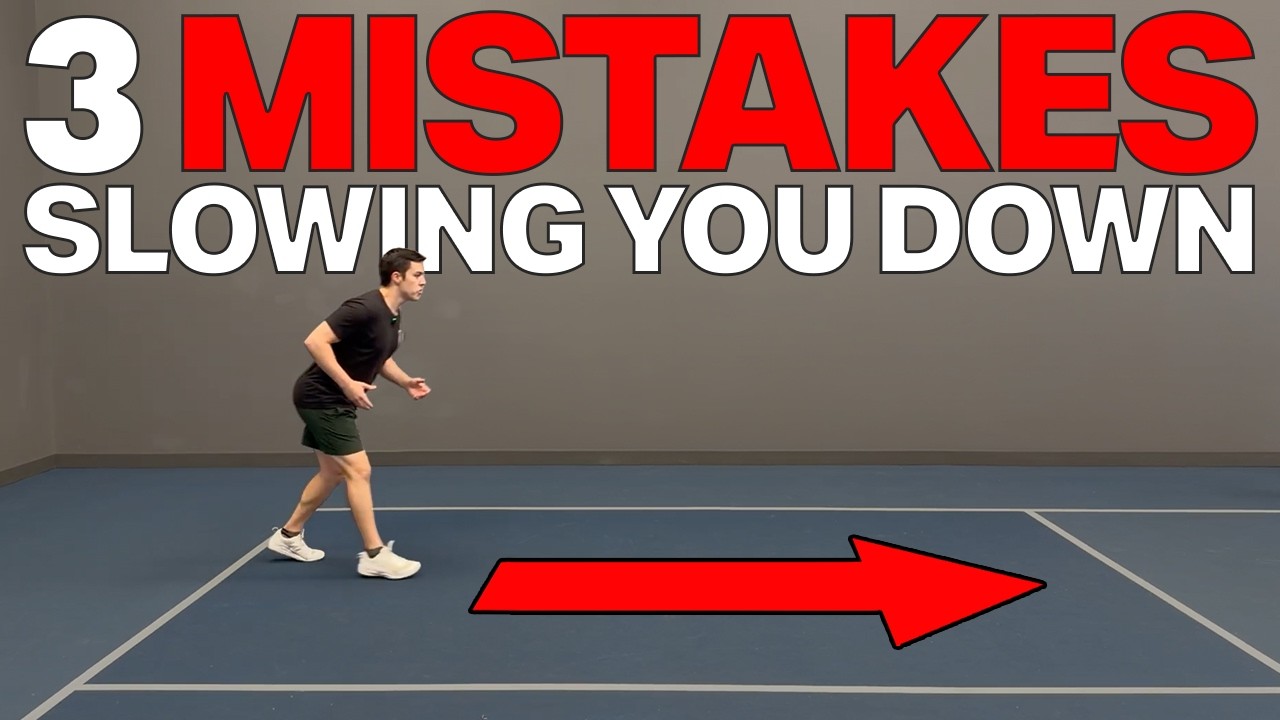
3 Pickleball Footwork Mistakes That Are Losing You Points
Most players lose points to their feet, not their paddle. Coach Ty Woody shares the pickleball footwork fixes that cover the court in two to three steps.
 The Dink PickleballThe Dink Media Team
The Two Shot Types You Need to Practice
Not every third shot situation calls for the same ball.
There are two distinct versions of the two handed backhand roll, and knowing when to use each one is what makes this shot genuinely dangerous.Shot Type 1: The High Topspin Drop
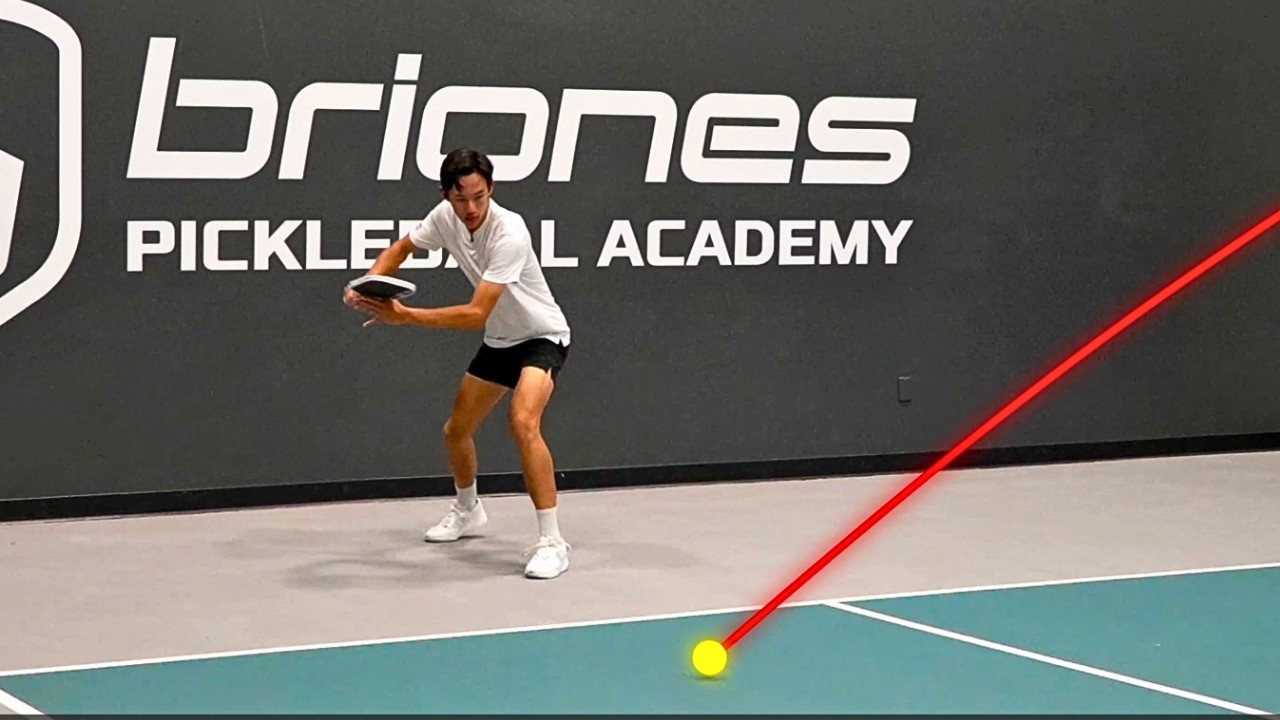
This is your standard third shot drop with topspin instead of slice. Your swing path is steep, around 45 to 60 degrees upward.
More of your left hand acceleration goes into spin rather than forward momentum.
The result is a ball that comes up, bounces high, and still lands inside the kitchen.
This works best against tall players who like to reach in, or any time you are on your back foot and need margin.
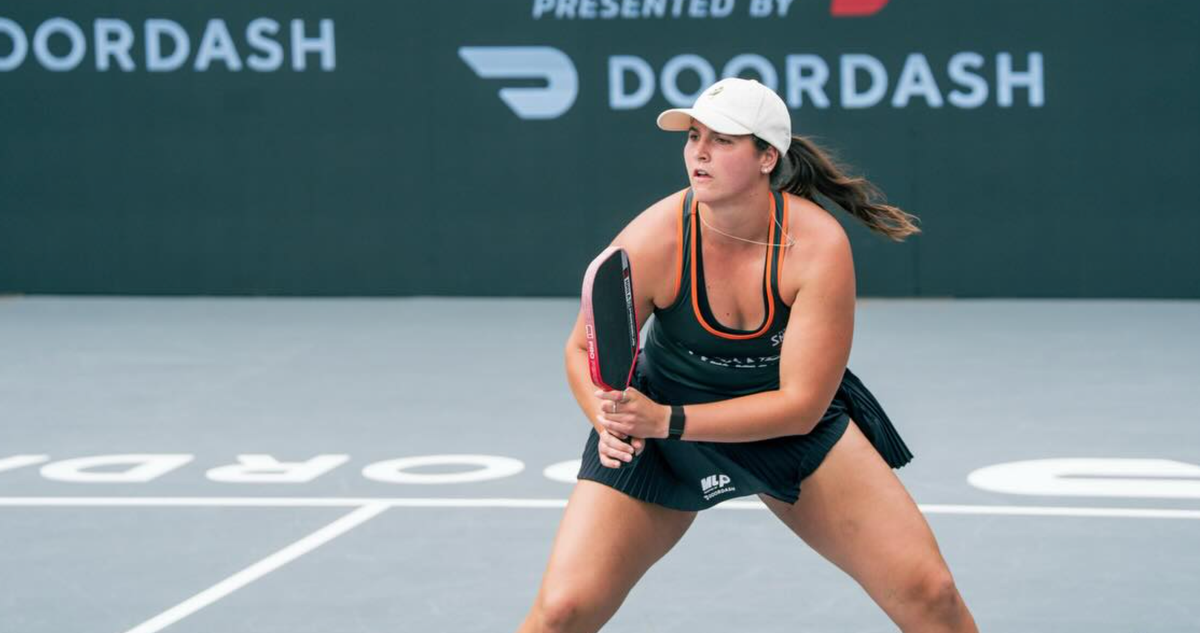
The Best Pickleball Players Aren’t Following the Rules Anymore
Modern pickleball isn’t won by coloring inside the lines. More and more, the most successful players are also the most creative.
 The Dink PickleballZoey Weil
Shot Type 2: The Linear Hybrid Drop
This is the shot you will use most of the time once you have built the mechanics. Your swing path is lower and more forward.
Your follow-through goes out toward the target instead of up toward your shoulder.This ball travels fast and low, bouncing right on or just behind the kitchen line.
It forces shorter players to take the ball at their feet or catches opponents who are switching late to get to the line.
The tradeoff is less margin for error. If you decelerate even slightly on this version, the ball goes into the net.
That is why constant left hand acceleration is non-negotiable on the linear ball.
The good news is that if you do miss, you will miss long rather than short, which forces your opponent out of the kitchen.
Understanding when to pick each option is part of the third shot drop vs. drive decision that better players make automatically.
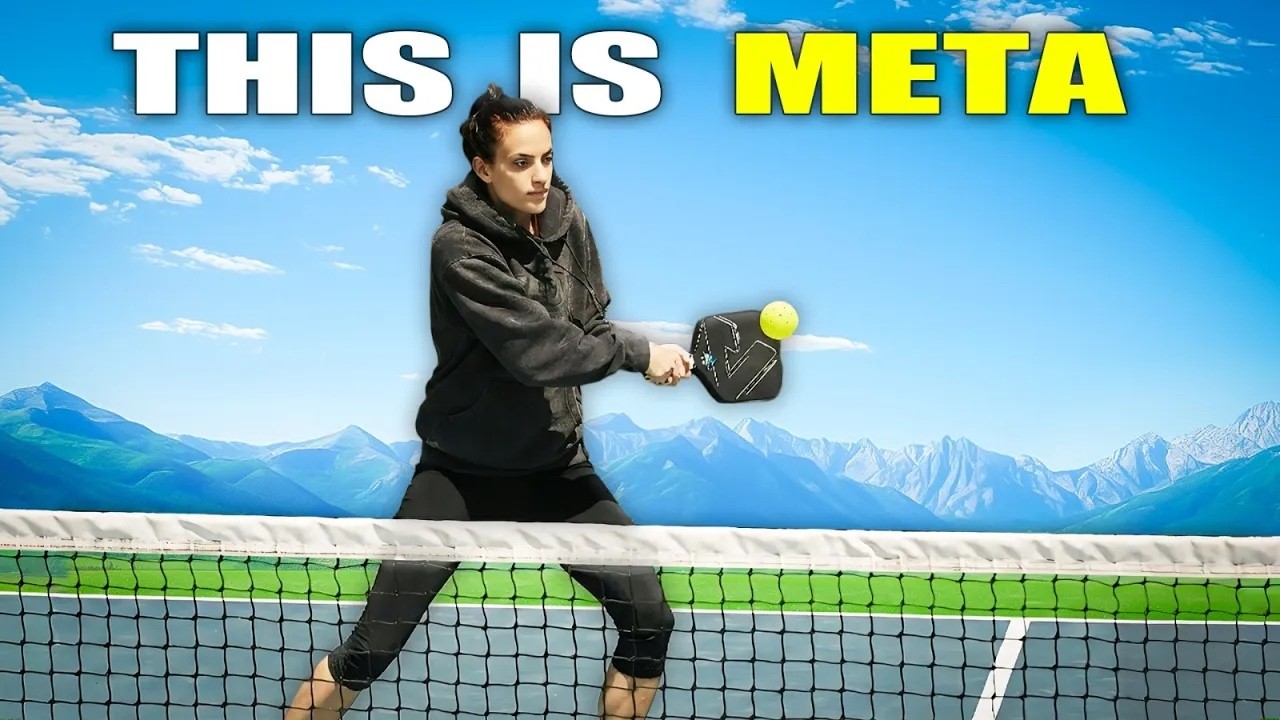
6 Pickleball Shots Shaping the Future of the Game
The pickleball shot landscape is evolving fast, and the players who master these six techniques will have a serious competitive advantage. From the two-handed backhand to the off-the-bounce combo, here’s what you need to know to stay ahead in 2026.
 The Dink PickleballThe Dink Media Team
Cross Court vs. Down the Line: Which Should You Default To?
Default to cross court on almost every two handed backhand roll. The geometry works in your favor and you need to understand exactly why.
Going cross court gives you more court to land the ball in. The net is lower in the middle. You can hit the ball harder because you have more space to work with.And most importantly, you are almost always hitting to your opponent's backhand when you go cross from the backhand side.
Going down the line looks appealing, but the risks stack up fast. The net is higher at the sideline. The kitchen is effectively shorter from that angle.
Your opponent can Erne you. And you have to hit across your own body to get there cleanly.There are absolutely times to go line, particularly if your opponent is cheating cross or you need to change the pattern.
But make cross court your baseline and only go line when you have a clear read on why it is the right call.
For players building out their all-court game, this kind of directional discipline is exactly what separates 4.0 from higher level play.These 3 skills that separate 4.0 from 5.0 pickleball players cover exactly that mindset shift.
How to Hit a Crosscourt Dink in Pickleball
The crosscourt dink is one of pickleball’s most versatile shots, and mastering it requires understanding paddle positioning and footwork fundamentals. Learn the exact technique used by top players to control the net and dominate rallies.
 The Dink PickleballThe Dink Media Team
What Happens When the Ball Gets Deep on You?
This is where the neutral right wrist grip pays off the most.
Because your paddle is not pronated, you can reach back, get under a deep ball, and still roll it into the kitchen from your back leg.That shot is essentially impossible with the pronated wrist method. Your contact window closes the moment the ball gets behind your front hip.
But with the neutral setup, your swing can accommodate a much wider range of ball positions.Richard Pickleball demonstrates this clearly in the video, showing how he can take a ball from his back foot and still roll it cross court to the corner with heavy topspin.
That kind of shot puts real pressure on your opponent and lets you crash the net behind it.
If you want to understand the bigger picture of why the two handed backhand is worth building, here is why you need a two handed backhand in pickleball as part of your overall game.
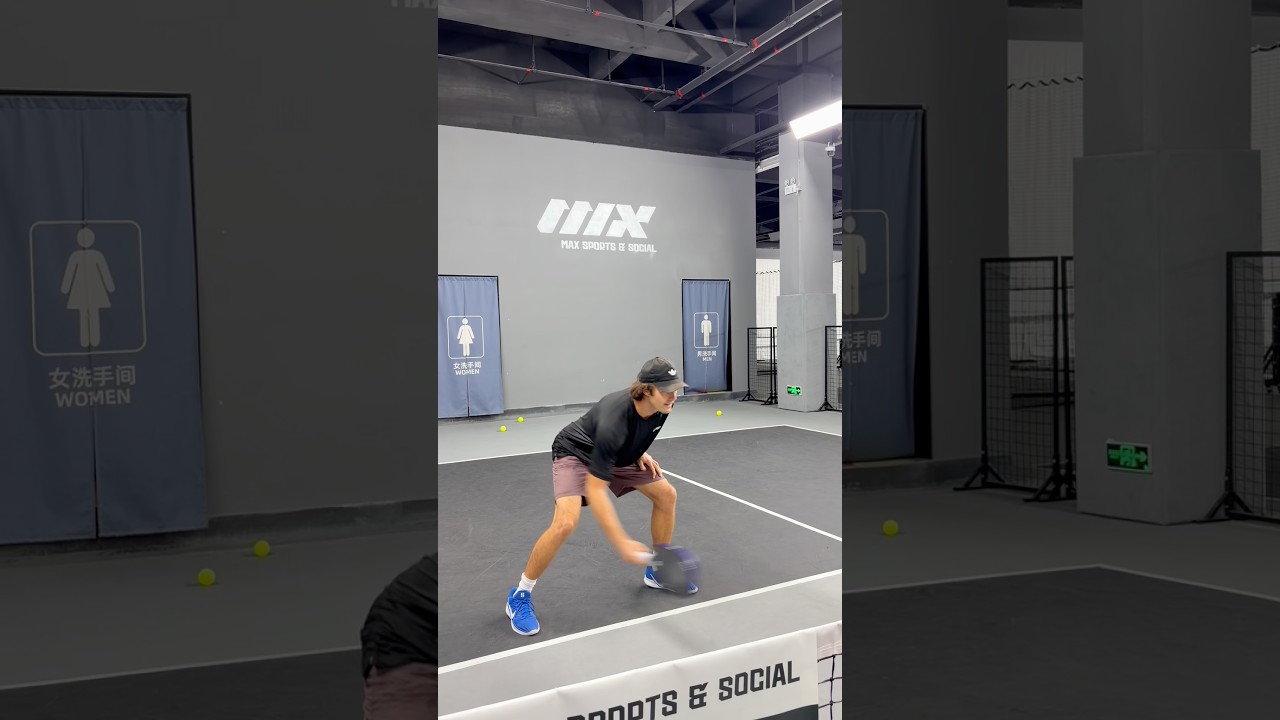
Don’t Drop from Deep Behind the Baseline: ‘Drive Yourself Out of Trouble’ Instead
Conventional pickleball wisdom dictates you play soft to get yourself out of hot water from deep on the court. Drop until you can work your way in, right? Wrong, says Tyson McGuffin.
 The Dink PickleballAlex E. Weaver
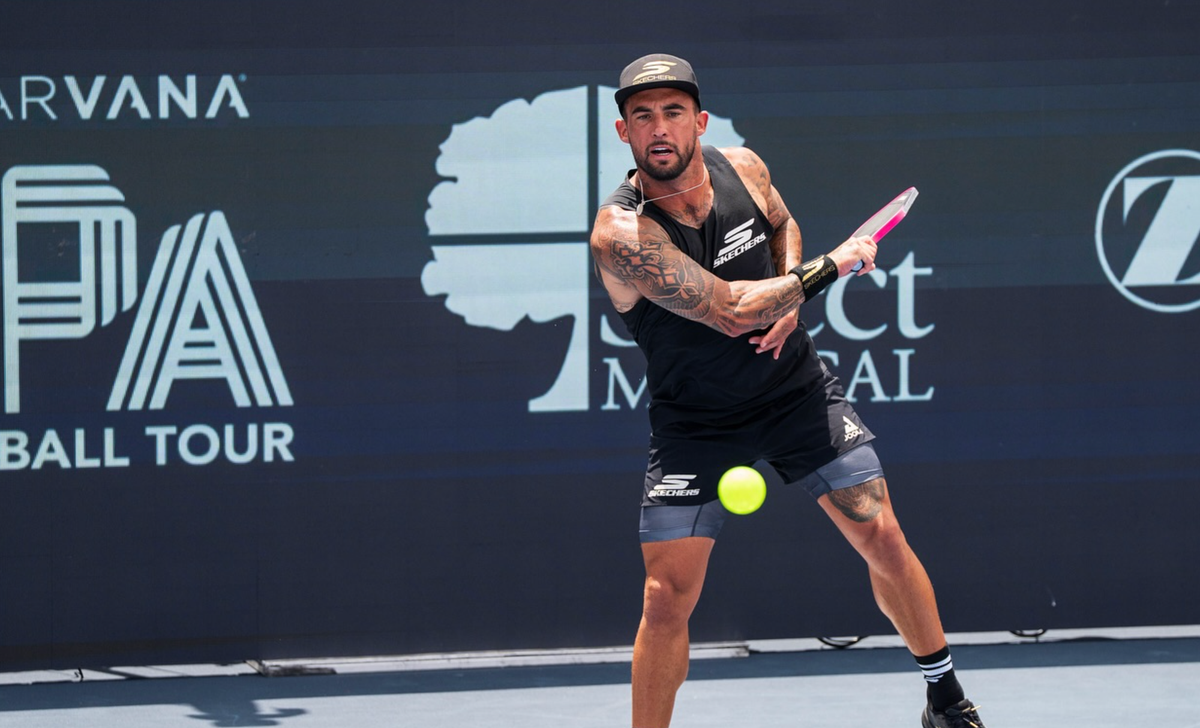
A Quick Checklist Before You Take This to the Court
Before you rep this shot in a live game, run through these checkpoints to make sure the fundamentals are locked in:
- Right wrist stays neutral. Paddle pointed forward, no pronation.
- Left hand drives to your shoulder fast. That is where your spin and accuracy come from.
- No leg movement during the swing. Get low first, then stay there.
- Eliminate the backswing. Your setup is compact. The paddle starts low and close to your body.
- Pick your shot type before the ball arrives. High topspin drop for margin, linear hybrid for pressure.
- Default cross court. Only go line when you have a specific reason.
This shot is not a trick play or a specialty weapon.
It is a repeatable, high-percentage third shot that puts topspin on the ball and forces opponents to deal with a bouncing ball instead of a dead slice they can read all day.
Players who are serious about building a complete transition game should also work on how the two handed backhand fits into their broader third shot drop approach and the three drop shots every solid player needs to know.Once you can hit the linear hybrid with consistency, you will notice opponents backing up to avoid it.
Why the Third-Shot Drive Matters More Than Ever
The drive isn’t replacing the drop. It’s setting it up. In today’s ultra-fast-paced game, that matters more than ever.
 The Dink PickleballAndrei Daescu
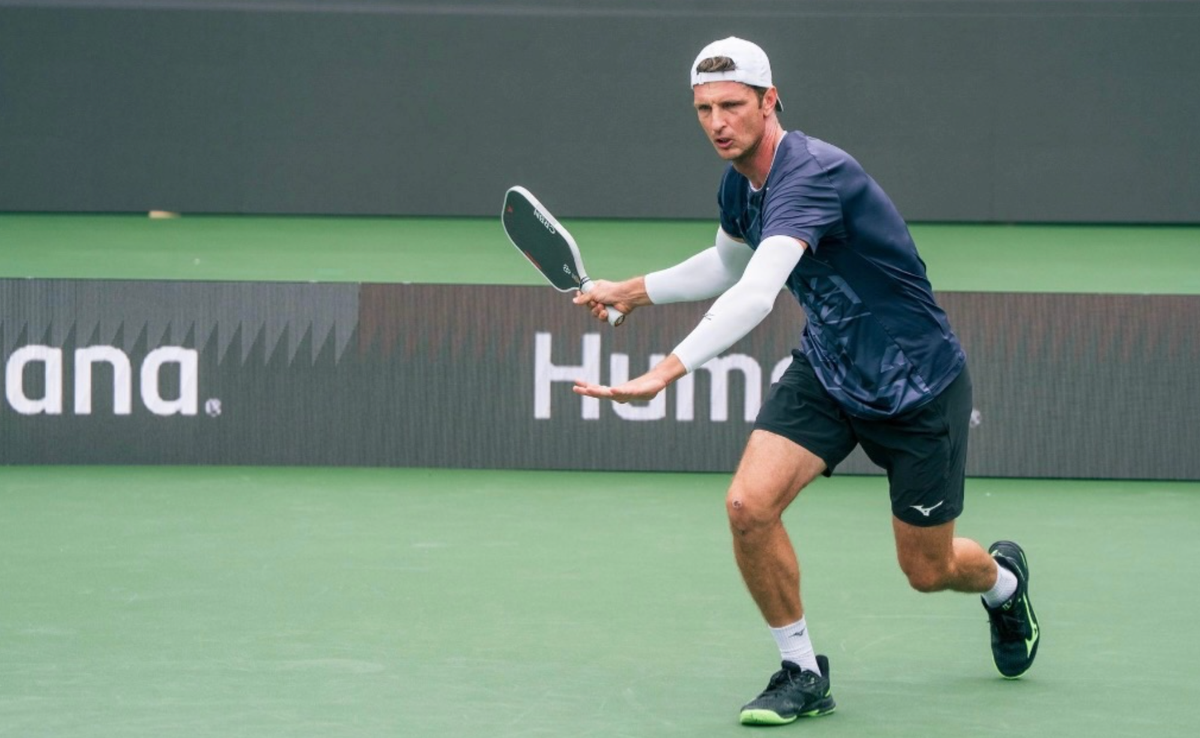
That is when you go back to the high topspin drop and watch them get jammed by a ball they were not expecting.
The two shot combination is what makes this approach genuinely hard to defend.
For more on how to create offense off your third and build toward the kitchen, here is what to do when you are stuck at the baseline and need a reliable plan to get in.If you are also working on your roll shot in other areas of the court, this breakdown on how to hit a roll shot with fast topspin is worth bookmarking.
And if you want to see how topspin principles apply to the kitchen game as well, these 7 topspin dink keys will connect the dots across your whole game.
💡
Heads up: hundreds of thousands of pickleballers read our free newsletter.
Subscribe herefor cutting edge strategy, insider news, pro analysis, the latest product innovations and more.
Frequently Asked Questions
What is the two handed backhand roll in pickleball?
The two handed backhand roll is a topspin third shot drop hit with both hands on the paddle, using left hand acceleration to generate spin and control. It is designed to bounce low and fast near the kitchen line, putting pressure on opponents who are at or moving toward the non-volley zone. Unlike a slice, it produces an active ball that rises off the bounce and is harder to attack.
Should I pronate my right wrist on the two handed backhand?
Keeping your right wrist neutral is the better approach for most players. Pronating the right wrist shrinks your contact zone and requires precise footwork to get the ball out front every time. A neutral wrist lets you reach balls that are deep or wide without breaking down your mechanics.
How do I stop missing the two handed backhand roll into the net?
The most common cause is decelerating through contact. Your left hand must accelerate all the way to your shoulder on every single rep, even when the ball feels tricky or you are off balance. If your left hand slows down, the ball dies into the net.
Commit to a fast, full follow-through and the net misses will drop off quickly.
When should I use the high topspin drop vs. the linear hybrid drop?
Use the high topspin drop when you need extra margin, when your opponent is tall and reaches well, or when you are on your back foot. Use the linear hybrid when your opponent is shorter, switching late, or trying to back up and let your ball bounce. The linear ball is lower risk when you are accelerating well, but it has less margin if your mechanics break down.
Why should I go cross court instead of down the line on this shot?
Cross court gives you more court to land the ball in, a lower net in the middle, and a natural angle to your opponent's backhand. Going down the line puts you over the higher part of the net, shortens the kitchen from that angle, and opens you up to an Ernie from your opponent. Default cross court and go line only when you have a clear tactical reason.
Anuncie Aqui / Advertise Here
Sua marca para o mundo Pickleball! / Your brand for the Pickleball world!



 English (US) ·
  Portuguese (BR) ·