
 English
  Spanish
  Portuguese
  German
  Italian
  Japanese
  French
  Polish
  Russian
  Netherlands
  Hungarian
  Turkish
  Videos
  Thedink Pickleball

The pros know something most recreational players don't: a few fundamental adjustments eliminate the vast majority of mistakes. These 5 pickleball tips from elite players will transform how you approach every shot on the court.
Here's something that might surprise you: most of your mistakes on the pickleball court aren't about athleticism or reflexes. They're about positioning.
Pickleball tips from the pros reveal a pattern that applies to nearly every player, regardless of skill level. The errors you're making repeatedly come down to a handful of fixable fundamentals.
Once you understand what the best players do differently, you'll realize how much of your game has been working against you.
Love pickleball? Then you'll love our free newsletter. We send the latest news, tips, and highlights for free each week. Subscribe to our free newsletter.
1. The Laser Pointer Theory: Why Your Paddle Position Matters More Than You Think
The first pickleball tip sounds almost too simple, but it's the foundation everything else builds on. Cracked Pickleball, a YouTube channel focused on competitive pickleball instruction, breaks down what they call the "laser pointer theory."
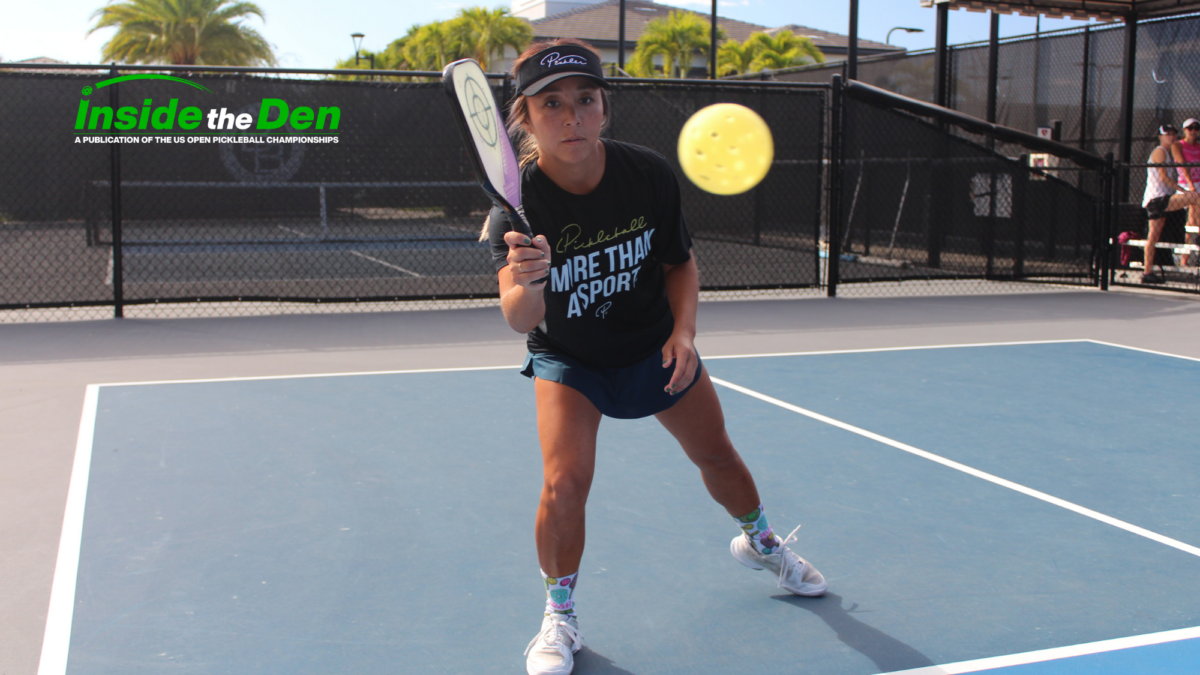
Imagine a laser beam projecting from the tip of your paddle. That beam should point directly at the ball whenever it's on your opponent's side of the court.This isn't just about tracking the ball visually. When your paddle points at the ball, your hips naturally align with it too. Your entire body positions itself to respond to whatever comes back at you. Most players drop their paddle to their side between shots, which means they're always playing catch-up when the ball arrives.
But here's where it gets smarter. Right-handed players should actually point slightly to the left of the ball, not directly at it. Why? Because your backhand covers more of your body than your forehand does. By shading toward your backhand, you're already prepared for the majority of shots your opponent will hit. Lefties flip this and point slightly right.
This positioning applies everywhere on the court, from the baseline through the transition zone and up to the kitchen line. The laser pointer theory keeps you ready at all times, which eliminates a huge category of errors before they happen.
2. The Seesaw Effect: Paddle Height Changes Everything
Once you've mastered paddle positioning, the next pickleball tip involves understanding how paddle height shifts as you move through the court. Cracked Pickleball calls this the "seesaw effect," and it's one of the most underrated concepts in the sport.
- At the baseline, your paddle should sit low, near your hips. Your opponent is trying to push you back and hit your feet, so you're already prepped for low balls.
- As you move forward into the transition zone, raise your paddle to about belly button height.
- This middle ground lets you handle both low rolls and occasional volleys that pop up.
Finally, when you reach the kitchen line, bring your paddle all the way up to chest height. The kitchen is where the fastest exchanges happen. Your paddle needs to be high so you can block volleys without moving much. When dinking comes into play, you have enough time to drop low and come back up, so prioritize being ready for speed.
Here's the bonus: your paddle height also becomes an out-call indicator. If a ball is above your paddle at any position, it's probably out. This simple tool helps players who struggle with line calls.
10 Pickleball Mistakes Holding You Back
From forcing points too early to avoiding your backhand, here’s exactly what to fix to get to the next level.
 The Dink PickleballThe Dink Media Team

3. Shot Selection: Stop Trying to Hit Winners Every Time
One of the biggest mistakes recreational players make is trying to hit the perfect winner on every shot. Cracked Pickleball simplifies shot selection by giving you exactly two target zones to aim for.
- The first zone sits directly between the middle of the net and the baseline.
- The second zone is the mirror image on the other side of the court.
That's it. Just two spots.
Why does this work? The net is slightly lower in the middle, giving you more margin for error. You're also staying away from the sidelines, which means fewer out-of-bounds shots. When you aim toward the middle rather than the sideline, your opponent has fewer attacking angles. They can't hit as hard crosscourt or down the line because the ball isn't positioned for those shots.
There's also a positioning benefit for you. If your opponent hits to the sideline, you have to move a ton to cover it. But if they hit to the middle, your angle of attack is so much smaller that you can defend it by leaning. Your feet stay balanced, your hands stay ready, and your reactions improve.
Choose whichever target zone feels more natural based on where you are on the court. If you're at the baseline, hitting crosscourt to the middle zone usually feels easier. From midcourt, hitting down the line to the middle zone might be more natural. The key is having a simple decision-making framework instead of trying to be creative on every shot.
💡
Need some new pickleball gear? Get 20% off select paddles, shoes, and more with code THEDINK at Midwest Racquet Sports
Here's where many players fall apart: they don't understand when to split step. A split step is when you split your feet apart, get low, and prepare to move. Most players think they should split step right when their opponent makes contact with the ball.
That's backwards.
You should split step before your opponent makes contact. This way, you're already low and balanced when they hit. Once they make contact and you see where the ball is going, you can immediately shuffle or sprint without wasting time getting down. If you split step after they hit, you've lost valuable milliseconds.
The split step is the foundation of proper footwork. It keeps you low, centered, and stable. From there, you can shuffle side to side, run forward, or backpedal without losing balance. This is why footwork separates advanced players from intermediate ones.
After you split step, your movement depends on where the ball is going. Shuffle side to side to keep that low position. Run forward with your momentum going ahead. Backpedal if you need to retreat. The key is that you're already in a ready position before you move, not scrambling to get there.
5 Pickleball Skill Secrets to Reach 4.0+ Fast
Start with efficiency. Master that. Then move to prediction. Then pace control. Then resetting. Finally, work on your transition game.
 The Dink PickleballThe Dink Media Team

5. Managing Spin: Use Their Spin Against Them
The final pickleball tip addresses something that trips up advancing players: heavy spin. As you improve, your opponents improve too. They're hitting more topspin and backspin than ever before.
The solution is spin continuation. Instead of fighting their spin, you use it. Here's how it works: when your opponent hits topspin, it rotates one way. By the time it reaches you, it looks like backspin from your perspective. So you hit backspin back, which doubles their spin and neutralizes it.
The opposite is true for backspin. When they slice underneath the ball, it rotates backward. From your side, it looks like topspin. So you hit topspin back.
The mistake most players make is trying to match heavy spin with equally heavy spin. If someone hits a heavy topspin serve, you don't try to hit heavy topspin back. That's fighting fire with fire. Instead, you use the opposite spin, which makes the return way easier.
If your opponent isn't hitting much spin, treat the ball like a blank canvas. Generally, topspin is your safest bet. Even if they hit a little topspin, you can hit topspin back and be fine.
Heads up: hundreds of thousands of pickleballers read our free newsletter. Subscribe here for cutting edge strategy, insider news, pro analysis, the latest product innovations and more.
Frequently Asked Questions
What is the laser pointer theory in pickleball?
The laser pointer theory means imagining a laser beam projecting from your paddle tip that points directly at the ball. This keeps your paddle and body in the correct ready position at all times, so you're prepared for whatever your opponent hits back. Right-handed players should shade slightly left of the ball to favor their backhand, which covers more of the body.
Why does paddle height matter in pickleball?
Paddle height changes based on where you are on the court. At the baseline, keep it low near your hips. In the transition zone, raise it to belly button height. At the kitchen line, bring it to chest height. This positioning prepares you for the types of shots you'll face in each zone and helps you make out calls more accurately.
When should you split step in pickleball?
You should split step before your opponent makes contact with the ball, not after. This way you're already low and balanced when they hit, allowing you to move immediately without wasting time getting into position. Timing the split step correctly is one of the biggest footwork improvements you can make.
What are the two target zones for shot selection?
The two target zones are the middle of the court on both sides of the net, positioned between the net and the baseline. Aiming for these zones gives you more margin for error, keeps you away from sidelines, and limits your opponent's attacking angles. Choose whichever zone feels more natural based on your court position.
How do you handle heavy spin in pickleball?
Use spin continuation by hitting the opposite spin your opponent uses. If they hit topspin, hit backspin back. If they hit backspin, hit topspin back. This neutralizes their spin instead of fighting it. Avoid trying to match heavy spin with equally heavy spin, as that makes the shot much harder.
Anuncie Aqui / Advertise Here
Sua marca para o mundo Pickleball! / Your brand for the Pickleball world!




 English (US) ·
  Portuguese (BR) ·