
 English
  Spanish
  Portuguese
  German
  Italian
  Japanese
  French
  Polish
  Russian
  Netherlands
  Hungarian
  Turkish
  Videos
  Thedink Pickleball

What separates amateurs from higher-level players isn't usually one magical skill – it's a collection of small adjustments
You're out there grinding on the courts, hitting your dinks, working on your third shot drop. But something's not clicking. You're losing matches you feel like you should be winning.
The frustrating part? You can't quite figure out what's holding you back.Most players don't realize they're making the same fundamental mistakes over and over again, and those mistakes are costing them points every single game.
In a recent video, the team at Enhance Pickleball broke down five telltale signs that you're still playing like an amateur, along with exactly how to correct them.
Love pickleball? Then you'll love our free newsletter. We send the latest news, tips, and highlights for free each week.
1. You're Not Adjusting Your Strategy Based on Your Opponents
This is probably the biggest gap between amateur and advanced players. A lot of folks show up to the court so focused on executing their own game that they completely ignore what's happening on the other side of the net.
High-level players are constantly reading their opponents, figuring out what they're weak at, and then exploiting those weaknesses. You should be doing the same thing.
Be more patient, wait for better opportunities, and let them make the mistake.Start by noticing whether your opponent struggles more with aggressive play or defensive play. If you're dinking and every time you speed up the ball they miss, that's your signal to be more aggressive. Go for more attacks, deviate from the dinking pattern, and take advantage of their weakness. But if they're counterattacking your speedups successfully, dial it back.
The same principle applies from the back of the court on your third shot. If your opponents are missing your drives or giving you weak shots you can attack, keep driving. But if they're hitting them deep and keeping you pinned back, switch to more drops and work the point gradually.
Another adjustment: target their weaker side. If you notice your opponent has a shaky backhand dink, attack that side more often during dinking rallies. From the baseline, do the same thing. Make their weaker side work harder, and you'll win more points.
The #1 Mistake Killing Your Shot-Making Consistency in Pickleball
When you depend on wrist action, you lose control. You lose repeatability. And in pickleball, consistency is everything.
 The Dink PickleballThe Dink Media Team
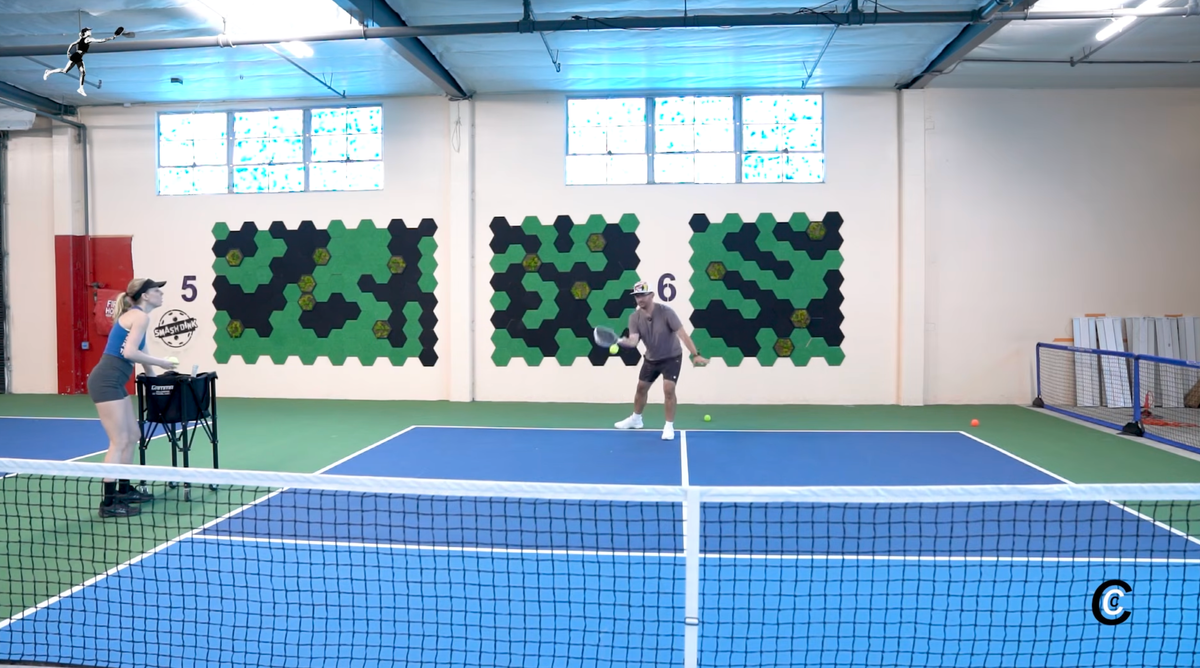
2. Your Split Step Timing Is Off (Especially on Resets)
The split step separates players who can react quickly from those who are always a half-step behind. But here's where most people mess up: they either don't use it at all, or they use it at the wrong times.
The split step should happen right as your opponent is making contact with the ball. You're getting into a low stance, which gives you a lower center of gravity and lets you push off side to side faster. When you're in the transition zone trying to move forward, especially on resets, this becomes critical.
Another crucial moment for the split step is right after you hit your return of serve. You're following the ball in, and you need to be ready for whatever your opponent throws at you on the third shot, whether it's a drop or a drive. If you don't split step and they hit a hard drive at you, you're going to be caught flat-footed. That's how you lose points you shouldn't lose.
3. You're Attacking From Bad Positions
This one's sneaky because it feels like you're being aggressive, which sounds good. But attacking when you're in a disadvantageous position is actually one of the fastest ways to lose a point.
Let's say you're at the back of the court and your opponent hits a hard shot at you. That's not the time to attack. You're in a bad spot, and if you drive it back hard, they can just attack you again. You're stuck in a cycle where you can't move forward.
The rule of thumb: when you're behind the baseline and making contact with the ball below your knee, you're not in an attacking position. You have to hit the ball up, which means even if you hit it hard, your opponent can hit down on it. That's a losing proposition. Instead, use your soft game.
Get the ball in the kitchen, move to a neutral position, and wait for a better opportunity.This happens a lot at the kitchen line too. Players get antsy during dinking rallies, feel pressure, and bail out by going for a hard shot. Then they get countered and lose the point. Advanced players stay calm in these situations. They wait. They might dink for 100 balls until someone finally hits it just a little bit higher, and that's when they attack. Patience wins points.
7 Pickleball Shortcuts to Reach 5.0 Faster
None of these shortcuts are revolutionary on their own. But stacked together, they create an entirely different player.
 The Dink PickleballThe Dink Media Team
4. Your Overhead Mechanics Are Costing You Power
About 90% of players are doing their overhead smashes completely wrong, which means they're leaving a ton of power on the table.
The biggest mistakes: not turning your shoulders and using the wrong grip. If you're just arming the ball, you're not going to generate much power at all. You need to turn your shoulders and your body so you can rotate fully into the shot. And if you're using a western grip, you're limiting your wrist mobility. Use at least an eastern or continental grip when you're hitting overheads.
When you need to move back to get to a lob, don't backpedal. You'll lose balance and you won't be able to use your full body. Instead, turn and cross your leg over the other leg so you can get back quicker and stay on balance. If crossing over feels too awkward, you can turn and shuffle back instead. Just don't backpedal, because it's slower and more dangerous.
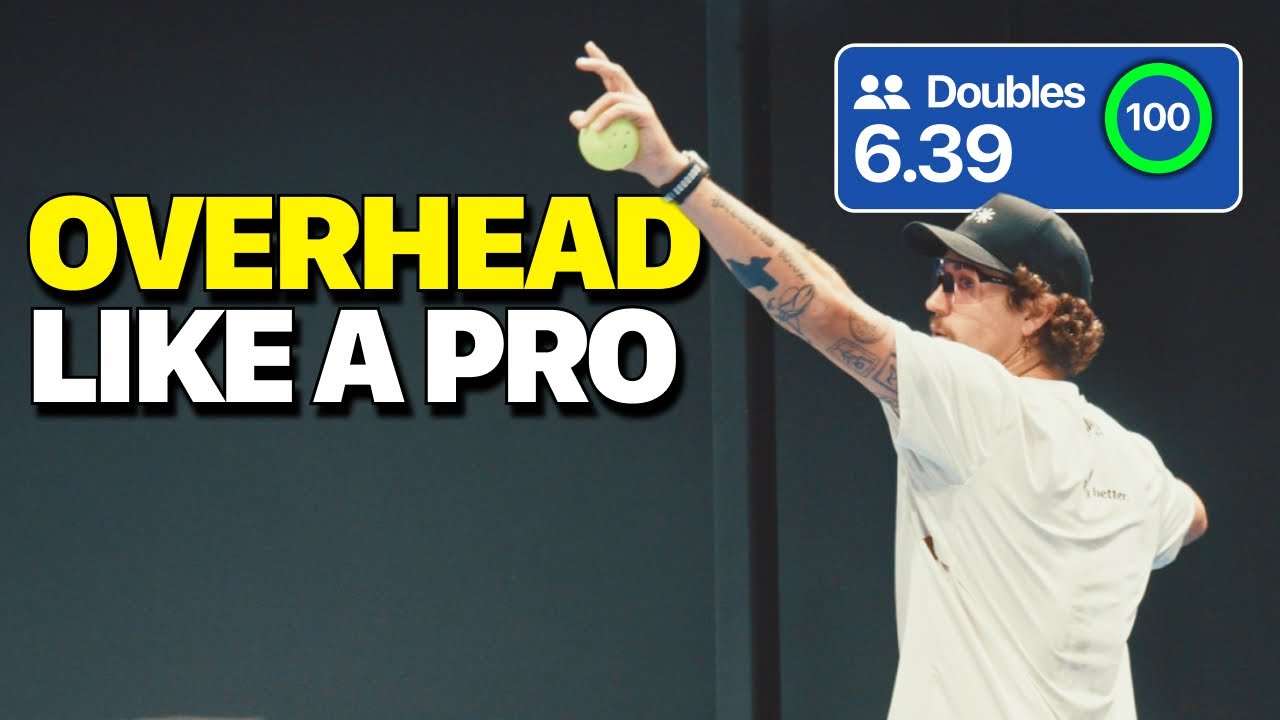
Use This 3-Part Motion to Master Overhead Smashes in Pickleball
Separate your elbow and load up on your shoulder; reach toward the ball; follow through all the way toward the ground. But before all that: footwork.
 The Dink PickleballThe Dink Media Team
5. You're Not Aggressive Enough When You're Up and They're Back
Here's a situation that comes up constantly: you're at the net, your opponent is at the baseline, and they hit you a mid-height ball. This is your moment to put pressure on them and win the point. But a lot of amateur players just float it back softly, which lets their opponent move forward and get back into the point.
If you have any ability to hit the ball down over the net because it's higher, use as much power as you can. Your goal is to win the point while they're back. You don't want to bring them forward.
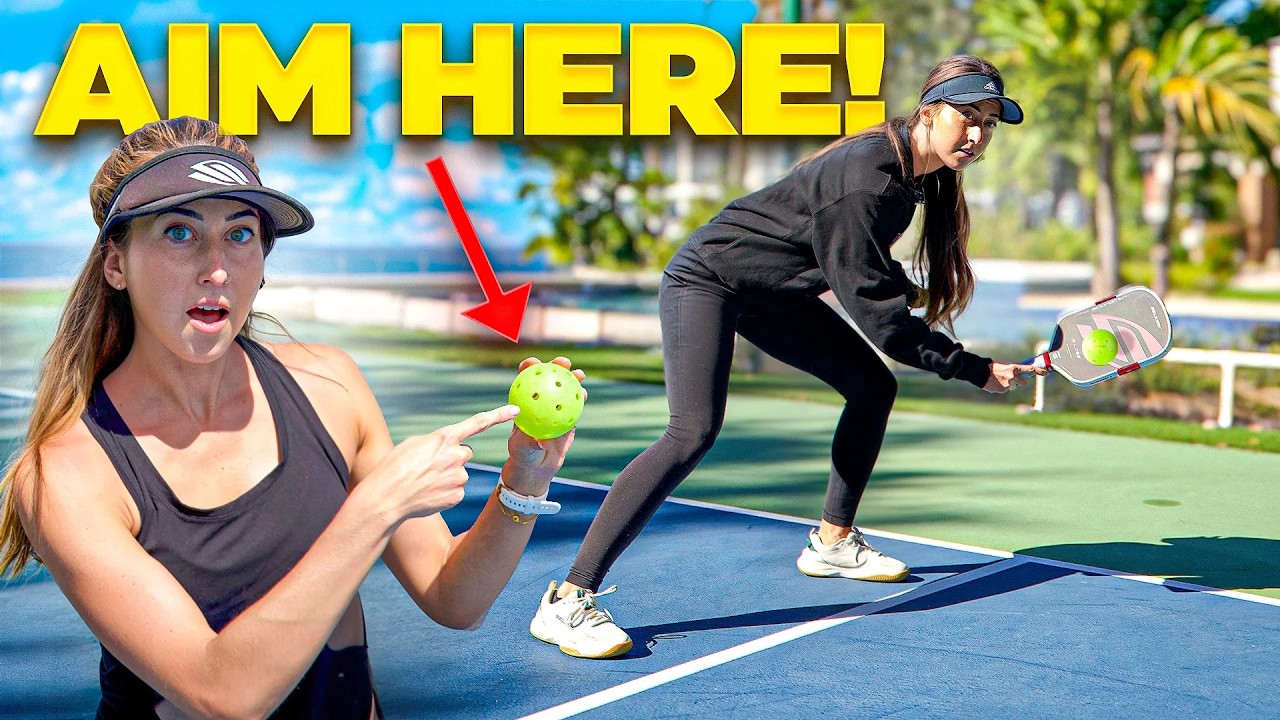
Smart Shot Decisions Beat Power in Advanced Pickleball
Every rally is a series of small choices, and those choices determine whether you win or lose.
 The Dink PickleballThe Dink Media Team
Even if the ball is a little lower, you still want to roll it at their feet with topspin so they can't come in. The topspin is critical here because it makes the ball accelerate even more when it reaches their feet, making it harder for them to use a reset.
If your opponent is driving at you instead of dropping, use a punch volley with less spin. You need a firmer grip because these shots are faster and you're more likely to mishit if you're trying to flick too much. Keep your wrist firm, aim for their feet, and keep them back. The technique changes slightly, but the goal stays the same: prevent them from moving forward.
Heads up: hundreds of thousands of pickleballers read our free newsletter. Subscribe here for cutting edge strategy, insider news, pro analysis, the latest product innovations and more.
Anuncie Aqui / Advertise Here
Sua marca para o mundo Pickleball! / Your brand for the Pickleball world!



 English (US) ·
  Portuguese (BR) ·