
 English
  Spanish
  Portuguese
  German
  Italian
  Japanese
  French
  Polish
  Russian
  Netherlands
  Hungarian
  Turkish
  Videos
  Thedink Pickleball

Most players think gluing yourself to the kitchen line is always the right call. In women's and mixed doubles, that assumption is quietly costing you points.
Most players treat the kitchen line like a finish line.
You get there, you stay there, and you try to outlast your opponent. In women's and mixed doubles, that thinking will get you burned.The women's game operates on a completely different set of principles than men's doubles.
The firefights last longer, the dinking is more aggressive, and the court positioning is more fluid.
This breakdown pulls from a masterclass session featuring BK Pickleball on YouTube, where BK worked through women's and mixed specific techniques with Danea from All Things Pickleball. Here is exactly what they covered and how to apply it to your game.
Love pickleball? Then you'll love our free newsletter. We send the latest news, tips, and highlights for free each week.
Why the Women's Game Looks So Different From Men's
The core difference comes down to power and putaways. In men's doubles, a player can often end the point quickly with raw strength and reach.
In women's doubles, points are constructed over longer exchanges.
That means more topspin dinking, more movement forward and backward, and longer hands battles.It also means your mixed doubles strategy around when to attack and when to reset has to be far more deliberate.
If you want a wider view of how the modern game has shifted, the four key strategies to winning in 2026 sets up the same ideas across every format.
1. Playing Off the Kitchen Line Is Not a Mistake
This is the biggest misconception players carry into women's and mixed doubles. Stepping back from the kitchen line is not passive. It is a weapon.
When you play a step or two behind the line, the ball has time to bounce up to its apex.
The higher the ball, the more you can do with it. Hitting from a low position near your feet gives you almost no options.Playing off the line also opens up angles. The closer you are to the net, the more compressed your shot choices become.
Give yourself room and you can shape the ball crosscourt or down the line with real intent.
It is the same spacing logic behind the 5 pickleball shots you must master before 2026.
You will also see this shift what type of shots you hit. Women playing at the top level tend to use aggressive topspin dinks rather than push dinks.
Topspin lets the ball dip down after it clears the net, which means you can aim higher with more margin and still land it short.Footing matters here too, which is why the best women's pickleball shoes of 2025 reward lateral grip over cushioning.
💡
Need some new pickleball gear? Get 20% off select paddles, shoes, and more with code THEDINK at
Midwest Racquet SportsHow Do You Know When to Move Forward or Back?
This is where the dink classification system comes in, and it is one of the most useful frameworks you can put into your game right now.
Think about every dink you hit in one of two categories:
- Dink One (neutral): Your opponent receives it comfortably. Their feet stay planted. Their body is balanced. You have not created any pressure.
- Dink Two (pressure): Your opponent shows discomfort. Their feet shuffle, they stutter step, or they reach into the kitchen and pull back.
Here is the critical point. A dink two is not about how hard you hit. It is about what your shot does to your opponent's body.
A soft lofted dink that jams someone or pulls them wide is a dink two. A hard flat dink they step into comfortably is a dink one. Read the response, not the shot.When you hit a dink two and see that uncomfortable reaction, that is your cue to step up to the kitchen line, plant your feet, and have your paddle ready.
A popup is likely coming. If they recover and return neutrally, retreat back to your midcourt position and reset the pattern.
For more on how to win these extended exchanges, this breakdown on how to win a dink battle using 3 steps pros use is worth reading alongside this.
Kitchen Positioning in Pickleball: Stop Reaching for Dinks
Kitchen positioning is one of the most misunderstood fundamentals in pickleball. Cori Elliott’s latest coaching breakdown reveals why recreational players stay stuck and how to move your feet instead of reaching.
 The Dink PickleballThe Dink Media Team
2. Use Topspin to Create Angles, Not Just Pace
In the men's game, you see a lot of flat push dinks. In women's doubles, topspin dinking is the primary weapon used to force movement and create offense.
Topspin does two things for you.
- First, it gives you more net clearance because the spin pulls the ball down after it peaks.
- Second, it lets you aim at the corners and sidelines with confidence because the ball curves into the court rather than sailing wide.
That shift is the same reason pros abandoned the slice shot in 2025 on so many kitchen exchanges.
When you combine topspin with the midcourt positioning above, you are shaping the ball from a spot where you have real angle options. That is the setup.You are building toward a dink two response, not just trying to survive the rally.
Layering that into 6 essential pickleball shots to master for 2026 gives the pattern somewhere to go.
If your topspin dink keeps flying long or popping up, check out this resource on why your pickleball topspin fails and how to fix it.
Topspin in Pickleball: The Complete 3-Step Progression Guide
It’s one of those shots that looks effortless when done right, but feels impossible when you’re the one holding the paddle
 The Dink PickleballThe Dink Media Team
3. Firefights in Women's Doubles: Who Is the Aggressor?
When the speed up happens and the hands battle begins, most players just react.
The better approach is to track one simple thing: are you hitting high to low or low to high?
- High to low: You are the aggressor. You have control of the exchange.
- Low to high: You are the defender. You are trying to neutralize, not attack.
The mistake players make is continuing to attack when they have become the defender.
If the ball is sitting below your knees and you are reaching down, hitting hard from there just gives your opponent a predictable pop up to put away.
Two signs tell you it is time to reset instead of attack.
- First, you feel yourself leaning backward.
- Second, you are having to hit consistently from below the net tape.
Both signals mean the same thing: step back, reset, and restart the point.
Understanding when to reset is one of the habits that separate better players from the pack.This article on the habit that separates a 4.0 pickleball player from you connects directly to this idea.
6 Pickleball Hands Battle Habits That Win Exchanges
Most rec players lose the hands battle before it even starts. A touring pro shared the six habits that keep him calm, compact, and in control at the kitchen line.
 The Dink PickleballThe Dink Media Team
Why Does Retreating During a Firefight Actually Help?
Stepping back during a fast exchange feels counterintuitive. It feels like giving up ground. But it is actually how you buy time and restore control.
The further you are from the net when resetting, the more room the ball has to drop safely into the kitchen.
If you are right on the line hitting low to high, that reset is nearly impossible to keep down. You will pop it up almost every time.Distance equals margin.
Step back, reset the ball softly into the kitchen, let the exchange slow down, and then rebuild your offense from the midcourt position all over again.If your resets keep failing under pressure, this breakdown on why your pickleball reset fails and how to fix it will show you where the breakdown usually happens.
Decision Matrix: When to Attack or Reset in Pickleball
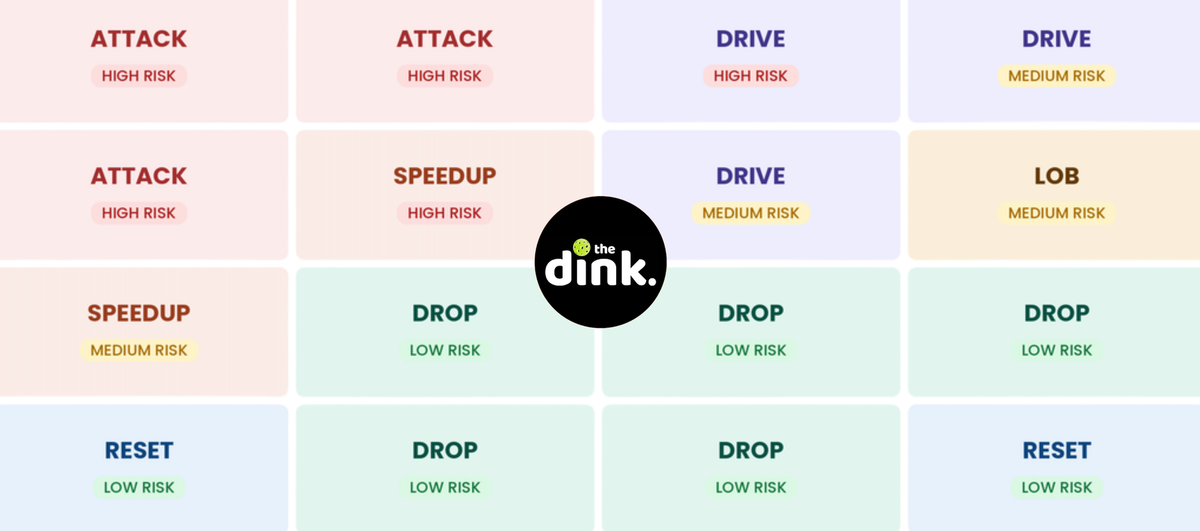
Pickleball is really all about two key factors: your court positioning and the height of the ball. This matrix decodes the game for you.
 The Dink PickleballThe Dink Media Team
4. Mixed Doubles Court Coverage: The 80/20 Reality
Here is something most recreational mixed doubles players do not talk about clearly.
In mixed doubles, the female player tends to see about 80% of the balls, even when the male player appears to be covering a large portion of the court.
The reason is straightforward.
Opponents know that speeding up directly at a strong male player with a big forehand is a low percentage play. So they target the female side instead.This is not disrespectful strategy. It is just how the game is played at every level.
Once you understand this, you can use it.
The female player should embrace her role as the point builder: creating angles, drawing uncomfortable responses, and setting up popup opportunities for her partner to finish.That division of labor is the same one you see in elite men's pairings too, which is why who Ben Johns could play men's doubles with in 2025 came down to who builds versus who finishes.
For a deeper look at how the pros approach this court split, this article on mixed doubles strategy with 7 fixes that win more points goes further into the tactical breakdown.
5 Pickleball Court Coverage Mistakes in Doubles
Pickleball court coverage in doubles breaks down the same way every time: one player covers the line, one covers the middle. Here are the five mistakes that expose both.
 The Dink PickleballThe Dink Media Team
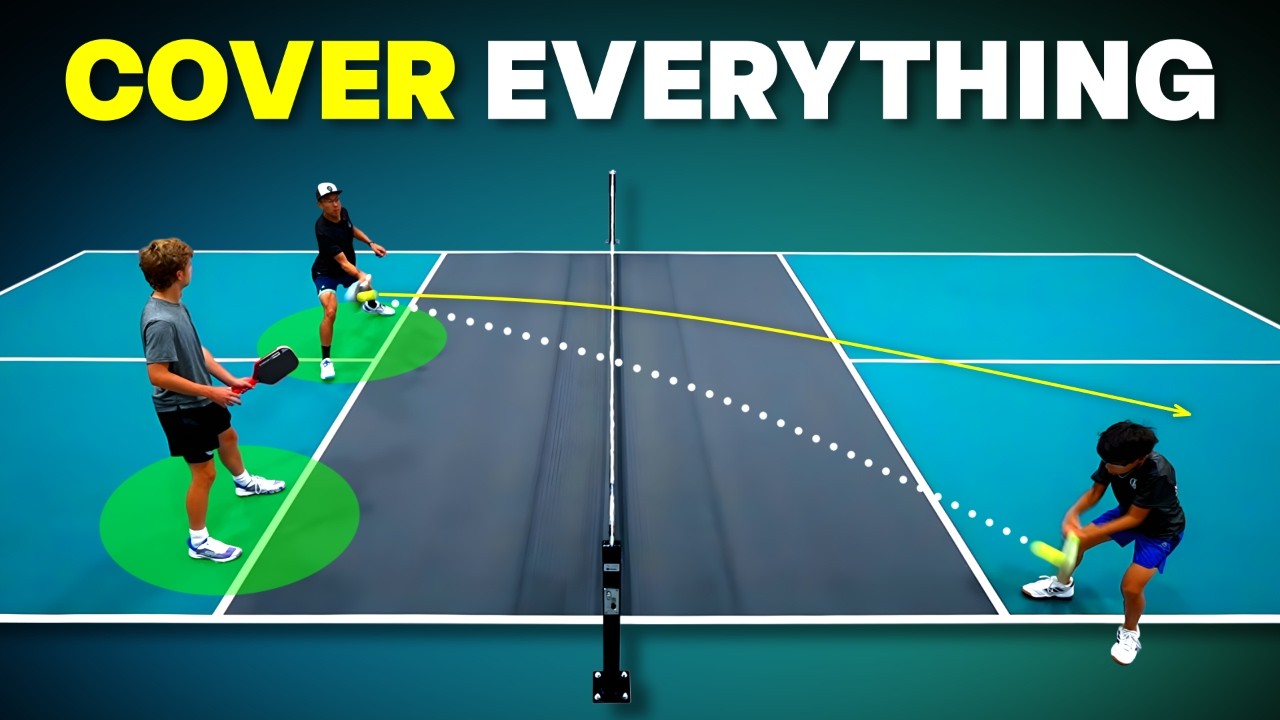
5. How to Poach Without Running Into Your Partner
The poach only works cleanly when your partner gives you the room to move.
This is where the female player's midcourt positioning becomes essential for the male player's ability to step in and attack.
- If the female partner is glued to the kitchen line and a popup comes, the male player cannot move forward to attack without running directly into her. The point is lost before the swing happens.
- When the female player steps back to the midcourt position, she creates a lane. The male partner can now move forward, take the ball out of the air, and initiate offense without the collision risk.
This also compresses the court when the female is being targeted.
Instead of standing on her side of the court and watching her cover the full width, the male player should slide toward the middle and reduce the available targets for opponents.
They still have the far sideline to aim at, but the high percentage middle and crosscourt targets disappear.
Compressing toward your partner also protects against the most common pattern: opponents hitting to the female side repeatedly and keeping the male player completely out of the point.Squeezing in forces opponents into lower percentage shots.
If the other team does make a perfect placement to the open corner, tip your cap.
That is the trade you want to make. Take away the easy shots and make them earn the hard ones.For more on how court positioning decisions shape your results, this piece on 5 pickleball court coverage mistakes in doubles covers the most common errors players make.
And if you are trying to understand when the roles flip, meaning when it is the male player being targeted and the female player should compress and cover, the same principles apply in reverse.
Read the targeting pattern, adjust accordingly, and keep the dominant player in position to attack.
One more adjustment that makes the poach more comfortable for both players: the female partner needs to genuinely step back, not just lean back or angle away.
A full step off the line signals to the male partner that the lane is clear. Without that clear signal, hesitation kills the attack opportunity.Spacing rules like this also intersect with kitchen positioning, so the 7 new USAP pickleball rules for 2026 are worth a read before your next tournament.
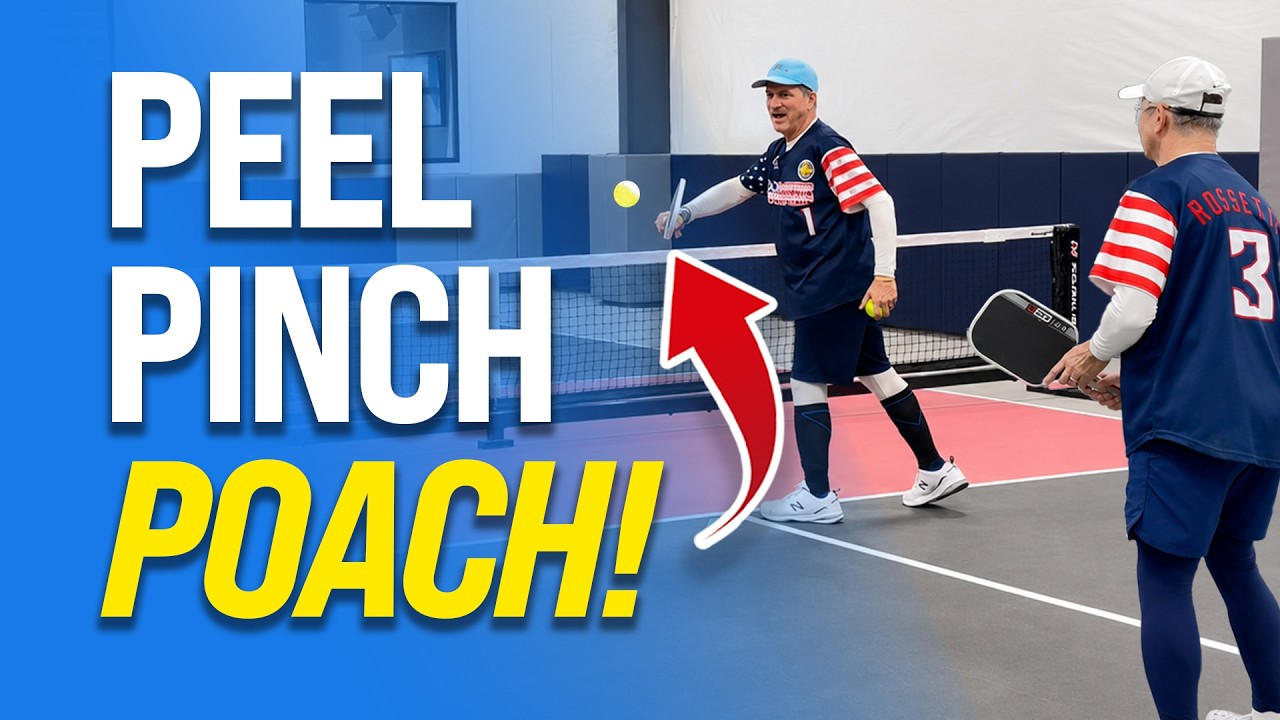
Peel, Pinch, Poach: The Staggered Transition in Pickleball
Most doubles teams move to the kitchen at the wrong time and in the wrong order. The staggered transition in pickleball fixes that with a simple three-step system called Peel, Pinch, Poach.
 The Dink PickleballThe Dink Media Team
Putting the System Together
These five adjustments are not isolated tips. They work as a connected system.
- You play off the line to create angles and hit topspin dinks.
- You use the dink one and dink two system to decide when to step up and when to hold back.
- You track aggressor versus defender status in firefights to know when to attack and when to reset.
In mixed, the female player builds the point and creates space for the male partner to poach and finish.
None of this requires more power.
It requires better reads and smarter positioning. That is exactly what separates recreational play from high level play in women's and mixed doubles.
For building the consistency to execute these patterns under pressure, this resource on how to build pickleball dink consistency is a good next step.
And if you want to understand the broader shot selection principles behind when to attack versus when to slow things down, this breakdown on 3 ways to slow down a pickleball game without hitting harder connects directly to the reset concepts covered here.Start with the dink one and dink two framework. Apply it in your next session and watch how quickly your movement decisions become more intentional.
💡
Heads up: hundreds of thousands of pickleballers read our free newsletter.
Subscribe herefor cutting edge strategy, insider news, pro analysis, the latest product innovations and more.
Frequently Asked Questions
Should women always play off the kitchen line in pickleball?
Playing off the kitchen line is a strategic choice, not a rule. It works best when you want to let the ball rise to its apex so you can hit topspin dinks with better angle and margin. If the ball is sitting up and you have an offensive opportunity, step forward and take it.
What is the difference between a dink one and a dink two in pickleball?
A dink one is a neutral dink that leaves your opponent comfortable and balanced. A dink two is any dink that forces your opponent into an uncomfortable position, shown by shuffling feet, a stutter step, or a reaching motion. The label is about what the dink does to your opponent, not how hard you hit it.
In mixed doubles, why do opponents target the female player?
Opponents target the female player because speeding up at a male player with a strong forehand is a high risk play. The female side is statistically the safer target in most mixed doubles matchups. Understanding this lets both partners plan their positioning and coverage around that pattern.
When should you reset instead of counter in a pickleball firefight?
Reset when you start leaning backward or when you are hitting consistently low to high. Both of those signals mean you have become the defender in the exchange, and attacking from that position usually produces popups. Step back, reset softly into the kitchen, and rebuild the point.
How do you poach effectively in mixed doubles without disrupting your partner?
The female partner needs to step back to the midcourt area so the male partner has a clear lane to move forward and attack. If the female partner stays glued to the kitchen line, there is no room to initiate offense without risking a collision and losing the point. A genuine backward step is the signal that the lane is open.
Anuncie Aqui / Advertise Here
Sua marca para o mundo Pickleball! / Your brand for the Pickleball world!





 English (US) ·
  Portuguese (BR) ·