
 English
  Spanish
  Portuguese
  German
  Italian
  Japanese
  French
  Polish
  Russian
  Netherlands
  Hungarian
  Turkish
  Videos
  Thedink Pickleball

Pickleball decision making is what actually separates 3.5 players from 4.0 and above. Here are the 6 choices you need to start making correctly every rally.
Pickleball decision making is the skill most 3.5 players overlook completely, and it is costing them more points than any technical flaw ever could.
You can have a clean stroke and still lose the rally by making the wrong call in the wrong moment. The shot choice matters just as much as the shot itself.These six decisions come from Coach Jess | Athena Pickleball on YouTube, and they cover the exact choice points that show up in nearly every single rally at the 3.5 level.
Love pickleball? Then you'll love our free newsletter. We send the latest news, tips, and highlights for free each week.
Decision 1: Drive or Drop on the Third Shot?
This is the decision most 3.5 players treat as fixed, when really it should change based on ball height, court position, and what you are comfortable executing under pressure.
First, know your preference. If your third shot drop is not reliable yet, it is completely fine to drive the majority of your thirds.
Drive the first one, gain some ground through the transition zone, and then look to drop the next ball when you are in a better position.
Second, read the ball trajectory and where it lands in the transition zone.Split the transition zone into two sections: the front half and the back third plus behind the baseline.
- Ball sitting up in the front half: Drive it at 60 to 70 percent power. Do not swing all out or you will sail it long if they move.
- Ball low in the front half: Drop it. You are moving forward with momentum and hitting low to high is a recipe for an error.
- Ball sitting up from deep: Drive is fine. Your weight is coming forward and you can look for a fifth shot drop.
- Ball low from deep, weight on your heels: Drop. Stabilize with your back leg and find the kitchen.
The players who swing for the fences from their back heel are the ones who get blocked and cannot recover. Do not be that player.
For more on third shot placement rules that work every time, that breakdown is worth reading before your next session.
Decision 2: Move Forward, Hold, or Retreat Through Transition?
Your movement decision after the third shot should be based entirely on what your ball is creating, not on a default habit.
Think of it as a traffic light system.
- Red light: Your ball is sitting up above their shoulders and they are about to slam it. Stop moving forward. You may even need to take a step back.
- Yellow light: They are taking the ball out of the air at chest height or stepping off it to swing straight through. Make some ground but be fully stopped when they make contact.
- Green light: Your ball has an arc heading down toward their feet and their paddle is facing up. That means they have to hit up. Move now.
Paddle up with ball coming down is always your signal to advance. Just stop again once they make contact so you can assess your next move.
Understanding the three keys to mastering the transition zone will help you build this read into your game faster.
💡
Need some new pickleball gear? Get 20% off select paddles, shoes, and more with code THEDINK at
Midwest Racquet SportsDecision 3: What Do You Do on the Fourth Shot?
The returning team has a built-in advantage off the return of serve. The fourth shot is where 3.5 players routinely throw that advantage away.
You have three options, in order of preference.
- Take it out of the air above the net. This is the best option. It keeps the serving team back and applies immediate pressure. Reach in and make contact at chest height or higher.
- Drop step and drive it at their feet. If the ball is dipping below the net at the point of contact, do not force a volley. Take one step back, let the ball rise off the bounce, and drive it from a stronger position.
- Short hop and concede to the kitchen. If their drop or drip is really good and there is no clean drive available, take the ball softly with a short hop and reset into the kitchen. Stay in the point.
The mistake most beginners make is insisting on every ball out of the air regardless of height.
That leads to low-to-high volleys that pop up and get attacked. Read the ball and pick the right option from the list above.
The Fourth Shot Drop: Shape the Rally, Win More Points
The fourth shot drop is one of the most overlooked shots in pickleball, yet it’s critical for controlling points at the net. Master this shot and you’ll immediately see improvement in your game.
 The Dink PickleballThe Dink Media Team
What Should You Hit When You Are Still in the Transition Zone?
Most 3.5 players drive every ball they see in transition off the bounce, and it keeps them stuck.
If you have not made it to the kitchen line yet and the ball bounces near you, drop it. Send it to your opponent's feet and use that time to close the gap.
Hitting low to high over and over with no progress is how you stall your own offense.Now, what about balls you can take out of the air through transition?
- If your drop was clean and they are scrambling or short hopping, attack through transition. Their paddle position will tell you if there is opportunity.
- If your drop was sloppy and they are stepping into it from a high position, reset. Do not try to attack from your knees when they are hitting high to low at you.
The rule is straightforward: if you can hit the ball high to low, attack. If you are going to be hitting low to high, stabilize and reset.
Check their paddle. Check your position.Those two reads take less than a second and they will save you from a lot of unforced errors through the middle of the court.
The shot selection scale for every situation is a useful reference for training your instincts here.
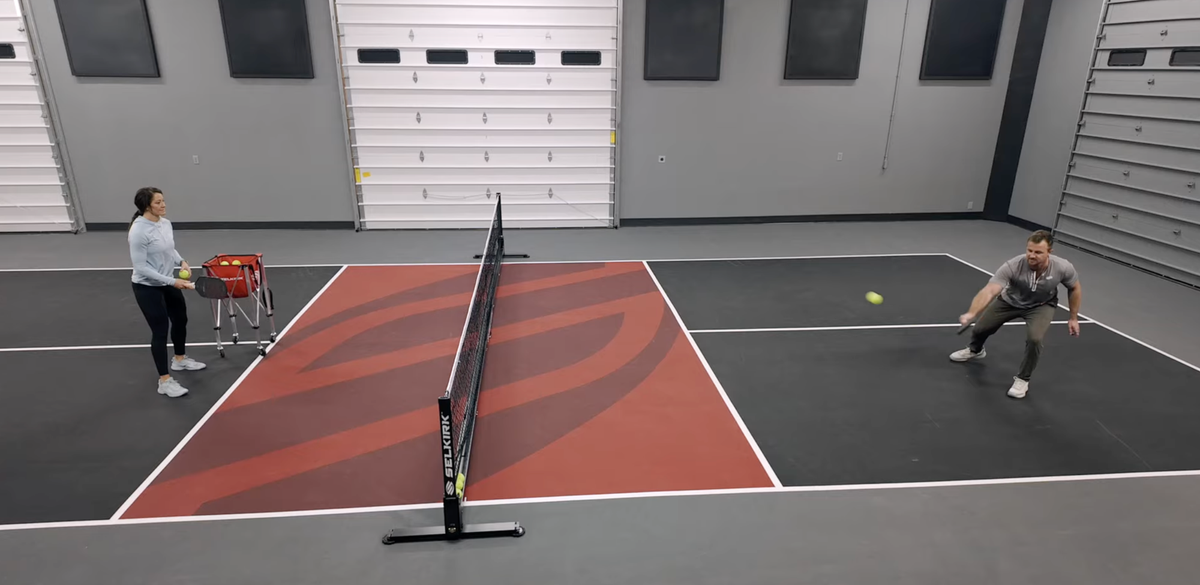
Master the Pickleball Transition Zone: Attack or Reset
The best players in the world aren’t just comfortable in the transition zone – they actively use it to their advantage
 The Dink PickleballThe Dink Media Team
Decision 5: Volley or Let It Bounce at the Kitchen Line?
At the kitchen line, the volley-or-bounce question comes up dozens of times per game.
This is the most repeated pickleball decision making moment in the entire sport.
The first use case is defensive.
If someone is pushing you off the line with heavy crosscourt dinks, keep your weight slightly toward them, bend your knees, and cut the ball off at the pass.
The contact rule is simple. If you can reach in and make contact at knee height or higher, consider volleying.If the ball drops below your knee before you reach it, step back and take it off the bounce.
The second use case is offensive. When you pull an opponent wide with an aggressive dink, too many players back off and hand them a comfortable reset inside the non-volley zone.
Instead, track with your paddle and bump that next ball out of the air. Then look for the put-away.Volley dinking is not just about defense. It is an offensive positioning tool that keeps opponents on their heels.
Pairing this skill with proven dinking drills will sharpen how quickly you read these moments in a real game.
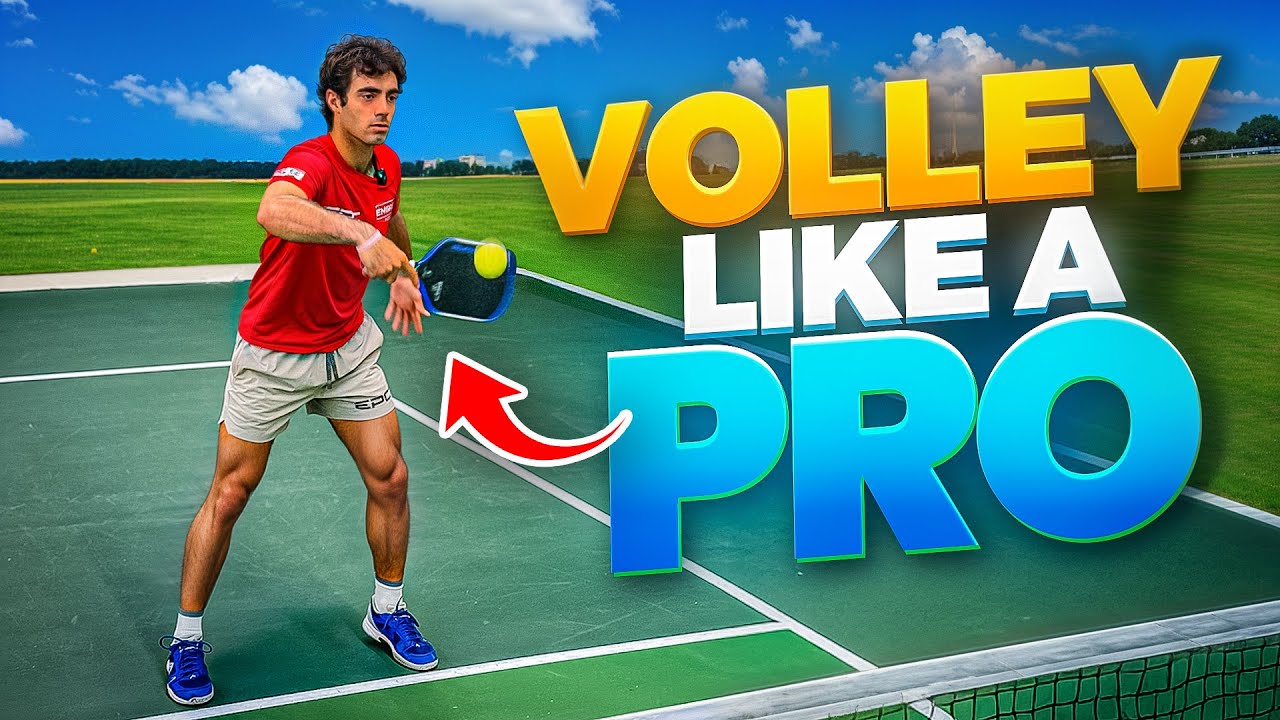
The Elite Volleying Technique That Beats Muscle in Pickleball
Stop trying to muscle your volleys. Start focusing on the mechanics that actually work.
 The Dink PickleballThe Dink Media Team
Decision 6: Keep Dinking or Speed It Up Off the Bounce?
Most players let their dink tolerance make this decision for them.
They hit a few dinks, get uncomfortable, and speed up regardless of whether the ball or their position actually supports it. That is backwards.
The correct triggers for speeding up off the bounce are specific.
- The ball sits up a little, giving you room to get it over the net cleanly.
- You are stable on both feet with your paddle in front of you.
- The ball lands further back in the kitchen rather than tight to the net.
The times you should absolutely not speed it up are equally specific.
- You have been pulled off the court and are crossing your feet or falling backward.
- The ball is too close to the net and too low to pull up without creating a pop-up.
- You are on your back heel with no stable base under you.
When you are out of position, reset to the middle, resume dinking, and wait.
You are looking for two things before pulling the trigger: stability and a ball that is sitting up enough to get over the net and attack straight ahead.Speed up down the line, not crosscourt. That is where the angles work in your favor.
For a detailed breakdown on exactly when, how, and why to speed up off the bounce, that piece covers the full decision tree.
And if you want to see how the pros string these decisions together into full sequences, Anna Bright's breakdown of five pickleball IQ decisions pros make every point is worth your time.
Pickleball Dinking Technique: The Complete Beginner’s Guide
This guide breaks down everything you need to know about proper dinking form, grip, stance, and drills to dominate at the kitchen line.
 The Dink PickleballThe Dink Media Team
Putting All Six Together
Moving past 3.5 is not just about whether you can hit a shot.
It is about whether you are choosing the right shot at the right moment with the information available to you in that split second.
Better pickleball decision making will improve your results even before your mechanics catch up.
That is the part most players do not realize until it is too late in the rally.
Work through these six decisions one at a time. Build the habit of reading the ball, reading the paddle, and checking your own position before you commit.
The results will come faster than you expect.Players who want to understand the broader picture of what separates levels should also read about the four reasons every 3.5 player stays stuck and the eight mindset shifts needed to break out of 3.5.
💡
Heads up: hundreds of thousands of pickleballers read our free newsletter.
Subscribe herefor cutting edge strategy, insider news, pro analysis, the latest product innovations and more.
Frequently Asked Questions
What is the most important pickleball decision for a 3.5 player to master first?
The third shot drive versus drop decision is the foundation because it sets up everything else in the rally. Start by identifying whether you are in the front or back half of the transition zone and whether the ball is high or low before you commit to a shot type.
How do I know when to take a ball out of the air versus letting it bounce at the kitchen line?
The contact height rule is the clearest guide: if you can reach the ball at knee height or above, consider volleying it. If it will drop below your knee before you reach it, step back and take it off the bounce to avoid a weak upward contact.
Why do I keep losing points in the transition zone even when my drops feel okay?
The most common cause is driving every bounced ball in transition instead of dropping it to buy time to reach the kitchen. If you are still in transition and the ball bounces, send it to their feet and use that extra moment to close the gap to the line.
When should I speed up off a dink instead of continuing the dinking exchange?
Speed up when you are stable on both feet, your paddle is in front of you, and the ball is sitting up with some distance from the net. Do not speed up when you are off-balance, pulled wide, or when the ball is tight to the net and low.
What does paddle position tell me during a rally and why does it matter?
Paddle position reveals what shot your opponent is about to hit before they hit it. A paddle facing up means they have to lift the ball, which is your green light to advance. A paddle set high means they may attack, which is your signal to hold or retreat.
Anuncie Aqui / Advertise Here
Sua marca para o mundo Pickleball! / Your brand for the Pickleball world!



 English (US) ·
  Portuguese (BR) ·