
 English
  Spanish
  Portuguese
  German
  Italian
  Japanese
  French
  Polish
  Russian
  Netherlands
  Hungarian
  Turkish
  Videos
  Thedink Pickleball

Left side pickleball offense doesn't require more power. It requires more deception, and these seven techniques show you exactly how to create it.
Left side pickleball offense breaks down for most players the moment their opponents start reading their speed ups.
You hit it down the line twice and suddenly your opponent is already moving before you even swing.The fix isn't hitting harder. It's giving your opponent multiple reads from the same setup, so they're always a half-step late.
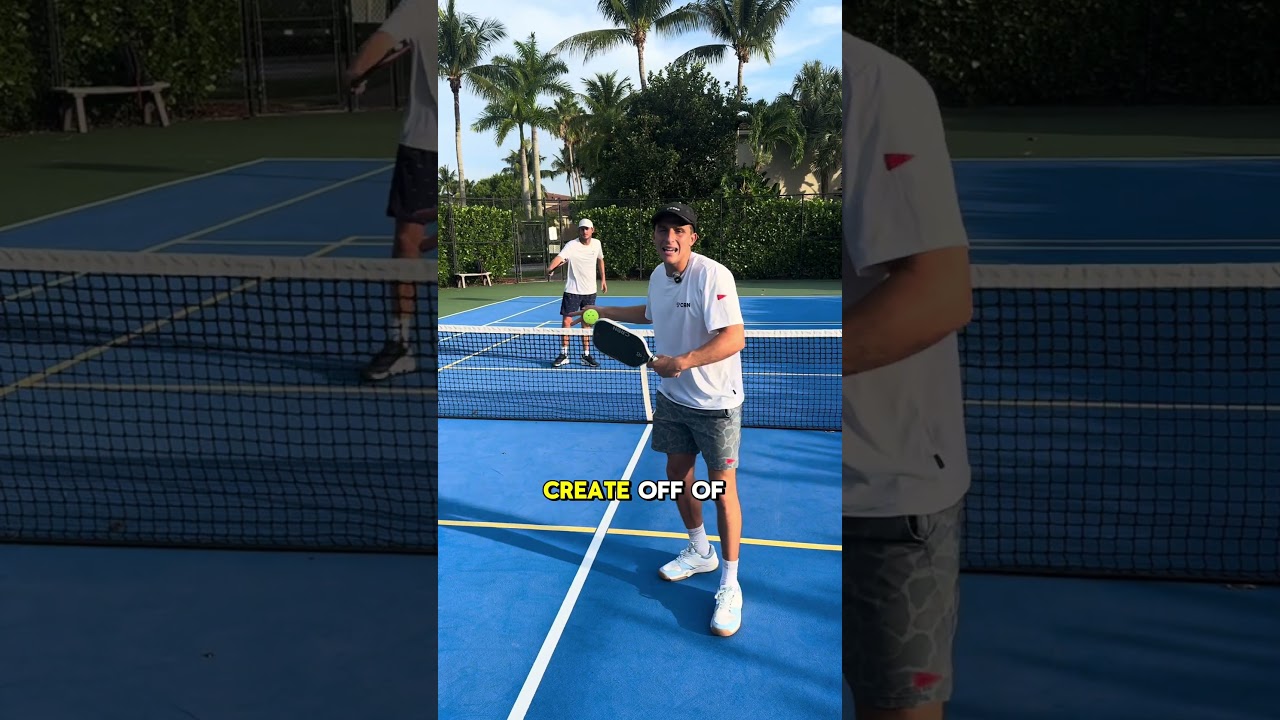
This full breakdown comes from Richard Pickleball on YouTube, who walks through every deception option he uses from the left side, covering both forehand and backhand speed ups off the bounce with his partner Zach.
Love pickleball? Then you'll love our free newsletter. We send the latest news, tips, and highlights for free each week.
Why Your Speed Ups Are Getting Read
Good players don't read the ball. They read you.
If you speed up down the line three times with the same shoulder turn and the same paddle angle, your opponent doesn't need great reflexes anymore.
They just need a memory.
That's the real problem with one-dimensional left side pickleball offense.The solution is building a speed up system where your body, paddle angle, and swing path all look identical across multiple shot directions.
When you can hit three different locations from one setup, your opponent is permanently guessing.
That's what separates high-level left side play from average left side play.
The Forehand Speed Up System from the Left Side
On the left side, your forehand covers the middle of the court.
That's prime real estate for attacking, and you have far more options there than most players realize.Richard organizes his forehand speed ups into three core mechanics, each giving you multiple placement options from the same starting position.
💡
Need some new pickleball gear? Get 20% off select paddles, shoes, and more with code THEDINK at
Midwest Racquet Sports1. The Snap
The snap is your base move. You drop the paddle slightly and then fire through the ball using a quick wrist snap at contact.
From this one motion, you have three placements available:
- Straight ahead at your opponent's body or hip
- Down the line on your right
- Through the middle of the court
The setup looks identical every time. Your opponent has to choose a direction to defend before they know where the ball is going.
That's exactly the position you want them in.2. The Wrist Break
The wrist break is an extension of the snap setup, and it gives you two completely new options that your opponent won't see coming if you've already shown them the snap.
You start exactly the same way, bringing the paddle toward your opponent as if you're going into a body attack.
Then, at the last second, you break your wrist and redirect the ball.
This is a late read. Your opponent starts moving toward their body and the ball slides somewhere else entirely.The two options off the wrist break are a low ball through the middle and an inside-out dink that catches players completely off guard.
The reason the wrist break is so effective is the timing. You're committing your paddle path toward one target and changing it at the very end of the swing.
By then, your opponent's weight is already shifting the wrong way.
For a deeper look at how wrist mechanics affect your soft game too, check out this breakdown on the wrist fix that improves your drop shot.
The Best Pickleball Players Aren’t Following the Rules Anymore
Modern pickleball isn’t won by coloring inside the lines. More and more, the most successful players are also the most creative.
 The Dink PickleballZoey Weil
3. The Big Swing: The Most Underused Left Side Pickleball Offense Move
When the ball sits up dead, take a full wind-up. Most players expect a hard drive when they see a big backswing.
Use that expectation against them. Your three options off the big swing are:
- An off-pace ball through the middle (the most effective and most underused option)
- A ball around the outside going wide to the corner
- A hard body shot if your opponent leans in trying to anticipate the slow ball
The off-pace option is the one that causes the most confusion. Your opponent loads up to counter a hard shot and gets nothing.
Their timing is completely off.If they start respecting the soft ball and backing up, that's when you go right at their chest.
7 Forehand Speedup Secrets From Pro John Cincola
John Cincola owns one of the most feared forehand speedups in pro pickleball. Here are the seven secrets behind it, from setup checklist to last-second deception.
 The Dink PickleballThe Dink Media Team
What About Your Forehand Stance?
On the forehand from the left side, stance changes are less important than they are on the backhand.
The three different paddle angles already create enough variety that your stance doesn't need to do as much work.
That said, you can still vary your position. The key is that all three speed up mechanics (snap, wrist break, big swing) work from the same semi-open stance.
You're not telegraphing anything through your feet.If you want to understand how shot selection connects to court position on the forehand side, this guide on the low forehand and high backhand rule is worth reading before your next session.
Pickleball Serve Footwork Stance: Load & Weight Transfer
Your pickleball serve footwork stance is the foundation of every point you start: get it wrong and no amount of arm swing will save you. This guide breaks down exactly how to set your feet, load your hips, and transfer weight for a serve that’s both powerful and repeatable.
 The Dink PickleballThe Dink Media Team
How Do You Create Deception on the Backhand Side?
The backhand is where stance becomes your primary deception tool. Instead of relying on different paddle angles, you shift between a closed stance and an open stance to give your opponent two completely different reads.
4. The Closed Stance Backhand
From a closed stance, most opponents will instinctively shade toward the line. They've seen enough closed-stance backhands go down the line that their body starts drifting before you swing.
Use that. From closed, you can hit line, middle, or cross.
All three are available, and your opponent is already leaning toward one of them.5. The Open Stance Backhand
Switch to an open stance and suddenly the same player who was shading line is completely lost. The open stance reads as a cross-court ball to most players.
So now you can go line from open and it catches them completely off guard.
The point isn't to always go the unexpected direction. The point is that both stances need to threaten all locations. Once your opponent knows that, they can't cheat anywhere.
That's where you want to be. This guide on the two-handed backhand covers the mechanics behind staying compact and explosive from either stance.6. The Big Swing on the Backhand
Same concept as the forehand. When the ball is truly dead, take a full backswing on your backhand.
Your opponent expects pace, and you give them off-pace through the middle.
If they start backing up to prepare for the soft ball, two options open up. You can go hard into their body, or you can lob the ball over them.
Both punish the retreat.The lob off the big swing is one of the most underused plays in recreational doubles.
One thing to avoid: don't try to lob off the wrist break on the backhand. The wrist angle makes it nearly impossible to get enough height on the ball.You'll send a hanging floater that gets smashed. Stick to the lob option on the big swing setups only.
The Deceptively Simple Strategy That Beat Anna Leigh Waters
If you can’t beat her, just don’t let her play.
 The Dink PickleballAlex E. Weaver
How Does This Work Cross Court?
Cross-court attacks from the left side follow the same mechanics but with different preferred targets.
On the forehand snap going cross, the favorite placement is through the opponent's hip.It's the most common ball players fail to cover because they're watching your paddle face, not your target line.
Once you've established that hip shot, two follow-up options open up: a ball through the middle and a wrist break that slides wide.Here's the sequence that causes the most problems for opponents:
- Speed up through the hip cross court
- Force a backhand reply, then attack the middle
- When they slide forehand to cover middle, snap the ball wide with the wrist break
Each shot in that sequence sets up the next one.
That's what two-shot combination thinking looks like in practice.For more on building these kinds of sequences, this piece on two-shot combinations gives you five more setups you can run from different positions.
On the big swing going cross, the preferred target shifts. Instead of the body, you're pulling the ball through the middle of the court.
Your opponent sees the big backswing and backs up expecting a hard shot to the corner. The soft ball through the middle lands before they can recover.
This advanced cross-court strategy guide breaks down when and why to use each angle.
One Cross-Court Dinking Tip That Stops Opponents Cold
Most players have no idea they are handing opponents free angles every time they hit a weak cross court dink. This dinking tip fixes exactly that.
 The Dink PickleballThe Dink Media Team
What Pro Players Do That You Should Copy
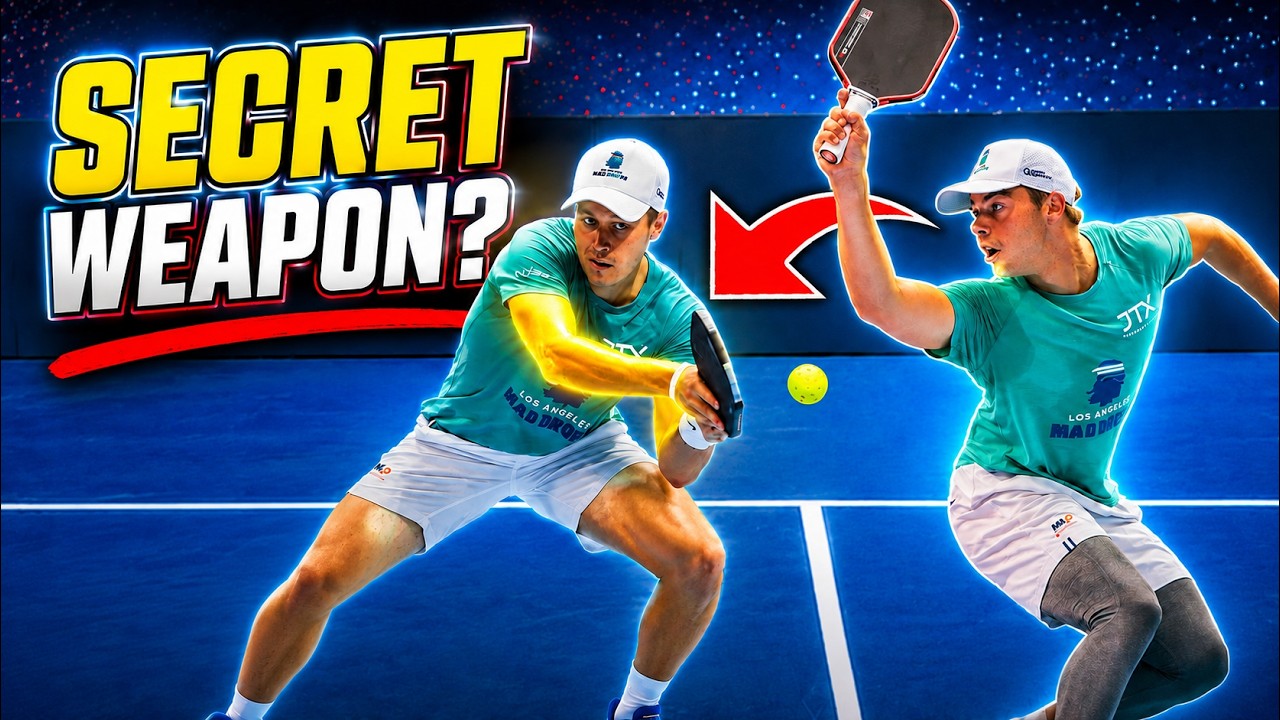
Anna Leigh Waters is a great example of the big swing concept taken to an elite level. She'll take a full motion and barely touch the ball, sending an off-pace shot that completely disrupts her opponent's timing.
The contact delivers something totally different.
Ben Johns applies a similar principle from the middle of the court, using body angle and paddle face variations to keep opponents honest on both sides.
Breaking down Anna Leigh's rhythm gives you a useful framework for understanding how elite players build deception into their natural swing patterns.
The common thread across all high-level left side players is this: multiple threats from one setup. They're not just hitting a speed up.They're presenting a problem that has no single correct answer.
For your own practice, start with the snap and add the wrist break once you're comfortable. Don't try to run all seven options in one session.
Build the toolkit one layer at a time. If your speed ups keep getting attacked, it's usually a sign that you're telegraphing your intention through your setup before the ball even leaves your paddle.
Work on the stance variations too. Closed versus open on the backhand is the fastest way to start confusing opponents who are trying to read your body.
And if you want to understand how this deception fits into your overall kitchen line game, this breakdown on kitchen attack strategy covers the roll versus flick decision that connects directly to when you should be snapping versus breaking the wrist.Finally, remember that deception only works if your opponent respects your other options.
The fake dink and speed up disguise is a related concept worth adding to your game once the core mechanics here feel natural.
💡
Heads up: hundreds of thousands of pickleballers read our free newsletter.
Subscribe herefor cutting edge strategy, insider news, pro analysis, the latest product innovations and more.
Frequently Asked Questions
What is the most effective left side speed up in pickleball?
The forehand snap through the opponent's hip is the most consistently effective left side speed up because it targets a difficult-to-cover zone and sets up multiple follow-up options. The key is that the setup looks identical whether you're going hip, middle, or wide. Once your opponent can't predict the target, every speed up becomes harder to defend.
How do you hide a pickleball speed up so opponents can't read it?
You hide a speed up by making your preparation look the same across multiple shot directions. Using the same stance, the same backswing, and the same paddle path until the last moment forces your opponent to react instead of anticipate. The wrist break is especially effective because the direction change happens so late that even experienced players struggle to read it.
When should you use a big swing speed up in pickleball?
Use the big swing when the ball is sitting dead and slow at the kitchen line. The large backswing signals pace to your opponent, which makes the off-pace ball through the middle extremely difficult to time. If your opponent starts backing up to handle the big swing, that's when you attack the body hard or lob over them.
Does stance matter for left side pickleball offense?
Stance matters more on the backhand than the forehand for left side players. Switching between a closed and open backhand stance gives your opponent two completely different reads, since most players associate closed stances with line attacks and open stances with cross-court play. On the forehand, paddle angle variation does most of the deception work, so stance is less critical.
Can you lob off every speed up setup on the left side?
You can lob off the snap and the big swing, but not the wrist break. The wrist angle during a wrist break makes it very hard to get enough height on a lob, and the result is usually a low floater that your opponent can put away. Stick to lobbing as an option off the snap or the big swing when your opponent is retreating or overcommitting to one side.
Anuncie Aqui / Advertise Here
Sua marca para o mundo Pickleball! / Your brand for the Pickleball world!



 English (US) ·
  Portuguese (BR) ·