
 English
  Spanish
  Portuguese
  German
  Italian
  Japanese
  French
  Polish
  Russian
  Netherlands
  Hungarian
  Turkish
  Videos
  Thedink Pickleball

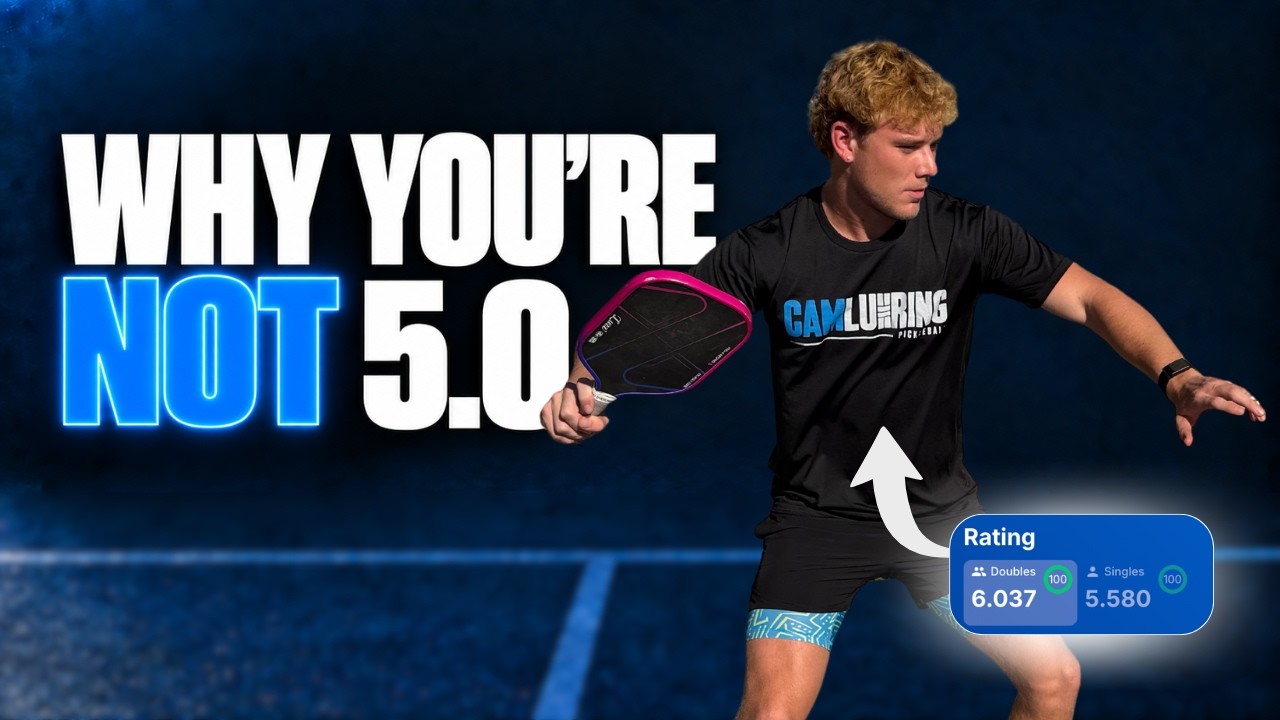
When 5.0 pickleball coaches team up with 5.0 students, every point becomes a clinic. Here are 7 lessons from their match that will sharpen your game immediately.
If you want to understand what separates 5.0 pickleball from everything below it, stop watching highlight reels and start watching real match footage with coaching commentary running throughout.
That is exactly what this match delivers.
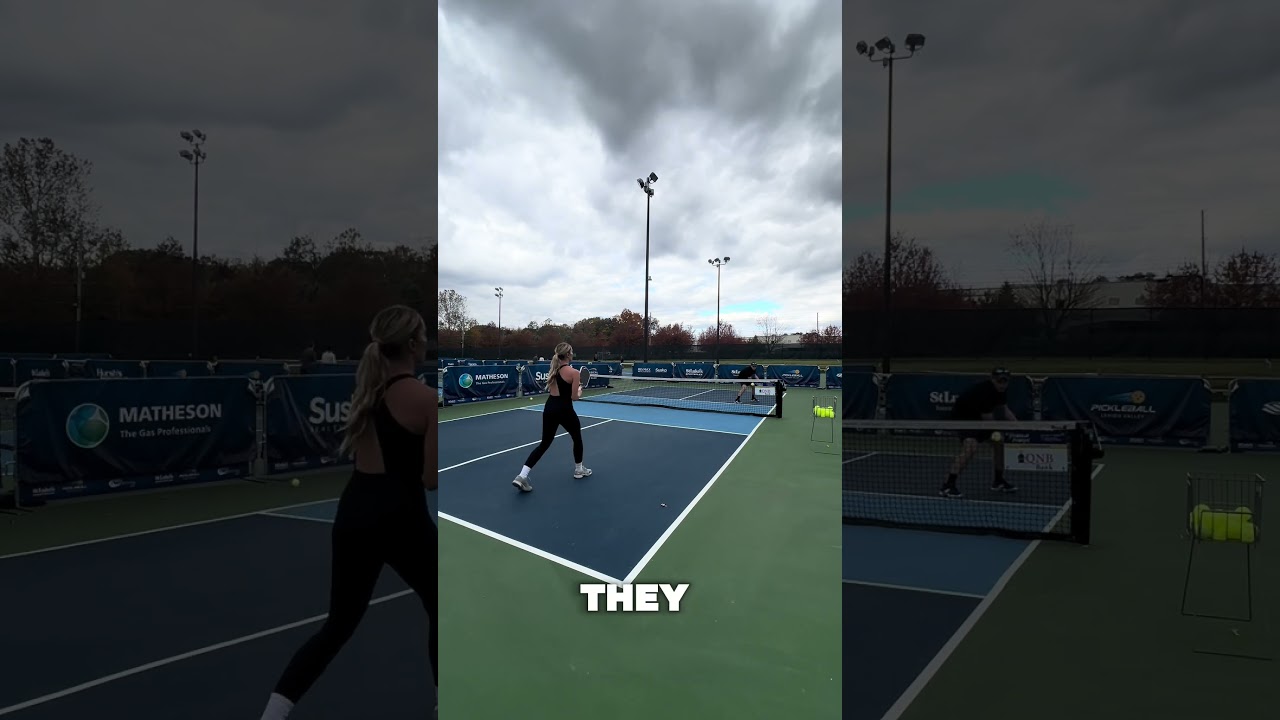
Two 5.0 coaches team up with 5.0 students in a competitive doubles game, and the real-time breakdowns reveal patterns that most players never notice on their own.The footage comes from REAL Pickleball on YouTube, and the insights buried inside each rally are the kind of things you only pick up after years of coaching competitive players.
Here are the seven most important lessons you can take directly into your next match.
Love pickleball? Then you'll love our free newsletter. We send the latest news, tips, and highlights for free each week.
Lesson 1: Your Role on the Court Should Change How You Hit Every Ball
The first thing the coach flags is the concept of knowing your role before the point starts.
His partner Jace is described as a crafter, meaning his job is to keep the ball low and construct the point rather than overpower opponents.
Knowing that changes how the coach sets up each ball he feeds Jace.
If you do not know your role in a doubles partnership, you are making shot decisions in a vacuum.Figure out who is the power player and who is the reset and construction player, then build your communication around that.
That split is one of the three key differences between a 4.0 and a 5.0 pickleball player.
Lesson 2: One Missed Split Step Costs You the Next Ball
Watch the coach acknowledge his footwork errors multiple times.
He notes being "late to the forehand" and admits that splitting sooner would have helped him read the next ball much earlier.The split step is not about being athletic.
It is about timing your weight transfer so you are ready to move in any direction the moment your opponent contacts the ball.
If you keep getting jammed or always feel a half-step late, this is almost always the fix.
Start with a technique pass to improve your pickleball footwork, then build reps into the 12 drills you need to play your best pickleball in 2026.
Split Step Pickleball: The Ready Position Most Players Skip
The split step in pickleball is a small hop that puts your body in the perfect ready position just before your opponent strikes the ball. Most recreational players skip it entirely, and that single habit is costing them more points than any other technique gap.
 The Dink PickleballThe Dink Media Team
What Does "Pulling Too Early" Actually Mean?
After the match, Jace admits he was pulling too early instead of staying in the dink exchange longer. This is a critical concept worth defining clearly.
Pulling too early means attempting to speed up or attack the ball before you have created a real opening.
You are reacting to your own impatience rather than to a genuinely attackable ball.The result is a speed-up that lands too high or directly at a ready opponent, and suddenly you have given the other team exactly what they wanted.
Overcoming the frustrated speed-up is one of the most common challenges at every level above 4.0.
5 Pickleball Speed-Up Fixes for Instant Offense
The best pickleball speed up comes from hitting less of the ball, not swinging harder. Here are five fixes that put the ball down fast off the bounce.
 The Dink PickleballThe Dink Media Team
Lesson 3: Cover the Middle When You Attack the Body
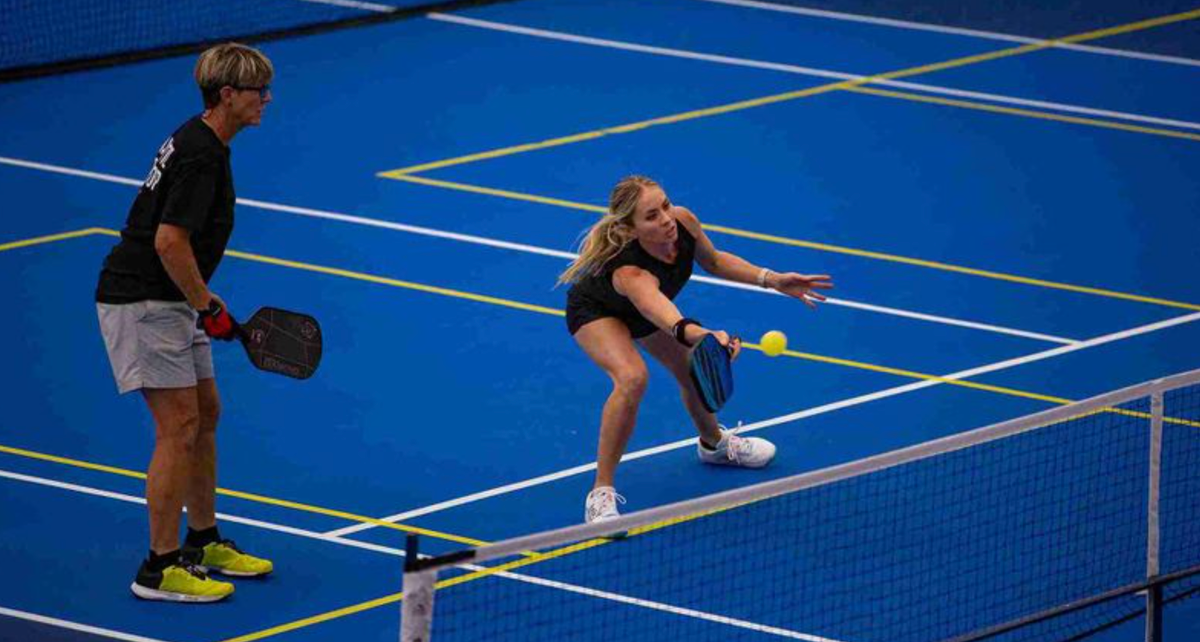
One of the sharpest tactical notes comes when the coach targets Grayson's body from the air.
When you go body, your opponent's partner has to cover the middle.
A well-placed body attack does two things at once. It pressures the target and it pulls the covering player out of position.This is not luck. It is geometry.
If you are only thinking about where the ball goes and not how that forces your opponents to move, you are leaving free points on the table, which is exactly what the who covers the middle X rule is built to solve.
Covering the Middle in Pickleball: 4 Rules to End Confusion
Most players think the forehand always takes the middle, but that is costing them points. Here is the real system for covering the middle in pickleball.
 The Dink PickleballThe Dink Media Team
Lesson 4: The Reset Machine Wins When the Attack Is Below the Net
Midway through the match, the coach calls Jace the "reset machine" after Jace neutralizes a ball that should have ended the rally.
That nickname tells you everything about what makes a 5.0 partner valuable.
At this level, errors off attackable balls are rare.What wins points is who can extend rallies when under pressure and then find the right moment to shift back to offense.
If your reset is failing you in those moments, the problem is usually paddle angle and contact point rather than touch.
Here is why your pickleball reset fails and how to fix it.
How to Master the Reset Shot in Pickleball
The reset shot is one of the most critical defensive skills in pickleball, yet most players struggle with it. Universal Rackets breaks down the exact mechanics and drills you need to stop popping up hard shots and start controlling the rally.
 The Dink PickleballThe Dink Media Team
Why Is Targeting the Hip So Effective?
The coach specifically mentions getting the ball under Grayson's hip as a reliable way to create pressure.
This is not random targeting. The hip area forces a backhand from an awkward low position or a forehand that has to reach across the body.Either way, the opponent's paddle path is compromised before they even swing. The resulting ball is often too high or too central, which gives Jace an easy counter opportunity.
Understanding how body attacks work in pickleball from both sides of the ball will sharpen your shot selection immediately.
Hit a Devastating Forehand Drive With Hip Rotation
As the game evolves and players get more skilled at dinking and net play, the ability to put away a ball with pace and control separates the good players from the great ones.
 The Dink PickleballThe Dink Media Team
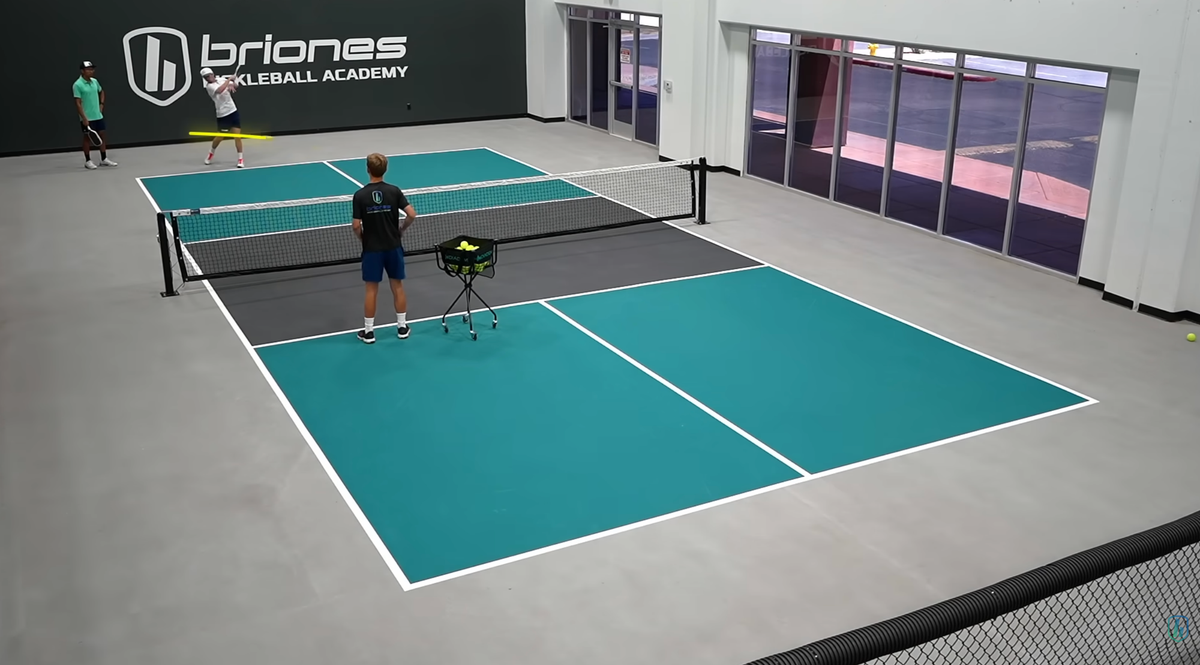
Lesson 5: Leaning Players Tell You Exactly Where to Go
Twice in this match, the coach reads that Grayson is leaning. His response is to go shorter or to the opposite side of where Grayson is committing weight.
A leaning opponent has already made a decision. They have taken themselves out of position for anything that does not match their lean.
Reading body language at the kitchen line is one of those things 6.0 players see that 4.0 players consistently miss.
Start watching your opponent's hips and shoulders before the ball reaches your paddle.
Pickleball Placement Strategy: Where to Aim Every Shot
Knowing where to aim in pickleball is the difference between winning and losing. Learn the exact placement strategy for every shot from serve to attack.
 The Dink PickleballThe Dink Media Team
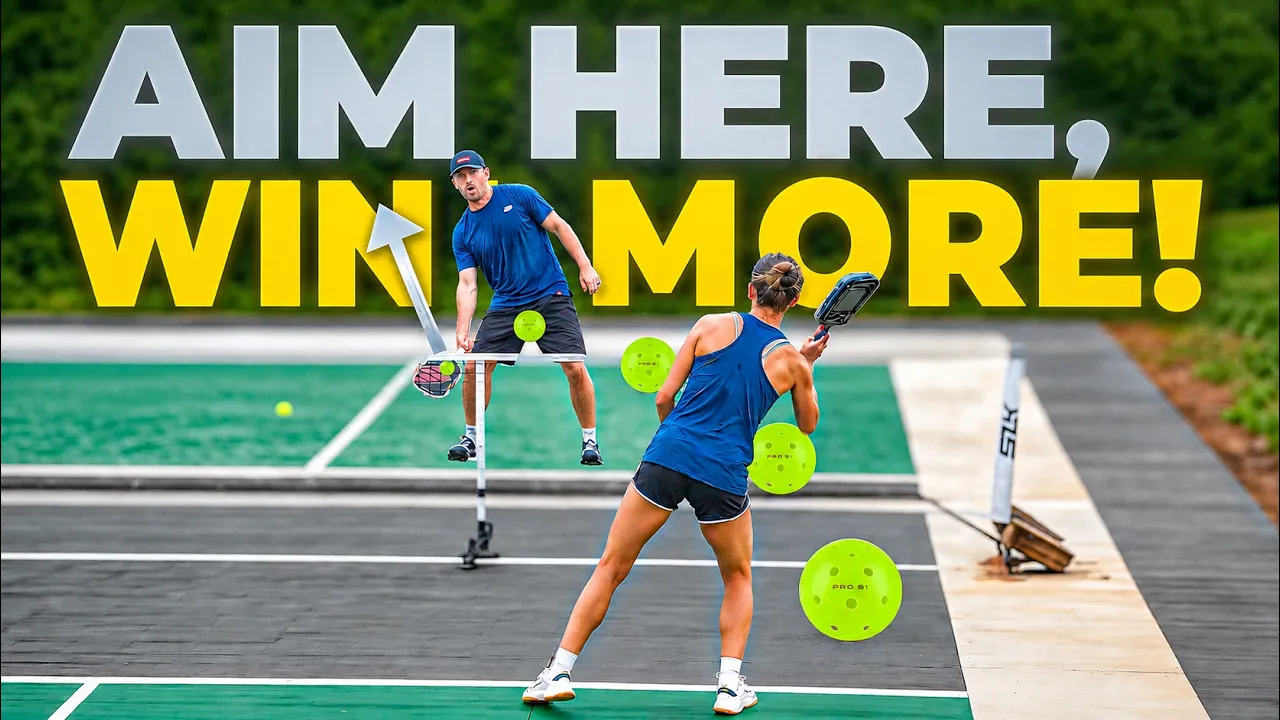
Lesson 6: After a Miss, Make the Next Shot Your Best Shot
The coach says it plainly during the match: "Make a good shot after the miss. It's always great."
That is not just motivational talk. There is a tactical reason behind it.When you follow an error with another error, your opponents build momentum and your partnership loses trust.
When you follow an error with a clean, composed shot, you stop the bleeding immediately.
The coach also flags the domino effect by name. One missed ball that you dwell on leads to a second error, then a third.
Here is why one pickleball mistake turns into three and how to break the cycle.
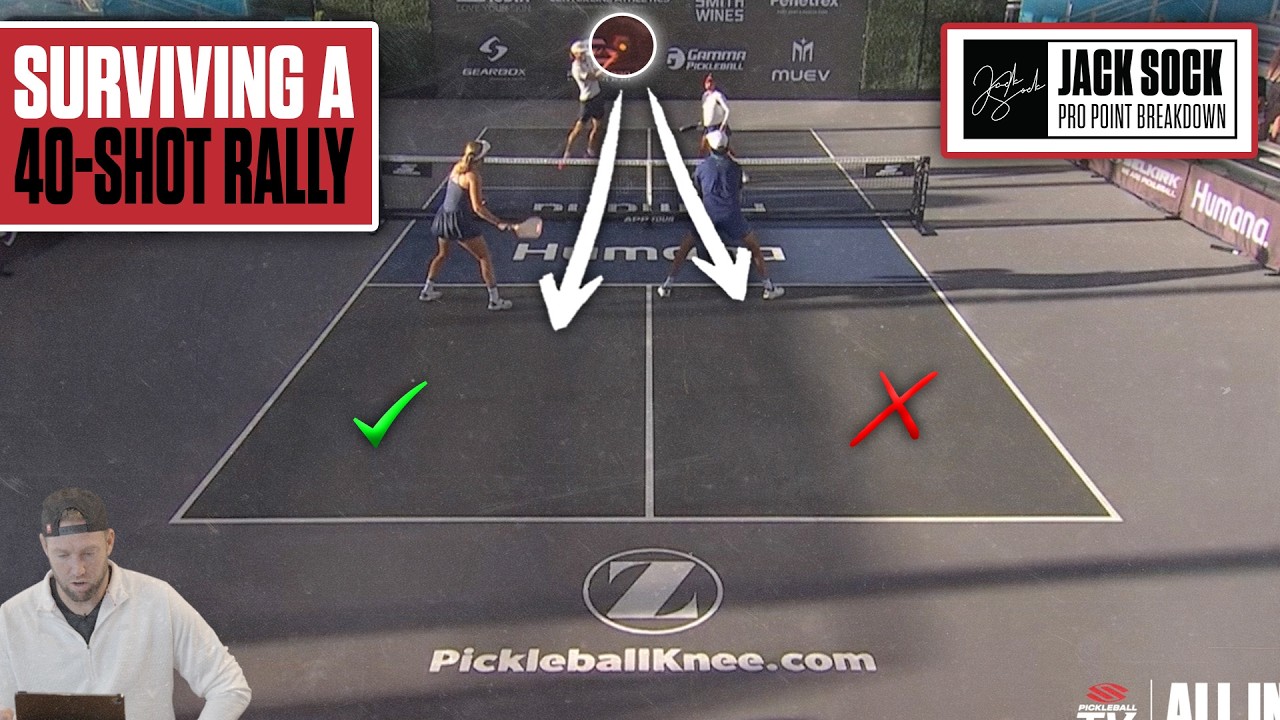
Pickleball Psychology: Why You Miss Easy Shots
Pickleball psychology plays a massive role in match outcomes, especially during extended rallies. Jack Sock explains how relentless defense can break down even the best players mentally.
 The Dink PickleballThe Dink Media Team
What Are the Biggest 5.0 Pickleball Shot Selection Mistakes in This Match?
Several patterns show up repeatedly across the full match:
- Speed-ups directed line when the opponent is already covering line, especially with Jace positioned in front of the baller.
- Lobs at the wrong moment. One lob draws immediate criticism because the situation did not call for it.
- Pulling the trigger before the ball drops. Several attacks come off balls still too high at contact.
- Going cross-body on the return without the angle. The coach tries a crosscourt return that fails and acknowledges the risk immediately.
These are not beginner mistakes. They happen in 5.0 pickleball because the margin for error shrinks as the level rises.
Even a slightly high contact point becomes a liability when your opponents have elite hands.Run your decisions through this ball height and court positioning checklist for pro-level shot selection, and clean up the fourth mistake with the perfect crosscourt attack.
How to Break 5.0: The 5 Pickleball Shots You Must Master Before 2026
The game is faster, more aggressive, and more competitive than it was even a year ago. If you’re looking to level up in 2026, these five shots are non-negotiable.
 The Dink PickleballThe Dink Media Team
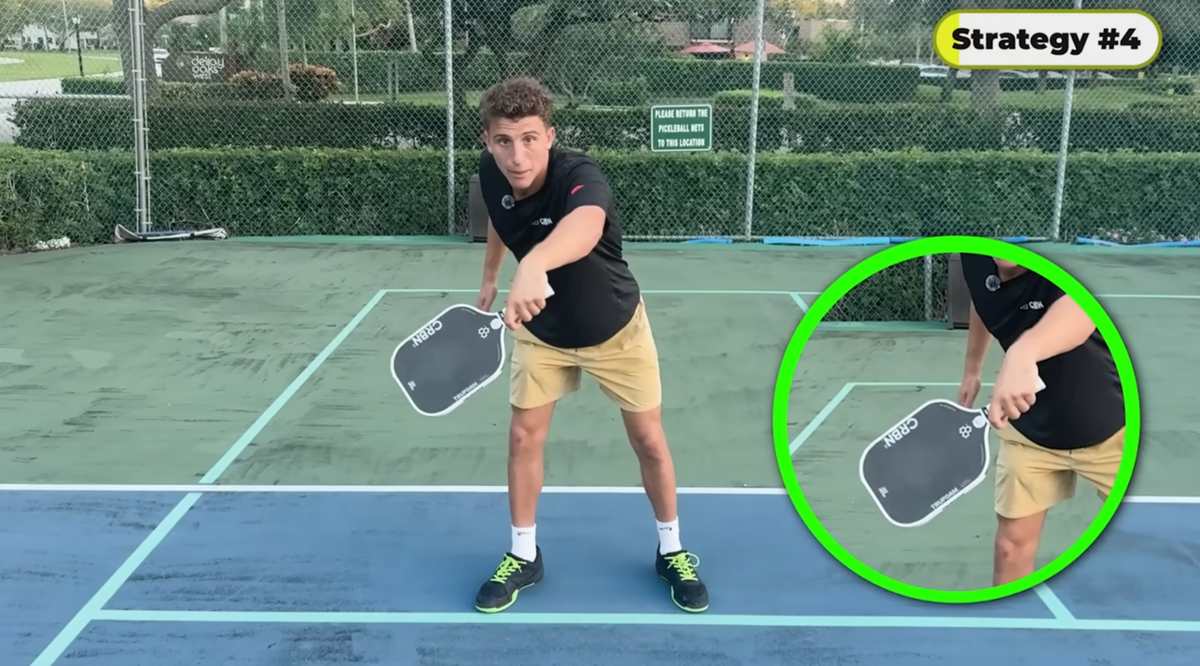
Lesson 7: Communication With Your Partner Is a Tactical Weapon
Early in the match, Jace asks a direct question: "When I drive, where do you want me going?"That single question changes how both players execute for the rest of the point.
High-level doubles is not four individuals making independent decisions. It is two partnerships operating with a shared plan on every ball.
When one player drives middle and the other does not expect it, you create collisions and confusion that the other team will exploit.Before each serve and return, your team should know who is taking the middle, who is driving, and what the reset plan is if the third shot does not land.
These eight doubles strategy fixes go deeper on how to build that shared plan with your partner.
Pickleball Doubles Communication: Calls Every Team Needs
Pickleball doubles communication is the hidden variable that separates teams that grind out wins from teams that implode on big points. Learn the exact calls, signals, and habits that keep you and your partner moving as one unit on the court.
 The Dink PickleballThe Dink Media Team
How to Use These Lessons in Your Next Match
Here is a simple checklist you can bring to your next session:
- Identify your role before the match starts and communicate it to your partner.
- Work on your split step timing so you stop arriving late to balls you should handle easily.
- Watch for opponents leaning and redirect away from their weight commitment.
- Stop speeding up balls that are still above the net tape. Wait for the right height.
- After every error, focus completely on executing the next ball cleanly.
- Target hip height on body attacks to force compromised paddle angles.
- Cover the middle when your partner attacks so the covering opponent cannot poach.
Every one of these comes directly from what played out in this match.
None of them require a massive overhaul of your game. They require awareness and intention.If you want to go even further with your strategy development, these four strategies pros use every single game are a natural next step.
And if you are working on your dinking consistency under pressure, this breakdown on winning the crosscourt dink battle is worth your time.
The gap between 4.0 and 5.0 is not physical. It is tactical and mental. Matches like this one show you exactly where that gap lives.
Frequently Asked Questions
What makes 5.0 pickleball different from 4.5?
At 5.0 pickleball, the margins on every shot shrink significantly. Players at this level have reliable resets, can attack from multiple positions, and read body language to anticipate shots before they happen. The biggest difference is consistency under pressure rather than raw shot quality.
Why do high-level players reset instead of attacking every ball?
Attacking a ball that is too high or in a poor position gives your opponent an easy counter, especially at the 5.0 level where hands speed is reliable. A well-executed reset puts the ball back below the net and forces your opponent to lift again, creating a better opportunity to attack on your terms.
How do I know when to speed up in pickleball?
Speed up when the ball is at or below net height and you can make contact with a downward or flat trajectory. If the ball is above the net tape and your opponent is already set, the risk is too high. This breakdown on when and how to hit a speed-up off the bounce gives you a clear decision framework.
What is the chicken wing in pickleball?
The chicken wing is when a player's elbow lifts away from their body during a backhand volley or counter, usually because the ball is coming at the body faster than they can adjust. It causes the paddle face to tilt and sends the ball high or wide. Keeping the elbow down and the paddle in front of the body prevents it.
How important is middle coverage in doubles pickleball?
Middle coverage is one of the most important decisions in doubles because the middle is the lowest point of the net and the hardest angle for either player to defend alone. These five court coverage mistakes in doubles will show you exactly how middle errors give points away without either player realizing it.
Anuncie Aqui / Advertise Here
Sua marca para o mundo Pickleball! / Your brand for the Pickleball world!




 English (US) ·
  Portuguese (BR) ·