
 English
  Spanish
  Portuguese
  German
  Italian
  Japanese
  French
  Polish
  Russian
  Netherlands
  Hungarian
  Turkish
  Videos
  Thedink Pickleball

Your dinks keep getting attacked because they have no job. Pro Sammy Lee breaks down the dinking strategy fixes that make every dink harder to punish.
Your dinking strategy is probably why you keep getting attacked at the kitchen line. Not your paddle, not your age, and not the lucky opponent across the net.
Pro player Sammy Lee made that case in a recent lesson with All Things Pickleball, and it stings because it is true.
As he put it, pros "are very intentional about placing our dinks: the depth, the height, whether it's low over the net."Most rec players just hit the ball into the kitchen and hope. No wonder the fastest growing sport in America is full of players stuck at the same level.
Here are the seven dinking strategy fixes from that lesson, in the order that will help your game most.
Love pickleball? Then you'll love our free newsletter. We send the latest news, tips, and highlights for free each week.
1. Your Dinking Strategy Needs a Job for Every Ball
Sammy Lee's first fix is brutal in its simplicity: every dink needs a purpose, because a dink without one is a dead dink.
A dead dink is a ball with no spin, no pace, and no placement. It just sits there, waiting to be punished.
If you are fuzzy on the fundamentals, start with what a dink actually is, because the shot is not "soft ball into the kitchen."
The goal of the kitchen line is to make your opponents as uncomfortable as possible on every single ball.
That means varying depth, height, and direction on purpose.
Feed the same comfortable ball to the same spot and any decent opponent will attack dead dinks all day long.
2. Should You Take Dinks Out of the Air or Off the Bounce?
Out of the air, almost always: Sammy Lee says your first instinct at the kitchen line should be to take the ball out of the air because it steals time from your opponent.
But there is a catch most players miss.
When you volley a dink, your job is to make that ball bounce on their side.
If your out-of-the-air dink gives them a ball they can volley right back, you accomplished nothing. The ball now comes back at you even faster.
So the decision tree looks like this:
- Can I reach it comfortably? Take it out of the air.
- Taking it out of the air, can I make it bounce at their feet? If yes, hit it.
- If the ball is past my comfortable reach, let it bounce, move my feet, and reset the point.
- Once my dink bounces, move them left or right and look to step in on dinks for the next one.
💡
Need some new pickleball gear? Get 20% off select paddles, shoes, and more with code THEDINK at
Midwest Racquet Sports3. Find Your Reach Range Before Someone Finds It for You
Your reach range decides air versus bounce, and Sammy Lee has a test that takes about thirty seconds:
- Stand at the kitchen line in a balanced stance.
- Reach out as far as you can comfortably.
- Now reach six inches further. Feel your hamstrings fire and your weight tip onto your toes? That is the edge of your range.
Anything inside that boundary, volley with confidence. Anything beyond it, let it bounce and play the ball after a drop step.
Most players never map this boundary, which is why so much kitchen positioning falls apart mid-rally.
You cannot make a fast decision if you do not know where your own line is.
According to CBS Sports, reaction time at the kitchen is one of the most cited skill gaps separating intermediate players from advanced ones.
Kitchen Positioning in Pickleball: Stop Reaching for Dinks
Kitchen positioning is one of the most misunderstood fundamentals in pickleball. Cori Elliott’s latest coaching breakdown reveals why recreational players stay stuck and how to move your feet instead of reaching.
 The Dink PickleballThe Dink Media Team
4. Balance and Stance: The Boring Fix That Changes Everything
Sammy Lee calls this the foundation of every shot in pickleball, and the fix is a slight lean forward. Stand straight up at the line and the ball attacks you.
Lean forward with bent knees and you attack the ball.
Your feet matter just as much. Set them around shoulder width or a touch wider, so reaching to either side becomes a lunge.
If you have to pick up a foot to reach a ball, your stance is too narrow.
This one fix solved a real problem in the video.
The student's counters kept finding the net until Sammy spotted the upright stance, and one adjustment later the counters started landing.
Simple, boring, and worth more than any new paddle.Pair this with the 6 essential pickleball shots to master for 2026 and your kitchen game starts to look very different.
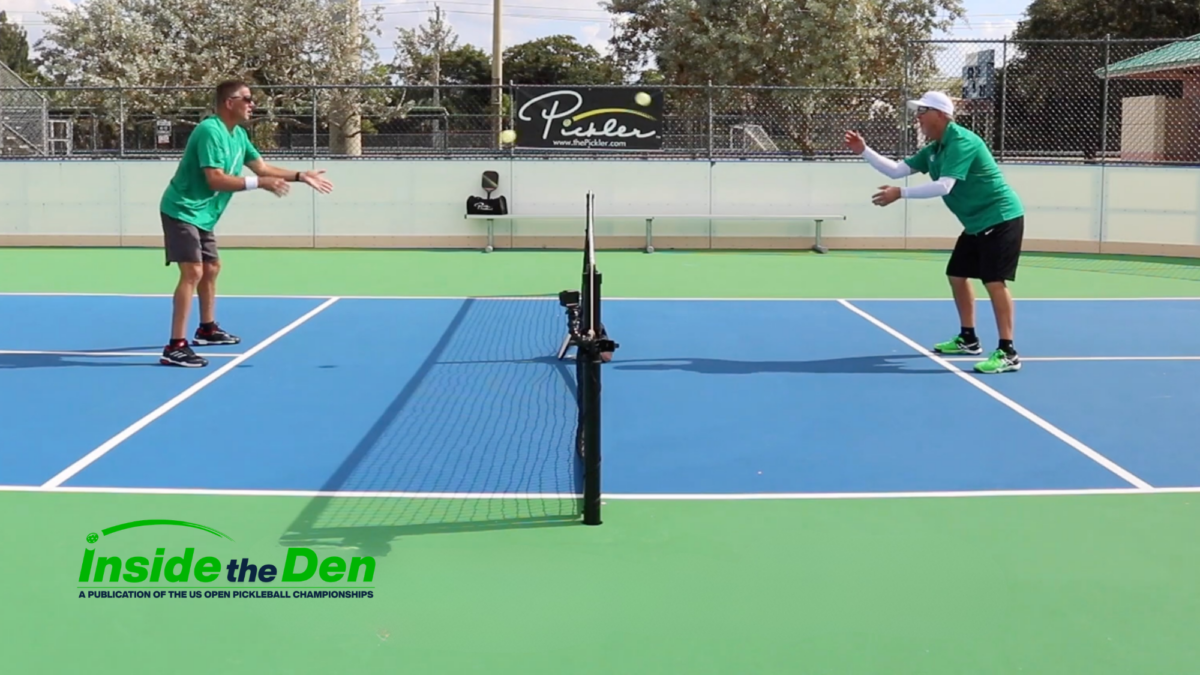
Pickleball Serve Footwork Stance: Load & Weight Transfer
Your pickleball serve footwork stance is the foundation of every point you start: get it wrong and no amount of arm swing will save you. This guide breaks down exactly how to set your feet, load your hips, and transfer weight for a serve that’s both powerful and repeatable.
 The Dink PickleballThe Dink Media Team
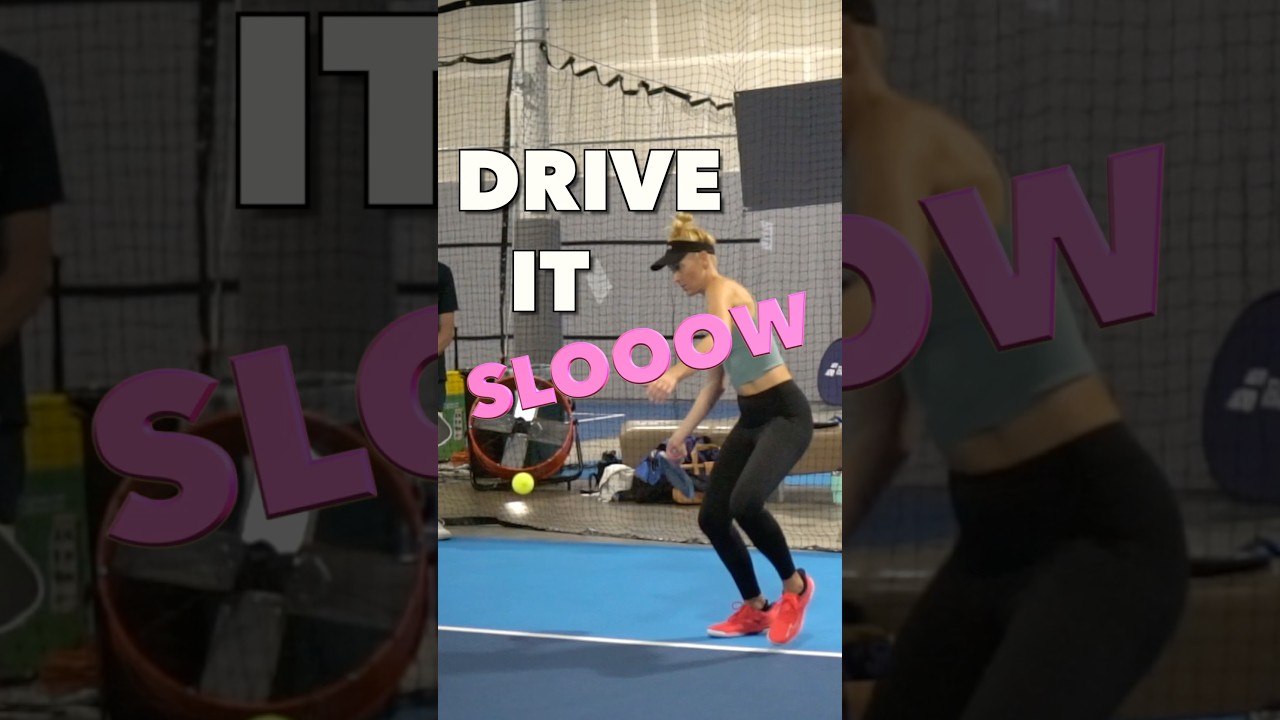
Here is the footwork rule from the lesson: feet parallel to the kitchen line for balls out of the air, a drop step for balls off the bounce.
Most players do the opposite of what the ball requires.
Watch your own dominant foot. If it slides back as you volley a dink, your brain had already decided to let the ball bounce, and you stabbed at it late.
Sammy Lee guarantees this has happened to every player at least once, and he is right.
Off the bounce, parallel feet jam you. There is no room for a takeback, so you short hop the ball and flick your wrist to survive.
Instead, drop step into a semi-closed stance, about 45 degrees, with your back knee giving you space to work.
From there you can hit topspin dinks, go cross, attack, or lob, all from the same setup.
Pair it with these pickleball footwork drills and the drop step becomes automatic.
One more footwork note from the lesson: glide to the ball in two steps, hit, and recover in two more.Choppy little steps are fine on a dead ball, but under pressure they leave you frantic and late.
Understanding modern pickleball strategies for 2026 will help you see why footwork is treated as a tactical weapon, not just an athletic detail.
How to Improve Pickleball Footwork: 5 Pro Drills
Pickleball footwork drills are the fastest way to close the gap between your shot-making ability and your actual on-court results. Here are five drills that competitive players use to move faster, recover quicker, and stop giving away free points.
 The Dink PickleballThe Dink Media Team
6. Where Should Your Dinking Strategy Send the Ball?
When the ball gets outside your knee, go middle or up the line, never crosscourt.
That placement rule was Sammy Lee's biggest correction in the entire lesson.
Flipping your paddle around a wide ball to drag it crosscourt is a low-percentage shot that hands your opponent an easy counter.
Aim for the middle of the box straight ahead instead. A full shot placement system helps here, but the short version is: wide ball, straight target.
And once your placement is reliable, learn to disguise your dinks so the same setup produces different shots.
That is when your dinking strategy stops being defense and starts being offense.According to ESPN, top players at every level credit shot disguise and placement as the dividing line between a player who wins rallies and one who simply survives them.
Pickleball Dinking 101: Small Swings, Big Results
You’re not trying to hit winners from the kitchen. You’re trying to create situations where your opponent makes a mistake or gives you a ball you can attack
 The Dink PickleballThe Dink Media Team
7. Hold the Kitchen Line, Especially in Hands Battles
The kitchen line is the most valuable real estate on the court, and Sammy Lee says you should only surrender it in two situations.
You popped a ball up high enough for an overhead, or you hit a dink you know is attackable.
Otherwise, hold the line.
Backing up during a neutral hands battle feels safer because you buy reaction time, but you also give ground, your stance rises, and you lose the exchange anyway.
This is exactly what Tyra Black does so well; her kitchen line secrets start with refusing to give up the line.
If quick exchanges scare you, train them.
This framework to develop faster hands is a good start, and simple wall drills build the same reflexes with no partner required.
There is a bonus here too. Calm, stable feet at the line intimidate opponents.
In Sammy's words, "if we are not showing that we're really frantic everywhere and we're showing that we're stable, we're maintaining the kitchen line. That's kind of scary."Kitchen Line Dominance: 5 Secrets From Pro Tyra Black
Tyra’s approach combines footwork, positioning, tactical dinking, and elite hand skills into a system that’s incredibly hard for opponents to break down.
 The Dink PickleballThe Dink Media Team
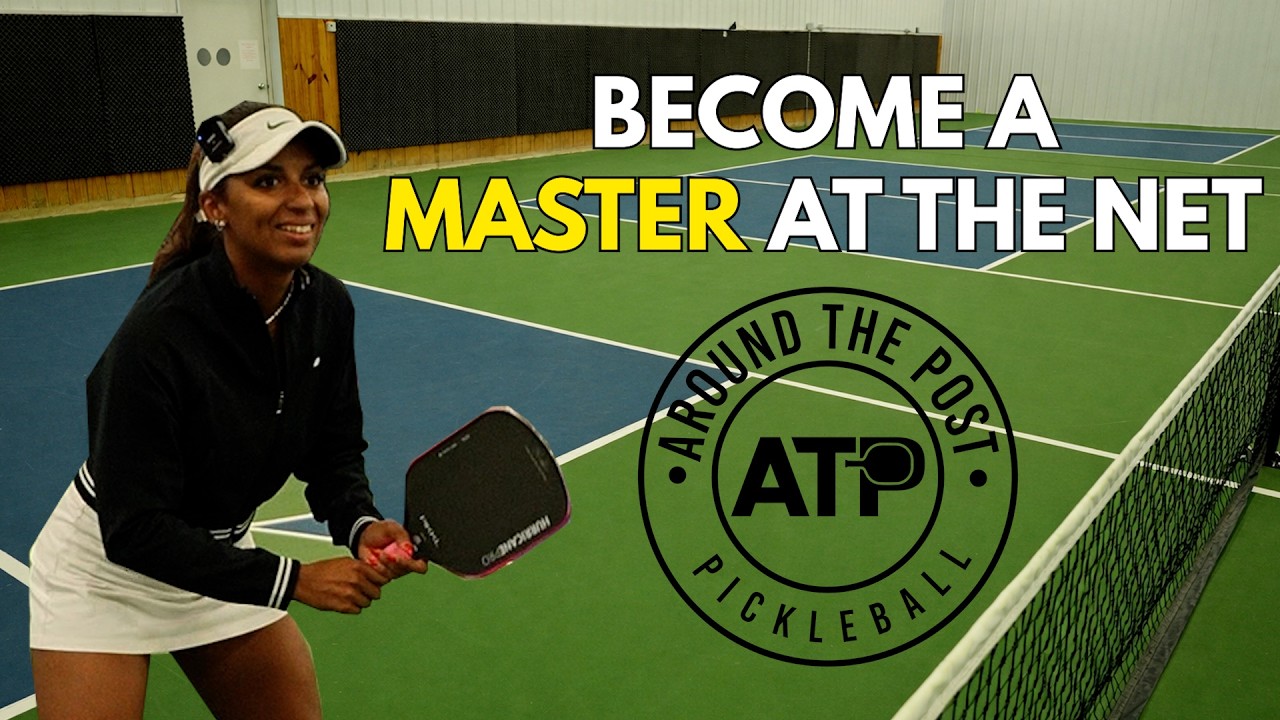
Putting It Together at Your Next Open Play
You do not need all seven fixes at once.
Start with the lean forward and the reach range test, because they take zero practice time, then layer in the drop step and the placement rule over your next few sessions.
If you still find yourself under constant pressure, our guide on how to stop getting attacked at the kitchen pairs perfectly with this lesson.
The theme is the same: intention beats habit.
Struggling to break through your current rating?
Check out how to break 5.0 with the five shots you must master and see how a sharper dinking strategy fits into the bigger picture.
And if you want to pressure-test your progress, a simple 4-step system to win more pickleball games in 2026 gives you a real framework to measure your improvement.
Sammy Lee summed up the whole lesson in one line: "You guys are playing chess while a lot of people are just hitting balls." Be the chess player.
💡
Heads up: hundreds of thousands of pickleballers read our free newsletter.
Subscribe herefor cutting edge strategy, insider news, pro analysis, the latest product innovations and more.
Frequently Asked Questions
What is a dead dink in pickleball?
A dead dink is a dink with no spin, no pace, and no intentional placement. It sits up in a comfortable spot for your opponent, which makes it the easiest ball to attack at the kitchen line. Good dinking varies depth, height, and direction so no ball is comfortable.
What is the best dinking strategy for beginners?
The best beginner dinking strategy is to give every dink one job: make your opponent uncomfortable. Take balls within your comfortable reach out of the air, let deeper balls bounce, and aim away from your opponent's paddle. Avoid crosscourt dinks on balls outside your knee.
Should I take every dink out of the air?
No. Take a dink out of the air only when you can reach it comfortably and make it bounce on your opponent's side. If you have to lunge past your balance point, let the ball bounce, use a drop step, and play the next ball from a stable stance.
How can I practice this dinking strategy at home?
Practice the reach range test and the drop step with shadow footwork, no ball needed. Then use a wall to rehearse taking balls out of the air with parallel feet. Ten minutes of wall work a few times a week builds the reactions these fixes depend on.
When should I back off the kitchen line?
Only when you have popped up a ball your opponent can hit an overhead on, or when your dink is clearly attackable. In a neutral hands battle, hold your ground. Backing up raises your stance, gives away court position, and usually loses the exchange.
Anuncie Aqui / Advertise Here
Sua marca para o mundo Pickleball! / Your brand for the Pickleball world!



 English (US) ·
  Portuguese (BR) ·