
 English
  Spanish
  Portuguese
  German
  Italian
  Japanese
  French
  Polish
  Russian
  Netherlands
  Hungarian
  Turkish
  Videos
  Thedink Pickleball

Advanced dinking patterns 4.0 pickleball demands are completely different from recreational play. It's not about keeping the ball in, it's about systematic pressure. This guide breaks down the four core patterns that separate good kitchen players from great ones.
Advanced dinking patterns 4.0 pickleball players rely on aren't about touch alone. They're about intent. At 3.5, surviving a dink rally feels like a win.
At 4.0 and above, every dink in that rally is supposed to be doing something: moving your opponent, opening a lane, setting up the next ball.
That's the shift. And if you haven't made it yet, this is where it starts.
Love pickleball? Then you'll love our free newsletter. We send the latest news, tips, and highlights for free each week.
What Makes Advanced Dinking Patterns 4.0 Pickleball Different
The biggest difference at 4.0 isn't physical. It's architectural.
Players at this level aren't dinking to stay alive. They're dinking to construct a point.Recreational dinking is about error avoidance. Advanced dinking patterns 4.0 pickleball demands are about accumulating pressure.
Every ball you place with intention shifts the geometry of the rally slightly in your favor.
Do it enough times, and you either get a short ball or you force a speed-up on your terms.
According to USA Pickleball's 2025 player rating guidelines, 4.0 players are expected to "sustain dinking rallies with a high level of consistency and change direction intentionally." That word, intentionally, is the whole game.
It's Not Just Keeping It In: It's Building Pressure
Think of a dink rally like a chess match. Pickleball's kitchen line dinking isn't neutral territory.
Every exchange either improves your position or your opponent's. Standing flat-footed and pushing the ball back cross-court to the same spot is treading water.
What 4.0 players do instead: they vary angle, depth, and spin to pull opponents out of position, collapse the middle, or create a forehand-to-backhand mismatch.
The ball doesn't have to be unreturnable. It just has to be uncomfortable.
💡
Need some new pickleball gear? Get 20% off select paddles, shoes, and more with code THEDINK at
Midwest Racquet SportsThe Cross-Court Angle Dink: Your Most Reliable Advanced Dinking Pattern
The cross-court dink is the foundation of advanced dinking patterns at 4.0 pickleball, and it's not even close.
Cross-court gives you more net clearance (the net is 34 inches at the center versus 36 inches at the sidelines), a longer distance to work with, and naturally pulls your opponent wide.
How to Execute the Cross-Court Angle Dink
Start with your contact point.
You want to make contact slightly in front of your lead hip, with a low-to-high brushing motion that keeps the ball below net height on your opponent's side.
The goal isn't spin for spin's sake. It's using subtle topspin to keep the ball from floating. A floating cross-court dink is an invitation.
The acute version of this shot, where you send the ball sharply toward the sideline near the kitchen corner, a shot JW Johnson has made famous at the pro level.
It's an extreme angle that forces your opponent to either stretch wide or abandon their court position entirely.
At 4.0+, players can execute this shot consistently from a stable stance, which makes it a legitimate pattern, not just a highlight play.
One drill worth building into your practice: cross-court target dinking. Place a cone or target near the kitchen corner on the diagonal side.
Rally with a partner and score a point every time you hit within 12 inches of the target.
Pickleball's hardest dinking drills are precision-based for exactly this reason.
You can't manufacture the acute angle under pressure if you haven't trained the mechanics outside of it.
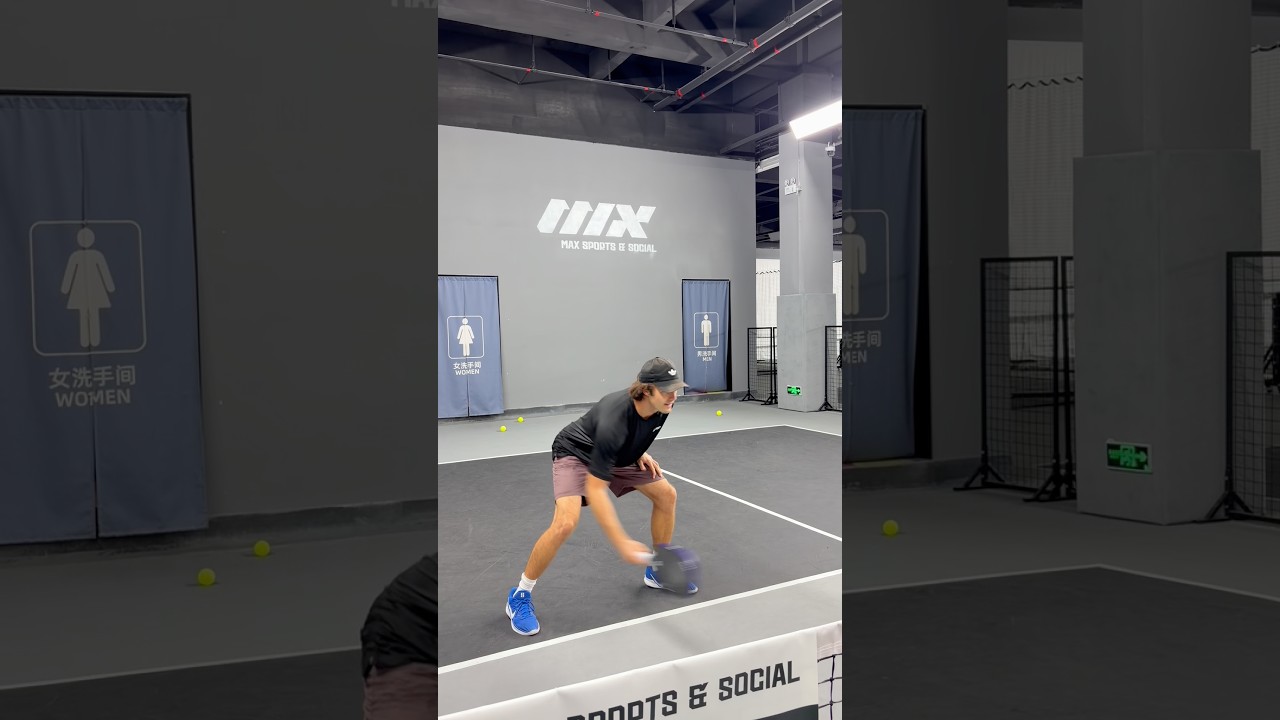
How to Hit a Crosscourt Dink in Pickleball
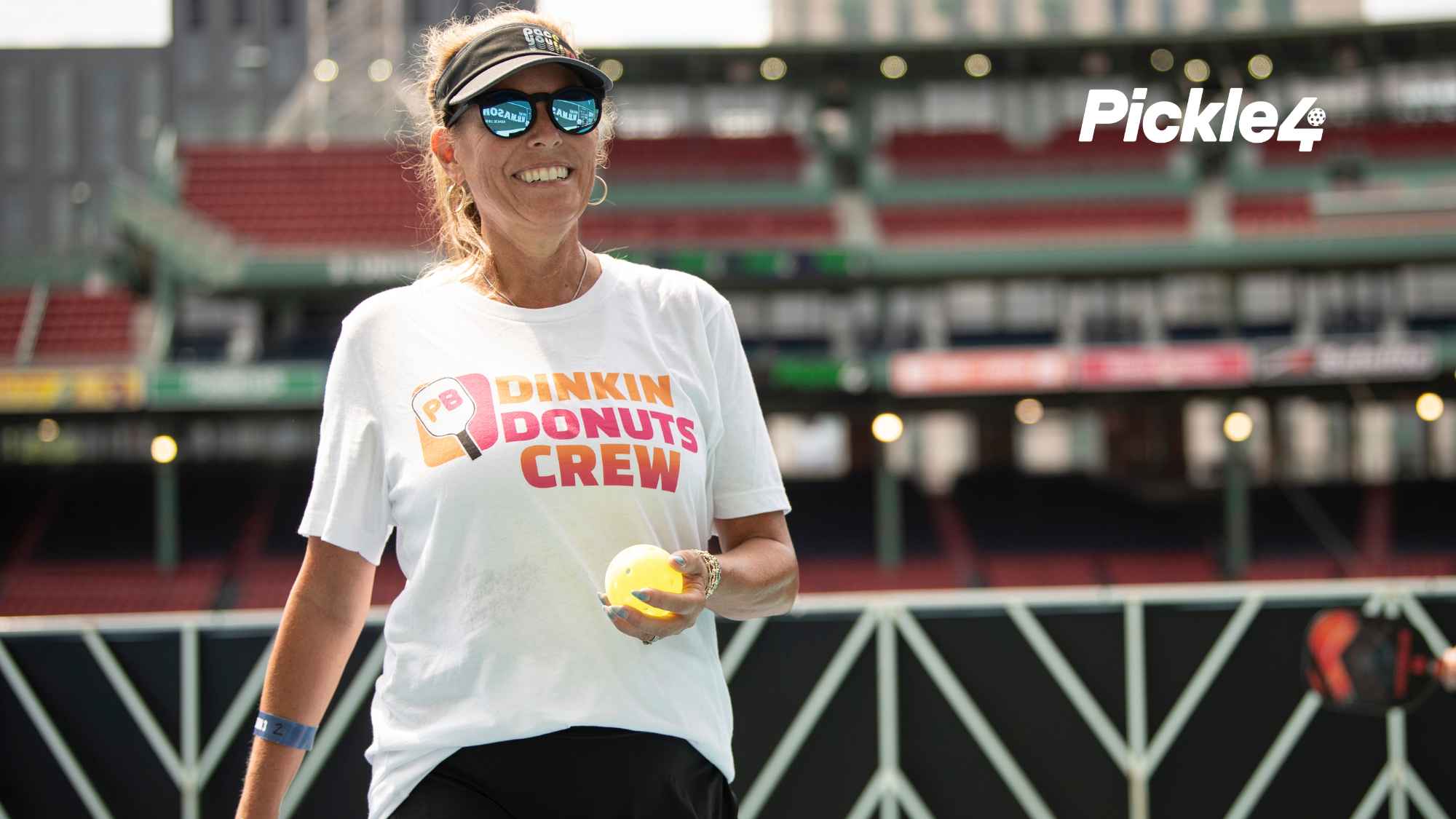
The crosscourt dink is one of pickleball’s most versatile shots, and mastering it requires understanding paddle positioning and footwork fundamentals. Learn the exact technique used by top players to control the net and dominate rallies.
 The Dink PickleballThe Dink Media Team
Advanced Dinking Patterns 4.0 Pickleball Players Use to Bait Attacks
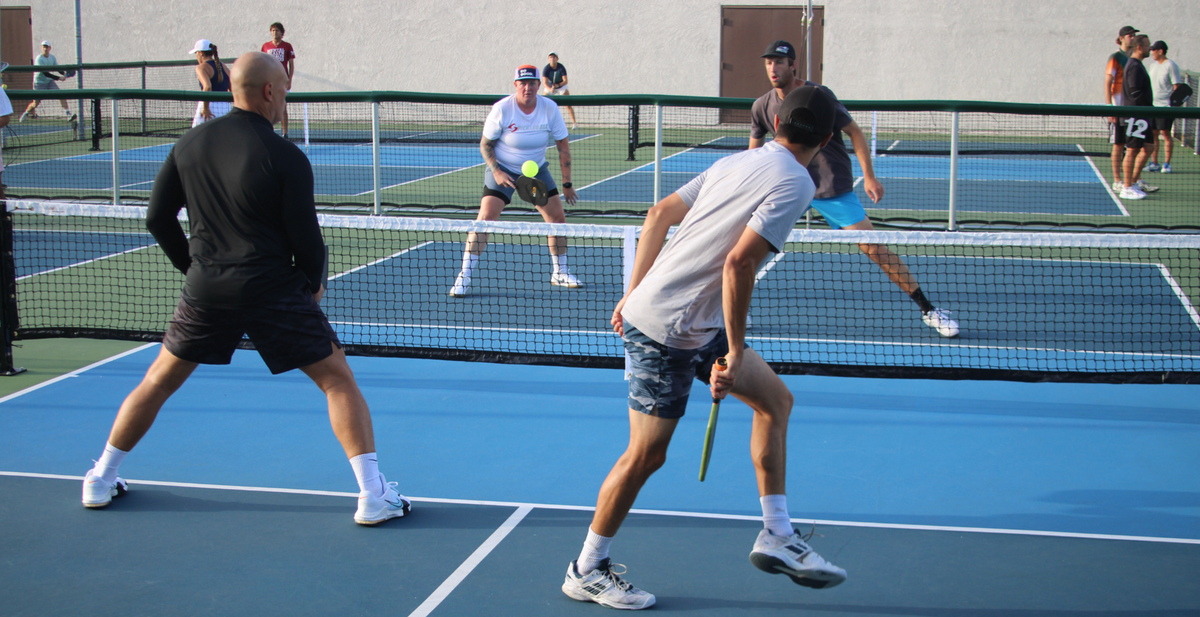
Here's where it gets interesting. At 4.0, your opponent is dangerous. They can speed the ball up, and if they catch you off-guard, the point is over.
The advanced player's move? Make them think they see an opportunity that isn't there.
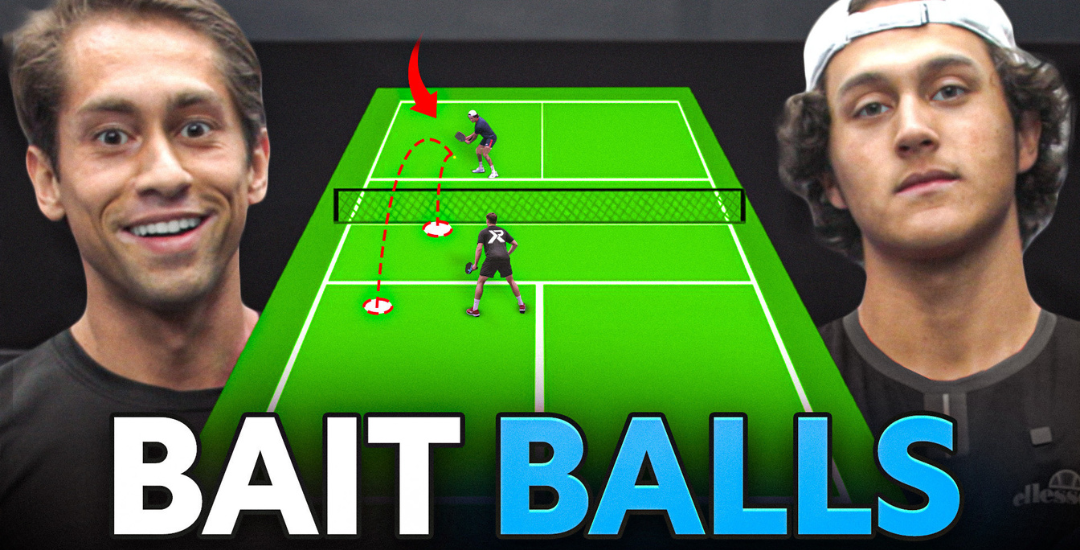
Speed-up baiting is a deliberate advanced dinking pattern.
You engineer a ball, slightly higher, slightly softer, pulled a few inches toward center, that looks attackable.
Your body and paddle position are already loaded for a counter. When they speed it up, you're ready.
When they hesitate, you've disrupted their rhythm and the next shot is yours.
How to Break the 4.0 Ceiling in Pickleball
Breaking the 4.0 ceiling in pickleball is the sport’s most common plateau, most players hit it and never figure out why. Here’s what’s actually holding you back and how to move past it for good.
 The Dink PickleballThe Dink Media Team
The Speed-Up Bait: Turn a Dink Rally Into a Putaway
Execution matters here.
Research on reactive decision-making in racket sports published in Perceptual and Motor Skills (2025) shows that players pre-set their motor response based on environmental cues rather than reacting in real time.
In other words, you can't simply react to a speed-up. You have to anticipate it.
The bait works because you're controlling the cue. Set the ball just above tape height with minimal spin in the middle-third of the court.
Keep your paddle up and your weight slightly forward. When they take the bait, your counter is a compact, redirected block, not a swing.
The backhand volley counter off a baited speed-up is one of the cleanest point-endings in the game at 4.0+.
Train this: during practice rallies, call out "bait" before you set the trap ball.
After a few sessions, the pattern becomes muscle memory and you stop needing to consciously set it up.
Mastering the Bait Ball Pickleball Shot with Jack Munro & Zane Navratil
Pros Zane Navratil and Jack Munro demonstrate how, when, and why to use the bait ball pickleball shot.
 The Dink PickleballZane Navratil
Middle Dinks and Body Shots: The Ugly Wins
You want to know what separates the 4.0 players who plateau from the ones who keep climbing? They're willing to play ugly.
Middle dinks and body-targeted dinks don't look pretty. They don't show up in highlight reels. But they win points.
The middle dink, placed directly between two opponents in doubles, exploits the communication gap.
Doubles strategy and T-sideline placement has long emphasized that the seam between partners is the most underused target in recreational and competitive play alike.
When neither player is sure whose ball it is, the hesitation is the problem. You've already won the exchange.
How to Hit the Middle Court Drop Shot in Pickleball
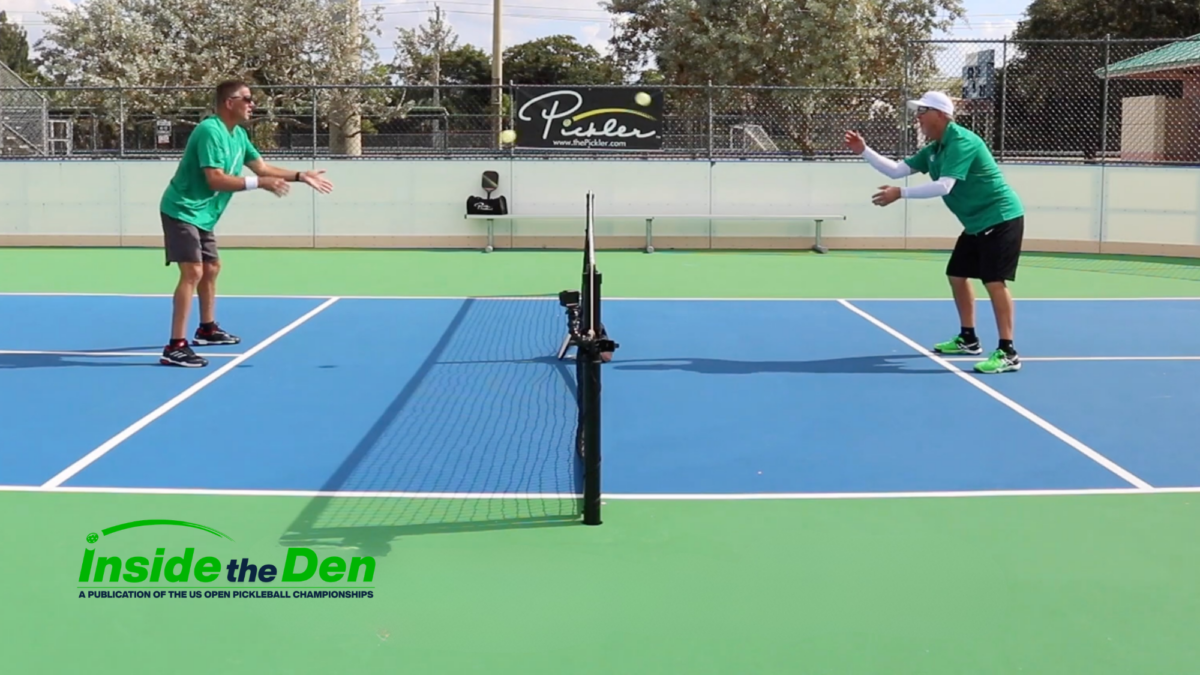
Most pickleball players make the same mistake when they find themselves in the middle of the court with an easy ball. Instead of hitting an aggressive shot out wide, the middle court drop shot is the smarter play that gains ground and wins points.
 The Dink PickleballThe Dink Media Team
Why Dinking at the Body Disrupts 4.0 Opponents
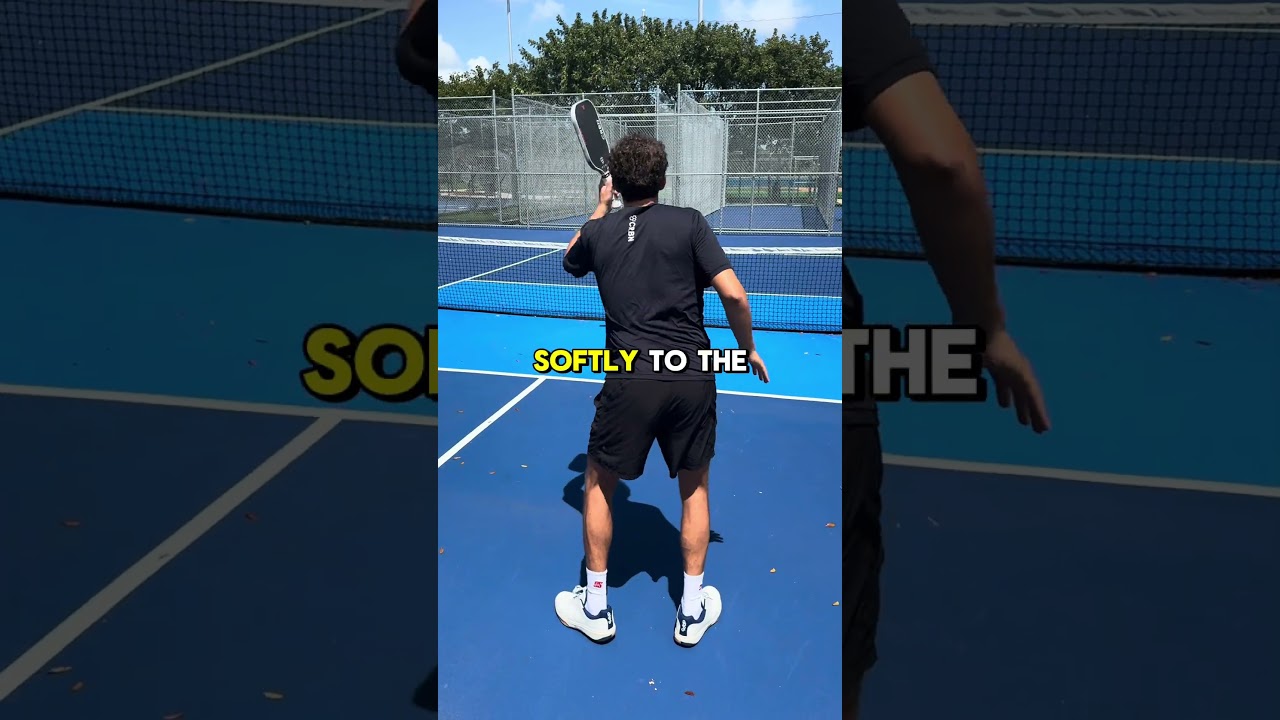
The body dink, aimed at the hip or torso of your opponent, forces an awkward decision: forehand or backhand? Step back or reach?
That indecision creates late contact, which almost always produces a popped-up ball or a short return you can attack.
A 2025 study published in the Journal of Sports Sciences on decision-making under spatial pressure found that athletes facing ball trajectories directed at their body centerline showed significantly slower response selection, averaging 40ms longer per decision, compared to wide targets. F
orty milliseconds is an eternity in a fast exchange.
The best practitioners of this shot keep their paddle face open and add just enough backspin to keep the ball low.
Combine this with the go-to slice dink mechanics and you've got a weapon that works regardless of pace.
Avoid These 3 Deadly Mistakes to Master Aggressive Dinking
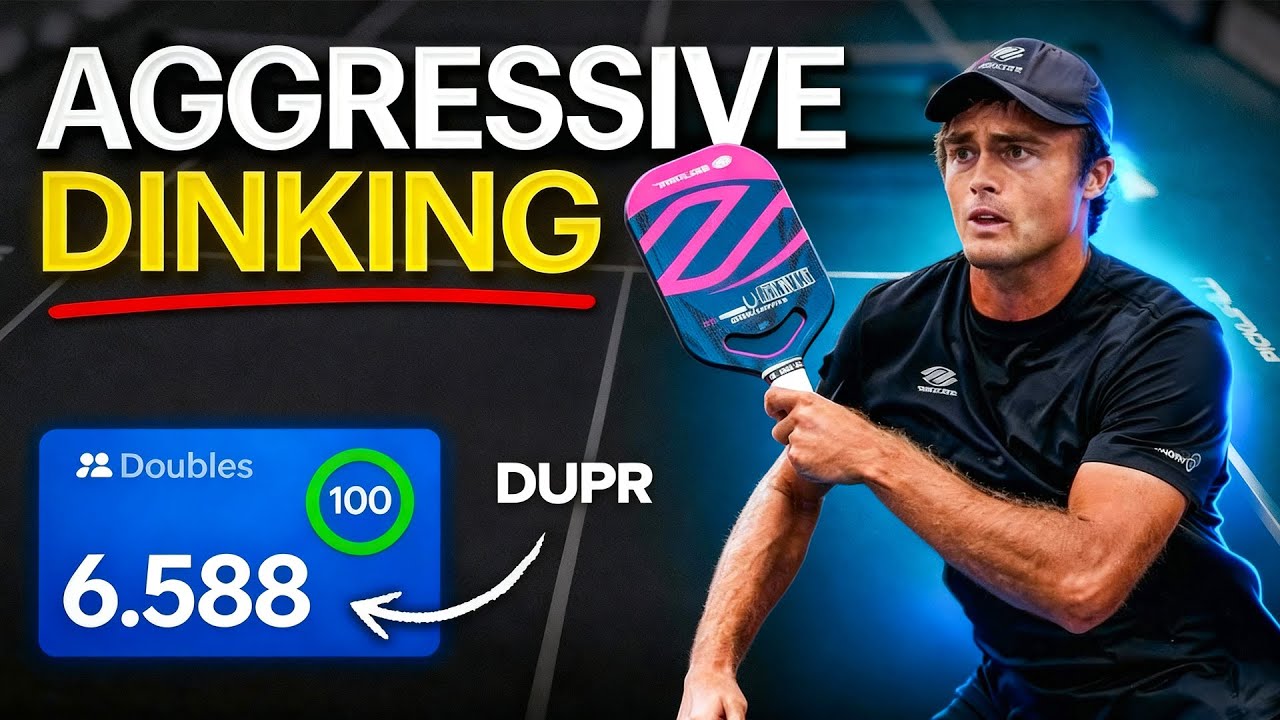
The aggressive dink isn’t about overpowering your opponent. It’s about creating pressure through placement, using deception to keep them guessing, and understanding when to attack versus when to reset
 The Dink PickleballAlex E. Weaver
How to Build a Reset-to-Attack Sequence With Advanced Dinking
A reset is not a surrender. That's the mindset shift that makes advanced dinking patterns 4.0 pickleball players execute.
Because at 4.0+, you will get attacked. You will face hard balls at your feet or your body.
The players who climb to 4.5 treat the reset as step one of a counterattack sequence, not the end of the point.
Here's the sequence:
- Absorb the attack: soft hands, paddle angled slightly upward, take pace off the ball and drop it into the kitchen
- Reset to neutral: the ball lands unattackably low, the rally returns to a dink exchange
- Immediately shift your pattern: the opponent who just speed-up is now anticipating your counter, so you go middle or body, not back to the same corner
- Wait for the float: your shifted placement will draw an uncomfortable ball; when it rides up, that's your speed-up opportunity
Reset better is a skill with its own mechanical requirements (soft grip pressure, forward weight, paddle in the ready zone), but the strategic layer is what 4.0+ players add.
You're not just resetting to survive. You're resetting to change the pattern.
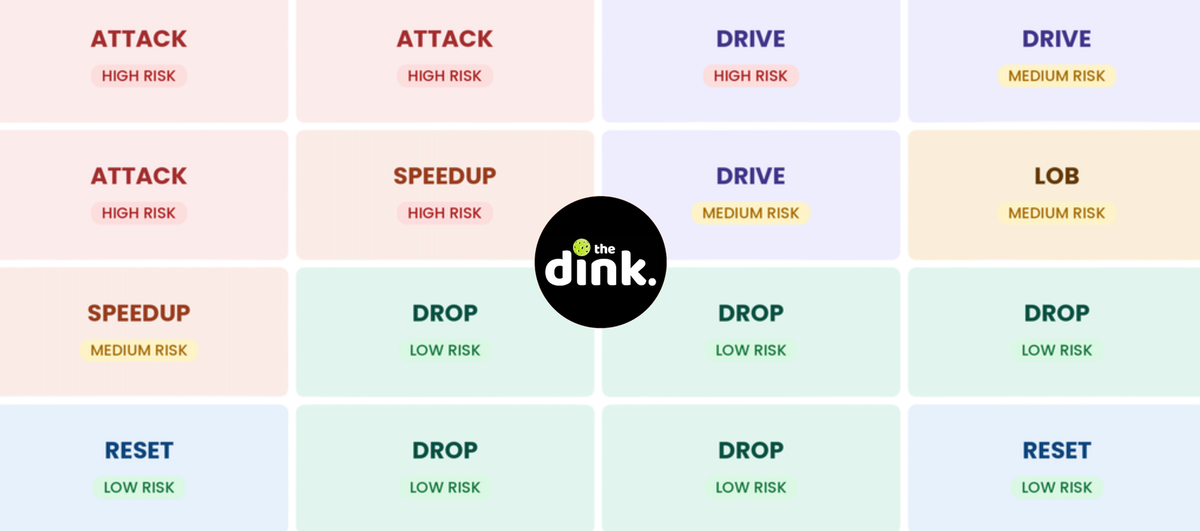
Decision Matrix: When to Attack or Reset in Pickleball
Pickleball is really all about two key factors: your court positioning and the height of the ball. This matrix decodes the game for you.
 The Dink PickleballThe Dink Media Team
When Should You Flip From Defense to Offense?
The trigger is ball height. Any ball above tape height with less than medium pace is attackable.
At 4.0, the mistake is attacking too early (when the ball is still dropping) or too late (after it's already past the strike zone).
Advanced pickleball shot selection comes down to training your eye to recognize the attacking window before your feet have time to set.
Two cues that tell you to flip: the ball height clears the top of the net by more than 6 inches, and your opponent is leaning back or retreating.
Both are green lights. Either one alone should prompt you to at least accelerate pace if not go full speed-up.
The five essential shots in pickleball all intersect here: your reset, your dink, your speed-up, your block, and your third-shot drop are a system, not a menu.
Advanced dinking patterns 4.0 pickleball demands that you cycle through that system intentionally, not reactively.
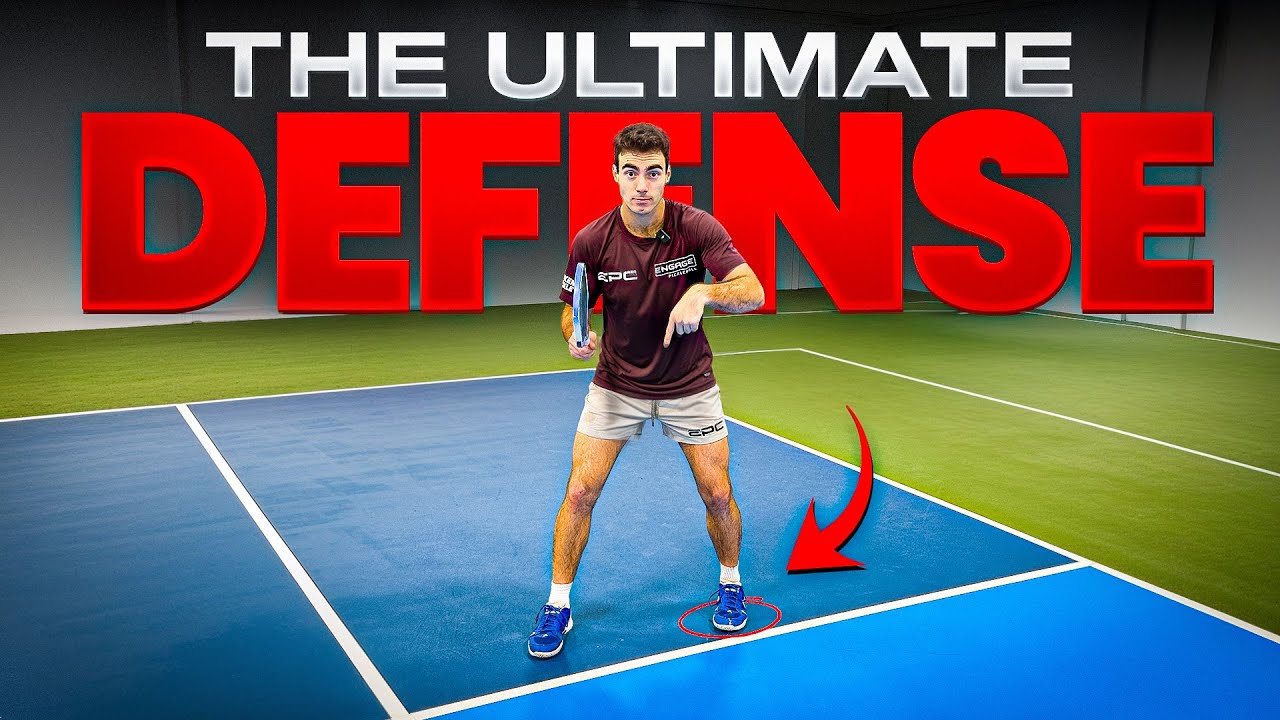
The Pivot Trick: How to Quickly Turn Defense Into Offense in Pickleball
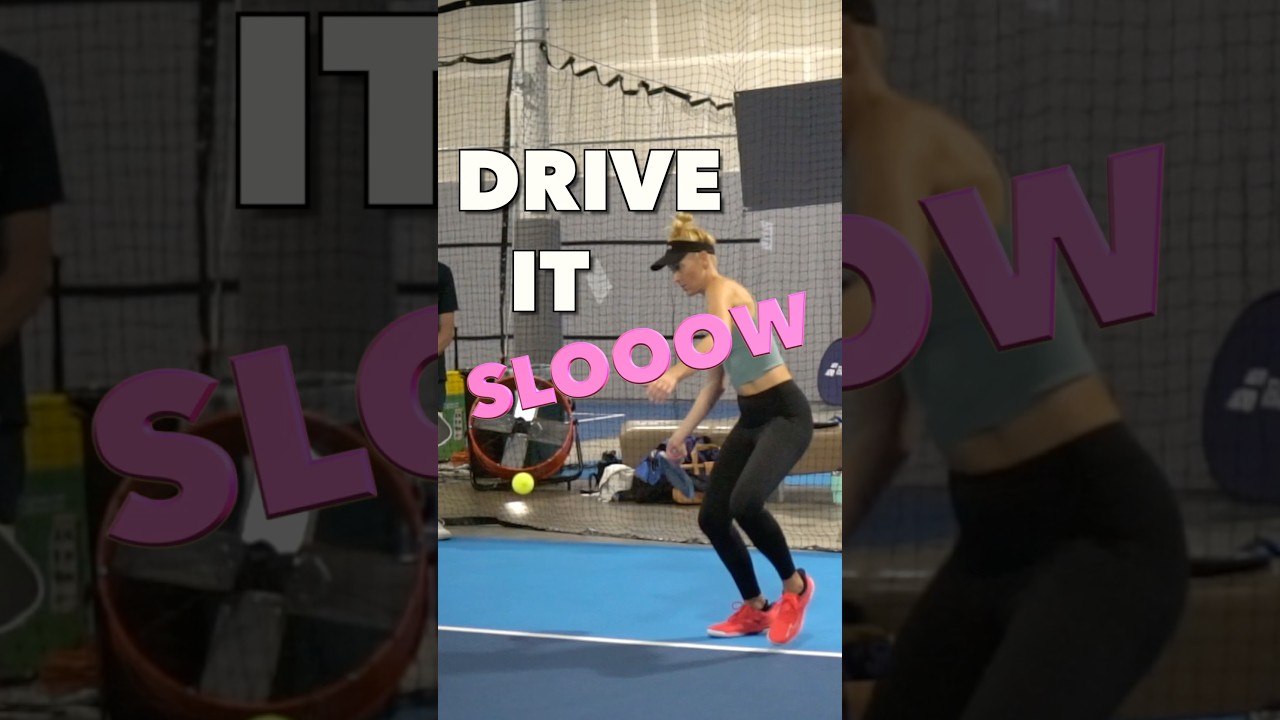
A well-timed pivot lets you turn into the shot, maintain your balance, and hit an aggressive return instead of a defensive block.
 The Dink PickleballThe Dink Media Team
Key Takeaways
- At 4.0+, every dink should have a purpose: angle, placement, pace, or spin
- The cross-court dink is the highest-percentage advanced pattern because it gives you the most net clearance and the widest angle
- Middle and body dinks create hesitation and decision errors in your opponent
- Speed-up baiting is a deliberate pattern, not a reactive gamble
- The reset-to-attack sequence is how elite players flip a defensive moment into a point-winner
💡
Heads up: hundreds of thousands of pickleballers read our free newsletter.
Subscribe herefor cutting edge strategy, insider news, pro analysis, the latest product innovations and more.
Frequently Asked Questions
What are the most effective advanced dinking patterns for 4.0 pickleball?
The cross-court angle dink, the middle dink, the body-targeted dink, and the speed-up bait sequence are the four core advanced dinking patterns 4.0 pickleball players use consistently. Each pattern disrupts opponent positioning in a different way: the cross-court creates width, the middle creates communication problems, the body shot causes decision hesitation, and the bait sequence creates a counter-attack opportunity on your own terms.
How is advanced dinking at 4.0 different from recreational dinking?
At 4.0+, every dink is intentional, placed with specific angle, depth, spin, or targeting in mind. Recreational players dink to avoid errors. Advanced players dink to accumulate pressure and manufacture a short ball or a speed-up opportunity. The difference is architectural: recreational dinking is reactive, advanced dinking patterns 4.0 players rely on are deliberate and sequential.
How do you train the cross-court angle dink for consistent advanced play?
Use a target-based drilling approach. Place a cone near the kitchen corner on the diagonal and rally cross-court with a partner, scoring points for tight placement within 12 inches of the target. Doing this 10-15 minutes before open play builds the muscle memory needed to execute the acute angle under pressure. Consistent contact in front of the lead hip, using a low-to-high brushing motion, is the mechanical key.
When should you use a body dink versus a corner placement?
Use the body dink when your opponent has locked into a wide-to-wide cross-court pattern and their feet are set sideways. The body shot breaks that rhythm by forcing a forehand-or-backhand decision they aren't ready to make. Use corner placements when your opponent is standing centered or when you want to pull them off the line for a subsequent middle attack.
What is the reset-to-attack sequence in advanced pickleball dinking strategy?
The reset-to-attack sequence is a four-step pattern: absorb the incoming attack with soft hands to drop the ball unattackably into the kitchen, re-establish the dink rally from neutral, immediately shift your placement to disrupt your opponent's anticipation, then wait for the float that your shifted pattern generates and attack it. This turns a defensive moment into a structured point-winning sequence rather than just a survival play.
Anuncie Aqui / Advertise Here
Sua marca para o mundo Pickleball! / Your brand for the Pickleball world!




 English (US) ·
  Portuguese (BR) ·