
 English
  Spanish
  Portuguese
  German
  Italian
  Japanese
  French
  Polish
  Russian
  Netherlands
  Hungarian
  Turkish
  Videos
  Thedink Pickleball

Knowing how many points win a pickleball game is the foundation of every match you'll ever play. Here's the complete breakdown of pickleball's scoring system, from standard recreational play to tournament tiebreakers.
Knowing how many points win a pickleball game is the first thing you should memorize before you ever step on the court, and yet it's one of the most commonly fumbled parts of the sport.
The short answer: 11 points, win by 2. But the full picture is a little more interesting than that.
There are tournament exceptions, a server-number system that trips up players constantly, and a newer format that's starting to change how the pros approach every single rally.
Love pickleball? Then you'll love our free newsletter. We send the latest news, tips, and highlights for free each week.
How Many Points Win a Pickleball Game? The Standard Rules
Most pickleball games are won by the first team to reach 11 points, but you must win by at least 2.
If the score hits 10-10, the game keeps going until one side leads by two. That's it.
Clean, simple, and responsible for some of the most tense moments the sport can produce.
This applies to recreational play, open courts, and the vast majority of organized league matches.
USA Pickleball's official rulebook confirms that the standard game format is 11 points, win by 2, with a third game tiebreaker (when applicable) typically played to 15, win by 2.
Here's something that new players often overlook: you can only score a point when your team is serving.
This is called side-out scoring, and it's the backbone of traditional pickleball. If the receiving team wins the rally, they don't get a point; they get the serve.
No point. Just possession.
That single rule completely shapes how you play the game, especially in doubles, where managing serve rotation and side-out opportunities is half the strategy.
How Does the Server Number System Work in Doubles?
This is where most beginners (and even intermediate players) who get confused. In doubles, each team gets two servers before losing possession.
That's why the score in doubles is called out as three numbers, not two. The format is: your score, opponent's score, server number (1 or 2).At the very start of the game, though, there's one important exception. The starting team only gets one server (server 2), announced as "0-0-2."
This gives the receiving team a slight advantage right out of the gate, preventing the serving team from running up an early score before anyone is warmed up.
It's a small tweak, but it matters , especially at higher levels where serving strategy can set the tone for entire games.
Once that first server loses the rally, the serve passes to the other team. From there, each team alternates both of their servers before a side-out occurs.
Once you internalize the three-number call, it becomes automatic. Until then, keep a scoreboard close , and everyone needs one at some point.
💡
Need some new pickleball gear? Get 20% off select paddles, shoes, and more with code THEDINK at
Midwest Racquet SportsWhat Happens in Tournament Play? The 15 and 21-Point Formats
Tournament formats can look different. Here's how it typically breaks down:
- Best of 3 games to 11, win by 2 , standard recreational and most sanctioned matches.
- Single game to 15, win by 2 , often used when time is limited, such as during pool play at large events.
- Single game to 21, win by 2 , used in some championship or gold-medal formats, particularly in USA Pickleball-sanctioned tournaments.
The 21-point format rewards consistency more than any other. You can't rely on one hot streak to close it out.
Every point compounds, and doubles strategy matters even more when the game stretches that long.
The mental game at 18-18 is completely different from 10-10 in an 11-point match.
Pro tip: Third games in a best-of-3 format sometimes switch ends of the court when one team reaches 6 points.
This balances out any court-side advantages , wind, sun, or crowd noise. It's an official rule, and it catches players off guard more often than you'd think.
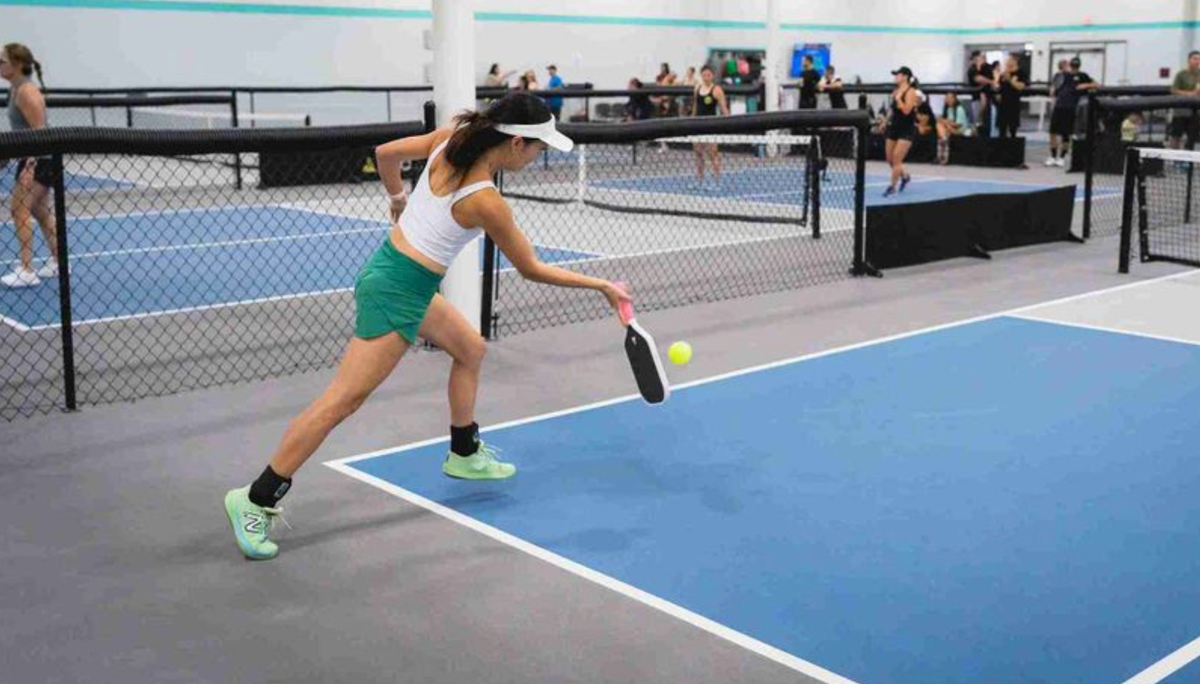
Pickleball Scoring Rules: Complete Guide (2026)
Pickleball scoring rules aren’t complicated, but they trip up new and experienced players alike. This guide breaks down side-out and rally scoring so you can step on the court knowing exactly what’s happening.
 The Dink PickleballThe Dink Media Team
Does Singles Scoring Work Differently?
Singles pickleball follows the same 11-point, win-by-2 structure , but the serving rules simplify considerably.
In singles, there's only one server per side, so the score is called with just two numbers: your score, then your opponent's. No server number needed.
The server's position on the court does matter, though. If your score is even, you serve from the right side. If your score is odd, you serve from the left.
It's a clean system once you get used to it, and it means your court position actually tells you the score if you forget to track it.
Singles play is a completely different beast from doubles , the physicality alone changes what it means to return serve effectively.
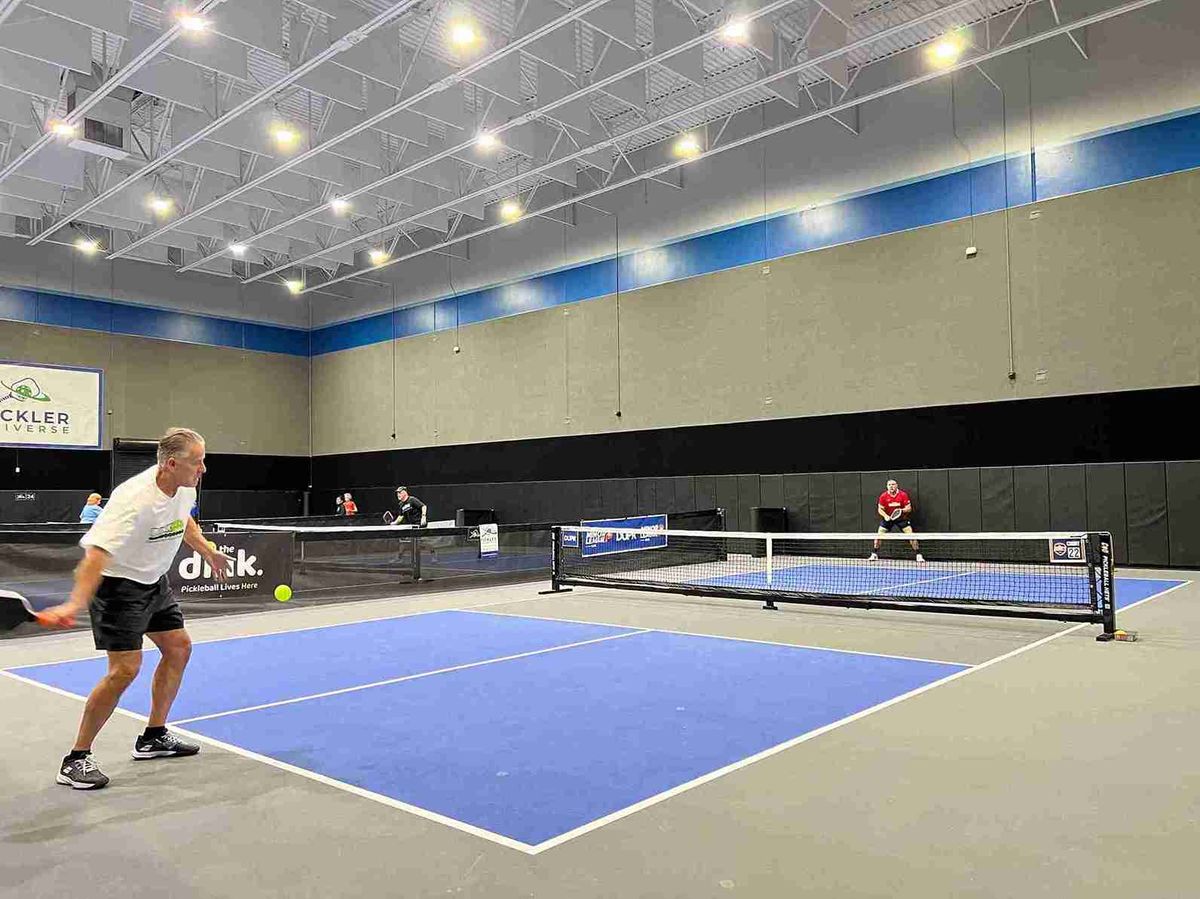
Pickleball Singles Rules: The Complete Guide to Solo Play
Pickleball singles rules follow most of the same framework as doubles, but the scoring system, serving rotation, and court strategy are different enough to trip up even experienced players. This complete guide breaks down every rule you need to play solo pickleball the right way.
 The Dink PickleballThe Dink Media Team
Why Does Win-by-2 Matter More Than You Think?
Honestly, the win-by-2 rule is underrated as a strategic element.
It's not just a tiebreaker mechanic , it fundamentally changes how you play the final stretch of a game.
When you're up 10-9, you don't just need one point. You need to hold serve and stay disciplined long enough to build a 2-point gap.
That pressure favors teams with strong mental composure and consistent third shots.
You see it constantly: a team gets to 10 first, tightens up, and their opponents rattle off 3 in a row to take a 12-10 win.
The team that manages the final few points best , not the team that that scored fastest , usually wins.
This is also where court positioning at the kitchen line becomes the deciding factor.
The pressure of win-by-2 makes soft, controlled play at the net far more valuable than power.
If you can dink consistently under pressure, you win close games. That's not a coincidence. That's structure.
Pickleball Shot Placement: Complete Winning Guide
Whether you’re serving, returning, dinking, or driving, knowing where to aim gives you control over the rally and keeps your opponent reacting instead of attacking.
 The Dink PickleballThe Dink Media Team
Building Your Game Around the Scoring System
Understanding the pickleball scoring system isn't just administrative ; it shapes every tactical decision you make.
Knowing that you only score on your serve (in traditional format) means you should be taking smarter risks when you're receiving.
You can be aggressive on return because the worst outcome is just a side-out, not a point against you.
It also means fourth-shot coverage and doubles court positioning should look different depending on whether you're the serving or receiving team.
Serving teams often play a touch more conservatively , they have something to protect. Receiving teams can press.
The mid-court transition game looks different based on that context.
If you're newer to structured play, these beginner fundamentals will give you a foundation before you layer in scoring strategy.
The scoring system isn't separate from how you play. It is how you play.
Every shot, every serve, every reset at the kitchen ; it all flows from understanding what's at stake on any given rally.
Elevate your overall skill set and the scoring rules start to feel less like rules and more like a framework you're actively exploiting.
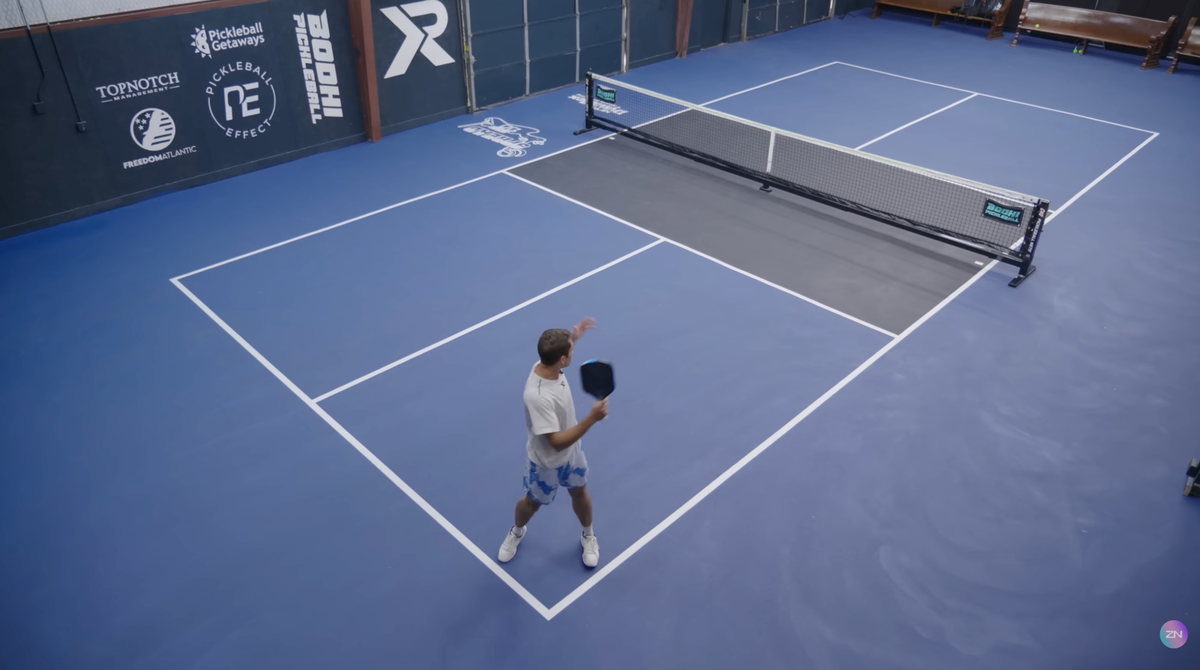
New to Pickleball? Learn the Rules, Key Shots, and Scoring in Under 5 Minutes
Then grab a paddle, find some friends and a court, and just go play. You’ll figure the rest out.
 The Dink PickleballThe Dink Media Team
Key Takeaways
- Standard pickleball games are played to 11 points, win by 2.
- You can only score a point when your team is serving (traditional scoring).
- Doubles games start with the score called as "0-0-2," giving the receiving team a built-in first-server advantage.
- Tournament games may be played to 15 or 21 points, still win by 2.
💡
Heads up: hundreds of thousands of pickleballers read our free newsletter.
Subscribe herefor cutting edge strategy, insider news, pro analysis, the latest product innovations and more.
Frequently Asked Questions
How many points win a pickleball game in standard play?
In standard recreational and competitive pickleball, you need 11 points to win a game , but you must win by at least 2 points. If the score is tied at 10-10, play continues until one team leads by 2. Tournament formats may use 15 or 21 as the target score, still requiring a 2-point margin.
What does "0-0-2" mean at the start of a pickleball game?
"0-0-2" is the score called at the very beginning of a doubles game. It means both teams have 0 points, and the serving team starts with server 2 (instead of the normal server 1). This rule gives the receiving team a slight advantage by limiting the first serving team to only one server before the first side-out occurs.
Can you score a point when you're not serving in pickleball?
Not in traditional side-out scoring. You can only earn a point when your team is serving. If you win a rally while receiving, you earn the serve , but not the point. The exception is rally scoring (used in some pro leagues and formats), where a point is awarded after every rally regardless of who served.
How many points do you play to in a pickleball tournament?
It depends on the tournament format. Most sanctioned matches use best-of-3 games to 11 points, win by 2. Some events use a single game to 15 or 21 points, especially for gold-medal or championship rounds. Always check the event's specific format sheet , it varies by tournament director and USA Pickleball event tier.
Anuncie Aqui / Advertise Here
Sua marca para o mundo Pickleball! / Your brand for the Pickleball world!




 English (US) ·
  Portuguese (BR) ·