
 English
  Spanish
  Portuguese
  German
  Italian
  Japanese
  French
  Polish
  Russian
  Netherlands
  Hungarian
  Turkish
  Videos
  Thedink Pickleball

Topspin pickleball technique is built on two fundamentals: a steep brush angle and a low-to-high paddle path. Nail both, and you'll hit shots that land deep, kick high, and force your opponents into uncomfortable defensive positions.
Topspin pickleball technique is the one skill that separates players who push the ball around from players who actually threaten the court.
It's not about swinging harder. It's about swing direction and where your paddle face meets the ball.
Get both right, and you'll hit shots that dip fast, land deep, and kick high off the bounce, which are shots that force your opponent back before they can even think about attacking.
The good news: this isn't magic reserved for 5.0 players. The mechanics are learnable, and with the right framework they click fast.
Love pickleball? Then you'll love our free newsletter. We send the latest news, tips, and highlights for free each week.
What Is Topspin in Pickleball (and Why Does It Matter)?
Topspin is forward rotation applied to the ball, created when your paddle brushes upward across the back of the ball at contact.
That spin makes the ball travel in a curved, downward arc rather than a flat line.
It lets you hit with more pace without sending the ball long, and when the ball lands, it kicks forward and up, making it extremely difficult to neutralize at the kitchen line.
This isn't just nice-to-have. Players who add reliable topspin to their pickleball drive technique push opponents off the baseline and open up the whole court.
The physics back this up: according to research published in the Journal of Sports Sciences, topspin reduces the effective flight distance of a shot while maintaining pace, which is exactly why it's such a weapon in net-dominated sports.
There are two variables that produce topspin: brush angle (the angle of your paddle face at contact) and paddle path (the direction your swing travels). Neither one works without the other.
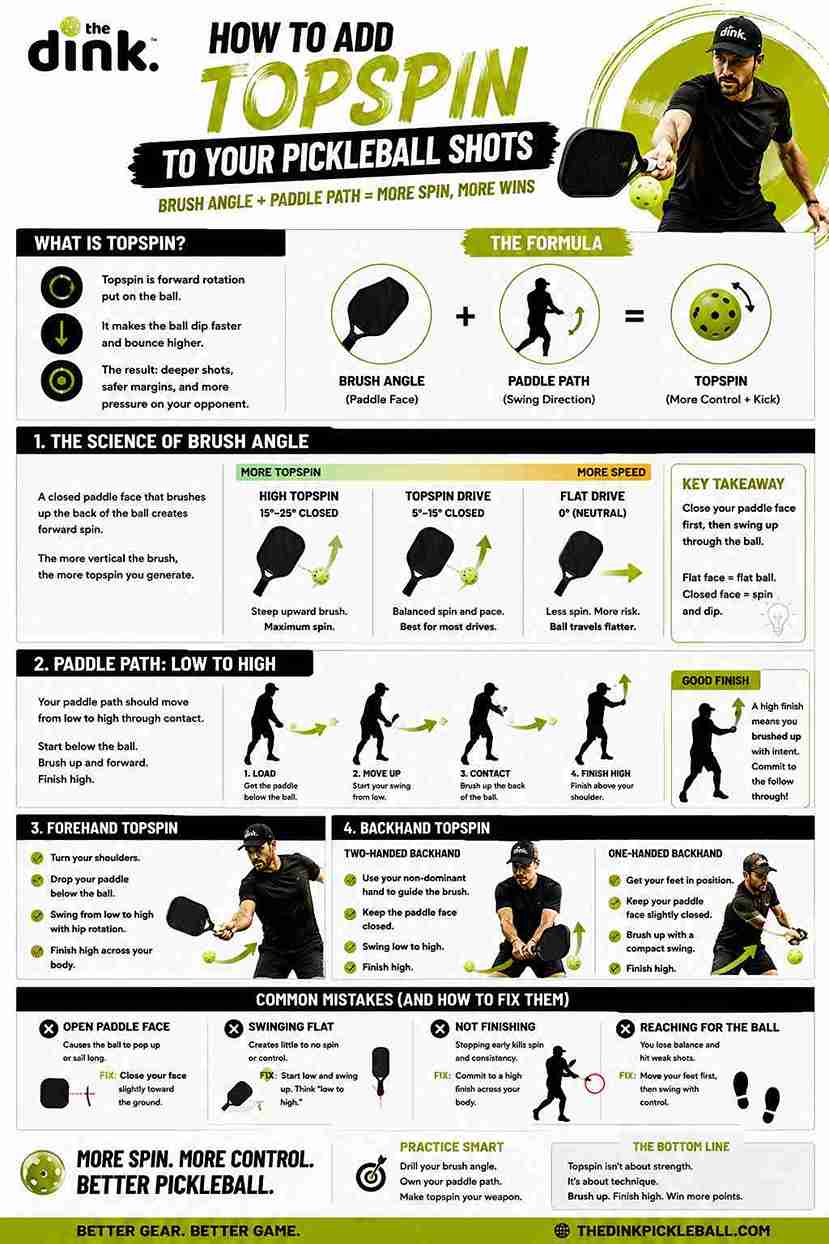
The Science of Brush Angle: Where Your Paddle Face Points
Your brush angle determines how much spin you generate vs. how much power transfers into the ball's forward velocity.
A closed paddle face (tilted slightly forward, toward the ground) combined with an upward swing creates the ideal topspin contact.
You're not hitting through the ball. You're brushing up and across it. The more vertical that brush, the more spin.
The more horizontal, the more drive and less topspin.
Here's the practical breakdown:
- High topspin (lots of roll): Paddle face closed 15–25 degrees, steep upward brush
- Topspin drive (spin + pace): Paddle face closed 5–15 degrees, moderate upward path
- Flat drive (little spin): Paddle face perpendicular to the ball, horizontal swing path
Most recreational players default to flat or semi-flat because it feels more powerful. It isn't.
A well-brushed topspin drive actually allows more pace because the spin brings the ball down before it goes out.
If you've ever wondered why your drive keeps sailing long, a flat paddle face and no upward brush is almost always the culprit.
The closed face is the part players miss. They hear "swing up" and swing up with a neutral or open face, which just pops the ball.
Close that face first. Then swing up through it.
💡
Need some new pickleball gear? Get 20% off select paddles, shoes, and more with code THEDINK at
Midwest Racquet SportsHow Paddle Path Drives Topspin Pickleball Technique
Paddle path is the direction your swing travels through the hitting zone, and for topspin pickleball technique, that path needs to move low-to-high.
That's the core mechanic. Not side-to-side. Not flat. Low to high.
Think of your swing as a diagonal line: starting below the ball and finishing above your shoulder. The steeper that diagonal, the more spin you produce.
The flatter it is, the more you're hitting a drive or a flat ball.
The finish matters just as much as the start.
A proper topspin swing finishes high, often with the paddle ending up near your opposite shoulder (for a forehand) or wrapping around your body (for a two-handed backhand).
A truncated finish, where you stop your swing at contact, kills topspin generation instantly. Commit to the follow-through.
For the forehand specifically, the low-to-high path pairs beautifully with hip rotation.
Your forward knee drops slightly as you load, your hips drive through at contact, and your arm follows the upward arc.
If your hips aren't moving, your arm is doing all the work, and you'll lose consistency fast.
Check out this breakdown on the forehand from the Picklepod for a closer look at how pros generate that kinetic chain.
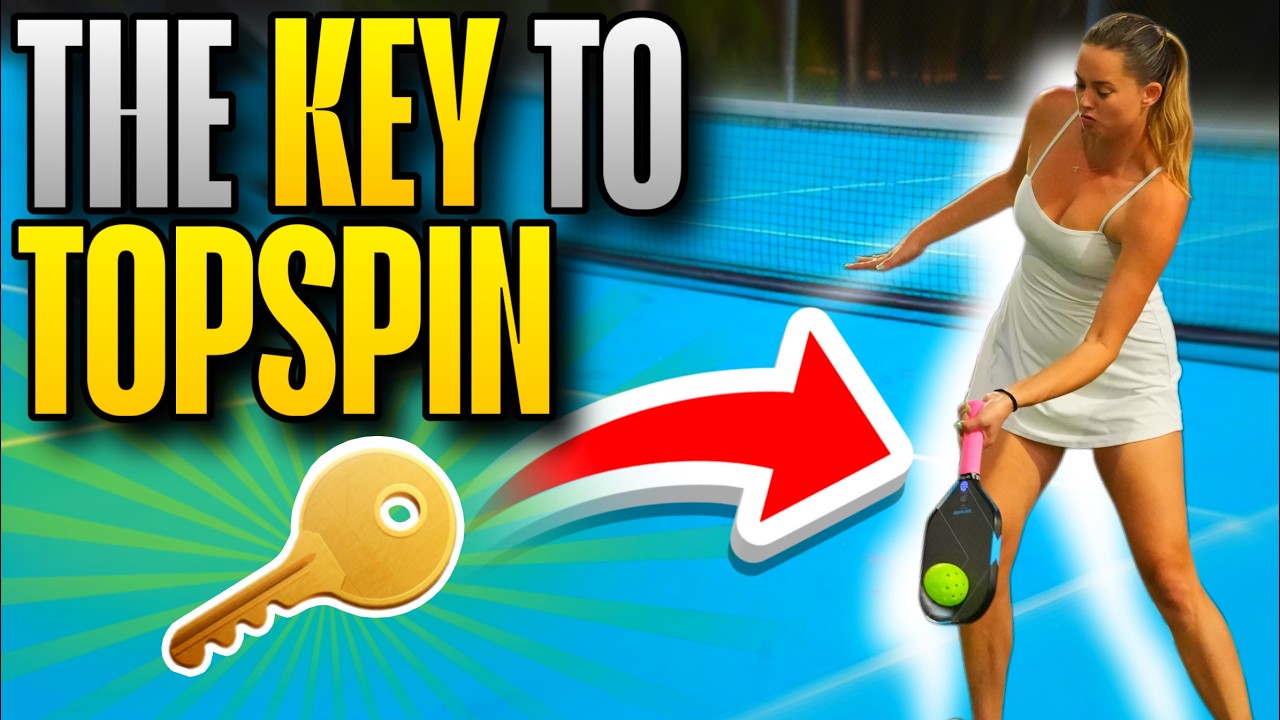
Pickleball Topspin: Master the Easiest Spin Technique
Pickleball topspin doesn’t have to be complicated. Professional player Ava Ignatowich reveals the simple wrist mechanics and paddle positioning that make pickleball topspin easier to learn than most players think.
 The Dink PickleballThe Dink Media Team
Forehand vs. Backhand Topspin: What Changes?
The principles are the same. The mechanics differ slightly.
Forehand topspin is generally easier to learn because the motion mirrors what players already do in other sports.
The hip rotation, the low-to-high arc, and the finish all feel relatively natural.
Focus on dropping your swing below the ball early and letting your elbow lead the paddle upward through contact.
Backhand topspin is where most players struggle, particularly on the one-handed backhand.
The brush angle is harder to maintain because the wrist has less natural range of motion in that direction.
A two-handed backhand solves a lot of this, which is a big reason why Ben Johns' backhand is such a weapon.
The non-dominant hand drives the brushing motion and keeps the face closed through impact.
For one-handed backhand topspin, the key is staying patient with your footwork.
Most errors happen because players reach for the ball instead of getting their feet around it first.
A proper backhand stance sets up the right contact point every time. Too close or too far, and the brush angle collapses.
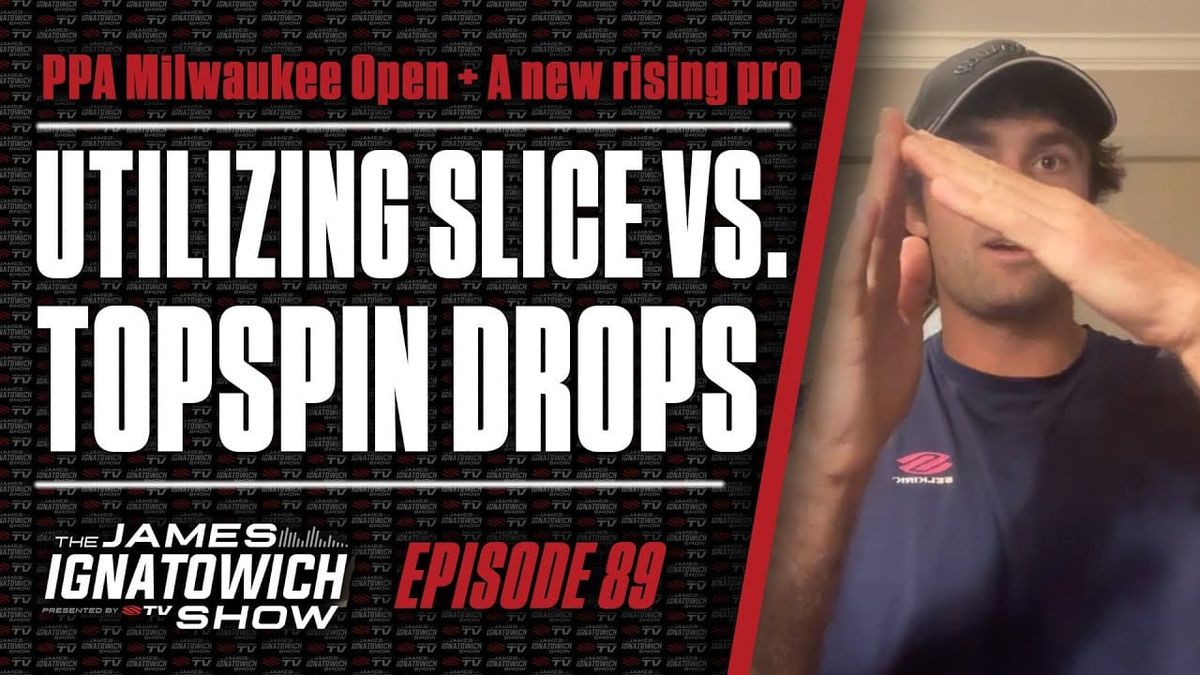
When to Use a Topspin Drop vs. a Slice Drop in Pickleball | James Ignatowich
Knowing when to hit a topspin drop versus a slice drop can make a big difference in your control and strategy on the court. Here are some tips from Selkirk pro James Ignatowich to help you.
The Dink PickleballThe Dink Media Team
When to Use Topspin Pickleball Technique (and When to Leave It Out)
Topspin isn't the answer to every ball. Knowing when to apply it is half the skill.
Use topspin when:
- You're hitting from mid-court or the baseline and need depth without risk
- Your opponent is camping at the baseline and you want to push them back further
- You're hitting a third shot drive and want it to land inside the court with pace
- You want to attack a high ball and drive it past a net rusher
Skip topspin when:
- You're in a dinking exchange at the kitchen (flat or backspin is usually better)
- The ball is below the net and you don't have room to brush upward
- You need precision over spin, such as a tight angle cross-court dink
The big mistake players make is trying to add topspin to every shot, including low, soft balls that need a completely different touch.
Your drive vs. drop decision should come before you decide how much spin to apply.
Mastering Pickleball Topspin: 5 Common Mistakes and How to Fix Them
By maintaining a stable face and letting the path of the paddle create the spin, you widen your margin for error and maximize consistency
The Dink PickleballThe Dink Media Team
3 Topspin Drills That Actually Work
You can read about brush angle all day. The only thing that builds it is repetition.
- 1. Wall Rally Topspin Drill Stand 8–10 feet from a wall. Hit forehands with a deliberate low-to-high swing path, aiming for a target zone about 3 feet above the ground. Focus on hearing a "brushing" sound at contact, not a "pop." A pop means your face is too open. A solid thwack with visible spin on the return means you're getting it right. For more solo drill ideas, check out solo pickleball drills you can do by yourself.
- 2. Basket Feed Swing Path Exaggeration Have a partner feed from a basket with medium-pace forehands. Exaggerate the low-to-high path by dropping your paddle head dramatically below the ball before each swing. You'll feel awkward at first. That's correct. Most players don't drop low enough to actually brush the ball properly. The figure-8 drill pairs well with this to build paddle awareness.
- 3. Cross-Court Topspin Rally Rally cross-court with a partner, both players hitting only topspin groundstrokes from the baseline. Call out "topspin only" and count consecutive shots. The constraint forces you to consciously apply technique on every ball instead of defaulting to flat when the point heats up. This is one of the advanced shot creation drills that serious players use to build shot-specific muscle memory.
Topspin in Pickleball: The Complete 3-Step Progression Guide
It’s one of those shots that looks effortless when done right, but feels impossible when you’re the one holding the paddle
The Dink PickleballThe Dink Media Team
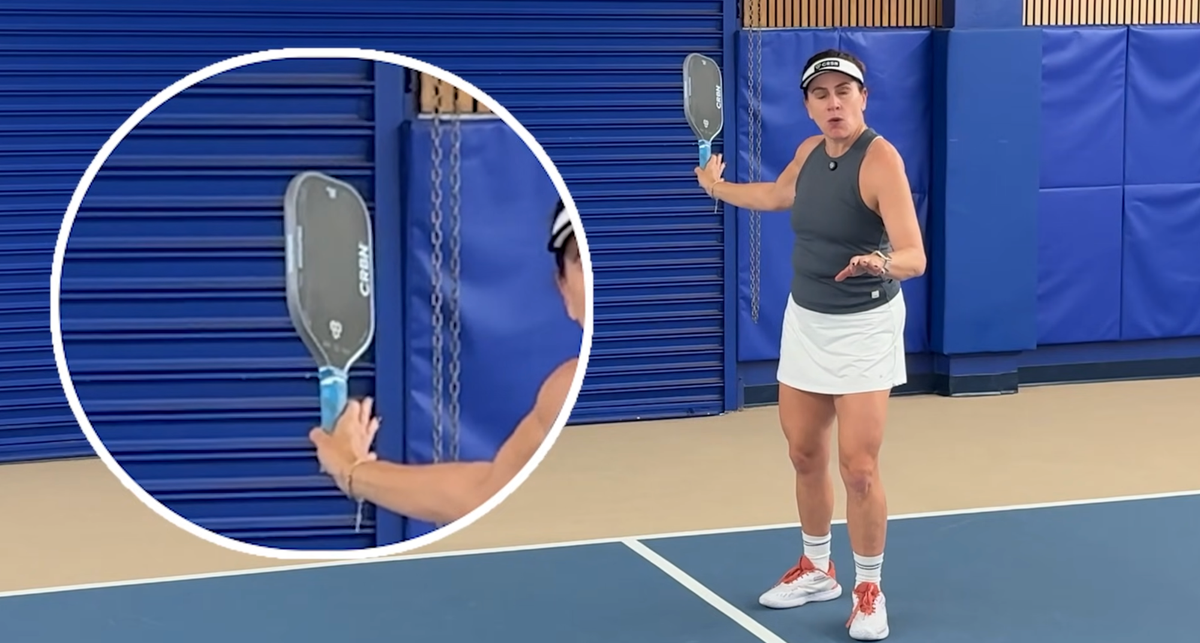
How Topspin Changes Your Whole Court Game
Here's the thing about topspin pickleball technique: it doesn't just improve one shot. It reshapes how you play the entire point.
When opponents know you can hit a heavy topspin drive that kicks up into their shoulder, they start respecting the baseline differently.
They can't creep in as aggressively. That gives you more time to transition to the kitchen on your own terms.
Suddenly, you're not just surviving rallies from the back of the court. You're dictating them.
It also gives you a genuine weapon on the return of serve.
A topspin return that lands deep in the corner forces the serving team to hit a difficult third shot from an uncomfortable position, which is especially punishing when the server rushed in too fast.
The players who invest in spin control early are the ones who plateau less.
The real reason most players stop improving is that they rely on the same flat ball forever and never build shot variety.
Topspin is variety. It's a different look, a different bounce, and a different problem for your opponent to solve.
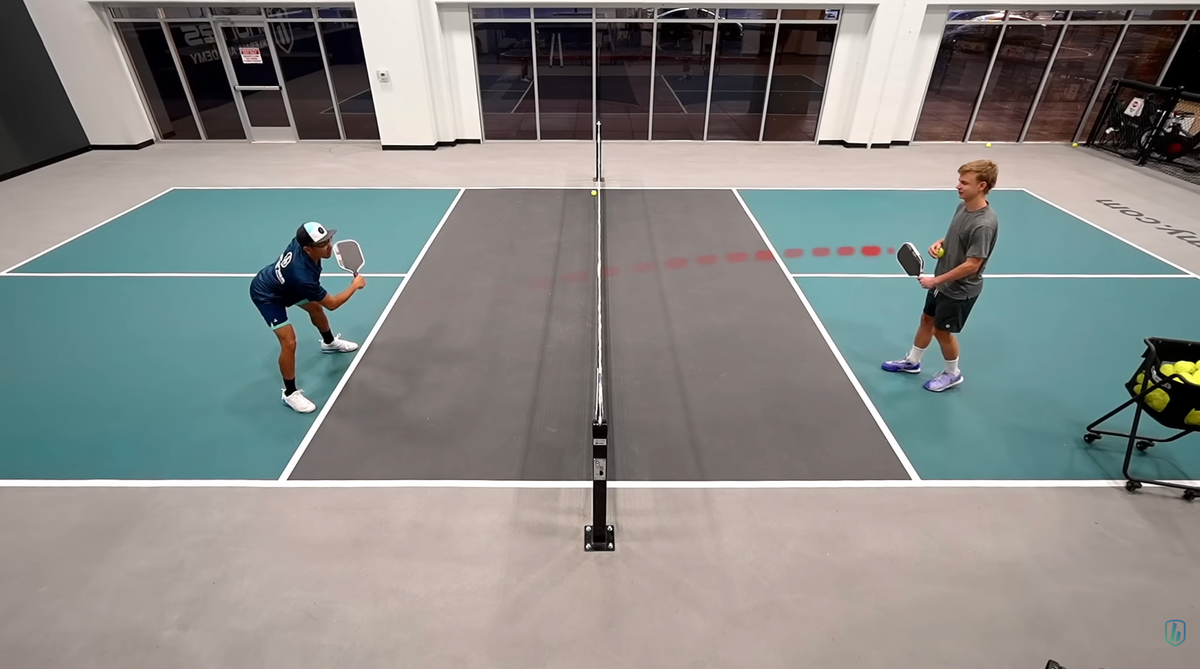
How to Hit the Topspin Drop in Pickleball
The topspin drop is one of pickleball’s most aggressive net shots, and mastering the topspin drop requires understanding footwork, spin generation, and body positioning. James Ignatowich breaks down the exact mechanics you need to add this shot to your arsenal.
The Dink PickleballThe Dink Media Team

Key Takeaways
- Topspin pickleball technique requires two mechanics working together: a closed brush angle and a low-to-high paddle path
- A closed paddle face (15–25 degrees) plus upward swing generates heavy spin; a neutral face creates a flat drive
- Finish your swing high, every time. A truncated follow-through kills spin
- Topspin is most effective from the baseline and mid-court; it's not the right tool at the kitchen line
- For the backhand, footwork and contact point are more important than wrist action
- Drills must isolate the brushing motion to build real muscle memory, not just awareness
💡
Heads up: hundreds of thousands of pickleballers read our free newsletter.
Subscribe herefor cutting edge strategy, insider news, pro analysis, the latest product innovations and more.
Frequently Asked Questions
What is topspin pickleball technique and how is it different from a flat shot?
Topspin pickleball technique involves brushing the paddle upward across the back of the ball at a closed angle, creating forward rotation. A flat shot drives straight through the ball with little to no spin. The practical difference: topspin drops faster in flight and kicks higher off the bounce, giving you more margin over the net while maintaining pace. A flat shot is faster initially but easier to handle because its bounce is predictable.
How do I keep my topspin drives from going into the net?
The most common cause of netted topspin shots is a paddle face that's too closed at contact. You're angling down instead of brushing up. Check two things: first, make sure your swing path is genuinely low-to-high and not just slightly upward; second, drop your contact point forward in your hitting zone so you're making contact at the peak of your swing arc, not on the way down. Also check your stance and body position, because poor setup usually causes poor contact.
Can I use topspin on my pickleball serve?
Yes, and it's a legitimate weapon. A topspin serve bounces forward aggressively after landing, making the return harder to handle. The mechanics are the same as a groundstroke: low-to-high brush with a closed face. The constraint is the USA Pickleball legal serve rule requiring an upward arc, which actually supports a natural topspin motion. Pair a topspin serve with varied placement to keep returners guessing. For more advanced serve mechanics, see how to weaponize your serve.
Does paddle choice affect how much topspin I can generate?
Paddle surface texture plays a real role. A rougher face (carbon fiber with grit) grabs the ball better than a smooth surface, allowing more spin transfer at contact. Paddle shape matters too. Elongated paddles with a smaller sweet spot tend to generate more spin because players can access more brush area. That said, technique drives spin far more than equipment. A paddle with control characteristics matters less than a consistent brush angle. Master the motion first, then optimize your gear.
How long does it take to develop consistent topspin in pickleball?
Most players see a meaningful improvement in 3–6 weeks of deliberate practice, meaning targeted drills rather than just playing games. The brushing motion feels unnatural at first because recreational players default to flat swings. Isolation drills (wall work, basket feeds) are faster than open rallies for building the habit. If you invest 15–20 minutes of focused swing-path work before each session, you'll have a dependable topspin forehand in about a month. The backhand takes longer, typically 6–10 weeks to feel solid under pressure.
Anuncie Aqui / Advertise Here
Sua marca para o mundo Pickleball! / Your brand for the Pickleball world!


 English (US) ·
  Portuguese (BR) ·