
 English
  Spanish
  Portuguese
  German
  Italian
  Japanese
  French
  Polish
  Russian
  Netherlands
  Hungarian
  Turkish
  Videos
  Thedink Pickleball

Becoming a better doubles partner in pickleball starts with two things: clear communication and smart court coverage. This guide breaks down the tactics, habits, and positioning strategies that separate good doubles teams from great ones.
Becoming a better doubles partner in pickleball is the fastest way to win more games, no matter your skill level.
You can have a silky third-shot drop and a backhand that makes people stop and stare, but if you and your partner aren't communicating or covering the court properly, you're going to lose to teams you shouldn't.
This is the truth most rec players ignore: doubles is a team sport. Obvious, right?
But you'd be surprised how many people show up to the court treating it like singles with a helper.
Love pickleball? Then you'll love our free newsletter. We send the latest news, tips, and highlights for free each week.
Why Being a Better Doubles Partner Starts With Communication
The single biggest difference between recreational doubles teams and competitive ones isn't paddle speed or spin rate. It's talking.
Research on team sports consistently shows that verbal communication reduces decision-making errors under pressure, and pickleball is nothing if not a series of rapid decisions under pressure.
You have milliseconds to decide whether a ball down the middle is yours or your partner's.
If you haven't built communication habits before that moment, you're guessing.
Start with the basics. Call "mine" or "yours" on every ambiguous ball. Call "switch" when you've crossed to cover your partner's side.It feels awkward at first. Do it anyway.
The doubles strategy around T-sideline placement also requires constant real-time feedback between partners.
One player can't execute a sideline attack if the other isn't covering the open court.
You're either communicating, or you're hoping. And hope is a terrible doubles strategy.
How to Improve Court Coverage as a Doubles Team
Solid court coverage in doubles pickleball means moving as a unit, not as two individuals.
Think of a bungee cord connecting you and your partner at the hip. When one of you moves left, the other moves left.
When one of you gets pulled wide, the other shifts to protect the middle. That's the mental model. Stick to it.
The middle of the court is where most points are won and lost.
According to USA Pickleball, the kitchen line is where doubles teams should be spending most of their time, and when both players are at the kitchen, coverage becomes a matter of inches, not feet.
USA Pickleball Quietly Delists Several Paddle Models
Hundreds of paddles receive USAP certification every year. What you don’t hear about is the ones that don’t make the cut.
 The Dink PickleballAlex E. Weaver
Know whose backhand is weaker. Know which side of your partner's body they don't want the ball on. Protect accordingly.
The 4th shot tips for court coverage in doubles outline exactly how the non-serving team should position itself after the return.
If you haven't internalized those principles, your coverage will always have a hole.
A quick drill: during warm-up, have your partner call out a side of the court. You both shift there, then back to center. Do it 10 times.
It sounds simple because it is, and simple repetition builds the movement habits you need when a ball is coming fast and you don't have time to think.
💡
Need some new pickleball gear? Get 20% off select paddles, shoes, and more with code THEDINK at
Midwest Racquet SportsWhat Is Stacking, and Should You Be Doing It?
Stacking is a doubles formation where both players position on the same side of the court before the serve or return, then shift to their preferred sides after the ball is struck.
It sounds complicated. It's not. The goal is simple: keep both players on their dominant sides for as long as possible, regardless of the score.
In a traditional serve, the right-handed server on the left side is stuck hitting from their backhand side if the return comes back cross-court. Stacking fixes that.
Most recreational players avoid stacking because it looks confusing.
But changing the way you think about doubles pickleball starts with understanding that positioning isn't random.
It's chosen. And stacking gives you the ability to choose.
Here's the basic version:
- Both players line up on the right side of the court before the serve.
- Server hits, then immediately shifts to their target side.
- Non-server holds position until the shift is complete, then fills the open side.
That's it. You don't need a whiteboard session or a coaching certification. You need reps. Run it in casual play until the movement becomes instinct.
The simple tips to improve teamwork on The Dink go into more detail on this, and they're worth bookmarking.
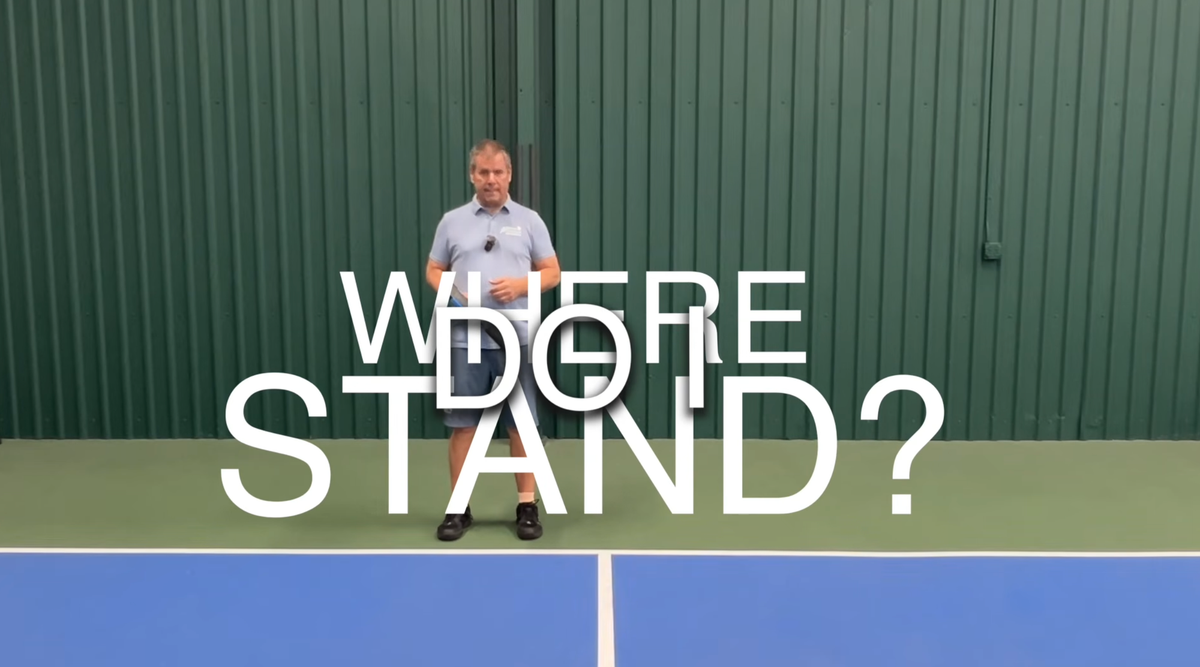
Doubles Stacking 101: The Fool-Proof Positioning Strategy That Wins Points
Stacking might be the single most underrated positional tool in doubles pickleball – and it’s way simpler than you think
 The Dink PickleballThe Dink Media Team
How Does Poaching Work in Doubles Pickleball?
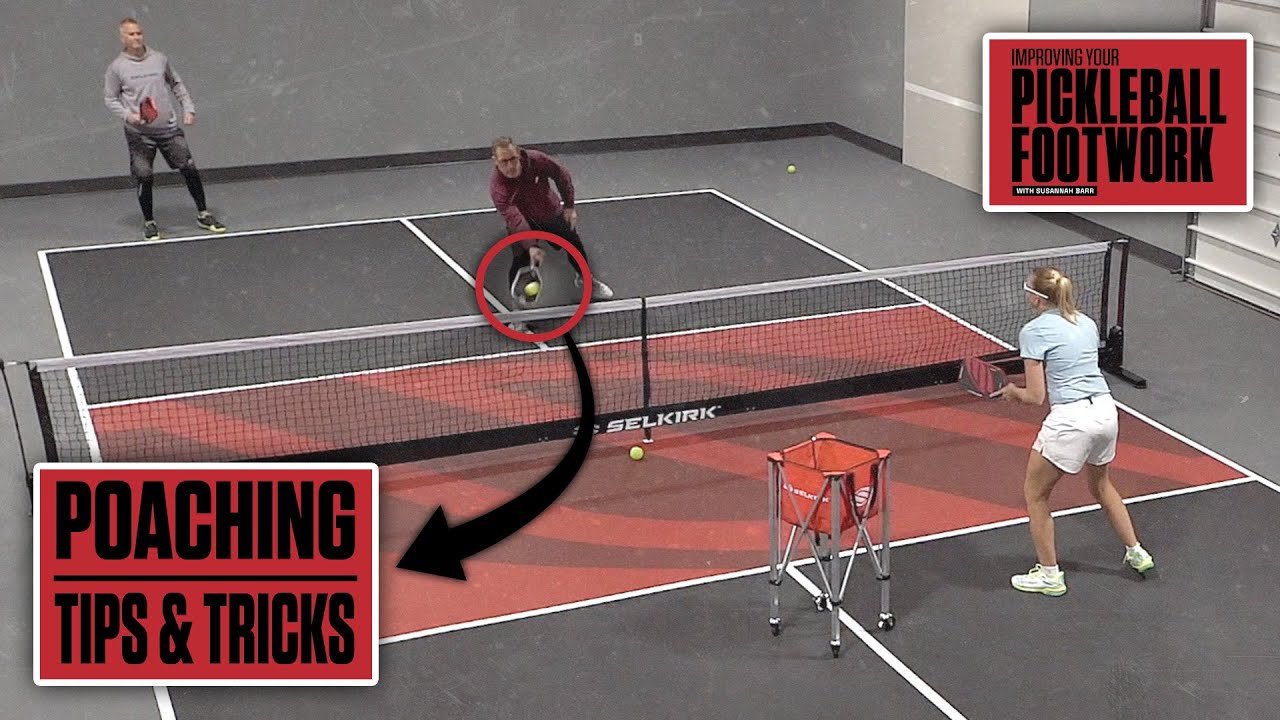
Poaching is when one player crosses into their partner's zone to intercept a ball they're better positioned to attack, and it's one of the highest-percentage plays in doubles when executed correctly.
The keyword there is "correctly." Bad poaching destroys court coverage and trust. Good poaching wins points.
Poaching works best when your partner has hit a ball that forced a predictable response.
If your partner's dink pulls the opponent to their backhand corner, the return is almost certainly going cross-court.
Step in, cut it off, put it away. Positioning yourself at the kitchen is a prerequisite, you can't poach effectively from the transition zone.
The communication piece here is critical. If you're going to poach, you should signal it.
Some teams use a closed fist behind the back (standard pro-level signal).
Others just call it verbally during the dink exchange: "I've got the next one." Whatever system you use, both players need to know the plan before the ball is struck.
The men's doubles disruption tactics break down how top-level teams use movement and deception to create poaching opportunities.
Study it. Even at the 3.5 level, these patterns apply.
Pro Tip: You’re Not Poaching Off Your Partner’s Third Shot Nearly Enough
Poaching comes down to three things: good footwork, smart timing, and trust in your partner
 The Dink PickleballThe Dink Media Team
The Habits That Make You a Better Doubles Partner in Pickleball
Being a better doubles partner in pickleball isn't about one big change. It's about a bunch of small ones that compound.
Before the point:
- Agree on a game plan. Who's covering the middle? Are you stacking? Is there a player on the other team you want to target?
- Talk about your own weaknesses. "I'm struggling with my backhand today" is useful information for your partner.
During the rally:
- Call every middle ball. No ball should bounce between two players because neither called it.
- Move together laterally. Watch your partner's feet, not just the ball.
- Good shot selection and position in doubles means both players are constantly recalibrating after every shot.
Between points:
- Give quick, positive feedback. "That was the right call" reinforces good decision-making.
- Reset mentally. Don't carry a missed poach into the next rally.
Research from sports psychology shows that positive reinforcement between team members during competition measurably improves performance under pressure.
You don't need to be a cheerleader. A nod and a "good move" is enough.
The secrets advanced pickleball players don't want you to know include a lot of communication-based habits that most recreational players overlook entirely.
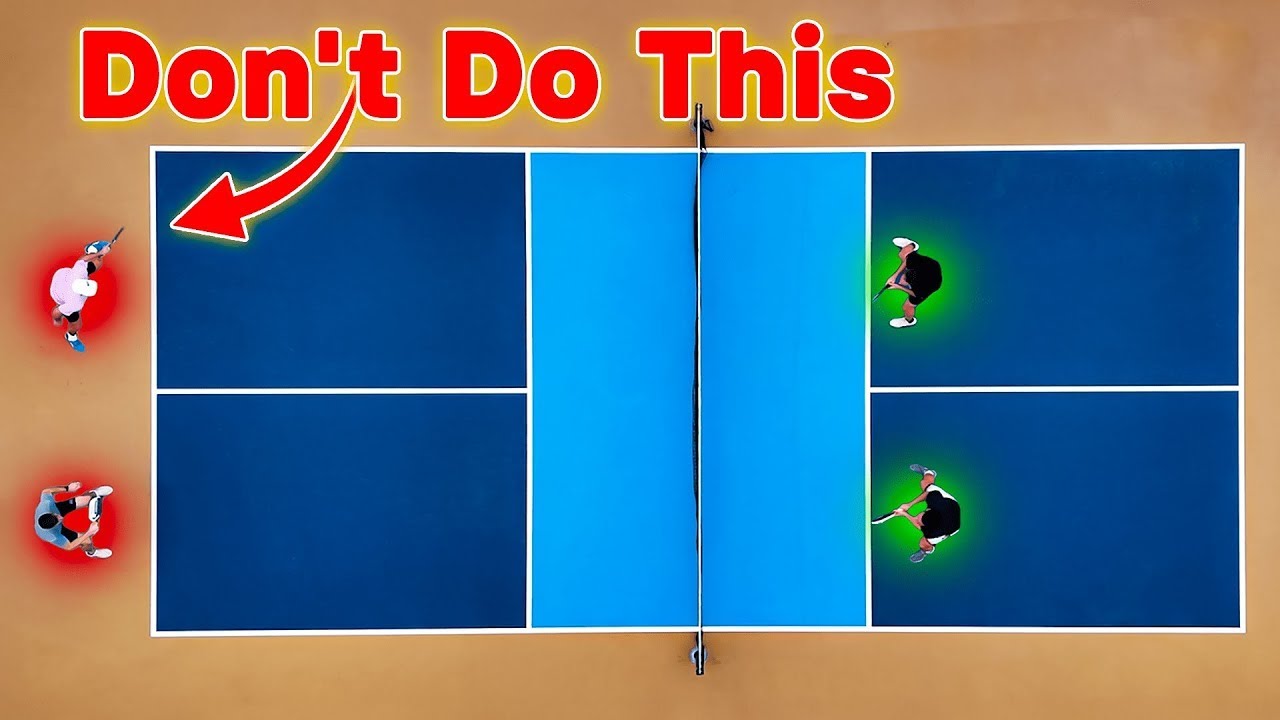
The #1 Doubles Strategy New Pickleball Players Must Know
The proof is in real statistics from professional pickleball: When the serving team fails to reach the kitchen line, they lose 65% of the time
 The Dink PickleballThe Dink Media Team
Playing Both Sides: How to Cover the Full Court
To cover the full court in doubles, each player should take ownership of their half while protecting the middle as a shared responsibility.
This sounds theoretical until you've had a ball die between you three times in one game. Then it becomes very practical, very fast.
The easiest mental shortcut: your middle is the center line, not your body. Too many players think about coverage from their own position.
Think about it from the ball's position instead. If the ball is on your side of the court, you're covering.
If it's on your partner's side, you're shifting to protect the middle from a cross-court attack.
The three advantages to playing both sides of the court is required reading if you want to understand how coverage creates offensive opportunities, not just defensive ones.
And don't forget transition. The mid-court tips are where a lot of doubles teams break down. You're not always at the kitchen.
Sometimes you're stuck in no-man's land, and your partner needs to know how to adjust their coverage while you work your way to the line.
Middle Coverage Pickleball: The 4th Shot Rule
The player already at the non-volley zone line should always take the middle 4th shot, not the returner moving forward from the baseline.
 The Dink PickleballThe Dink Media Team
Key Takeaways
- Communication is a skill, not just a personality trait. You can practice it.
- Court coverage in doubles is built on two principles: move together and cover the middle.
- Stacking is one of the most underused tools at the recreational level.
- Calling shots ("mine," "yours," "switch") in real-time prevents the most common coverage breakdowns.
- The best doubles partnerships are built on trust, not talent.
💡
Heads up: hundreds of thousands of pickleballers read our free newsletter.
Subscribe herefor cutting edge strategy, insider news, pro analysis, the latest product innovations and more.
Frequently Asked Questions
What makes someone a better doubles partner in pickleball?
A better doubles partner communicates clearly, moves with their teammate, and understands court coverage principles. The biggest improvements come from calling middle balls, signaling poaches before they happen, and learning basic stacking to keep both players on their dominant sides.
How do you communicate better with your doubles partner during a game?
Start with a pre-point check-in: agree on positioning and any target strategy before the serve. During the rally, call "mine," "yours," or "switch" on ambiguous balls. Between points, give brief, positive feedback to reinforce good decisions. Consistency in those habits builds communication without needing to think about it.
What is stacking in doubles pickleball and when should you use it?
Stacking is when both players start on the same side of the court before a serve or return, then shift to their preferred sides after the ball is struck. Use it when one or both players have a dominant forehand side they want to protect. It's most effective in intermediate to advanced play but can be learned at any level.
How do you stop balls from falling between partners in doubles?
The solution is ownership and communication. Assign clear responsibility for middle balls based on your positioning, typically the player with the forehand in the middle takes priority. Call every ball that isn't clearly on one side. If you're not sure who should take it, call "yours" and your partner can call "mine" to confirm or redirect.
How does poaching affect doubles court coverage?
Poaching shifts coverage responsibilities in real-time. When one player crosses to intercept a ball, the other must shift to cover the vacated side. Without communication, poaching creates gaps instead of points. The best doubles teams signal poaches in advance using hand signals or verbal cues so both players adjust simultaneously.
Anuncie Aqui / Advertise Here
Sua marca para o mundo Pickleball! / Your brand for the Pickleball world!




 English (US) ·
  Portuguese (BR) ·