
 English
  Spanish
  Portuguese
  German
  Italian
  Japanese
  French
  Polish
  Russian
  Netherlands
  Hungarian
  Turkish
  Videos
  Thedink Pickleball

Most players dink without a plan and then wonder why they never get a good attack opportunity. Dinking with intention means using every shot to move your opponent, control positioning, and earn the right to speed up.
Most players treat dinking like a waiting game. You dink, they dink, and everybody just hopes someone pops the ball up eventually.
That approach is not a strategy. It is a habit, and it is costing you points every single session.This breakdown covers the three core problems that keep recreational players stuck in passive dink rallies: lazy warm-ups, attacking without earning it, and poor positioning during cross-court exchanges.
The framework comes straight from Mari Humberg Pickleball on YouTube, and it applies whether you are playing rec or training for a tournament.
Love pickleball? Then you'll love our free newsletter. We send the latest news, tips, and highlights for free each week.
Your Warm-Up Is Not Actually a Warm-Up
Here is the honest truth: the way most players warm up their dinks is almost useless.
Paddles low, no footwork, no split step, just tapping the ball back and forth until it is time to play. That is not preparation. That is just occupying space on the court.The whole point of a warm-up is to get your body ready to perform. Your legs, your arms, your reaction time all need to be activated before you step into a real rally.
What a real dinking warm-up looks like:
- Active feet on every single ball, not just the hard ones
- A split step timed to when your opponent makes contact with the ball
- One additional step toward the ball after the split step before you swing
- Consistent body positioning on each shot, not a different stance every time
- Enough movement that you are slightly out of breath after a few minutes
You do not need to move like a touring pro to get this right.
The goal is to repeat the same shot over and over from the same position, so your muscle memory actually builds.
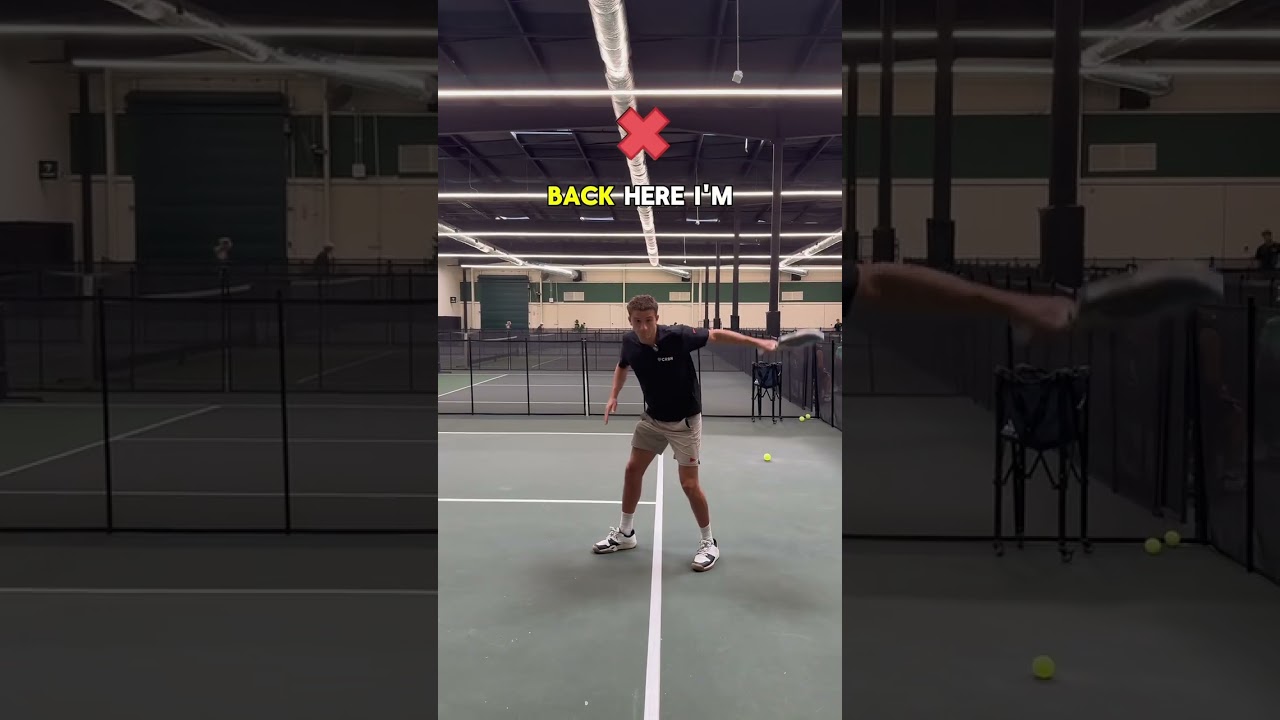
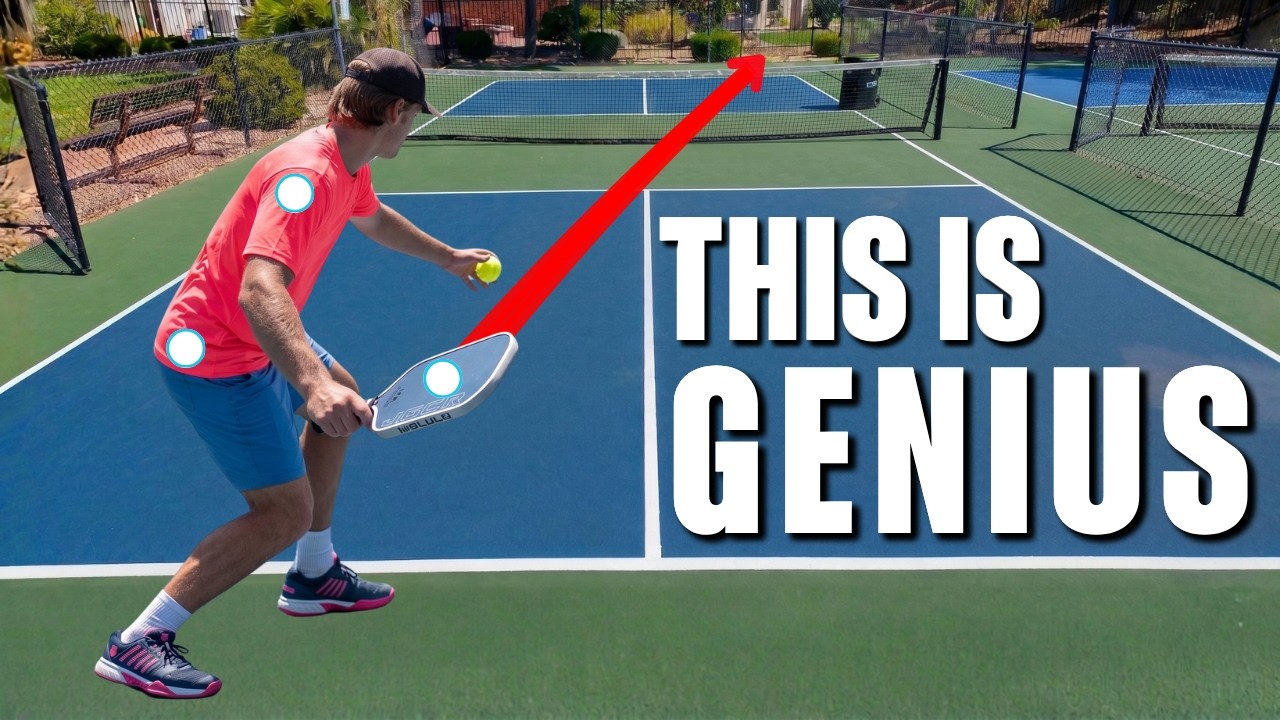
On the forehand dink, that position is a semi-stance, meaning your body is angled diagonally.The contact point sits just in front of your left knee and slightly to the right of center.
On the backhand slice dink, the contact point shifts to just beside the right knee. These are not random preferences.They are repeatable positions that produce consistent spin and depth every time.
What Does "Split Step, Step, Hit" Actually Mean?
The split step is one of the most talked-about skills in pickleball, and also one of the most skipped during actual play.
The timing is simple: split step when your opponent makes contact. The sound of the paddle hitting the ball is your cue.From there, you take one more step toward the ball before swinging.
So the full sequence is split step, step, hit, recover. Four beats per dink.If you are reaching for dinks or hitting balls behind your body, you skipped the footwork. No amount of paddle technique fixes a shot hit from a bad position.
Lateral movement drills can help you build this pattern until it becomes automatic. Until then, say the cue words out loud if you have to.💡
Need some new pickleball gear? Get 20% off select paddles, shoes, and more with code THEDINK at
Midwest Racquet SportsWhy Are You Attacking Before You've Earned It?
This is where a lot of players waste their best weapon.
Players want to learn the flick, the speed-up off the bounce, the aggressive roll. That is fine. But attacking before you have created an opportunity is not aggressive pickleball.
It is impatient pickleball.
The rule is clear: do not attack when you are off balance, out of position, or when you have not earned it.The third condition is the one most players ignore entirely.
How do you actually earn an attack?
- Move your opponent around until they are off balance or scrambling. A player reaching for a wide dink is a player who cannot reset properly.
- Target the uncomfortable spots. For right-handed players, the right foot is one of the most awkward dink zones, and anything hit at or between the feet forces an ugly contact point. For lefties, flip it: the left foot becomes the primary target.
- Push them back if they give you space. If your opponent is not tight to the kitchen line, keep hitting dinks that back them up further. Space creates error.
Dinking cross-court with no purpose is not patience. It is just killing time until someone makes a mistake.
Winning the dink battle means actively creating the conditions for your attack, not just waiting around for a gift.
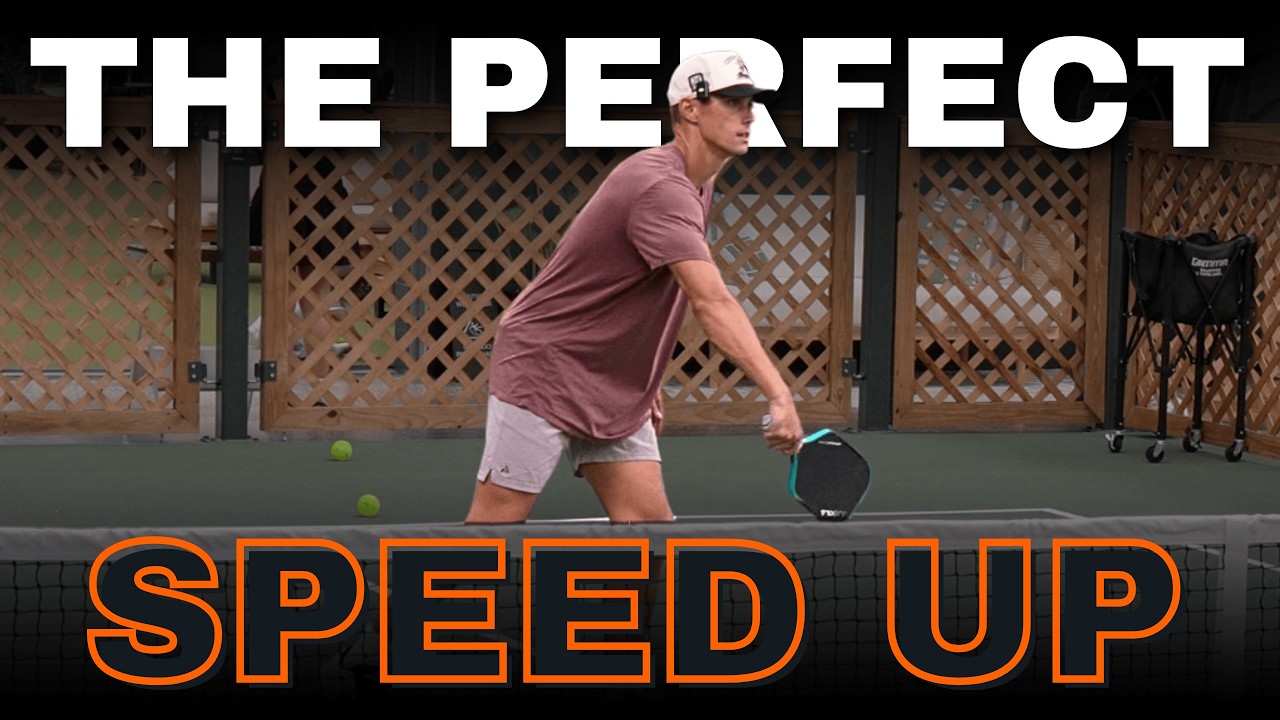
For lefties, the same logic applies but flipped: the left foot becomes the primary discomfort target.Attacking in Pickleball: 3 Things You’re Doing Wrong
Most pickleball players focus on hitting harder when they should focus on hitting smarter. Travis Rettenmaier reveals the 3 critical mistakes holding back your pickleball attack and how to fix them immediately.
 The Dink PickleballThe Dink Media Team
Are You Giving Away Free Angles After Every Dink?
This is the pet peeve that most recreational players never get corrected.
You hit a beautiful cross-court backhand dink. You admire it. You stand still.
And now there is a wide-open lane on the opposite side of the court just waiting to be exploited.
You cannot hit and admire. When you send the ball cross-court, your body needs to follow the angle of that shot. You move with the ball, not after it.
Understanding court angles separates players stuck at 3.5 from players operating at 4.5 and above.The more extreme the angle you create, the more space you open on the other side.
That works in your favor when you are positioned correctly and against you when you are not.
Mastering the cross-court dink exchange is not just about shot quality.Learning how to dink in pickleball at this level is about knowing where to stand after every ball you hit.
When you are pulled wide and cannot recover well, the smart play is a dead dink back to the middle.That neutralizes the angle and buys you time to reset. Trying a hero shot from an off-balance position usually ends in a pop-up or an error.
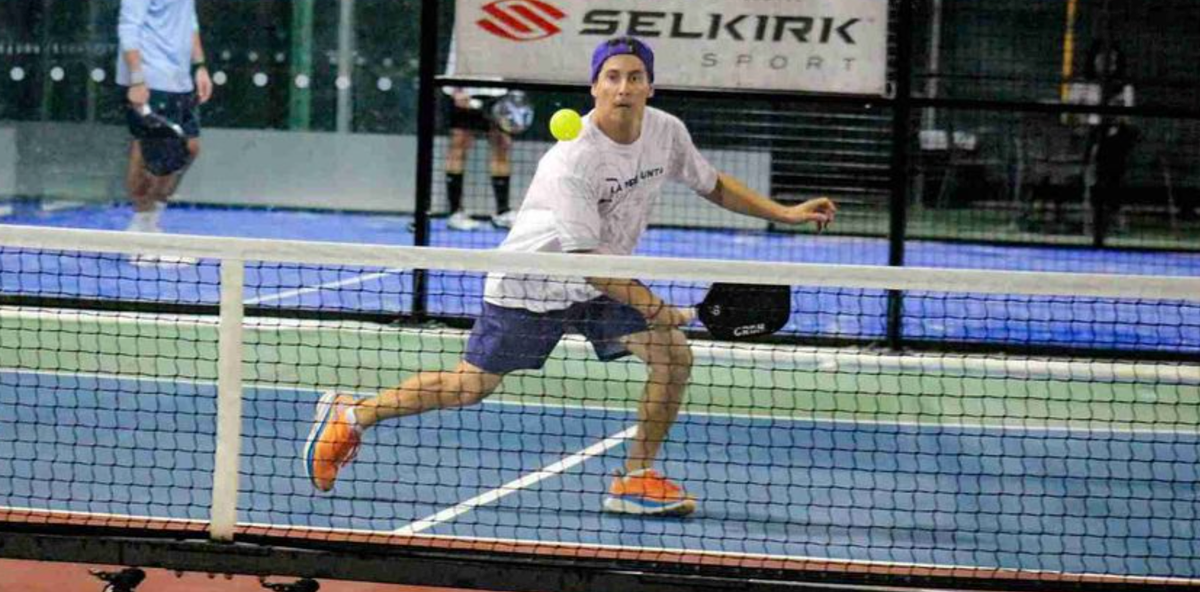
How to Step In on Dinks in Pickleball
Stepping in on dinks in pickleball is one of the fastest ways to shift from reactive to offensive at the kitchen line. Learn the footwork, timing, and positioning cues that let you create pressure and open angles your opponents can’t handle.
 The Dink PickleballThe Dink Media Team
What Happens When You Are Not the One Hitting?
Most players only think about positioning when the ball is coming to them.
That is a problem, because your positioning while your partner is dinking matters just as much.
If the ball is on the far side of the court and you are standing in the middle watching, you are the easiest target on the court.Tracking the ball means shifting laterally based on where the ball is, even when you are not touching it.
If the ball is wide to your partner's side, you should be covering the middle and the angle back toward you.
A player who stands still during a 20-shot rally is not resting. They are creating a giant hole in the court, and court coverage mistakes in doubles almost always come back to one player being stationary.Split stepping applies here too.
How to dink in pickleball as a team comes down to split stepping on every ball your opponent strikes, not just the ones aimed at you, and staying honest about your spacing off the kitchen line.
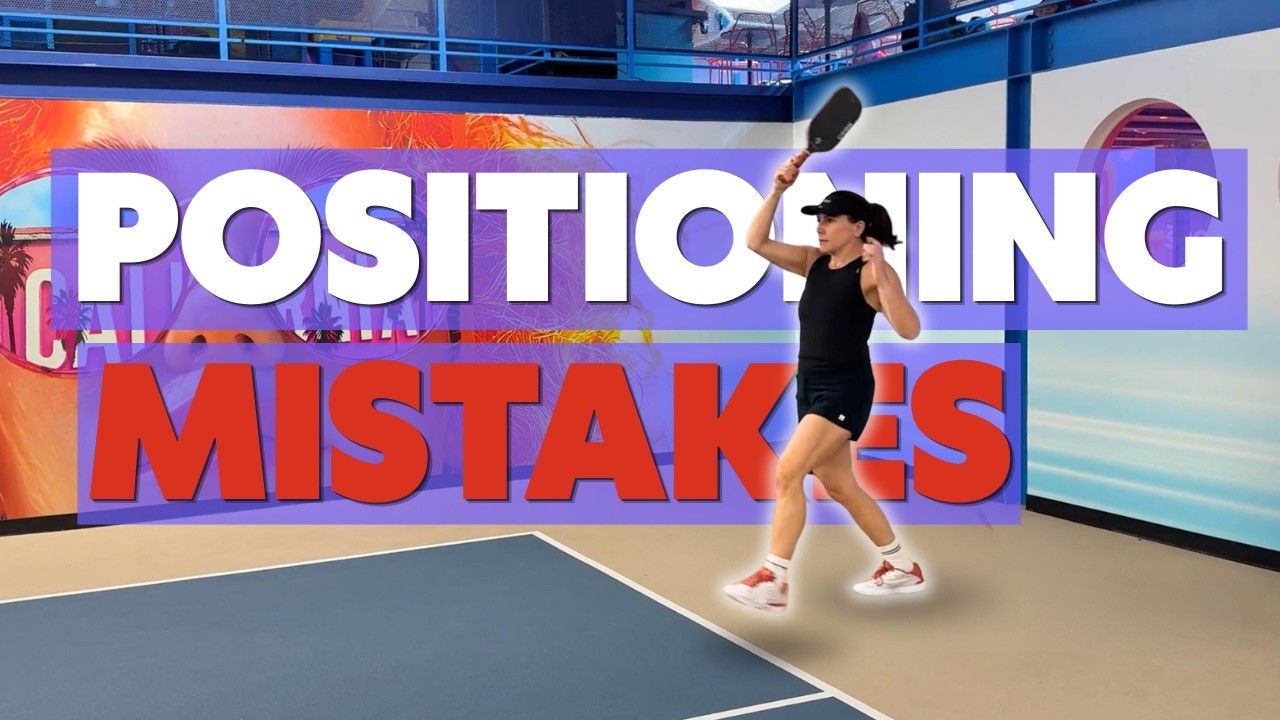
7 Pickleball Positioning Mistakes Hurting Your Game
Most pickleball positioning mistakes have nothing to do with your strokes. Fix these 7 court positioning errors and you will win more points immediately.
 The Dink PickleballThe Dink Media Team
The Real Reason Pros Dink Better Than You
It is not spin. It is not paddle technology. It is repetition of the exact same shot.
Pros are not inventing a new dink every time the ball comes to them.
They have one forehand dink and one backhand dink, and they repeat those shots thousands of times until the mechanics are automatic.
What changes is the target, not the technique. That is what makes their dinks so hard to attack.There is no variation in ball height or pace that gives an opponent a predictable window, and building that kind of dink consistency starts in warm-up.
The pros figured out how to dink in pickleball without ever changing the stroke.
If you want to mix it up, change your target: right foot, then left foot, then middle.
This is also why the different dink types matter. A topspin dink from semi-stance plays completely differently than a flat push from open stance.Pick your shot, know your position for that shot, and repeat it until it stops being a decision and starts being a reflex.
Being a trustworthy doubles partner means your positioning and shot selection are predictable enough that your partner can make confident decisions too.For players working on the physical side of the kitchen game, controlling the kitchen line comes down to these same fundamentals regardless of age or athleticism.
And if you already know the basics but your dinks keep getting attacked, the answer is usually found in pro habits that quietly hurt rec players who copy them without the right foundation.
Dinking with intention is not complicated.
That is how to dink in pickleball the way the 5.0s do it: harder than aimless tapping, and most players never commit to the difference.
💡
Heads up: hundreds of thousands of pickleballers read our free newsletter.
Subscribe herefor cutting edge strategy, insider news, pro analysis, the latest product innovations and more.
Frequently Asked Questions
What does dinking with intention mean in pickleball?
Dinking with intention means every dink you hit has a purpose, whether that is moving your opponent, targeting a weak spot, or setting up an attack opportunity. You are not just keeping the ball in play. You are actively building toward a moment you can exploit.
How do I know when I have earned the right to attack during a dink rally?
You have earned an attack when your opponent is off balance, out of position, or popping the ball up above a height you can drive effectively. If none of those conditions exist, keep dinking with purpose until one of them does.
What is a split step and when should I do it?
A split step is a small hop that lands you in an athletic, balanced position ready to move in any direction. You should split step the moment your opponent makes contact with the ball, not when the ball is already crossing the net.
Why do my dinks keep getting attacked even when I think they are good?
The most common reasons are that the ball is sitting too high over the net, you are contacting it from an open stance instead of a semi-stance, or the ball has no spin to keep it low and short. Fixing your dinking technique starts with getting your contact point and stance right before worrying about placement.
Should I move when my partner is dinking and the ball is not coming to me?
Yes, always. You should be tracking the ball and adjusting your lateral position on every shot, including ones your partner handles. Standing still while your partner dinks leaves the court open and makes you the easiest target when the ball does come your way.
Anuncie Aqui / Advertise Here
Sua marca para o mundo Pickleball! / Your brand for the Pickleball world!




 English (US) ·
  Portuguese (BR) ·