
 English
  Spanish
  Portuguese
  German
  Italian
  Japanese
  French
  Polish
  Russian
  Netherlands
  Hungarian
  Turkish
  Videos
  Thedink Pickleball

The Erne pickleball shot is one of the most disruptive weapons at the net, letting you volley the ball outside the kitchen line while your opponent has nowhere to go. Here's exactly how to set it up, execute the jump, and land legally every time.
The Erne pickleball shot is one of those rare weapons that makes opponents visibly uncomfortable the moment you start setting it up.
It's aggressive, it's legal, and when it lands, it's almost always a winner. Here's everything you need to know to add it to your game.
Love pickleball? Then you'll love our free newsletter. We send the latest news, tips, and highlights for free each week.
What Is an Erne in Pickleball?
The Erne is a volley hit from outside the sideline, beside the non-volley zone (NVZ), rather than from inside or behind it.
Named after Erne Perry, who popularized the shot in the early days of competitive pickleball, it lets you contact the ball in mid-air while standing completely outside the kitchen's lateral boundary.
Here's why it works so well: your opponent's crosscourt dink is a setup for your Erne. They think they're making a safe, neutral shot.
You've already started moving into position to punish it.
The shot bypasses the non-volley zone rule entirely because you're not volleying from within the NVZ. You're positioned to the side of it.
That's the legal loophole that makes it so devastating.
Why the Erne Pickleball Shot Changes a Rally
Most kitchen battles are a war of patience. Both teams are resetting, dinking, and waiting for an attackable ball. The Erne disrupts that rhythm.
Instead of waiting for a pop-up, you're proactively taking time away from your opponent by shortening the angle on a crosscourt dink.
💡
Need some new pickleball gear? Get 20% off select paddles, shoes, and more with code THEDINK at
Midwest Racquet SportsThink of it this way. A standard volley from the NVZ line gives your opponent a small window to react. An Erne from beside the post gives them almost none.
The ball is on them before they've finished the follow-through on their dink.
It also creates a psychological effect. Once you've hit one Erne, your opponent starts second-guessing the crosscourt dink.
They steer toward the middle. You've taken an entire side of the court away from them, and you haven't even hit the ball yet.
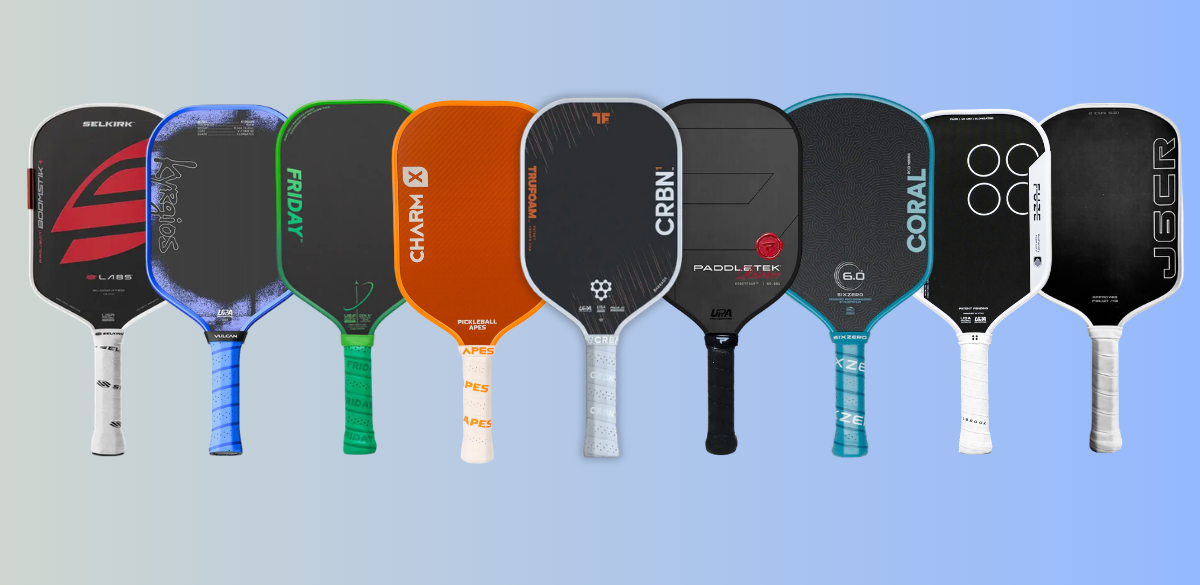
9 Power Paddles that Are Excellent at Dinking
Based on a unique blend of lab-tested power and consistency metrics, these paddles are proven to give you an edge in all three zones of the court.
 The Dink PickleballAlex E. Weaver
How to Set Up the Erne Pickleball Shot
The setup is everything. A poorly telegraphed Erne attempt is just you standing outside the court while your opponent hits a winner down the middle.
Step 1: Identify the crosscourt dink pattern. The Erne works best when your opponent is locked into a predictable crosscourt dink sequence. Watch for the pattern during a soft-game exchange at the kitchen. Two or three dinks in the same direction is your green light.
Step 2: Start early, move late. Don't telegraph the move by drifting toward the sideline on your setup shot. Stay positioned normally, then make your lateral move after your opponent commits to the dink. If they see you sliding early, they go middle and you've given up court position for nothing.
Step 3: Use a body-wide dink to pull them there. A dink aimed at your opponent's backhand corner naturally invites a crosscourt reply. You're not just reacting to their shot. You're engineering it. That's pickleball deception at its most effective.
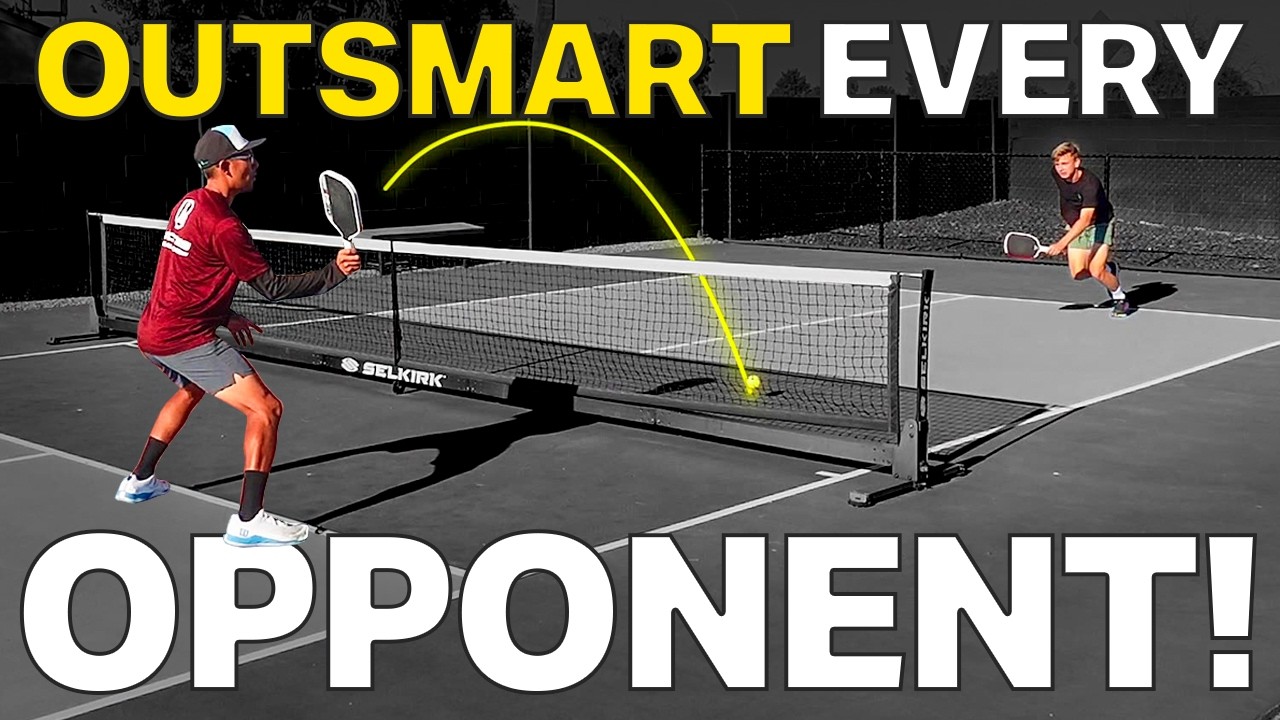
Three Pickleball Shots Every Recreational Player Must Learn
The lob handles defense, the drop volley finishes points with touch, and the ATP gives you an escape route when you’re in trouble.
The Dink PickleballThe Dink Media Team
The Jump: How to Execute the Erne Correctly
Once you've moved into position outside the sideline, the contact mechanics matter. This isn't just a lunge. Done right, it's a controlled, explosive movement.
Your feet must clear the NVZ before you contact the ball. You can step around the NVZ post by going behind it and planting outside the court.
Or you can jump: take off from behind the NVZ line, travel through the air past the post, and contact the ball while airborne. Both are legal.
The key rule is that neither foot can touch the NVZ or its extension at the moment of contact or on your landing.
Here's the sequence for the jump Erne:
- Start at the NVZ line in your normal ready position
- Step back with your inside foot to create momentum
- Push off and travel laterally past the post
- Contact the ball while your feet are outside the NVZ and in the air
- Land completely outside the court, beyond the sideline
Your contact point should be out in front. Reaching back or letting the ball get beside you kills the angle.
Meet it early and punch it into the open court or at your opponent's feet.
10 Pickleball Tips That Transform Your Game
A 5.0 pickleball player shares 10 game-changing pickleball tips that took years to learn. From grip fundamentals to wrist strength, these insights will transform your game.
The Dink PickleballThe Dink Media Team

Is the Erne Legal? Understanding the NVZ Rules
Yes, the Erne is 100% legal under USA Pickleball's official rulebook.
Rule 9.B. states that a player may exit the non-volley zone and re-enter the court through any path, including around the net post, as long as no part of the body touches the NVZ during the volley.
The two most common Erne violations:
- Landing with a foot in the NVZ or on the kitchen line after contact
- Jumping from inside the NVZ at takeoff
Both result in a fault. The landing is where most players get sloppy. After contact, momentum carries you forward and laterally.
You need to be far enough outside the sideline that your landing clears the NVZ extension completely.
One more thing: the net post is not out of bounds. You can go around it. You cannot go through it.
Any contact with the net or post during the Erne is a fault, regardless of where your feet are.
Master the Pickleball Transition Zone: Attack or Reset
The best players in the world aren’t just comfortable in the transition zone – they actively use it to their advantage
The Dink PickleballThe Dink Media Team
When Should You Hit an Erne in Pickleball?
The Erne is a high-reward shot, but it's situational. Doubles strategy is about picking the right weapon at the right moment.
Use the Erne when:
- Your opponent is locked into a repetitive crosscourt dink pattern
- The dink is traveling close to the sideline and won't require you to reach across your body
- You're confident in the landing zone and your balance post-contact
- Your partner is aware of your move and can cover the middle
Avoid the Erne when:
- The dink is hit deep into the kitchen and you'd need to reach back
- You haven't established the crosscourt pattern yet (it's too early in the rally)
- You're out of position and won't have time to cover the middle if you miss
The best Erne attempts look inevitable. Your opponent has been dinking crosscourt for four or five shots. You've baited the pattern.
The Erne is just the last move in a sequence you started two shots ago.
When, How & Why to Hit a Two-Handed Backhand Drive in Pickleball
Whether you’re trying to break out of a dinking rally or apply pressure, knowing how to execute a solid backhand drive can completely change your game.
The Dink PickleballThe Dink Media Team

How to Practice the Erne Shot
You can work on this without a full rally. Start with solo drills to build the footwork pattern, then progress to cooperative practice.
Footwork drill: Stand at the NVZ line. Practice your lateral takeoff step, push off past the post, land outside the court.
Do this 20 times before touching a paddle. The movement should feel automatic before you layer in the ball.
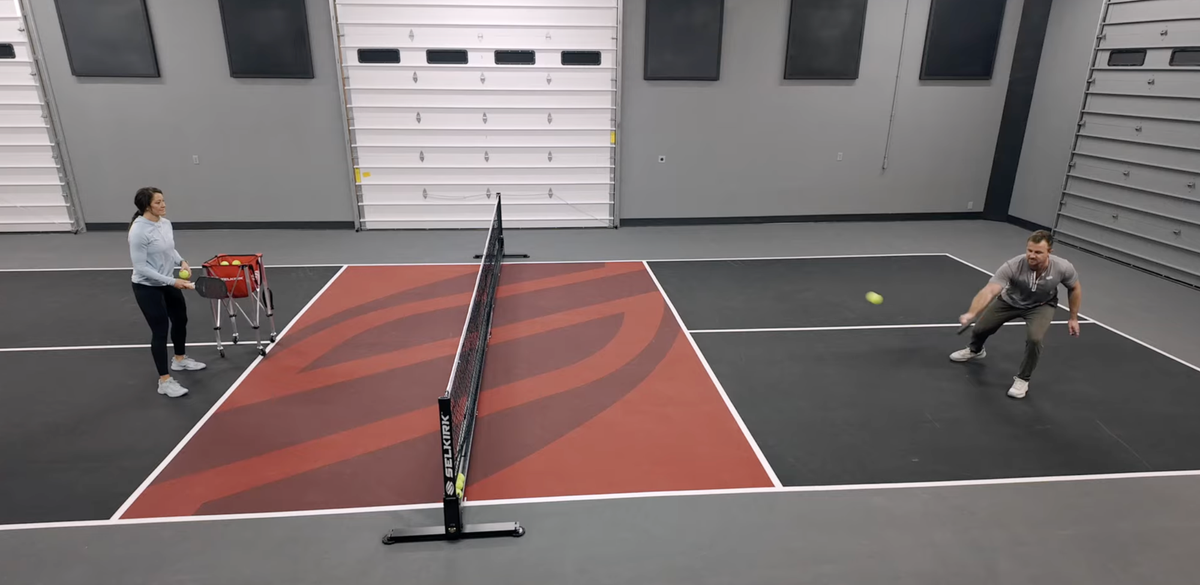
Feed drill: Have a partner feed soft crosscourt dinks repeatedly while you set up and execute the Erne. Start with a stationary setup, so your only variable is timing the contact. Once that's consistent, work in the movement from neutral position.
Live drill: Play a cooperative kitchen game where your partner tries to hit crosscourt dinks and you're actively hunting Erne opportunities. Don't just wait for a perfect setup. Manufacture it by steering dinks to the corner.
How to Practice Pickleball Alone: 7 Solo Drills
Learning how to practice pickleball alone is one of the fastest ways to close the gap between where your game is and where you want it to be. These 7 solo drills target the shots and movement patterns that actually matter during live play.
The Dink PickleballThe Dink Media Team
Erne Pickleball Variations Worth Knowing
The standard Erne is a punch volley, but the shot has variations that higher-level players use to keep opponents guessing.
The fake Erne: Start the lateral movement toward the sideline, then hold when your opponent goes middle.
You've just exposed the open court they created by avoiding your threat. Power shots become easier when your opponent is steering away from something.
The ATP (Around the Post): Technically a different shot, but executed from a similar position outside the court.
Where the Erne is a volley beside the NVZ, the ATP lets you hit a ball that has traveled outside the sideline by going around the post at a low trajectory.
They're both weapons in the same category: exploiting court geometry.
The Erne on the return: Less common, but possible.
If your opponent is serving to a wide position and you're moving early, you can set up an Erne off the return itself. Risky at lower levels, effective at higher ones.
💡
Heads up: hundreds of thousands of pickleballers read our free newsletter.
Subscribe herefor cutting edge strategy, insider news, pro analysis, the latest product innovations and more.
Frequently Asked Questions
What is an Erne in pickleball?
An Erne is a volley hit from outside the sideline, beside the non-volley zone, while the player is either airborne or standing completely outside the court. It's named after Erne Perry and is legal under USA Pickleball rules as long as the player's body doesn't touch the NVZ during the shot or landing.
Is the Erne pickleball shot legal?
Yes, the Erne is fully legal. USA Pickleball Rule 9.B. explicitly allows players to move around the net post and contact the ball from outside the court. The shot becomes a fault only if the player touches the NVZ or its extension at any point during the volley or on the landing.
How do you practice the Erne in pickleball?
Start with footwork repetitions: practice the lateral push-off and landing outside the court without a ball. Then progress to a feed drill where a partner sends crosscourt dinks and you execute the Erne at contact. Live cooperative drilling, where your partner actively tries to dink crosscourt while you hunt the Erne, is the most effective way to develop timing.
What is the difference between an Erne and an ATP in pickleball?
An Erne is a volley hit beside the NVZ post from outside the sideline. An ATP (Around the Post) is hit when the ball has already traveled outside the court boundary, and you go around the post to return it at a low angle. Both are hit from outside the sideline, but the Erne is more of a planned attack while the ATP is usually a defensive recovery that becomes offensive.
What makes the Erne pickleball shot so effective?
The Erne eliminates your opponent's reaction time by shortening the angle on a crosscourt dink. It also creates a psychological effect: once a player is aware you're threatening the Erne, they avoid the crosscourt dink entirely, which opens up other areas of the court. The shot is effective not just for the points it wins directly, but for the court real estate it controls throughout a rally.
Anuncie Aqui / Advertise Here
Sua marca para o mundo Pickleball! / Your brand for the Pickleball world!





 English (US) ·
  Portuguese (BR) ·