
 English
  Spanish
  Portuguese
  German
  Italian
  Japanese
  French
  Polish
  Russian
  Netherlands
  Hungarian
  Turkish
  Videos
  The Pickler

Most players spend their practice time working on topspin drives and slice returns, but there’s another advanced shot that can be a valuable addition to your toolbox: the inside-out forehand.
Unlike topspin or slice, this shot creates horizontal sidespin, causing the ball to curve through the air before it reaches your opponent. When used at the right time, that curved flight path can open angles, jam opponents, and create shots that are difficult to predict.
What Is an Inside-Out Forehand?
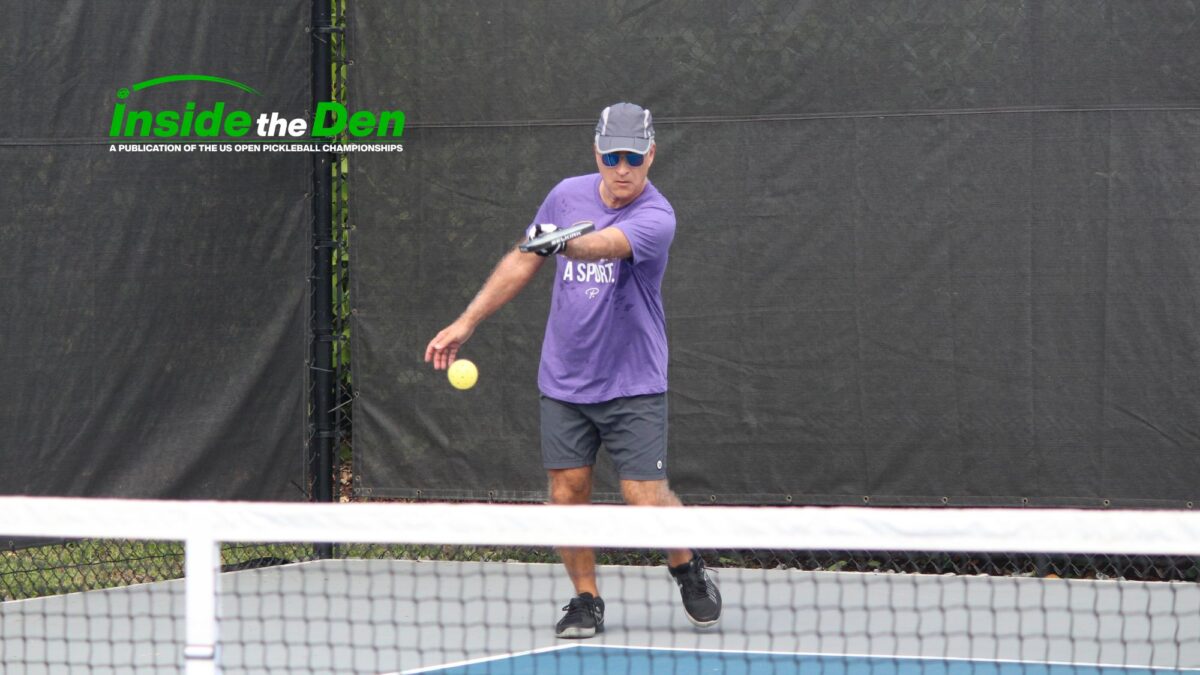
An inside-out forehand is a specialty forehand drive that generates sidespin rather than primarily topspin or backspin. Because the spin is horizontal instead of vertical, it has less effect on how the pickleball bounces. Instead, the sidespin causes the ball to curve or hook through the air, and it will generally retain its spin after the bounce.
For a right-handed player, an inside-out forehand generates clockwise sidespin. For a left-handed player, it generates counterclockwise sidespin.
Why Hit an Inside-Out Forehand?
The biggest advantage of an inside-out forehand is the way it can catch your opponents off guard. As the pickleball curves through the air, opponents often misjudge where it will finish. A shot that initially appears to be traveling toward the middle, for example, can continue bending toward the sideline or into an opponent’s body.
The shot can be especially effective when the pickleball gets too tight to your body, making a traditional forehand drive difficult to execute. It can also help create a sharper angle, pull an opponent off the court, or force them to make an uncomfortable contact.
It’s not a shot that you will use in every rally, but it can be a useful option when the right opportunity presents itself.
How It Changes Court Geometry
The inside-out forehand changes the geometry of the rally by altering the ball’s flight path. Instead of traveling in a relatively straight line, the ball curves as it moves toward your target.
That movement can create wider angles than a standard drive, allow you to start the ball toward one target area before it hooks toward another, and force opponents to make late adjustments. Since the movement happens in the air, the shot can be particularly uncomfortable for opponents who aren’t practiced with reading sidespin.
How to Hit an Inside-Out Forehand
The preparation is similar to a basic forehand drive, but there are a few important differences that create the sidespin.
1. Use a Slightly Open Paddle Face
Unlike a basic forehand drive, which uses a relatively flat paddle face, an inside-out forehand requires a slightly open paddle face angled toward the sky. This position is similar to the paddle angle used on a forehand slice.
2. Move the Paddle Horizontally Across the Ball
The paddle path is the key to generating the sidespin.
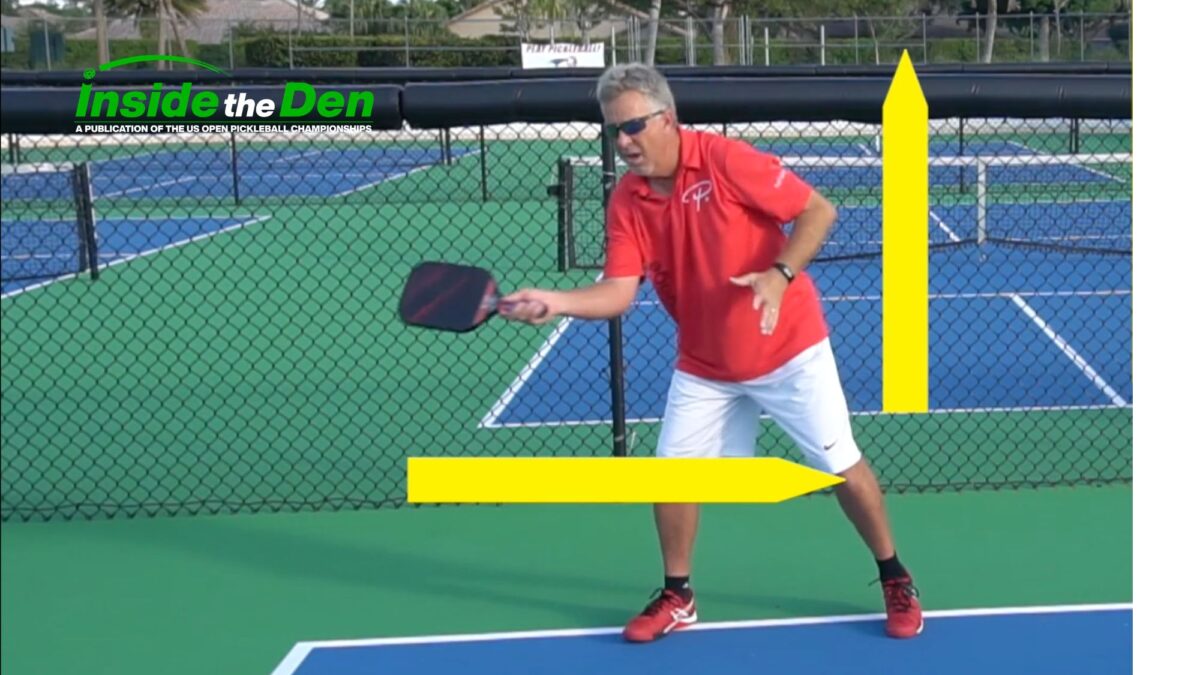
Start with a short backswing, keeping the paddle around waist height. From there, pull the paddle horizontally across the backside of the pickleball, moving from the outside of the ball toward your body.
Think of your paddle face like sandpaper. You’re brushing across the back of the pickleball from the outside toward the inside. The friction created between the paddle and the ball generates the sideways rotation that makes the pickleball curve.
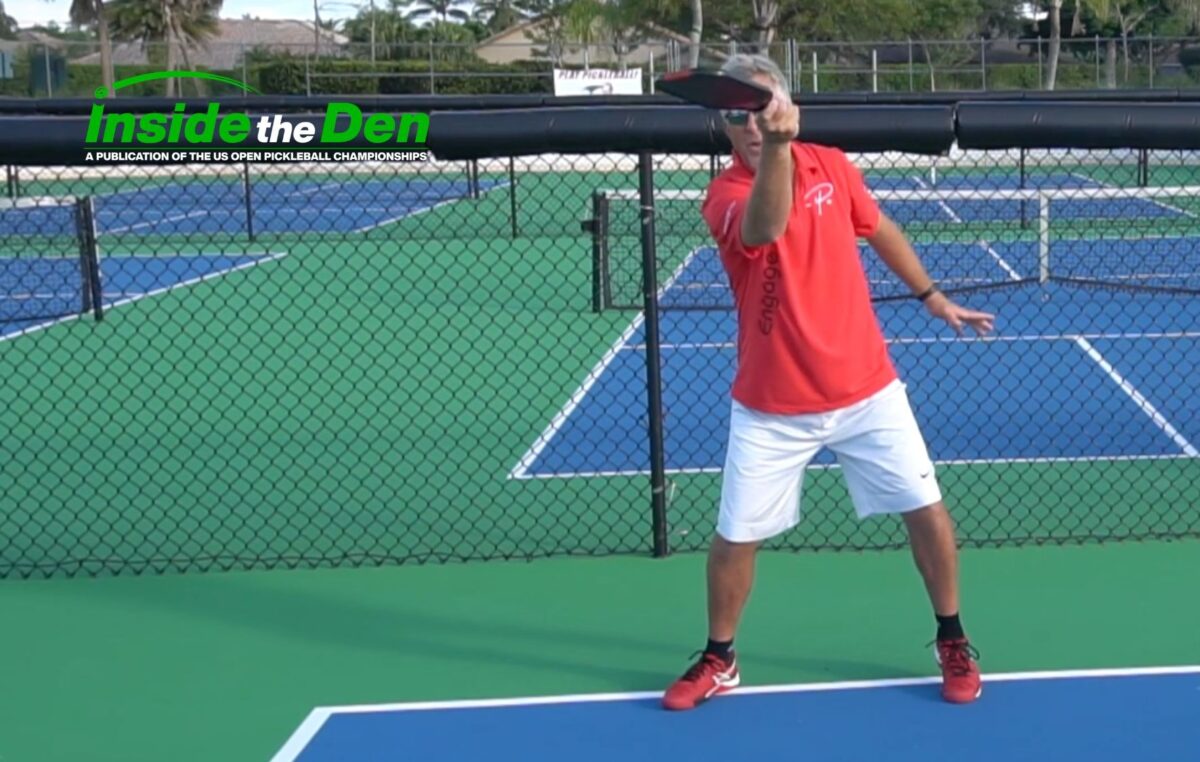
After brushing across the backside of the ball, continue the swing up and through the pickleball. Your paddle should finish flat and facing toward the sky, similar to a waiter holding a tray.
3. Use a Shorter Backswing and Slower Paddle Speed
Resist the temptation to attack this shot with a big swing.
A shorter backswing and slightly slower paddle speed give you greater control over the amount of hook you create. If you swing too aggressively, you can generate too much lift and sidespin, causing the pickleball to curve too sharply and sail out of bounds.
The goal is consistency and control, not maximum power.
Make the Spin Work for You
The inside-out forehand is about making the pickleball travel differently. Its horizontal sidespin creates a curved flight path that can change your available angles, force opponents to adjust, and make an otherwise predictable drive much more difficult to read.
While it shouldn’t replace a reliable forehand drive, the inside-out forehand can give you another way to attack when the pickleball gets tight to your body, or you see an opportunity to use the curve to your advantage. Start with a controlled swing, learn to manage the hook, and let the spin do the work.
Source: The PicklerAnuncie Aqui / Advertise Here
Sua marca para o mundo Pickleball! / Your brand for the Pickleball world!



 English (US) ·
  Portuguese (BR) ·