
 English
  Spanish
  Portuguese
  German
  Italian
  Japanese
  French
  Polish
  Russian
  Netherlands
  Hungarian
  Turkish
  Videos
  Thedink Pickleball

Your pickleball serve footwork stance is the foundation of every point you start: get it wrong and no amount of arm swing will save you. This guide breaks down exactly how to set your feet, load your hips, and transfer weight for a serve that's both powerful and repeatable.
Your pickleball serve footwork stance is the single most overlooked piece of the serve. Players obsess over grip, swing path, and spin.
They forget that every bit of power starts from the ground up. If your feet are wrong, your serve is wrong. Simple as that.
The good news: footwork is coachable. It's not a feel thing or a talent thing. It's a mechanics thing.
Once you understand the three pillars of a legal, powerful serve (stance setup, hip load, and weight transfer), you'll immediately have more consistency and more pace with less effort.
Love pickleball? Then you'll love our free newsletter. We send the latest news, tips, and highlights for free each week.
Most players treat the serve like a formality. Get the ball in, move on.
That's exactly why 4.0 players plateau and wonder why their serve never becomes a weapon.
Here's the thing: the serve is the only shot in pickleball where you have 100% control of the setup.
No one is hitting at you. No one is rushing you. You pick the pace, the position, the moment of contact.If you're leaving power and precision on the table during that moment, that's on you.
Research in sport biomechanics consistently shows that ground reaction forces (the energy your legs push into the court) are the primary driver of upper-body rotational power in striking patterns, according to the Journal of Sports Sciences (2025).
The same principle that makes a pitcher's windup important makes your pickleball serve stance important. You're loading a spring.
The question is whether you're actually loading it.
What Does Proper Pickleball Serve Footwork Actually Look Like?
The legal baseline for serve stance is clear: both feet must remain behind the baseline and to one side of the centerline during the entire service motion, from start through contact.
That's straight from USA Pickleball Official Rulebook Rule 4.A.4 (2025). One foot fault and the point is gone before it starts.
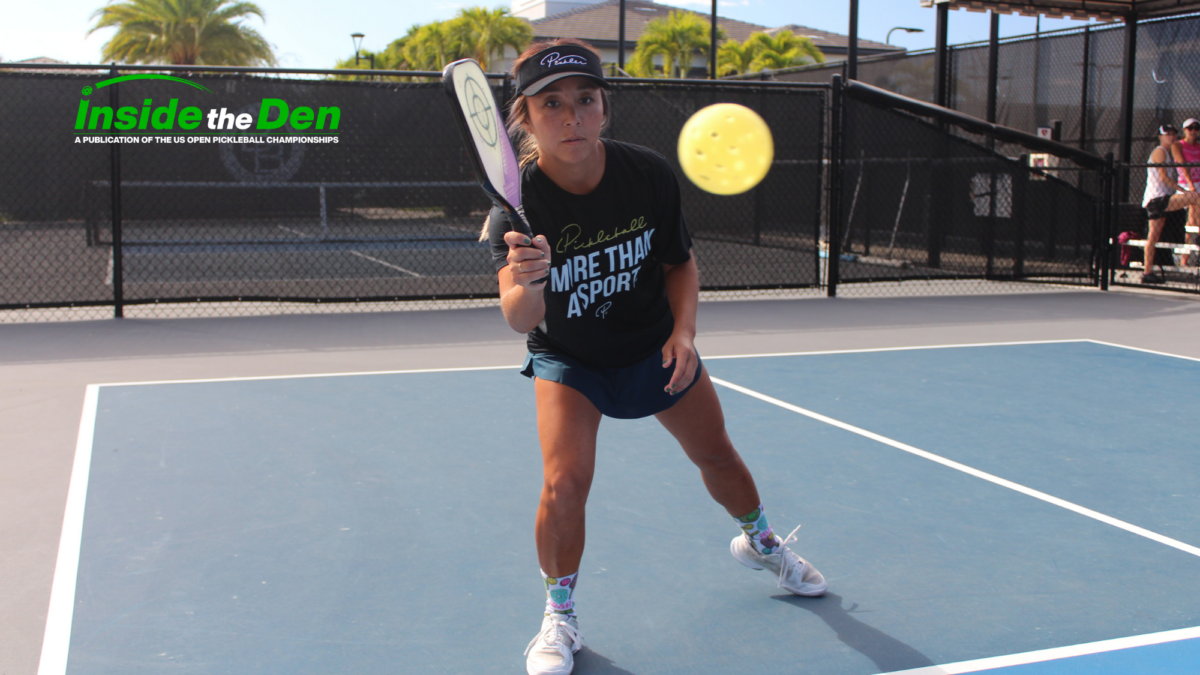
Within those legal constraints, you have significant room to improve your mechanics. Here's the standard setup that works for the vast majority of players:
- Staggered stance: Non-dominant foot forward, dominant foot back. For a right-handed player, left foot is closer to the baseline, right foot is a half-step behind.
- Shoulder-width spacing: Too narrow collapses your base during rotation; too wide restricts hip turn.
- Slight knee bend: 10 to 15 degrees. You're not squatting, but you're also not standing with locked knees.
- Weight on the balls of your feet: Not your heels. Heel contact kills reaction time and reduces ground force.
- Toes pointing slightly toward the kitchen: This primes your hips for forward rotation during the swing.
Want to see what a refined serve grip looks like alongside this stance? Those two elements work together more than most players realize.
💡
Need some new pickleball gear? Get 20% off select paddles, shoes, and more with code THEDINK at
Midwest Racquet SportsHow to Load Your Hips for Maximum Serve Power
Loading the hips means coiling your torso against a stable lower body, creating the tension that unwinds into your swing.
Think of it like a twisted rubber band. The more you coil before the swing, the more snap you get on the release.
Here's the move: in your staggered stance, initiate your backswing by turning your upper body away from the target.
Your front shoulder rotates toward your back foot. Your hips follow, but not completely. Your front hip stays partially open, acting as an anchor.
That separation between shoulder rotation and hip position is where power lives.
Biomechanics researchers call this the "X-factor stretch," and it's been documented across racket sports as a key predictor of swing velocity, per the British Journal of Sports Medicine (2025).
This is also the move that most recreational players skip entirely. They go from static stance directly into the swing, bypassing the load phase.
No wonder their serves are flat and armsy.
Advanced pickleball serve mechanics depend on this separation being present every single time.
It's not a power move. It's a consistency move.Your swing becomes more repeatable when it starts from the same loaded position.
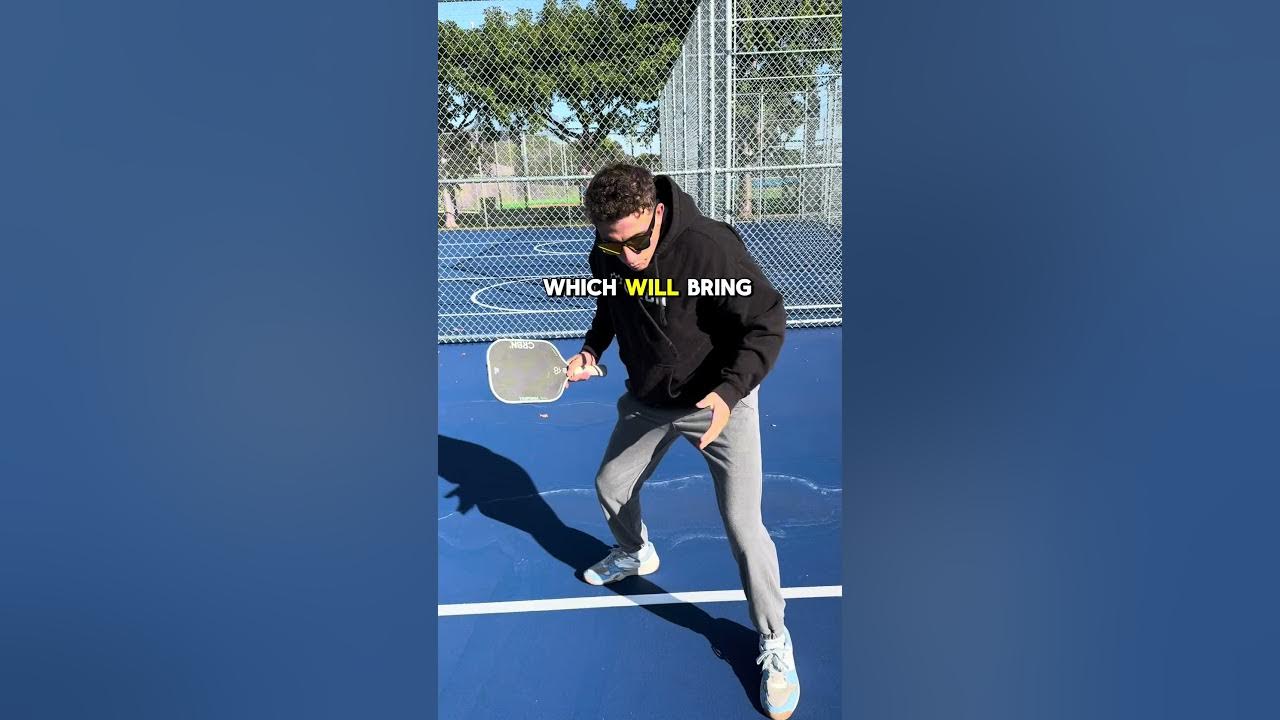
3 Mistakes Killing Your Pickleball Serve Power
Most pickleball players are unknowingly sabotaging their pickleball serve power with three critical mistakes. Fix your shoulders, hips, and ball placement to generate explosive power on every serve.
 The Dink PickleballThe Dink Media Team
Weight Transfer: The Step Most Players Are Getting Wrong
Weight transfers from back foot to front foot during the forward swing.
Not before it. Not after it. The transfer and the swing happen simultaneously. That's the kinetic chain working.
The instinct for newer players is to plant, then swing. That kills your power. Instead, think of it as a "fall forward" into the swing.
Your back foot pushes off, your weight shifts, and your hips unwind, all in one connected movement.
A useful cue: your back heel should lift off the ground at or just before contact.
USA Pickleball Quietly Delists Several Paddle Models
Hundreds of paddles receive USAP certification every year. What you don’t hear about is the ones that don’t make the cut.
 The Dink PickleballAlex E. Weaver

If your back heel stays flat through the entire serve, you're not transferring weight. You're arm-swinging.
Check your pickleball technique in the rest of your game and you'll find this same principle everywhere.
One important legal note: you cannot step forward past the baseline during contact. The weight transfer happens within your base.
Both feet stay behind the line through contact. After the ball leaves your paddle, move forward freely.
A 2025 study on racket sport serve mechanics via PubMed found that players who successfully transferred weight generated significantly higher ball velocities than those with static weight distribution, even when controlling for upper-body mechanics.
The legs do the work. The arm delivers it.
The Pickleball Performance Hack Most Players Ignore
VKTRY Insoles feature a full-length carbon fiber plate you can customize based on your weight and activity type, returning energy with every step. And they’ll last far longer than your pricier paddle.
 The Dink PickleballAlex E. Weaver

Practice serves on an empty court and match serves are two very different animals. Nerves tighten your body, rush your tempo, and compress your stance.
You start creeping toward the baseline. Your feet narrow. You lose the load.
The fix is routine, not focus. Build a pre-serve routine that physically locks in your stance before every serve. Most pros do this instinctively.
Study the Zane Navratil serve breakdown: his foot positioning before every serve is virtually identical. That's not accident. That's reps.
Your routine can be simple: bounce the ball twice, set your back foot first, then your front foot, check your knee bend, go.
Five seconds. Every serve. Same every time.This is what separates players who serve well in drills from players who serve well when it counts in doubles.
Think about what comes right after the serve, too. Your return of serve positioning starts with finishing your serve motion in a balanced stance.
A proper weight transfer naturally brings you back to neutral, ready to react. Poor serve footwork leaves you off-balance for shot three.
Pro Pickleball Drilling Routine: Train Like a 6.0 DUPR
This advanced pickleball drilling routine focuses on building consistency, cleaner attacks, and faster hands under pressure.
 The Dink PickleballThe Dink Media Team
Pickleball Serve Footwork Drills You Can Run Today
- Drill 1: The Slow-Motion Load Drill Serve at 30% pace. Focus only on hip rotation and heel lift. Exaggerate both. The goal is not ball placement; it's ingraining the feel of a loaded pickleball serve footwork position. Do 20 reps, then return to full pace.
- Drill 2: Stance Tape Drill Put a small piece of tape on your back heel before serving. If the tape lifts before contact, your weight transfer is premature. If it never lifts, you're static. Find the timing window between those two failure modes.
- Drill 3: Shadow Serving No ball. No paddle. Stand in your serve stance and rehearse the full motion, load to transfer to follow-through, in slow motion. Your mid-court positioning and other movement patterns also benefit from shadow reps because the kinetic chain principles carry over.
These drills are simple on purpose. Footwork doesn't require complex equipment or court time.
Most of the work can happen in a driveway. Good shot selection follows naturally when your foundation is solid.
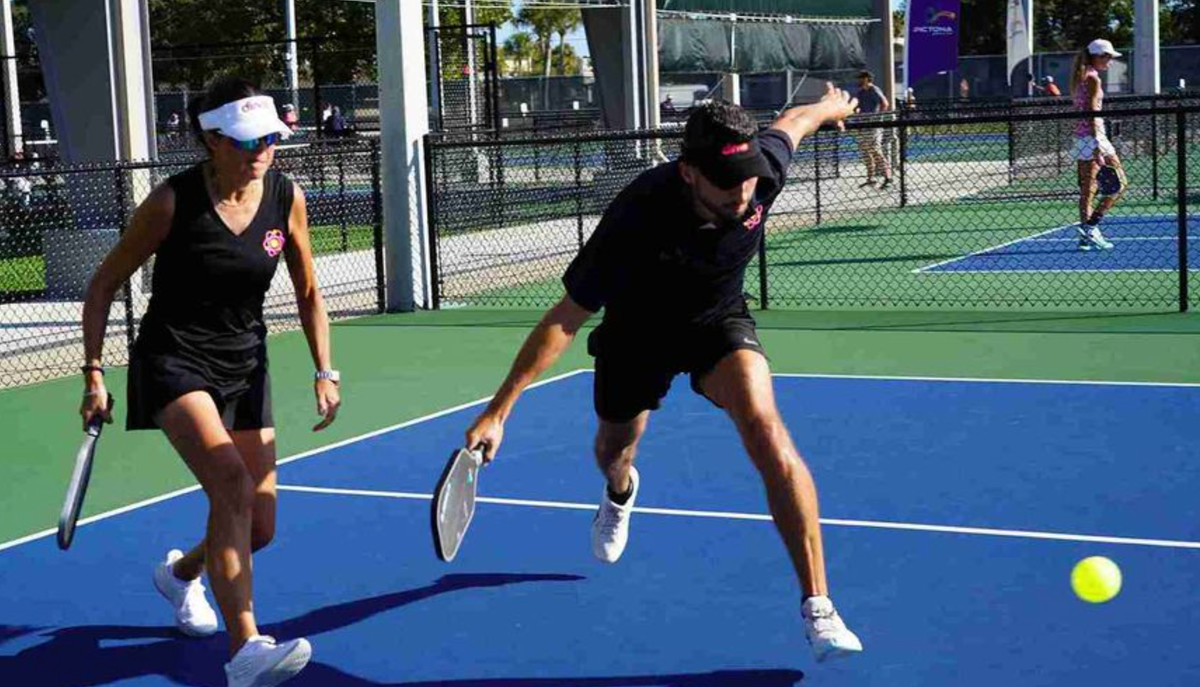
How to Improve Pickleball Footwork: 5 Pro Drills
Pickleball footwork drills are the fastest way to close the gap between your shot-making ability and your actual on-court results. Here are five drills that competitive players use to move faster, recover quicker, and stop giving away free points.
 The Dink PickleballThe Dink Media Team
Even experienced players make these errors regularly:
- Square stance: Facing the net eliminates hip rotation range. You end up arm-serving every ball.
- Weight on heels at setup: Kills ground reaction force before the serve even starts.
- Rushing the load phase: Skipping the backswing coil to serve faster. You get tempo, not power.
- Over-stepping post-contact: A common foot fault most players don't know they're committing.
- Inconsistent foot placement: Subtle shifts in foot position change the entire serve trajectory. Weaponizing your serve starts with reps, and reps require the same setup every time.
Fix the foundation and everything else improves.
Your third shot drop and drive versus drop decisions become easier when your serve is already putting real pressure on the returner.
That pressure only comes from mechanics that start at the feet.
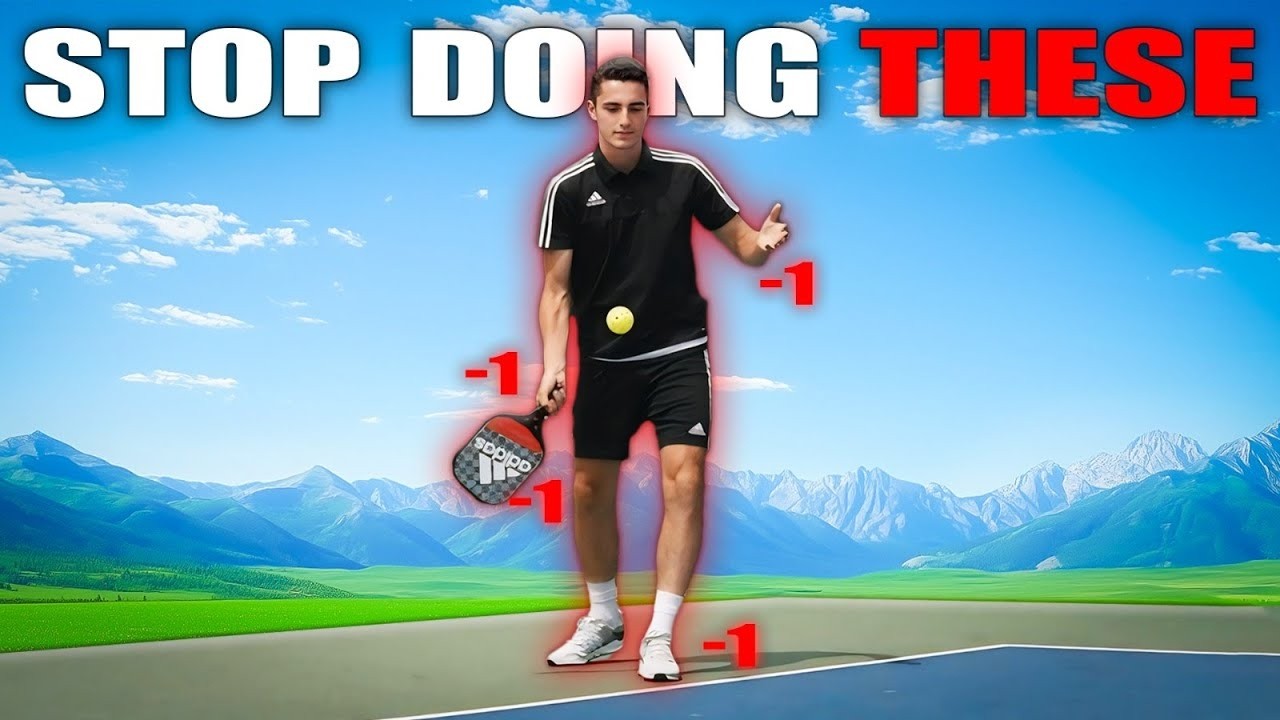
Fix These Pickleball Serve Mistakes Now
Almost every recreational pickleball player makes the same serve mistakes without realizing it. Fix these common pickleball serve mistakes and start winning more free points immediately.
 The Dink PickleballThe Dink Media Team
Key Takeaways
- Stance width should be roughly shoulder-width, with your non-dominant foot slightly forward
- Hip loading (not arm swing) is the primary power generator in a legal pickleball serve
- Weight transfers from back foot to front foot during the forward swing, not after
- Foot fault violations are more common than players realize; one foot must stay behind the baseline through contact
- A staggered stance gives you better rotational range than a square stance for most players
- Pre-serve routine locks in consistent foot placement and prevents stance drift under match pressure
💡
Heads up: hundreds of thousands of pickleballers read our free newsletter.
Subscribe herefor cutting edge strategy, insider news, pro analysis, the latest product innovations and more.
Frequently Asked Questions
What is the correct pickleball serve footwork stance for beginners?
A staggered stance is the best starting point. Place your non-dominant foot slightly forward, keep feet roughly shoulder-width apart, and bend your knees slightly. Both feet must stay behind the baseline through contact, per USA Pickleball Rule 4.A.4 (2025). Start there and refine as your serve develops. Most beginner fundamentals build from exactly this base.
How does weight transfer affect pickleball serve power?
Weight transfer is one of the primary power sources in a pickleball serve footwork stance. As you swing forward, weight shifts from back foot to front foot. This engages hip and core musculature, adding velocity to your paddle without extra arm effort. A heel lift on the back foot at contact is the clearest physical indicator that the transfer is happening correctly.
What is a foot fault in pickleball serve footwork?
A foot fault occurs when either foot touches or crosses the baseline, the centerline extension, or the sideline before ball contact. It can also be called if a player steps into the court during the service motion. Foot faults are often committed unintentionally, especially by players who drift forward during weight transfer. Knowing where to position on the return matters, but your serve has to be legal first.
Can you step forward when serving in pickleball?
No. Per USA Pickleball rules, your feet must stay behind the baseline through contact with the ball. You can transfer your weight forward within your stance (heel lift is legal and encouraged), but you cannot step into the court until after the ball has left your paddle. Post-contact, move toward the kitchen freely.
How does pickleball serve footwork differ from tennis serve footwork?
Tennis allows and encourages a full step into the court as part of the serve, including a continental-grip overhead motion. Pickleball requires an underhand upward swing with feet behind the baseline at all times. The rotational loading principle is similar across both sports, but the swing plane and legal foot constraints make pickleball serve footwork its own distinct skill. Players transitioning from tennis often need several weeks just to unlearn the forward step.
Anuncie Aqui / Advertise Here
Sua marca para o mundo Pickleball! / Your brand for the Pickleball world!





 English (US) ·
  Portuguese (BR) ·