
 English
  Spanish
  Portuguese
  German
  Italian
  Japanese
  French
  Polish
  Russian
  Netherlands
  Hungarian
  Turkish
  Videos
  Thedink Pickleball

Stacking in pickleball is used by every top pro, and it's easier to learn than most players think. Here's a complete breakdown of when to stack, how to stack, and how to use it against your opponents.
Stacking in pickleball is not an advanced concept reserved for pros. It is a foundational doubles tool that every competitive player needs to understand.
Most recreational players either avoid stacking entirely or attempt it without a clear system, and both approaches cost them points.
If you do not know when to stack, when to stay straight up, and how to manage the switch, you are leaving a real advantage on the table.This full breakdown comes from Zane Navratil Pickleball on YouTube, where former world number one singles player Zane Navratil walks through every major stacking method, the advantages and disadvantages, and exactly how to exploit teams that stack against you.
Love pickleball? Then you'll love our free newsletter. We send the latest news, tips, and highlights for free each week.
What Is Stacking and Why Does It Matter?
Stacking in pickleball is when both players position themselves on the same side of the court before the point starts, then switch to their preferred sides after the serve or return is hit.
It is not a gimmick. Every single team in the current top five men's doubles rankings stacks on every point, and the 2025 medal counts back that up. Every team in the top 100 mixed doubles rankings stacks as well.
The reason is simple: the conventional side assignments based on score position do not always put each player in the spot where they perform best.
Why Do Players Stack in the First Place?
There are several strong reasons to stack, and they apply at every level of the game.
Amplifying strengths. Ben Johns plays the left because his backhand flick from that position is one of the most dangerous weapons in the sport.
Gabe Tardio plays the right because his backhand counterattack and forehand speed up thrive from that side.If you have a shot that dominates from one side, stacking in pickleball gets you there every point.
That same logic drives who Ben Johns could play men's doubles with at the top of the sport.
- Hiding weaknesses. A weak forehand dink makes the right side uncomfortable. A weak backhand dink makes the left side brutal. Stacking lets you avoid those exposures without having to fully fix the problem before your next tournament. In mixed doubles especially, the stronger player typically takes the left side because that player covers more court and handles more balls through the middle.
- Exploiting matchups. Sometimes you want to line yourself up directly in front of a specific opponent, regardless of which side that puts you on. If you read their patterns better than your partner does, get in front of them.
- Building rhythm. Staying in the same position point after point lets you develop consistent shot patterns with your partner. Over time, this creates what Navratil calls the 1 + 1 = 3 effect, where the team performs better than the individual players would separately.
💡
Need some new pickleball gear? Get 20% off select paddles, shoes, and more with code THEDINK at
Midwest Racquet SportsWhat Are the Real Disadvantages of Stacking?
Stacking is not always the right call. There are real costs to be aware of.
- Vulnerability on defense: When you are receiving serve and stacking, you have to sprint across the court after the return. A strong serve followed by a drive gives you almost no time to switch and get into a good defensive position.
- Short return punishment: If your return is weak, the stacking partner cannot cover for you. The opponent can simply hit to the open court you left exposed.
- Open court on third shots: The time it takes to switch creates openings. Smart opponents will attack those gaps with their third shot while you are mid-transition.
- Predictability: If you always stack, opponents know exactly where you are going. That is only a problem if they can actually punish it, but at higher levels they can.
- Mental load for beginners: Remembering where to stand and communicating with your partner takes focus away from the actual game. This fades with repetition, but it is real when you are learning.
- Stack dependence: Some players stack so much they lose the ability to play their other side. If your preferred system breaks down mid-match and you have no backup, you are stuck.
Building that into the 12 drills you need keeps both wings sharp.
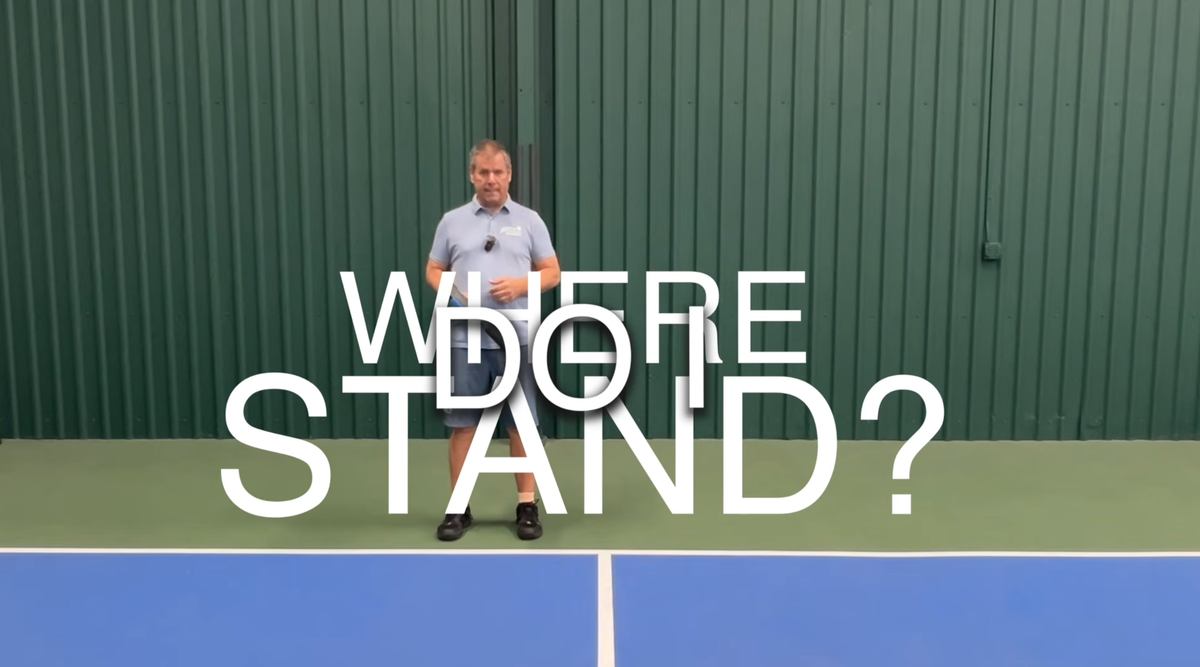
Doubles Stacking 101: The Fool-Proof Positioning Strategy That Wins Points
Stacking might be the single most underrated positional tool in doubles pickleball – and it’s way simpler than you think
 The Dink PickleballThe Dink Media Team
Which Stacking Method Should You Use?
There are three main approaches, and the right one depends on your skill level, your partner, and what you are trying to accomplish.
- The Full Stack. You stack on every single point, both when you serve and when you receive. This is what the pros do. It takes practice and communication but produces the most consistent positioning over a full match. Pair it with the four key strategies to winning and the system starts compounding.
- The Half Stack. You only stack when you are serving, not when you are receiving. This removes the pressure of having to switch after a return, which is where most amateur teams fall apart. It is a smart starting point if your team is just learning the system.
- The Tandem Stack. Popularized by Riley and Lindsey Newman, one player stands behind the other at the start of the point so opponents cannot tell which side each player will end up on. This works especially well when one player is being targeted consistently on returns. The opponent does not know where to aim until the players actually move.
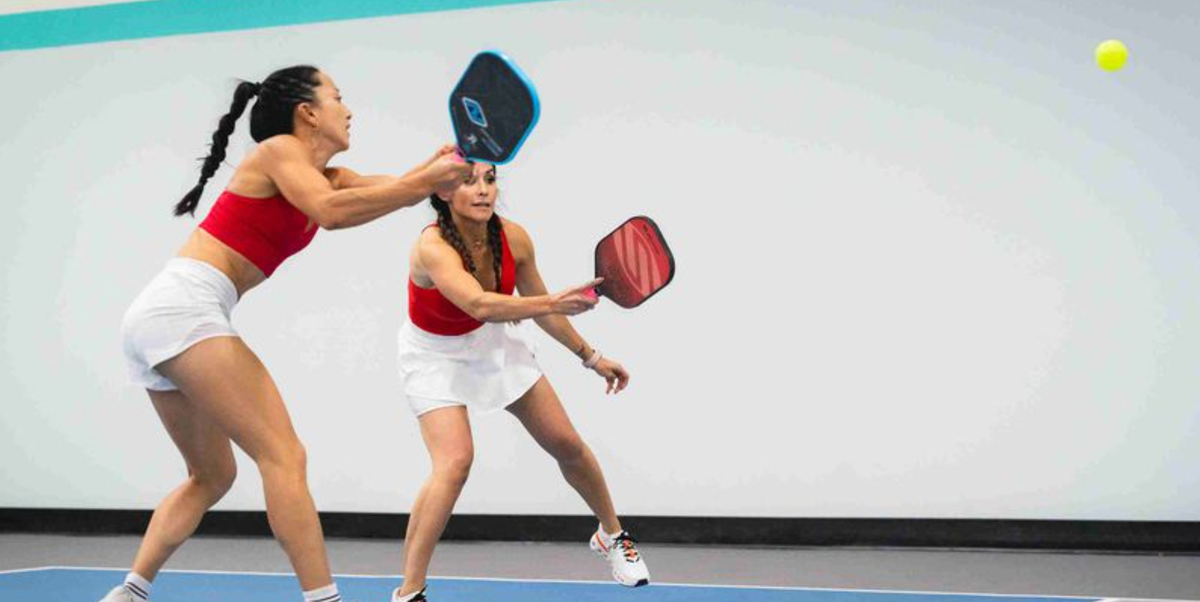
Doubles Pickleball Stacking for Beginners: Full vs Half Stack
Stack pickleball doubles beginners need to master one of the most misunderstood tactics in the game: intentional position-swapping to control court sides. This guide breaks down full stack vs half stack so you and your partner can start using it immediately.
 The Dink PickleballThe Dink Media Team
Off-Court vs. On-Court: Which Method Wins?
When you are stacking on the return side, you have two specific options for how your partner positions themselves before the switch.
- The off-court method has your partner standing completely outside the court while you hit the return. There is no ambiguity. You hit, you run, you switch. The clarity is real, and there is no hesitation about who does what. The downside is predictability. Your opponents know the stack is coming. If you hit a short return, your partner cannot bail you out from off the court.
- The on-court method has your partner standing on the court as if they plan to stay, and then you switch only if the return is good enough to make it worthwhile. This gives you an escape hatch. If the return is weak, the returner calls "stay" and both players hold their positions.
The key rule with the on-court method: the returner makes the call, not the net player.
The returner is the only one who knows whether they can make the crossing sprint in time. The net player assumes the switch is happening until told otherwise.
Use hand signals to communicate. An open hand means switch. A closed fist means stay.Calling it out loud tells your opponents exactly what you are doing, which defeats the whole purpose of the on-court method.
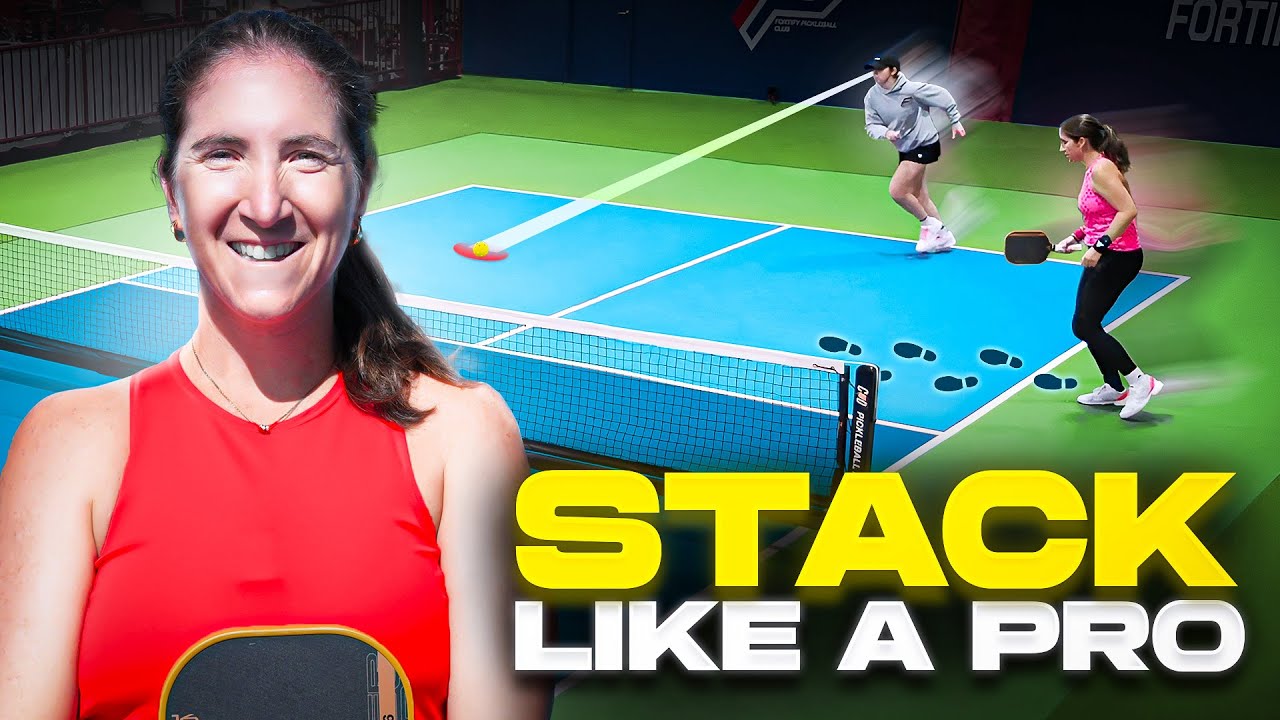
Pickleball Stacking: Complete Guide to Both Court Positions
Pickleball stacking is a game-changing doubles strategy that lets you position your forehands in the middle of the court. Whether you’re playing mixed doubles or teaming with a lefty, understanding both off-court and on-court stacking methods will transform your competitive edge.
 The Dink PickleballThe Dink Media Team
What Are the Switching Best Practices?
Even with the right method, poor execution during the switch itself gives points away.
These are the details that separate teams that stack well from teams that stack badly.
- Return placement is everything. Hit the return down the line, in front of your position, not crosscourt. A down-the-line return forces your opponent to hit their drive at an angle, which is far easier to defend. A crosscourt return lets them drive straight ahead while you are still moving. Knowing the 4 essential return targets makes this automatic.
- Return with your outer wing. From the left side, that means using your backhand. From the right side, that means your forehand. The reason: it keeps your body moving toward the court instead of away from it, and it reduces the distance you have to cover during the switch. It also explains why pros abandoned the slice return in so many of these positions.
- Your partner covers the middle. When the return stays in front of the returner, the net player can position in the center and cover up to 70 percent of the court on the next shot. If the ball goes crosscourt, that coverage disappears.
- Signal early. The net player needs to give the hand signal well before the return is hit, not as the ball is already in the air. Late signals cause hesitation, and hesitation causes collisions and missed coverage.
If you want to go deeper on return mechanics, these serve return mistakes cover several of the same positioning problems that come up when stacking.
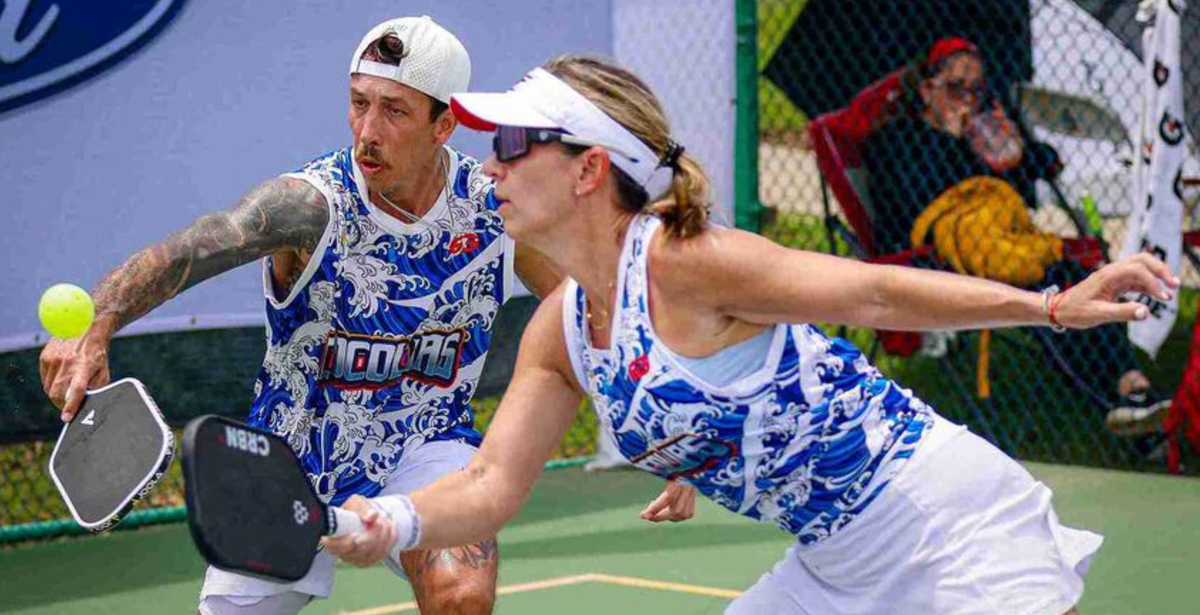
Competitive Doubles Strategy 4.0 Pickleball: Patterns That Win
Competitive doubles strategy 4.0 pickleball is less about hitting harder and more about controlling patterns, court positioning, and forcing opponents into losing situations.
 The Dink PickleballThe Dink Media Team
How Do You Exploit a Team That's Stacking Against You?
Stacking creates openings, and smart opponents will find them. Here is how you become that opponent.
- Serve big. A heavy serve that forces a weak return is still the highest percentage way to exploit a stacking team. A short or defensive return while the partner is sprinting across court is a free third shot attack. You can read more about hitting a heavy serve to apply this directly.
- Serve wide. An angled serve forces the returner to move in the opposite direction from where they are trying to go after the return. Even if they get a decent return back, they are now further out of position during the switch.
- Use the hybrid drop drive on thirds. If your opponent is caught mid-transition, a pure drive gives them time to react. The hybrid is harder to handle because it has drive pace but drops into the kitchen. Your partner can crash hard behind it.
One warning: watch the net player. Even if they look like they are staying put, experienced teams will move at the last second.
Keep them honest by occasionally attacking their position, and do not over-commit to a pattern they can read.Understanding how weak returns give away free time will also help you recognize when to attack the third and when to go back to a safe drop.
How to Defend Against Stacking in Pickleball
Knowing how to defend against stacking in pickleball is one of the most underrated skills in doubles. This guide breaks down the counter-tactics that flip the stacking team’s positioning advantage against them.
 The Dink PickleballThe Dink Media Team
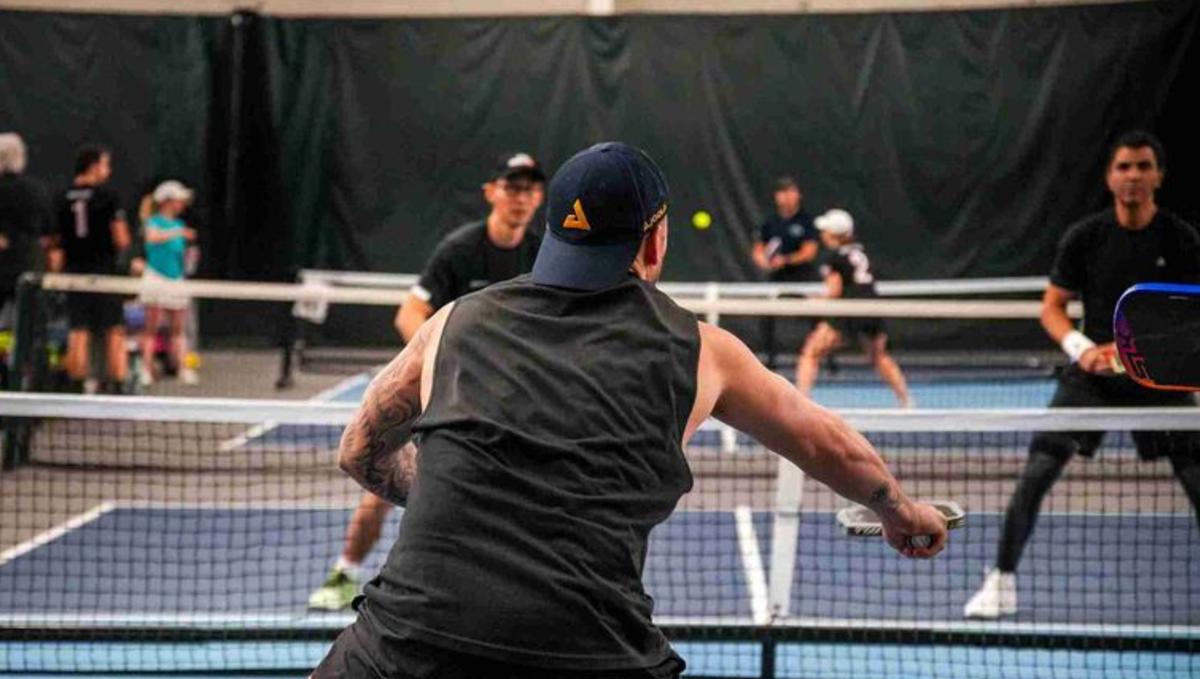
Should You Actually Stack?
The honest answer is yes, you should learn it, but no, you should not hide behind it.
If you are a developing player, stacking your backhand away from exposure every single point means your backhand never gets tested and never gets better.
Work on both sides in practice, even when stacking is the smart competitive call.
In actual competition, stacking is worth it when your strengths and your partner's strengths clearly benefit from specific side assignments.
It is less worth it when the communication and switching execution are not there yet, because the mistakes during the switch will cost more than the side preference saves you.For players working on overall mixed doubles strategy, stacking is one piece of a much larger picture. The fundamentals still come first.
And if your opponents are stacking against you, focus on your forehand speed up and your serve depth before worrying about complex counter-schemes. Simple execution against a switching team is often enough.
Learning stacking also pairs well with understanding court coverage mistakes in doubles, since switching sides incorrectly is one of the fastest ways to leave gaps your opponents will absolutely exploit.For players who want to build the full system, working on your third shot drop alongside your stacking mechanics means you have a reliable shot to fall back on when the switch leaves you out of position.
Finally, understanding the transition zone is directly connected to stacking execution. The switch puts you in the transition zone whether you like it or not, and knowing how to handle it makes the whole system more stable.
Also worth noting: the strategies pros use every game consistently include controlled stacking paired with aggressive net positioning, not stacking as a substitute for sound fundamentals.💡
Heads up: hundreds of thousands of pickleballers read our free newsletter.
Subscribe herefor cutting edge strategy, insider news, pro analysis, the latest product innovations and more.
Frequently Asked Questions
What does stacking mean in pickleball?
Stacking in pickleball means both players position on the same side of the court before the point begins, then switch to their preferred sides after the serve or return is made. It allows players to stay on their stronger side regardless of the score-based conventional positioning. Every top pro doubles team uses some form of stacking.
When should you not stack in pickleball?
Avoid stacking on the return side if your opponents have a big serve and a strong drive game, because you are extremely vulnerable during the switch. It is also worth skipping the stack if your communication with your partner is not solid yet, since poor execution during the switch costs more points than staying straight up. Half stacking, only on your serve, is a safer starting point.
What is the difference between the off-court and on-court stacking method?
The off-court method has the net player stand outside the court before the return, committing fully to the switch no matter what. The on-court method has the net player stand as if they are staying, and the returner calls "stay" or signals the switch based on return quality. The on-court method gives you an escape option but requires clear, early communication from the returner.
Does stacking work at the recreational level?
Yes, but the mental load is real when you are first learning it. Keeping track of score, court position, and switch signals all at once takes practice before it becomes automatic. Start with half stacking on your serve only, get comfortable with the movement, then add the return side stack when the system feels natural.
How do you exploit a team that is stacking against you?
Serve big to force a weak return, then attack the third shot while the stacking team is mid-switch. A wide serve that pulls the returner away from where they need to go after the return is also very effective. Use a hybrid drop drive on your third when opponents are partially transitioned, since it is harder to handle than a pure drive.
Anuncie Aqui / Advertise Here
Sua marca para o mundo Pickleball! / Your brand for the Pickleball world!



 English (US) ·
  Portuguese (BR) ·