
 English
  Spanish
  Portuguese
  German
  Italian
  Japanese
  French
  Polish
  Russian
  Netherlands
  Hungarian
  Turkish
  Videos
  Thedink Pickleball

Learn how to track pickleball progress using DUPR ratings, shot stats, and practice logs so you can measure real improvement. This guide shows exactly how to track pickleball progress without turning every match into a referendum on your worth.
If you want to know how to track pickleball progress without losing your mind over every loss, stop starting with your win-loss record.
Honestly, it's the worst metric in your bag.
It rewards easy opponents, punishes tough brackets, and tells you nothing about whether your third shot drop actually got better this month.
The scoreboard was built to settle a match, not to track a season.
Here's the thing about progress in this sport.
It's rarely linear, and it's almost never visible on the top pickleball states leaderboard or any other big-picture number.
You can lose 11-9 to a 4.5 player after playing the best pickleball of your life. You can also blow out a 3.0 buddy and learn absolutely nothing.
The scoreboard measures outcomes. Tracking measures growth. Those are different jobs, and this piece is about doing the second one properly.
Once you know how to track pickleball progress the right way, wins and losses stop feeling like a verdict on your worth as a player.
Love pickleball? Then you'll love our free newsletter. We send the latest news, tips, and highlights for free each week.
How to Track Pickleball Progress With Your DUPR Rating
The single best number-based way to track pickleball progress is your DUPR rating, and it's not close, especially after the recent ratings update made the algorithm even more accurate.
DUPR pulls from every verified match you play, weighs opponent strength, and spits out a rating that moves in fractions, not whole numbers.
A jump from 3.62 to 3.71 over eight weeks tells you more than a 6-2 weekend at your local rec league.
Pickleball ratings in general have exploded as a topic of conversation, and DUPR pickleball scores now show up on tournament brackets, club ladders, and even dating profiles (don't ask).
The reason is simple: a rating adjusts for competition level, so it's a fairer read on where your game actually sits.
If you haven't looked into how DUPR works or grabbed the latest version of the app, that's step one.
What's a Good DUPR Rating, Anyway?
A DUPR rating, the backbone of any dupr pickleball profile, is a decimal score, typically between 2.0 and 8.0, that estimates your current skill level based on match results and opponent strength.
Recreational players often land between 3.0 and 4.0. Competitive tournament players usually sit above 4.5. There's no universal "good" number here.
Good means trending upward relative to where you started, which is exactly why the dupr rating scale matters more as a personal reference point than a public flex.
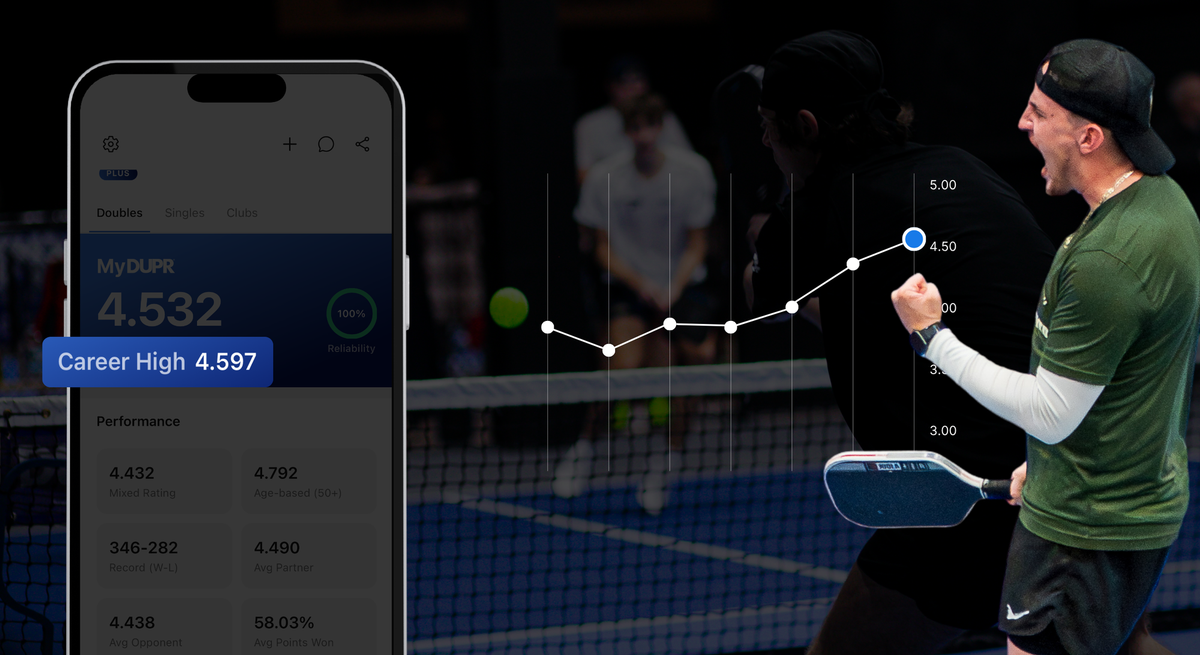
New DUPR Features: Career High, Age-Based Ratings & More
See the breakdown of your ratings by format and age, track your highest level achieved, and see how scorelines could impact your rating pre-game.
 The Dink PickleballAlex E. Weaver
Building a Practice Log That Actually Means Something
Your DUPR score updates from matches, not from the drills you're actually putting in.
It says nothing about practice, and practice is where most of your actual improvement happens.
Keep a simple log. Date, drill, what you worked on, one honest sentence about how it went. That's it. No app required, though plenty exist.
Even the hardest dinking drill out there is worth logging, since the toughest reps are exactly what separate a good week from a rough one.Try to make your opponents hit the tougher shot in a match, then log whether that pattern actually held up.
💡
Need some new pickleball gear? Get 20% off select paddles, shoes, and more with code THEDINK at
Midwest Racquet SportsRun through solo drills on days you can't find a partner, and rotate in the figure-8 drill when your dinking gets sloppy under pressure.
If you play with a regular partner, log your reps together too. Practicing with intention as a team surfaces patterns you'd never notice from a single session.
Here's the catch. A log only works if you're specific. "Worked on dinks, felt good" tells future you nothing.
"Third shot drop landed short 4 of 10 reps, need to soften my grip" tells future you exactly what to fix next Tuesday.
Specificity is the entire point of tracking. The same logic applies to return of serve reps: vague notes teach you nothing, specific ones change your next session.
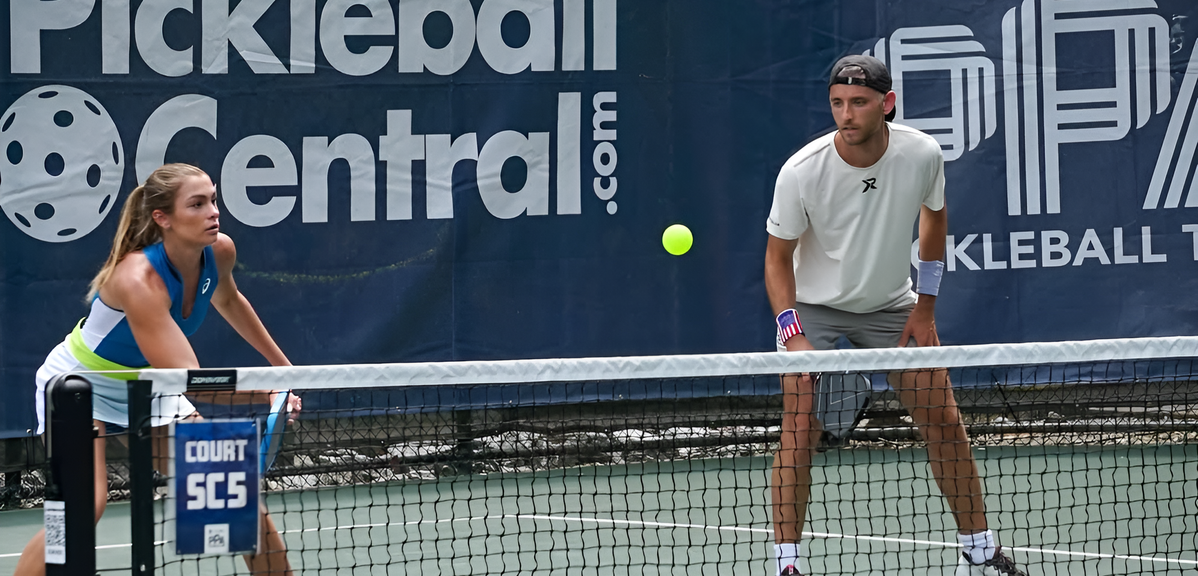
Attack the Right Spots: Win More Points in Pickleball
You can’t go to the same spot every single time you go on offense – eventually, your opponent will catch on. And make you pay for it.
 The Dink PickleballEric Roddy
How to Track Pickleball Progress Through Video Review
Film yourself. That's the honest answer to how to track pickleball progress that most players skip because it feels awkward.
Pair it with a training routine built around real reps, and a propped-up phone on the fence line captures footwork flaws, paddle prep, and positioning mistakes that are invisible in the moment.
Set it up once a month, watch ten minutes, and compare it to last month's clip.A 2025 review published on ResearchGate on motor skill acquisition found that athletes who reviewed recorded footage of their own performance corrected technical flaws roughly 30% faster than athletes relying on memory alone.
That's not a small edge. If you're serious about filming your matches, this is the research-backed reason why it works.
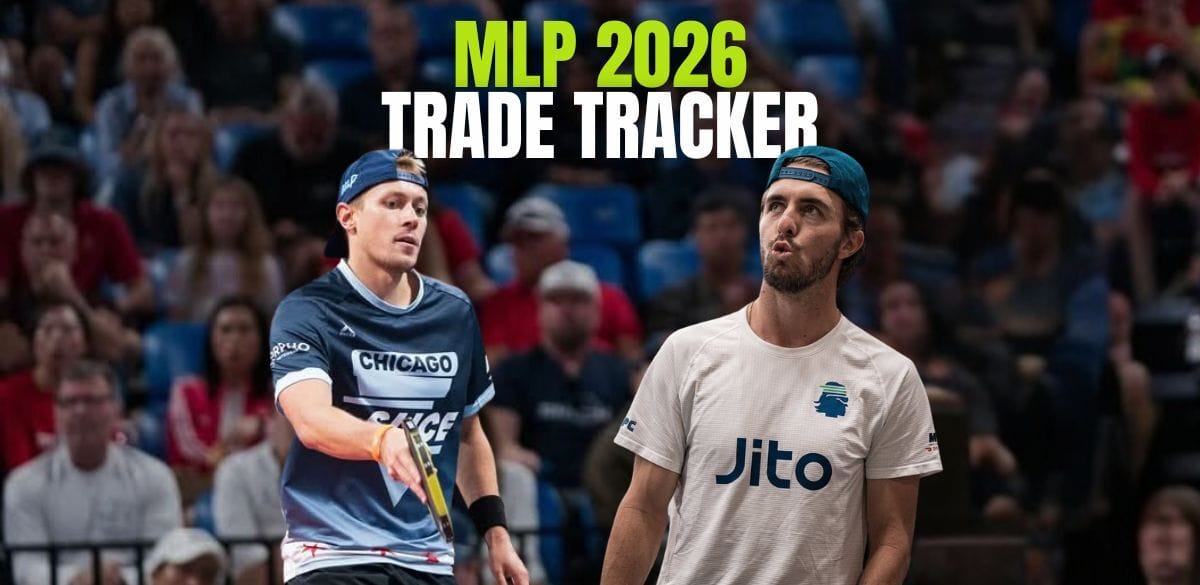
2026 Major League Pickleball Transaction Tracker
This article will be updated regularly with all trades made during the 2026 Major League Pickleball (MLP) season.
 The Dink PickleballErik Tice
How to Track Pickleball Progress With Shot-Level Stats
You don't need a full analytics suite to figure out how to track pickleball progress at the shot level.
Pick two or three shots that matter most to your game and track them for a stretch of matches.Third shot drop success rate. Return depth. Unforced errors at the kitchen line. That's plenty.
Run a few reps of an advanced shot-selection drill and you'll immediately see which of those stats needs the most attention.
Here's why this works better than obsessing over the final score.
A single stat, tracked consistently, reveals a pattern a scoreboard can never show.
Maybe your power shots are winning points early but costing you in the third set once fatigue sets in.Maybe you're great at reading the perfect drop but falling apart at mid-court transitions.
None of that shows up in a win-loss column. It shows up when you count.
Try this for one month: track a single stat across every match you play, win or lose.
Chart it on paper if you have to.
Watching one number move over four weeks is more motivating than any highlight reel, and it's the clearest way to actually track pickleball progress in a sport that otherwise hides its data behind final scores.
The player who went from 3.0 to 3.5 using a handful of tracked tips didn't do it by accident.
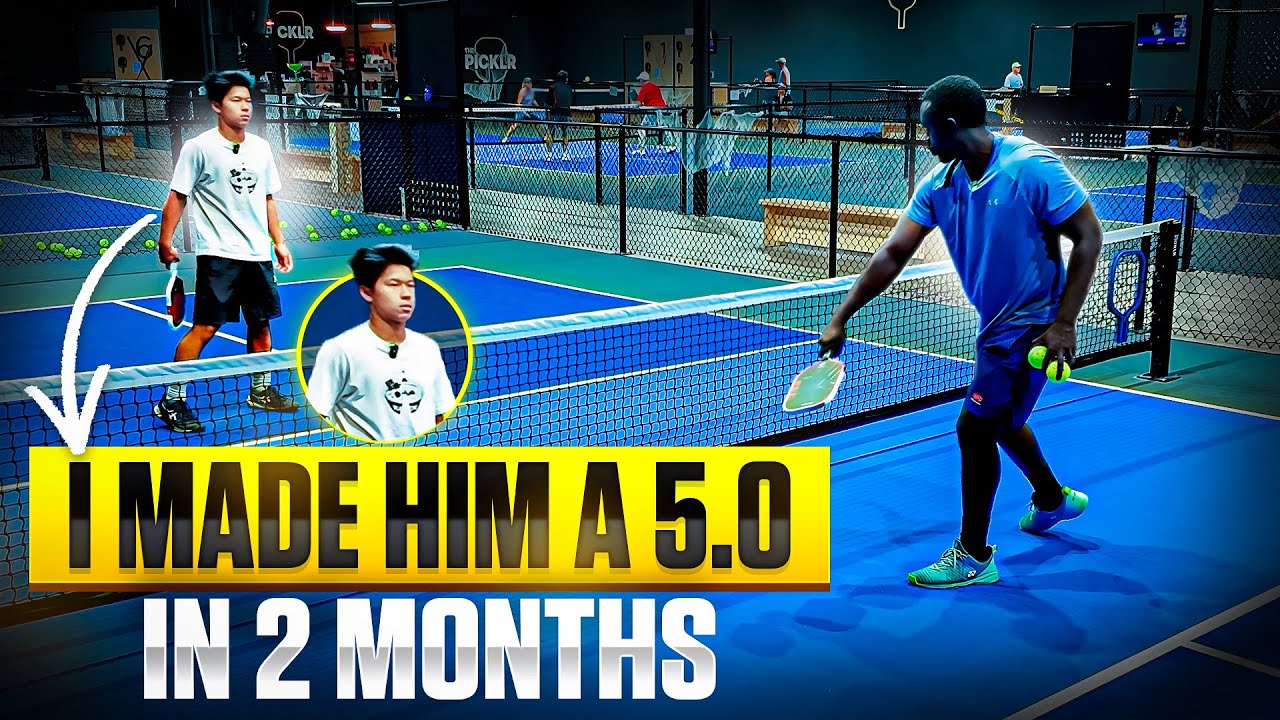
The Skills Progression That Transformed This Tennis Player into a Pickleball 5.0
Some skills definitely translate, but a tennis background can be a liability without proper training and techniques
 The Dink PickleballThe Dink Media Team
Setting Goals That Aren't Just "Win More"
"Win more" isn't a goal. It's a wish. Real goals are specific, measurable, and tied to the skills that produce wins rather than the wins themselves.
Set a goal like "cut unforced errors on my backhand by half this month" instead of "get better."
Studying doubles court positioning is a good example of a skill goal that's specific enough to actually measure.
Revisit your goals every few weeks the way plenty of Dink readers do with their annual goal check-ins.
Consider which skill investments will move the needle fastest for where you are right now, and don't ignore the parts of your game that involve someone else on the court.
If you play doubles, improving communication with your partner is a trackable skill too, not just a vibe.
Participation numbers back up why this matters.
The Sports & Fitness Industry Association's 2025 single-sport report shows pickleball participation climbing for the fifth straight year, which means the player pool you're competing against keeps getting deeper and more skilled.
Tracking your own development against a moving target, not just last season's version of the field, keeps your goals honest.
How to Set Realistic, Achievable Pickleball Goals
Your pickleball future isn’t decided by how much you play. It’s decided by how well your body holds up. Build a schedule you can live with, not one that destroys you.
 The Dink PickleballThe Dink Media Team

The Mental Side: Tracking Confidence and Consistency
Stats and ratings capture the physical game.
Even a well-drilled spicy third shot can fall apart under pressure if the mental side isn't tracked too, and the mental game is often where matches actually get decided.
Rate your confidence on a simple 1-to-5 scale after each match. Note whether nerves affected your serve.
Track how you handled a bad line call, a tough fourth shot exchange, or a momentum swing.
The Best Pickleball Players Aren’t Following the Rules Anymore
Modern pickleball isn’t won by coloring inside the lines. More and more, the most successful players are also the most creative.
 The Dink PickleballZoey Weil
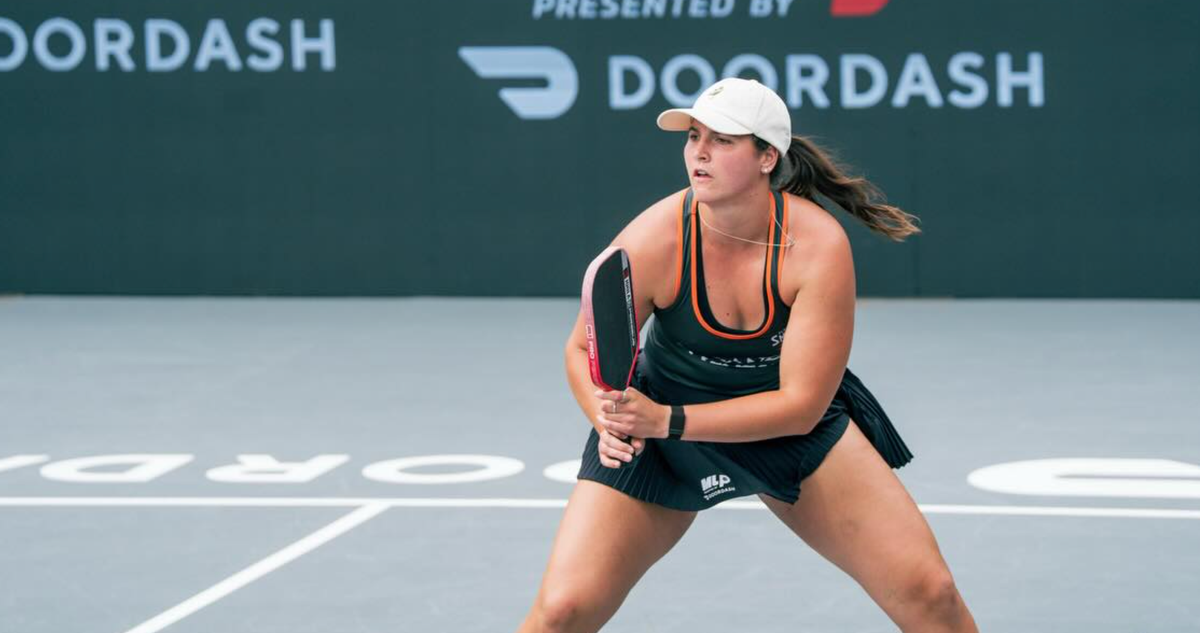
This matters because consistency under pressure is a skill, and skills can be tracked.
Players who work on deception at the net or study how to become unattackable are really just building repeatable patterns they can trust under stress.
Even the basics every beginner needs become mental anchors once you've drilled them enough to stop thinking about them mid-point.
A 2026 update from USA Pickleball on rating consistency noted that players who logged post-match self-assessments alongside their DUPR scores showed steadier rating trajectories over a season than players who tracked results alone.
Confidence, it turns out, is data too.
Pickleball Mental Game: Stay Calm Under Pressure and Win
The mental game competitive pickleball demands is just as important as your backhand or your third shot drop. Learn how top players stay calm under pressure, reset after errors, and build the focus that wins matches.
 The Dink PickleballThe Dink Media Team
Key Takeaways
- Your win-loss record is the least useful metric for measuring real improvement.
- DUPR ratings adjust for opponent strength, making them a far better long-term gauge than the scoreboard, the same way DUPR's collegiate rankings separate real improvement from a soft schedule.
- A specific, honest practice log beats a vague one every time.
- Monthly video review speeds up how quickly you correct technical flaws.
- Tracking one or two shot-level stats reveals patterns a final score can never show.
- Goals should target skills, not outcomes; "win more" isn't a plan.
- The mental game is trackable too. Confidence and consistency deserve their own log, the same discipline players bring to DUPR's collegiate championship season.
💡
Heads up: hundreds of thousands of pickleballers read our free newsletter.
Subscribe herefor cutting edge strategy, insider news, pro analysis, the latest product innovations and more.
Frequently Asked Questions
How to Track Pickleball Progress if You Hate Spreadsheets
Keep a one-line note after each session, the same habit that makes following DUPR's fantasy pickleball scoring so addictive. Date, one thing you worked on, one honest sentence about how it went. That alone beats relying on memory or your win-loss record, and it takes under a minute. It's the simplest possible way to track pickleball progress without any tools at all.
Does my DUPR rating actually reflect my skill level?
Mostly, yes. As a pickleball rating system, DUPR adjusts for opponent strength across verified matches, which makes it more reliable than a raw win-loss record. It's not perfect, especially with a small match history, but it's the closest thing the sport has to an objective number, which is why even DUPR's top-ranked players by region treat it as the standard reference.
How often should I review my progress?
Check your DUPR trend and practice log every two to four weeks. Anything shorter and normal variance looks like a slump or a breakthrough when it's really just noise.
Can I track pickleball progress without playing tournaments?
Absolutely. Practice logs, video review, and shot-level stats from casual matches work just as well, the same discipline behind DUPR's collegiate power rankings that update all season long. Tournaments help your DUPR rating move faster since matches are verified, but they're not required to measure improvement.
What stats matter most for a beginner trying to improve?
Focus on unforced errors and third shot drop success rate. Both are simple to track, directly tied to point outcomes, and forgiving enough that a beginner can see real week-to-week movement. Pairing that with a structured training routine makes the numbers move even faster.
Anuncie Aqui / Advertise Here
Sua marca para o mundo Pickleball! / Your brand for the Pickleball world!




 English (US) ·
  Portuguese (BR) ·