
 English
  Spanish
  Portuguese
  German
  Italian
  Japanese
  French
  Polish
  Russian
  Netherlands
  Hungarian
  Turkish
  Videos
  Thedink Pickleball

Whether you're picking up a paddle for the first time or looking to refine your game, understanding the seven fundamental pickleball shots is essential. From the serve to the overhead, each shot serves a specific purpose and mastering them will transform how you play.
If you're serious about improving your pickleball shot, you need to understand the foundation first.
According to pro Mari Humberg, there are seven fundamental shots that every player must master to grow their game. These aren't fancy trick shots or advanced techniques—they're the building blocks that separate casual players from competitive ones.
The seven fundamental pickleball shots are: the serve, return of serve, drive, drop, dink, volley, and overhead.
Each one has a specific purpose, a distinct technique, and a moment when it matters most on the court. Learning them isn't just about hitting the ball; it's about understanding when and why to use each shot.
Love pickleball? Then you'll love our free newsletter. We send the latest news, tips, and highlights for free each week.
Why These Seven Pickleball Shots Matter
Before we break down each pickleball shot individually, let's talk about why they matter. The sport of pickleball has exploded in popularity over the past few years, and with that growth comes a flood of new players looking to improve. Many beginners jump straight into advanced strategies without mastering the fundamentals, and that's where they get stuck.
Mastering these seven fundamental shots is what allows you to grow your pickleball game from beginner to intermediate to competitive. You can't build a house without a foundation, and you can't build a pickleball game without these shots.
The latest drop from 11Six24 is here — and The Dink is giving you a shot to get one for free.
We’re giving away 10 Power 2 paddles, the hottest new paddle on the market built around a powerful premise: Surface grit that lasts the life of the paddle.
Enter here. And checkout their new Power 2 lineup and get $10 off with code THEDINK.
1. The Serve: Starting Every Point Right
The serve is where every rally begins, and it's the only shot you have complete control over. There's no opponent hitting the ball to you—you're in charge. That's why getting your serve right is crucial.
According to Humberg's instruction, the key to a proper serve is understanding the rules first. You must start behind the white line (the baseline), and you cannot step into the court to serve. Your serve must land in the opposite diagonal service box—if it lands in the white or red areas, it's out.
The motion itself should be low to high. This isn't a tennis serve where you're whipping the ball down hard. In pickleball, the serve is more controlled and deliberate. You're setting the tone for the point, not trying to ace your opponent (though that's a nice bonus when it happens).
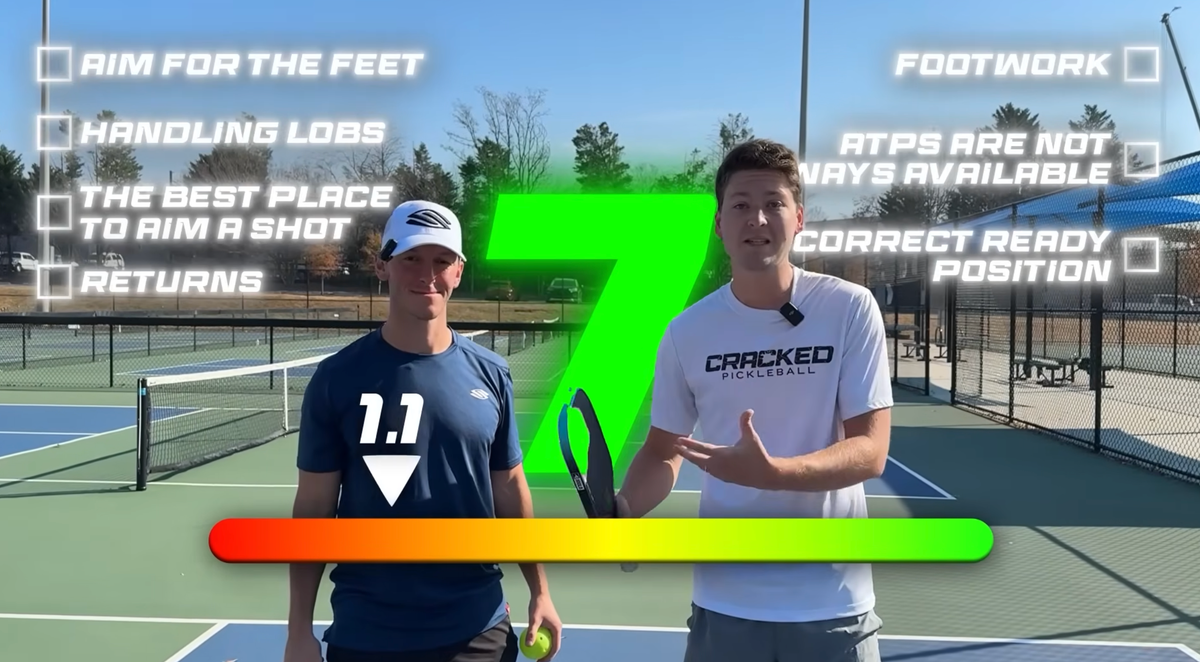
7 Pickleball Tips That Will Actually Change Your Game
Here’s a little knowledge nugget: just because you know how to hit an ATP doesn’t mean you should go for one every wide dink you get
 The Dink PickleballThe Dink Media Team
2. The Return of Serve: Your First Aggressive Opportunity
Once your opponent serves, it's your turn to respond with a return of serve.
Unlike the serve, there's no specific rule about where you stand when returning—you have flexibility here. Humberg recommends starting a little bit behind the baseline to give yourself enough space to return the ball comfortably.
The return of serve doesn't have to follow the low-to-high motion of the serve. You can swing bigger and more freely. The key is to follow that ball in after you hit it, moving forward toward the kitchen line (the no-volley zone) to set yourself up for the next shot.
Think of the return as your first aggressive opportunity.
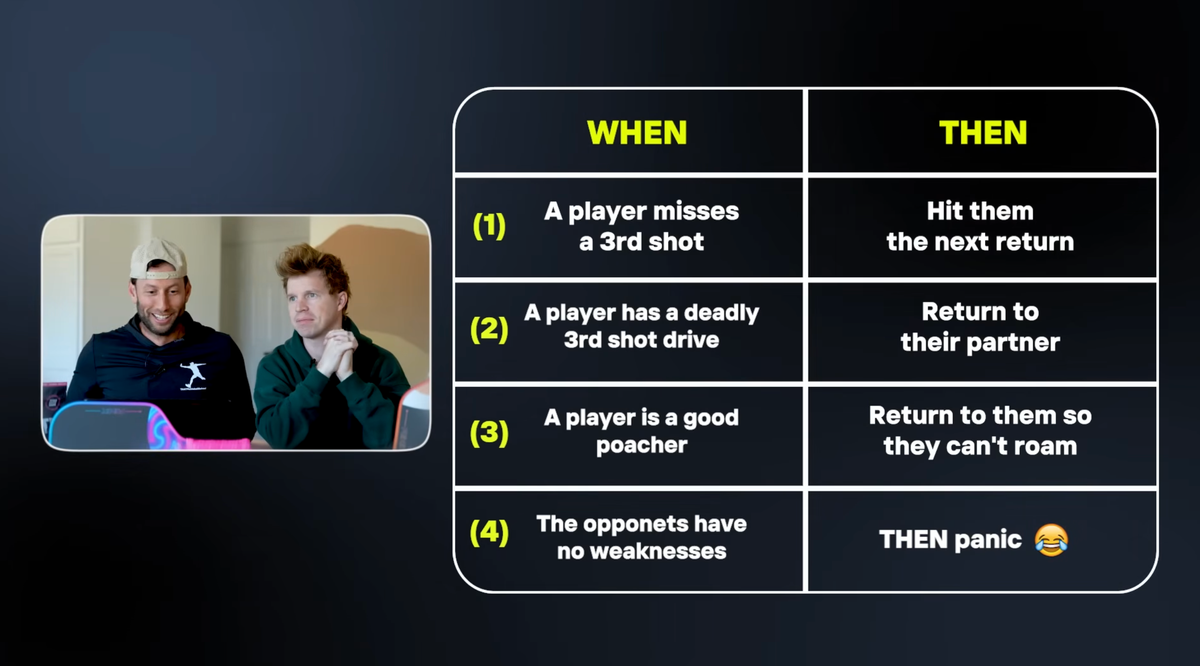
You're not just getting the ball back; you're positioning yourself to take control of the point.The 4 Essential Pickleball Return Targets to Play Like a Pro
By mastering these targets, you’ll improve your return consistency, put pressure on your opponents, and ultimately win more points.
 The Dink PickleballThe Dink Media Team
3. The Drive: When You Want to Put Pressure On
The drive is essentially a harder hit shot where you're trying to drive the ball through your opponent.
It's more aggressive than a dink or drop, and it's designed to put pressure on the other team.
When you hit a drive, you're not necessarily trying to run up to the kitchen line immediately after. Some players make the mistake of rushing forward after every shot, but with a drive, you're trying to force your opponent into a defensive position. Let them react to your aggression.
The drive is useful when you're in a rally and you see an opportunity to take control.It's a pickleball shot that requires good timing and court awareness—you need to know when your opponent is vulnerable.
💡
Need some new pickleball gear? Get 20% off select paddles, shoes, and more with code THEDINK at Midwest Racquet Sports
4. The Drop: The Third Shot That Changes Everything
If the drive is about aggression, the drop is about finesse.
The drop is the other third shot option (the first shot after the return of serve), and it's one of the most important shots in pickleball.
A drop means you're trying to land the ball softly inside the kitchen line or aim at your opponent's feet on the kitchen line. The goal is to force them to hit up at you, which gives you the advantage. A well-executed drop shot can completely change the momentum of a point.
This pickleball shot requires precision and touch. You're not swinging hard; you're controlling the ball and placing it exactly where you want it. It takes practice, but once you master it, you'll see immediate improvement in your game.
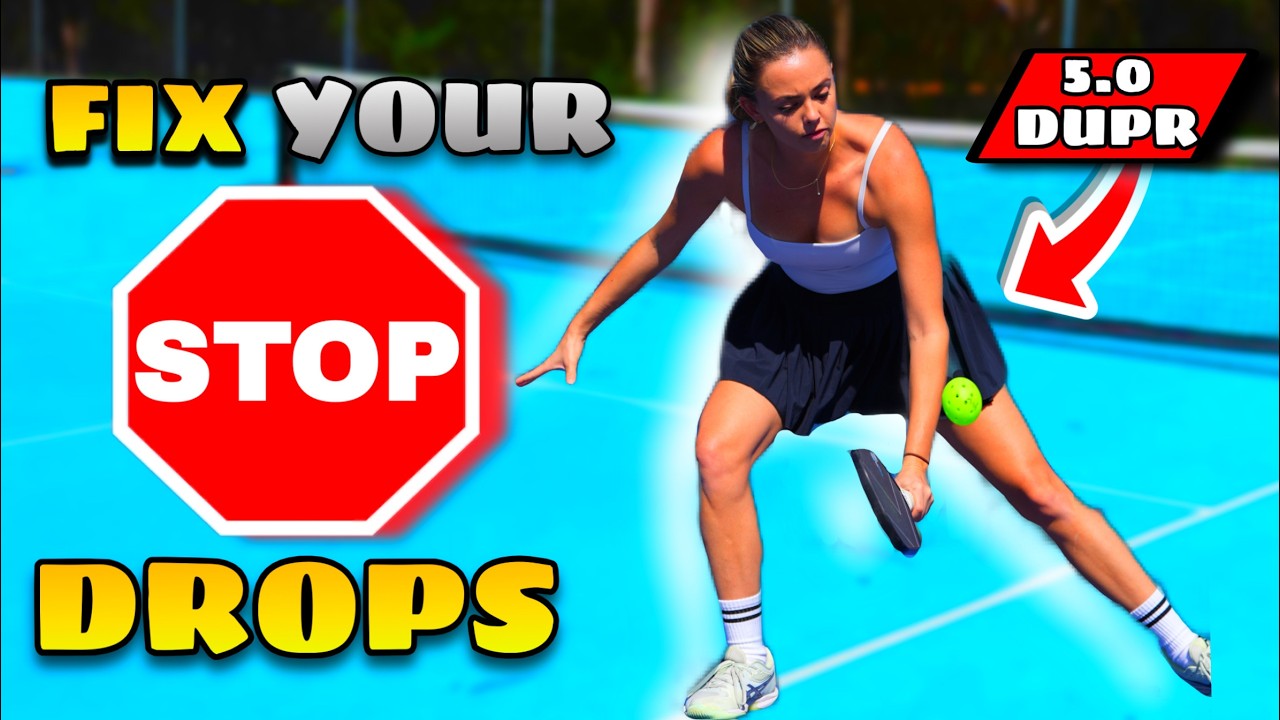
5 Drop Shot Techniques to Elevate Your Pickleball Game
The drop shot is one of pickleball’s most essential skills, yet it’s also one of the most misunderstood.
 The Dink PickleballThe Dink Media Team
5. The Dink: The Soft Game That Wins Points
Now we're getting into the shots that define modern pickleball. The dink is a soft shot hit from inside the kitchen line, and it's become the foundation of competitive play.
Here's the thing about dinks: there's a common misconception that you're just trying to put the ball in play. That's not the case at all. When you dink, you're setting up for an attack.
You're hitting soft shots back and forth with your opponent, trying to create an opportunity where you can hit an aggressive shot and win the point.The dink is a pickleball shot that separates good players from great ones. It requires patience, consistency, and strategic thinking. You're not trying to end the point with a dink—you're trying to set yourself up to end it with something else.
Heads up: hundreds of thousands of pickleballers read our free newsletter. Subscribe here for cutting edge strategy, insider news, pro analysis, the latest product innovations and more.
6. The Volley: Taking It Out of the Air
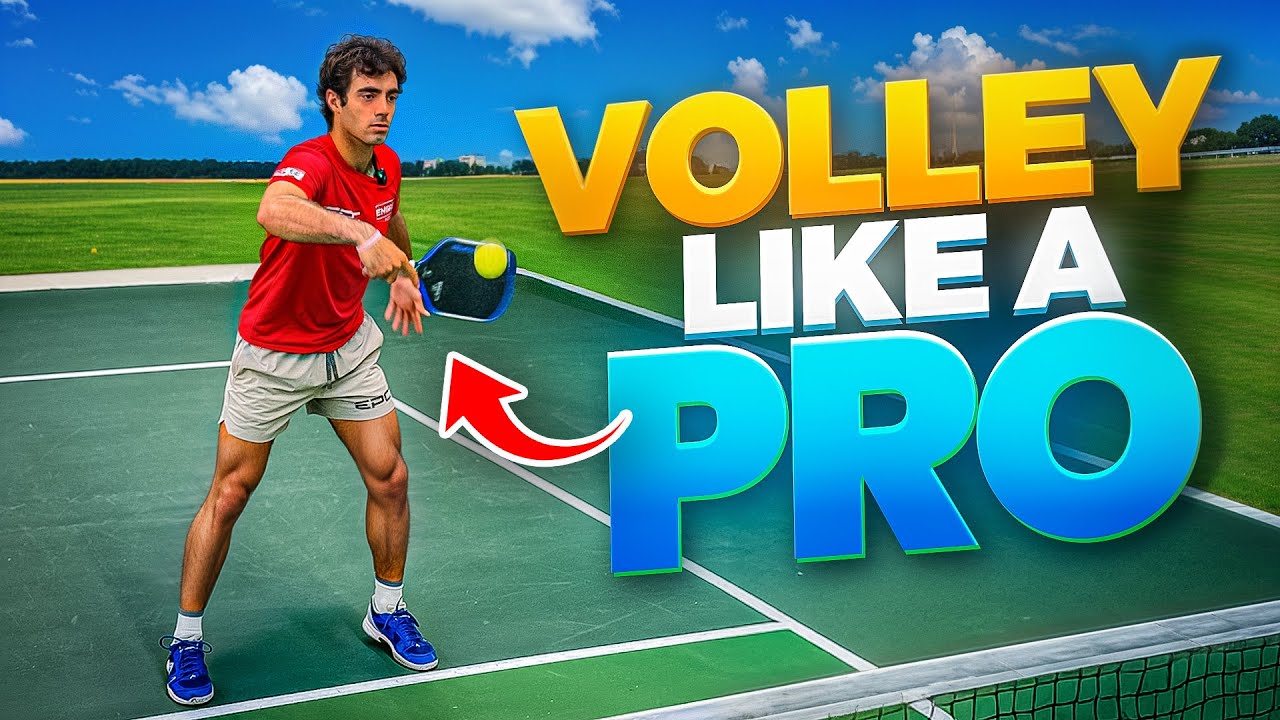
The volley is similar to the dink, but with one key difference: you're taking the ball out of the air instead of letting it bounce. Any ball that's hit out of the air from the kitchen area is referred to as a volley.
The volley is useful when you're at the kitchen line and your opponent hits a ball that's coming at you quickly. Instead of backing up and letting it bounce, you can take it out of the air and hit it back. This keeps the pressure on your opponent and prevents them from advancing.
A good volley game means you're comfortable at the net and confident in your reflexes. It's a pickleball shot that becomes more important as you move up in skill levels.
The Elite Volleying Technique That Beats Muscle in Pickleball
Stop trying to muscle your volleys. Start focusing on the mechanics that actually work.
 The Dink PickleballThe Dink Media Team
7. The Overhead: Your Finishing Shot
The overhead is the last of the seven fundamental pickleball shots, and it's your chance to finish a point. When your opponent hits a lob (a high, arcing shot), the overhead is your response.
The name says it all: you're making contact with the ball as high as possible, over your head. Because of that angle, you can hit down on the ball and put real pace on it. The overhead is an attacking shot, and it's often the shot that ends the rally.
You probably want to back up a little bit when you see a lob coming. Give yourself space to get under the ball and make solid contact. A well-hit overhead is one of the most satisfying shots in pickleball.
Putting It All Together
Understanding each pickleball shot individually is one thing. Knowing when and how to use them in a real match is another.
The serve gets the point started, the return puts you in position, and then you're choosing between aggressive shots (drive, overhead) and setup shots (drop, dink, volley) based on what your opponent gives you.
The beauty of pickleball is that it rewards smart shot selection over raw power. You don't need to be the strongest player on the court to win—you need to be the smartest. And that starts with mastering these seven fundamental shots.
Frequently Asked Questions
What is the most important pickleball shot to learn first?
The serve is the best place to start because it's the only shot you have complete control over. Once you can consistently get your serve in play, you can focus on the other shots. A solid serve sets the tone for every point.
How long does it take to master these seven pickleball shots?
It depends on how often you play and practice, but most players can develop basic competency in all seven shots within a few weeks of regular play. True mastery takes months or years of consistent practice and match experience.
What's the difference between a dink and a volley?
The main difference is whether the ball bounces. A dink is hit after the ball bounces, while a volley is hit out of the air. Both are soft shots used to set up attacks, but they require slightly different techniques and timing.
Why is the drop shot so important in pickleball?
The drop shot is important because it forces your opponent to hit up at you, which gives you an advantage. A good drop shot can neutralize an aggressive opponent and shift momentum in your favor.
Can I win matches without mastering all seven shots?
Technically yes, but you'll be limiting yourself. Most competitive players use all seven shots regularly. The more shots you have in your arsenal, the more options you have to adapt to different opponents and situations.
Anuncie Aqui / Advertise Here
Sua marca para o mundo Pickleball! / Your brand for the Pickleball world!



 English (US) ·
  Portuguese (BR) ·