
 English
  Spanish
  Portuguese
  German
  Italian
  Japanese
  French
  Polish
  Russian
  Netherlands
  Hungarian
  Turkish
  Videos
  Thedink Pickleball

The bunt drop is one of pickleball's most effective offensive shots, but most players execute it incorrectly. Learn the proper technique for hitting a bunt drop that keeps your opponent pinned on defense.
The bunt drop is one of the most misunderstood shots in pickleball, yet it's also one of the most effective weapons in your offensive arsenal.
Most players think they're hitting a bunt drop when they're actually chopping at the ball with excessive motion, which kills the shot's effectiveness and leaves them vulnerable at the net.
Love pickleball? Then you'll love our free newsletter. We send the latest news, tips, and highlights for free each week. Subscribe to our free newsletter
What's the Difference Between a Bunt Drop and a Topspin Drop?
Here's the thing: pickleball has two primary types of drop shots, and understanding the distinction between them is crucial to your game.
The bunt drop is essentially a push drop, while a topspin drop involves more aggressive spin and motion. According to pro James Ignatowich, the bunt drop is the simpler, more controlled version that beginners and intermediate players should master first.
💡
The bunt drop requires minimal motion and relies on soft hands rather than aggressive paddle movement. This makes it more reliable in high-pressure situations and easier to execute consistently.
The topspin drop, by contrast, demands more technical skill and timing, making it a shot you'll develop after you've perfected the fundamentals of the bunt drop.
The Critical Detail: Paddle Tip Position
The single most important element of hitting a proper bunt drop is keeping your paddle tip down throughout the entire stroke. This one detail separates players who hit effective bunt drops from those who are just hacking at the ball.
When your paddle tip is down, you naturally prevent yourself from chopping at the ball. Your paddle face stays relatively flat, and the ball comes off softly with minimal spin.
Many players make the mistake of lifting their paddle tip or using an upward chopping motion, which creates too much energy and sends the ball sailing past the net or bouncing too high for your opponent to handle.
The mechanics are straightforward:
- Step forward with your right foot (if you're right-handed)
- Keep your paddle tip down
- Use a gentle pushing motion rather than a swinging motion
- Think of it less like a tennis stroke and more like a controlled push
Your goal is to take pace off the ball and land it softly in your opponent's kitchen, forcing them into a defensive position.
Master the Push Drop: The Simplest Pickleball Shot the Pros Use to Dominate
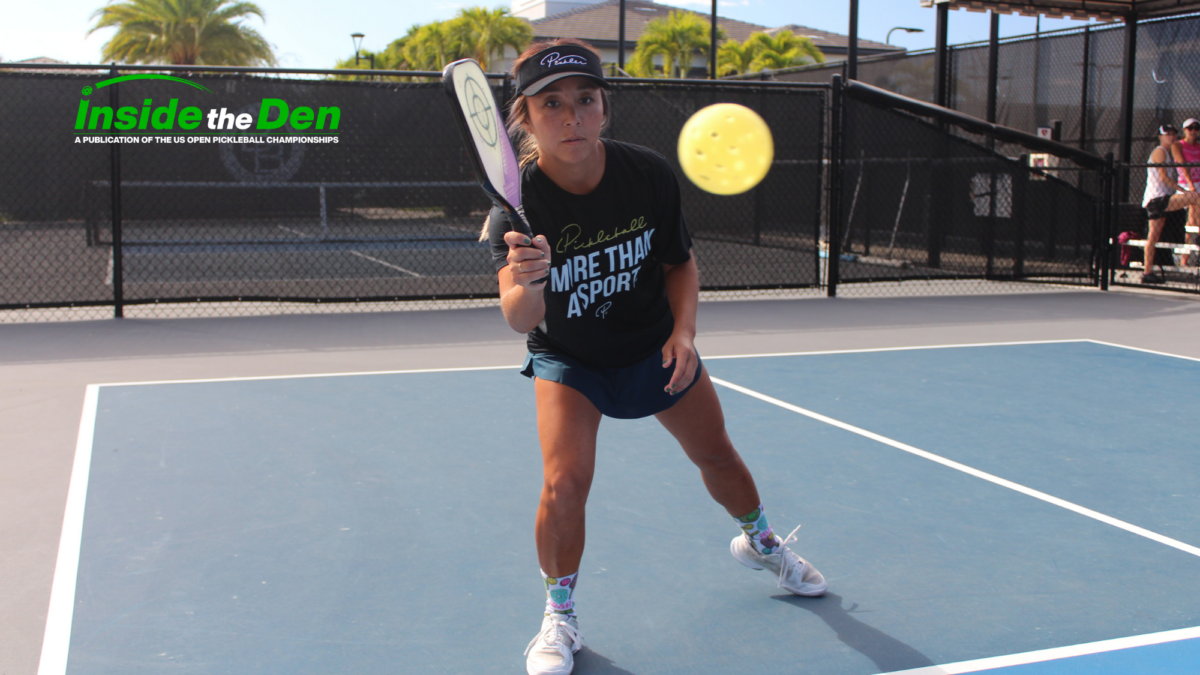
In a sport where everyone’s trying to hit harder, spin more, and execute increasingly complex shots, the push drop is a reminder that consistency and positioning often beat flash.
 The Dink PickleballThe Dink Media Team
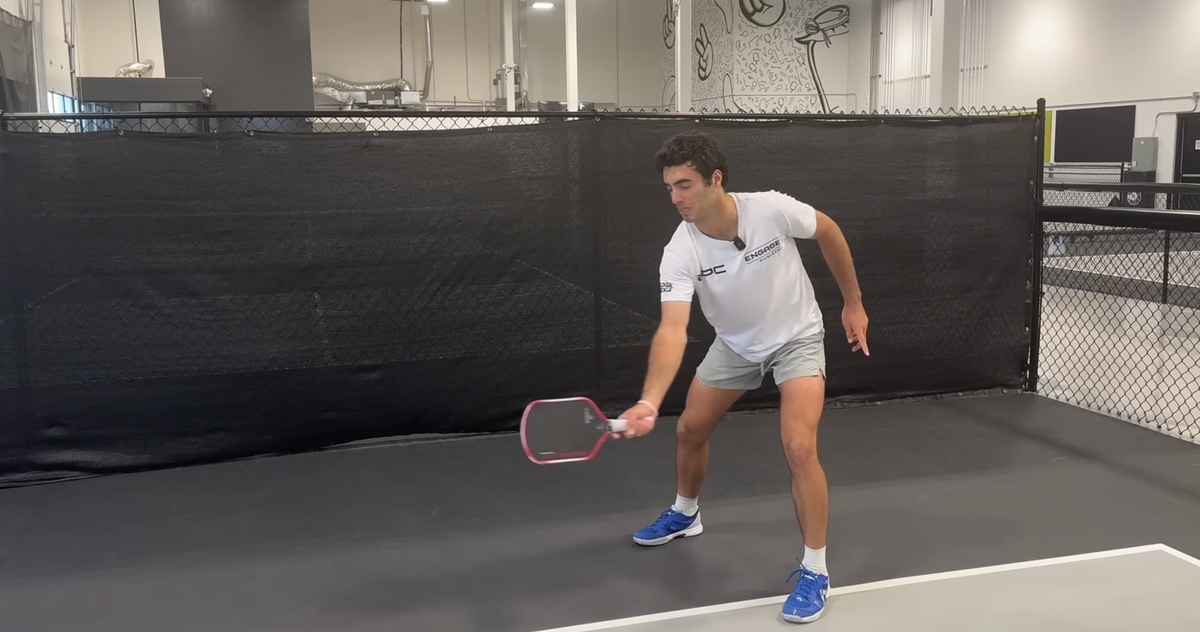
Your footwork sets up everything else in the bunt drop. Stepping forward with your right foot (for right-handed players) accomplishes two things:
- It gets your body weight moving toward the net
- It positions you to follow through on your shot
This forward step isn't a lunge or an aggressive movement. It's a controlled, deliberate step that puts you in position to execute the shot with precision. Your weight should be balanced, and your feet should be shoulder-width apart or slightly wider. This stance gives you stability and allows you to adjust quickly if your opponent returns the ball.
Many players make the mistake of staying too far back from the net when attempting a bunt drop. You need to be close enough to the net that you can execute the shot with a short, controlled stroke. If you're too far back, you'll be tempted to swing harder, which defeats the entire purpose of the bunt drop.
How to Improve Pickleball Footwork: 5 Pro Drills
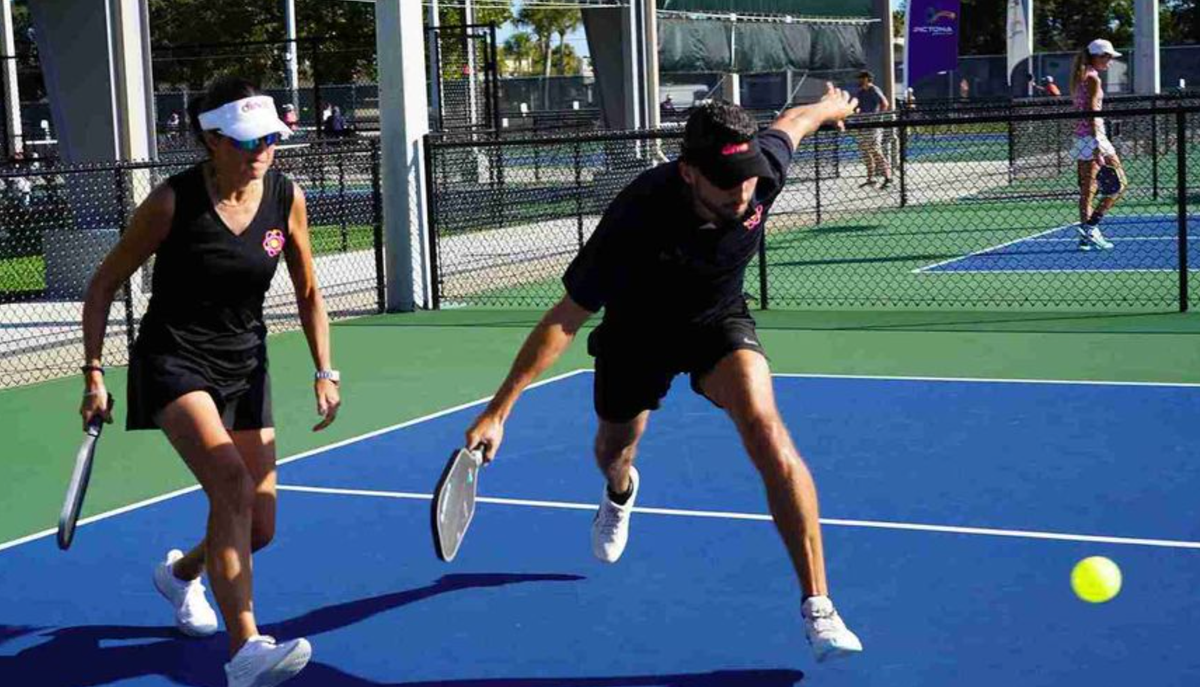
Pickleball footwork drills are the fastest way to close the gap between your shot-making ability and your actual on-court results. Here are five drills that competitive players use to move faster, recover quicker, and stop giving away free points.
 The Dink PickleballThe Dink Media Team
Why Motion Control Is Everything
The biggest mistake players make when hitting a bunt drop is using too much motion. Excessive paddle movement creates unnecessary energy, which translates into a ball that either flies too high or travels too far into the court. Neither outcome is what you want.
A proper bunt drop should look almost effortless. Your paddle moves just enough to make contact with the ball and direct it toward your target. There's no big backswing, no follow-through that extends past your body, and no chopping motion. It's a compact, controlled stroke that relies on soft hands and touch rather than power.
Think of it this way: if you're making a big motion, you're doing it wrong. The bunt drop is about finesse, not force. This is why it's such an effective shot for players who understand the importance of touch and control in pickleball.
Heads up: hundreds of thousands of pickleballers read our free newsletter. Subscribe here for cutting edge strategy, insider news, pro analysis, the latest product innovations and more.
The Bigger Picture: Why the Bunt Drop Matters
Understanding how to hit a proper bunt drop is about more than just adding another shot to your arsenal. It's about developing the soft hands and touch that make you a complete pickleball player. Players who master the bunt drop tend to be better at other soft shots like dinking and third-shot drops because they understand the importance of control and finesse.
The bunt drop also teaches you an important lesson about pickleball strategy: sometimes the best offense is a controlled, patient approach rather than an aggressive one. By hitting a soft bunt drop that forces your opponent into a defensive position, you're setting yourself up to finish the point with a more aggressive shot later in the rally.
This is why pickleball is such a fascinating sport. It rewards players who understand the nuances of the game and who can execute a variety of shots with precision and control. The bunt drop is just one example of how a relatively simple shot, executed properly, can be a powerful weapon in your game.
Pickleball Etiquette for Beginners: Unwritten Rules
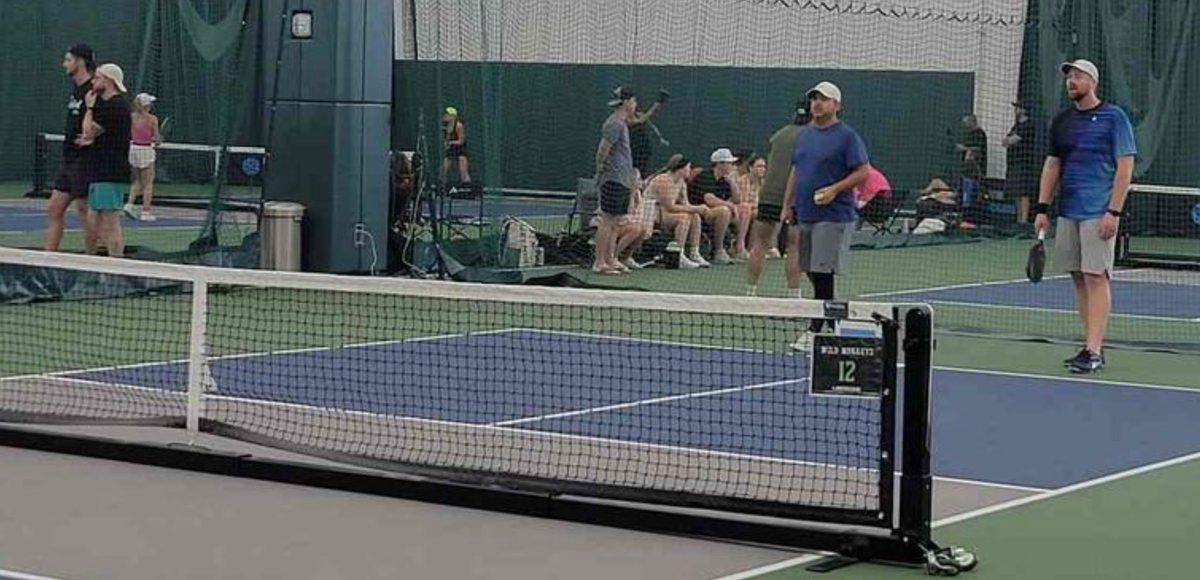
Pickleball etiquette for beginners goes beyond the rulebook, the unwritten social code of the court matters just as much as your backhand. Here’s what every new player needs to know before stepping on a court.
 The Dink PickleballThe Dink Media Team
Frequently Asked Questions
What's the difference between a bunt drop and a push drop?
A bunt drop and a push drop are essentially the same shot. Both terms refer to a soft, controlled drop shot that uses minimal motion and keeps the paddle tip down. The terminology varies depending on who's teaching the shot, but the mechanics are identical.
How do I know if my paddle tip is down enough?
Your paddle tip should be pointing downward at roughly a 45-degree angle or steeper. If your paddle face is flat or tilted upward, your paddle tip isn't down enough. Practice in front of a mirror or have a partner watch you to ensure your paddle position is correct.
What happens if I use too much motion on a bunt drop?
If you use too much motion, the ball will either fly too high and sail past the net, or it will land too deep in the court and give your opponent an easy offensive opportunity. The whole point of the bunt drop is to take pace off the ball and land it softly in the kitchen.
Is the bunt drop a beginner shot or an advanced shot?
The bunt drop is a beginner-friendly shot in terms of mechanics, but it requires touch and feel to execute consistently. Beginners can learn the basic technique quickly, but developing the soft hands and consistency needed to use it effectively in matches takes practice and experience.
Anuncie Aqui / Advertise Here
Sua marca para o mundo Pickleball! / Your brand for the Pickleball world!




 English (US) ·
  Portuguese (BR) ·