
 English
  Spanish
  Portuguese
  German
  Italian
  Japanese
  French
  Polish
  Russian
  Netherlands
  Hungarian
  Turkish
  Videos
  Thedink Pickleball

Rachel Rohrabacher breaks down the fundamentals of mixed doubles strategy in a masterclass with Kyle Koszuta. From understanding each player's role to reading your opponent's movement, this guide covers everything you need to elevate your mixed game.
Mixed doubles might be the most misunderstood format in pickleball, but mixed doubles strategy doesn't have to be complicated.
Top 10 player Rachel Rohrabacher recently sat down with Kyle Koszuta from The Dink Pickleball to break down exactly how to play this format at a high level, and the insights she shared are game-changing for anyone looking to improve their mixed game.
Love pickleball? Then you'll love our free newsletter. We send the latest news, tips, and highlights for free each week.
Why Does the Man Take So Many Balls in Mixed Doubles?
The most common question in mixed doubles is simple: why does the guy take so many balls?
The answer, according to Rohrabacher, comes down to pressure and positioning.
The man's job isn't just to hit balls; it's to create constant pressure on the opposing woman's dinking game."If the ball is just a regular dink from the girl or guy, they probably shouldn't be coming over to the right side of my body," Rohrabacher explains.
"But from over here, the man has to come over because he has to put a lot of pressure on the woman's dinks."
Here's the key insight:
If the man isn't actively moving and looking to attack, the woman on the other side has zero pressure.She can dink all day without consequence. The man's constant movement and aggression force her to make tougher decisions faster.
This is why mixed doubles strategy hinges on the man's willingness to be active and aggressive.
That said, there's a fine line. Rohrabacher notes that sometimes men come over too far, screening their own partner or taking balls they shouldn't. The solution?
Communication. "As long as you're communicating, I'm prepared to be faked out," she says.
"I'm the backup player, so I'm always ready for you to come over and then honestly pull out if you need to."Best Women’s Pickleball Shoes of 2026: Top 9 Reviewed
I tried the 9 top women’s pickleball shoes from Nike, ASICS, Selkirk, JOOLA and more to reveal the best options for comfort, speed, and on-court performance.
 The Dink PickleballEmily Visnic

Understanding Each Player's Role in Mixed Doubles
So what exactly is each player supposed to do in mixed doubles?
Rohrabacher breaks it down clearly: the man should be taking the middle and looking to be aggressive, while the woman plays a supporting role that's still aggressive but more selective.
"The man should be taking the middle and they should be looking to be aggressive and making aggressive plays," Rohrabacher says.
"The women can still be aggressive, especially like that's my game style, but within reason."
The reason for this dynamic is straightforward. In a standard righty-versus-righty matchup, the man typically has better hands and more power.
The woman, therefore, needs to be more careful and selective about what she attacks. This doesn't mean she's passive; it means she's strategic.
Rohrabacher describes her role as being a "supporting actress."
She's not trying to win points on her own; she's manipulating balls to set up her male partner for aggressive opportunities.
This is where mixed doubles strategy becomes nuanced. The woman's job is to create the conditions for the man to attack, not to attack herself.
💡
Need some new pickleball gear? Get 20% off select paddles, shoes, and more with code THEDINK at
Midwest Racquet SportsHow to Manipulate Balls and Set Up Your Partner
If the woman's role is to set up her partner, what does that actually look like?
Rohrabacher gives specific examples of how she manipulates the ball to create attacking opportunities.
One of her favorite tactics is the roll dink hit wide.
By starting with a dink right at the opposing woman's feet and then moving her wider, Rohrabacher creates pressure that forces a pop-up or a rushed shot.
She also uses depth strategically. "I'll make my deep dinks deeper and deeper so that she either tries to speed up to my man and he's ready, or she's not as comfortable," she explains.
Another key tactic is going behind the man when he's creeping too far into the middle.
If the opposing man is overcommitting to the center, Rohrabacher will hit a speed-up down the line to keep him honest.
This forces him to stay in his lane and gives her more freedom in the crosscourt dinking battle.
The broader principle here is that every shot should have a purpose.
You're either creating pressure, baiting an attack, or setting up your partner. There's no such thing as a neutral dink in high-level mixed doubles.
Master Pickleball Momentum: Control Every Point
The difference between 5.0 players and everyone else isn’t speed or strength—it’s understanding pickleball momentum. Master the three states of every rally and you’ll start beating players who are technically better than you.
The Dink PickleballThe Dink Media Team

Reading Your Opponent's Movement
One of the most underrated skills in mixed doubles is the ability to read your opponent's weight shift before they even hit the ball.
Rohrabacher demonstrates this by watching the man's movement right before she hits her shot.
"Right before I hit is when they'll take a step, and that's when you have to quickly change your mind," she says.
This split-second decision-making is what separates amateurs from pros.
She's not watching the woman on the other side; she's watching the man because she knows his movement will tell her where the ball is going.
This is why mixed doubles strategy requires constant communication and awareness.
You need to know your partner's tendencies, your opponents' tendencies, and the geometry of the court all at once.
Pickleball Stacking: Complete Guide to Both Court Positions
Pickleball stacking is a game-changing doubles strategy that lets you position your forehands in the middle of the court. Whether you’re playing mixed doubles or teaming with a lefty, understanding both off-court and on-court stacking methods will transform your competitive edge.
The Dink PickleballThe Dink Media Team

When Should You Attack in Mixed Doubles?
Rohrabacher's approach to attacking is refreshingly simple: only attack when you're comfortable with the ball you're given.
"I'm never going to put myself out or take too risky of a speed-up," she says.
"But if I'm holding my line and out of the air, if I can go like a speed-up down the line, I'll do it."She also considers her opponent's backhand.
Most men don't have a reliable two-handed backhand counter, so if she can get the man reaching on his backhand, that's a tough ball for him to hurt her on.
The timing of your attack matters too. Rohrabacher looks for balls that are bouncing and not too high.
If the ball is high, the opponent can smash it. If it's low and bouncing, that's your moment.
Master the Kitchen Dink: Pro Tips for Better Play
The kitchen dink is the foundation of modern pickleball strategy. Master depth control, target placement, and counter-anticipation to dominate at the net.
The Dink PickleballThe Dink Media Team

How to Defend Against Attacks in Mixed Doubles
When the other team attacks, Rohrabacher's first instinct is to reset. But where you reset matters enormously.
She prefers resetting back to the woman because there's more court space and the woman generally has less reach than the man.
"I like resetting crosscourt because there's more room for me to get it down," she explains. "And also, he has more reach, so that also adds to the less room part."
If the ball is low and you're too far back to counter, a reset is your best option.
But if you're in a position to counter, you can also drive the ball from the baseline. Rohrabacher loves this option, especially in today's faster game.
"There's no reason to try to reset something, especially when you're playing with someone with great reach," she says.
8 Pickleball Doubles Strategy Tips Nobody Talks About
Pickleball doubles is a game of angles, positioning, and reading your opponent. But there’s a gap between what coaches teach and what actually wins matches.
The Dink PickleballThe Dink Media Team

Positioning: When to Step Back and When to Step Forward
One of the most fluid aspects of mixed doubles is your positioning relative to the kitchen line.
Rohrabacher doesn't stay in one spot; she's constantly moving based on what's happening in the rally.
"I'm not staying here the whole time," she emphasizes.
"I was back there for maybe like 5 seconds, and then once I can analyze and I hit one shot and it's down, then I'm back up."
She can gravitate as far back as the baseline if needed, especially against a strong man who's protecting the middle. But she's never static.
The moment she hits a good shot, she's moving forward. The moment the ball is high, she's stepping back.
This constant adjustment is what makes her positioning so effective.
The key principle is that your position should reflect the current state of the rally, not some predetermined spot on the court.
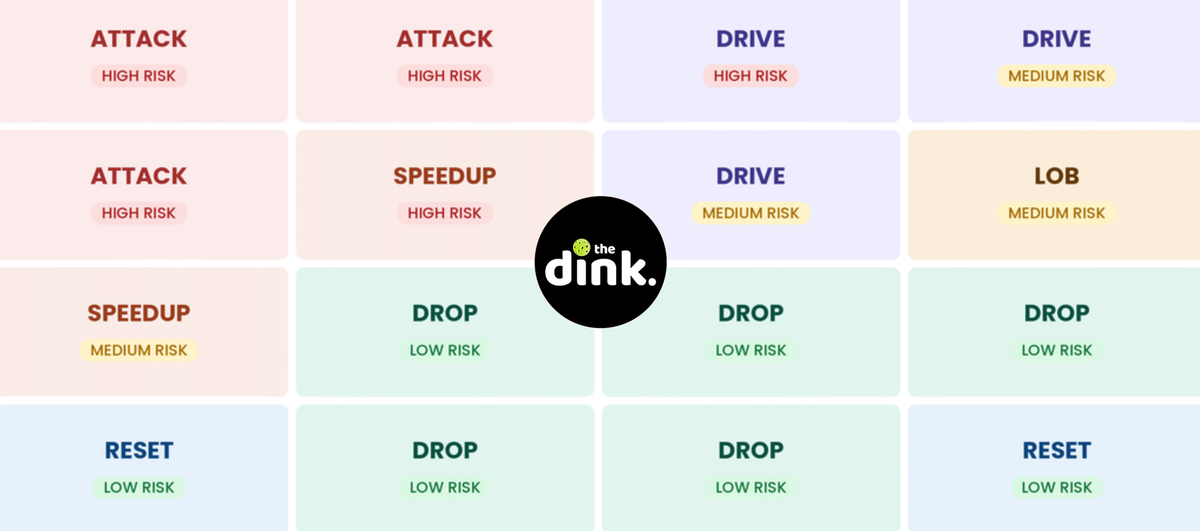
Decision Matrix: When to Attack or Reset in Pickleball
Pickleball is really all about two key factors: your court positioning and the height of the ball. This matrix decodes the game for you.
The Dink PickleballThe Dink Media Team
Targeting Strategy: Where to Hit Your Shots
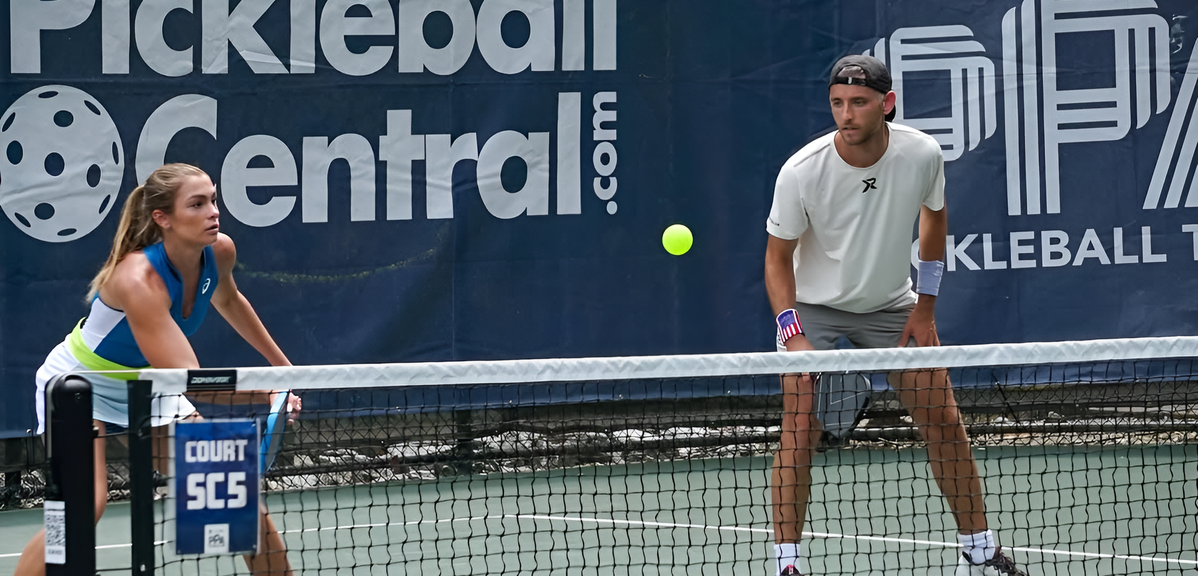
When you're trying to get into the kitchen, where should you target? Rohrabacher's answer is clear: the woman, most of the time.
"The safest bet is to the girl for me because I have crosscourt, it's more room for the ball to drop, and also the woman generally has less reach than the male she's playing with," she says.
However, there are exceptions. If the man is coming over too far on the fourth shot, going behind him is a smart play.
He has to not only come back over but also reach for it, which makes it a much tougher ball.
Attack the Right Spots: Win More Points in Pickleball
You can’t go to the same spot every single time you go on offense – eventually, your opponent will catch on. And make you pay for it.
The Dink PickleballEric Roddy
The Third Shot and Middle Ball Dynamics
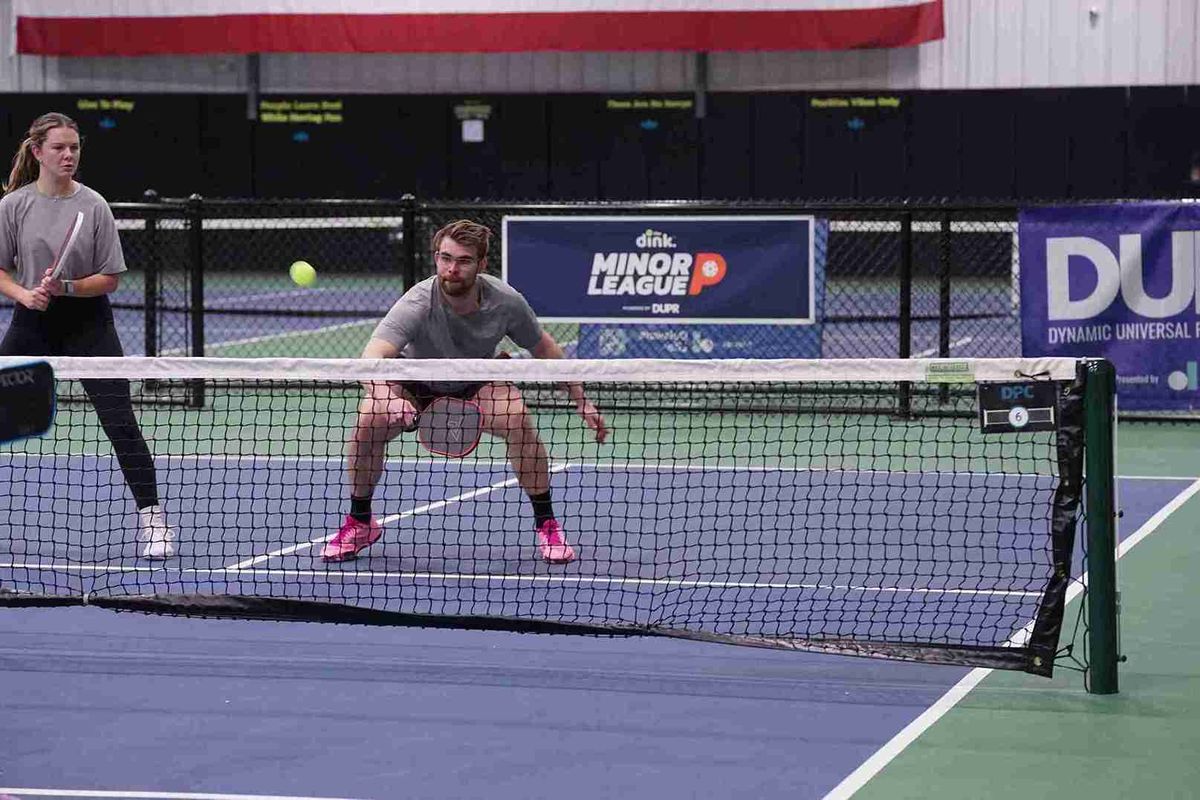
When the return comes back toward the middle, who takes it? This is a conversation every mixed doubles team needs to have before they step on court.
"That's definitely a conversation I have with every new partner before we even play a match," Rohrabacher says.
"Usually in mix, the male is taking this ball, but sometimes not everybody has their best day."The important thing is that it's not an assumption. Some partners will tell you they've got it; others will ask you to take it.
Rohrabacher has played with partners who take the majority of backhand thirds and others who want her to take them.
The flexibility and communication are what matter.
Third Shot Drop Pickleball: 3rd Shot Guide
The 3rd shot pickleball play is the most important shot you’ll hit on every single rally. This step-by-step guide breaks down the mechanics, common mistakes, and drills to help 3.0 to 4.0 players master it fast.
The Dink PickleballThe Dink Media Team
Serve and Return Strategy in Mixed Doubles
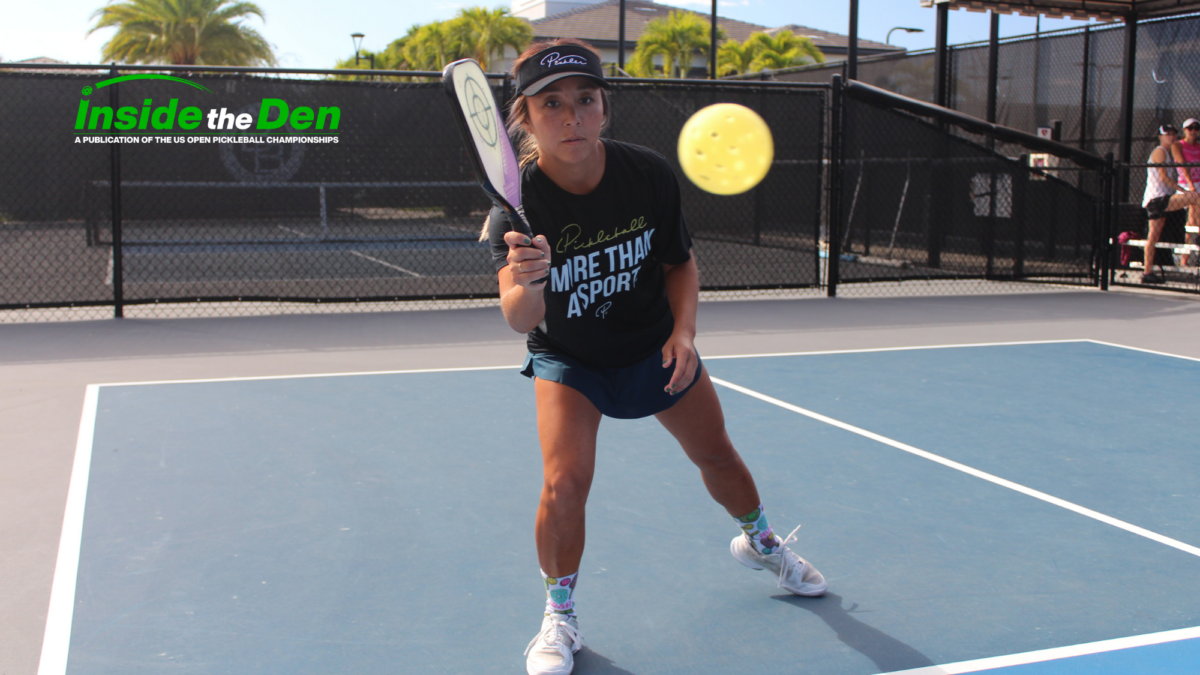
When serving in mixed doubles, Rohrabacher thinks about stacking and where the returner's partner will be.
"Going to the person who's coming in is always a great idea, especially in mixed, that's when you see a lot of stacking," she explains.
She also watches for the man trying to help his partner. If she sees him move to protect, she'll adjust her target.
The returner's partner also has a critical job. "The returner's partner should always be looking to help the returner," Rohrabacher says.
This is true at all levels, from amateurs to pros.
If the return is low and penetrating, the returner's partner should be ready to take the middle and help out.
Pickleball Serve Return: 5 Steps to Master It
These five steps build on each other. Start with positioning and depth, add movement and timing, then mix in variety, and your return game will quickly become a weapon.
The Dink PickleballThe Dink Media Team

Communication Is Everything
Throughout this entire breakdown, one theme emerges repeatedly: communication.
Rohrabacher and her partners talk constantly about what they're doing, what they're seeing, and what they're going to do next.
"It's just a lot of communication and making sure that you're comfortable with your partner," she says.
This isn't just about calling the ball; it's about understanding each other's tendencies, strengths, and weaknesses.
When you're playing mixed doubles with someone for the first time, have that conversation.
- What do you think about the middle?
- How far do you want me to come over?
- What's your comfort level attacking?
These questions matter because they set expectations and prevent confusion during the match.
💡
Heads up: hundreds of thousands of pickleballers read our free newsletter.
Subscribe herefor cutting edge strategy, insider news, pro analysis, the latest product innovations and more.
Frequently Asked Questions
What is the primary role of the man in mixed doubles?
The man's primary role is to take the middle and create constant pressure on the opposing woman's dinking game. He should be actively moving, looking for balls to attack, and positioning himself to make aggressive plays. His presence forces the other team to make faster decisions and limits their options.
Why should the woman target the opposing woman in mixed doubles?
The woman generally has less reach than the man, making her a safer target. Hitting to her also gives you more court space on the crosscourt angle, which means your drops have a better chance of landing in. Additionally, it's harder for the woman to speed up through the man, so you're not giving the opposing team easy attacking opportunities.
How do you know when to attack versus when to reset in mixed doubles?
Attack when you're comfortable with the ball and when you can put the opponent in a difficult position, such as making them reach on their backhand. Reset when the ball is low, when you're too far back to counter effectively, or when you're not confident in your attack. The key is reading the height and depth of the ball and understanding your opponent's strengths and weaknesses.
What should you communicate with your mixed doubles partner before a match?
Discuss who will take the middle ball on the third shot, how far the man should come over, each player's comfort level with attacking, and any specific tendencies or weaknesses you want to address. Clear expectations prevent confusion during the match and help you play as a cohesive unit.
How important is positioning in mixed doubles?
Positioning is critical because it determines your options and your ability to defend. You should constantly adjust your position based on the current state of the rally. Don't stay in one spot; move forward when you have momentum and step back when you need to defend. This fluidity is what separates good mixed doubles players from great ones.
Anuncie Aqui / Advertise Here
Sua marca para o mundo Pickleball! / Your brand for the Pickleball world!






 English (US) ·
  Portuguese (BR) ·