
 English
  Spanish
  Portuguese
  German
  Italian
  Japanese
  French
  Polish
  Russian
  Netherlands
  Hungarian
  Turkish
  Videos
  Thedink Pickleball

Pickleball court lines define every rule on the playing surface, from the kitchen boundary to the baseline. This guide breaks down exactly what each line means and how it affects your game.
Pickleball court lines are the backbone of every single rule dispute you'll have, and you'd be surprised how many players still get them wrong.
The kitchen foul, the out call on a serve, the sideline debate at match point, all of it comes back to understanding these lines cold.
Miss one and you're arguing with a stranger about something you should have known before you ever picked up a paddle.
Here's the good news: the court is straightforward once you see it as a system, not a list of markings.
Love pickleball? Then you'll love our free newsletter. We send the latest news, tips, and highlights for free each week.
What Are the Pickleball Court Lines?
The pickleball court lines form a complete boundary and scoring system across a 44-foot by 20-foot playing surface.
Every line has a specific name and a specific function tied directly to the rules. There are no decorative markings here, every stripe matters.
The full set of lines includes:
- Baselines: the end lines at each end of the court
- Sidelines: the outer boundary lines running the length of the court
- Non-volley zone lines: parallel to the net, 7 feet out, one on each side
- Centerlines: running from the kitchen line to the baseline, splitting each side into two service boxes
- The net: technically not a painted line but functions as the court's central divider
The court is the same size for both singles and doubles. That surprises a lot of players who assume doubles uses a wider layout like tennis does.
It doesn't. Pickleball court dimensions stay constant regardless of format.
The Non-Volley Zone Line: The Most Important Line on the Court
The non-volley zone line, universally called the kitchen line, is where more arguments, faults, and lost points happen than anywhere else.
It runs parallel to the net at exactly 7 feet on both sides. The zone it creates is called the non-volley zone (NVZ), or simply "the kitchen."
The rule is absolute: you cannot volley the ball while any part of your body is touching the kitchen or the kitchen line.
That includes your paddle, clothing, or anything you're wearing.
It doesn't matter if your foot is technically behind the line, if your momentum carries you into the NVZ after hitting a volley, it's a fault.
Here's the catch a lot of players miss: the kitchen line is in bounds for most shots during a rally.
If a ball lands on the kitchen line during a groundstroke exchange, it's live. But during a serve, a ball that lands on the kitchen line is a fault.
That one exception trips up players constantly. Knowing how to position yourself at the kitchen tactically depends on understanding exactly where that line sits.
💡
Need some new pickleball gear? Get 20% off select paddles, shoes, and more with code THEDINK at
Midwest Racquet SportsWhat Is the Baseline in Pickleball?
The pickleball baseline is the back boundary line of the court, running the full 20-foot width at each end. It sits 22 feet from the net on both sides.
When you're serving, you stand behind or on the baseline, your feet must not touch or cross it before the ball is struck.
A ball landing on the baseline is in. Full stop. The line is part of the court.
The baseline matters most for serve placement and return position.
Three options from the baseline open up when you understand exactly how deep you can push an opponent before they're hitting from behind the line.
Tactically, the baseline is your deep reset zone, and knowing its exact position helps you decide when to stay back versus getting to the net.
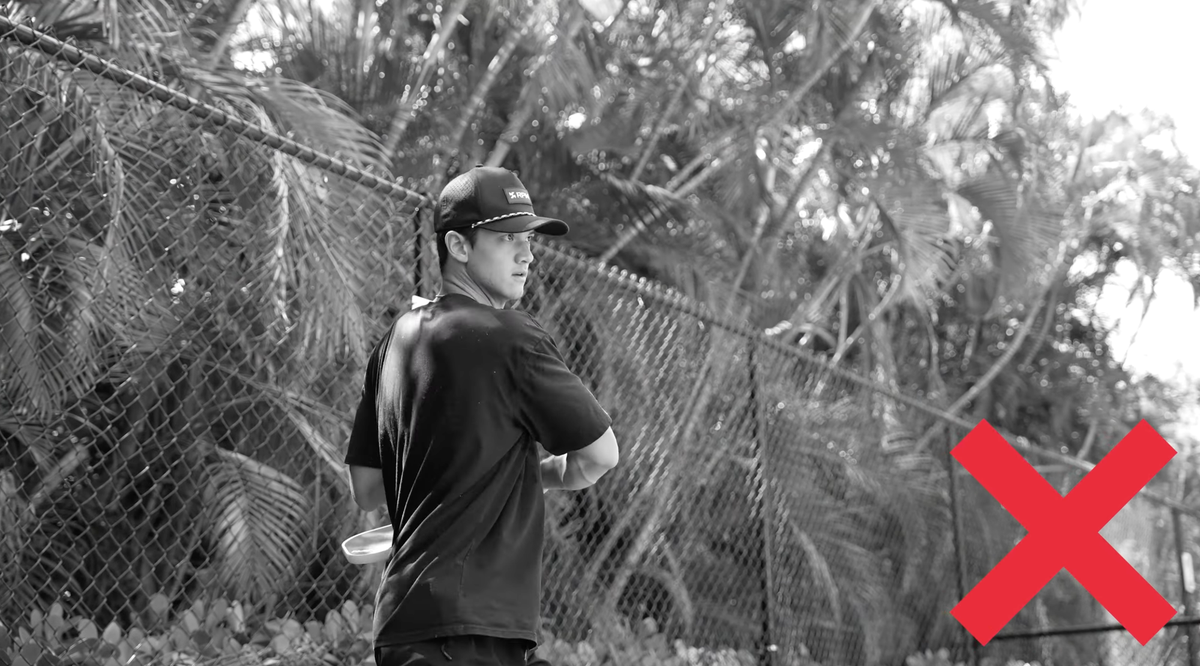
The Return Plus One: Mastering the Transition from Baseline to Kitchen Line
The return and fourth shots aren’t glamorous; they’re the shots that determine whether you’re winning matches or wondering why you keep losing to players you think you should beat.
 The Dink PickleballThe Dink Media Team
How Does the Centerline Work?
The centerline divides each side of the court into two equal service boxes.
It runs from the kitchen line to the baseline, splitting the court's 20-foot width into two 10-foot sections. This is the line that matters on every serve.
The serve must land in the cross-court service box, diagonally opposite from where the server is standing.
If the ball lands outside that box, on the centerline on the server's own side, or in the kitchen, it's a fault.
Here's what's worth knowing: the centerline itself is in on a serve. A serve landing on the centerline is good.
That's one of those rulings that causes a lot of confusion in rec play.
The only lines that fault a serve are the kitchen line (including the NVZ line), the wrong sideline, or landing out entirely.
Understanding where to return serve in pickleball starts with knowing exactly where the serve can and can't land.
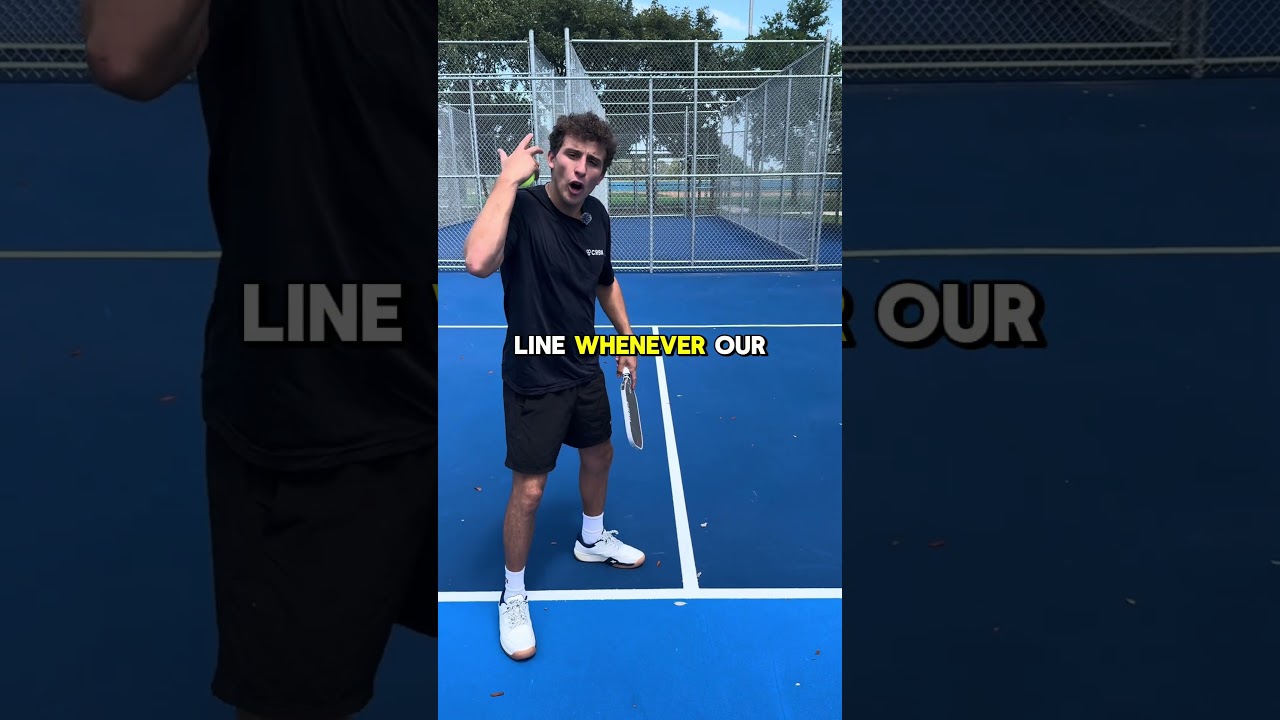
When to Cross the Center Line and Cover Your Partner in Pickleball
Most 3.5 to 4.0 pickleball players treat the center line pickleball like an invisible wall they can’t cross. This fundamental misunderstanding is costing them matches and limiting their doubles strategy. Here’s what you need to know to fix it.
 The Dink PickleballThe Dink Media Team
Are Pickleball Court Lines In or Out?
All pickleball court lines are in during a rally. If any part of the ball contacts a line, the ball is considered to have landed in bounds.
The only exception is the non-volley zone line on a serve, which creates a fault. This is one of the most frequently confused rules in recreational play.
USA Pickleball clarifies this in Rule 6.D of the official 2025 rulebook: a ball contacting the playing surface outside the applicable lines is out.
The implied reverse, that anything touching a line is in, is the standard ruling.
The sidelines follow the same logic. Ball hits the sideline? It's in.
That call happens in close rallies constantly, and it's always in favor of the player whose ball grazed the stripe.
Doubles strategy around the sideline often involves pushing opponents to exactly that edge.
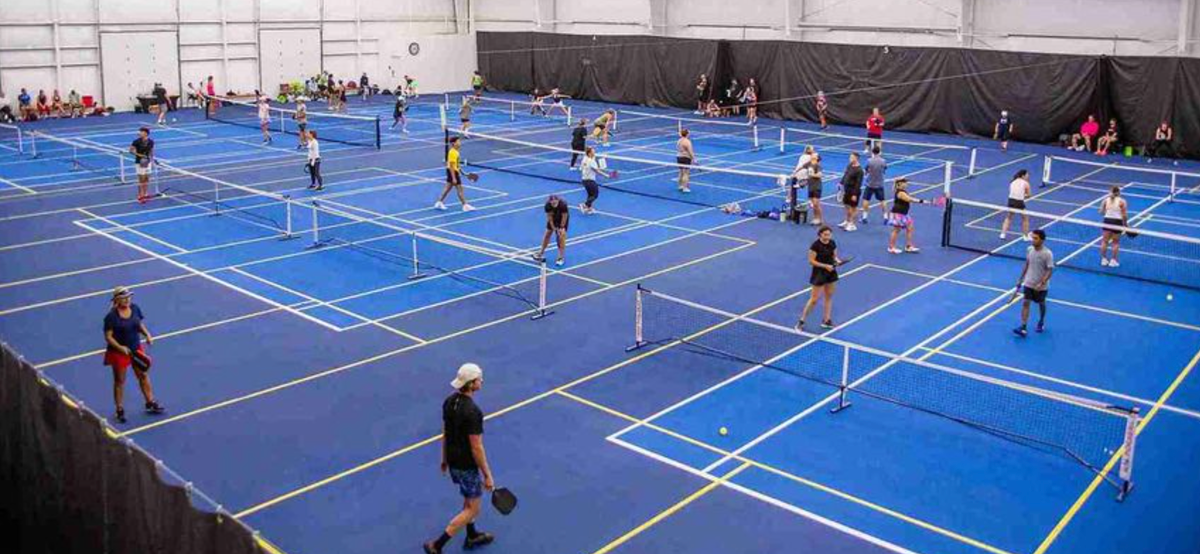
Pickleball Court Measurements: Every Line Explained
Pickleball court measurements follow exact USA Pickleball standards, with a total playing surface of 44 feet long by 20 feet wide. This guide breaks down every line, zone, and dimension so you never second-guess what’s in bounds or out.
 The Dink PickleballThe Dink Media Team
Why Do Pickleball Court Line Widths Matter?
This one's for the serious players. Per USA Pickleball specifications, all court lines must be 2 inches wide.
That width is factored into the court's overall dimensions, the lines are measured from the outside edges, meaning the full court including line width is 20 feet by 44 feet.
On professional courts, line color contrast is also regulated. Lines should contrast visibly with the court surface.
Most competitive courts use white lines on a green or blue surface.
This might sound like trivia, but poor line visibility is a legitimate issue in outdoor recreational play, especially in shadows or on faded asphalt.
Getting the most out of your court time sometimes just means being able to actually see the lines you're playing off of.
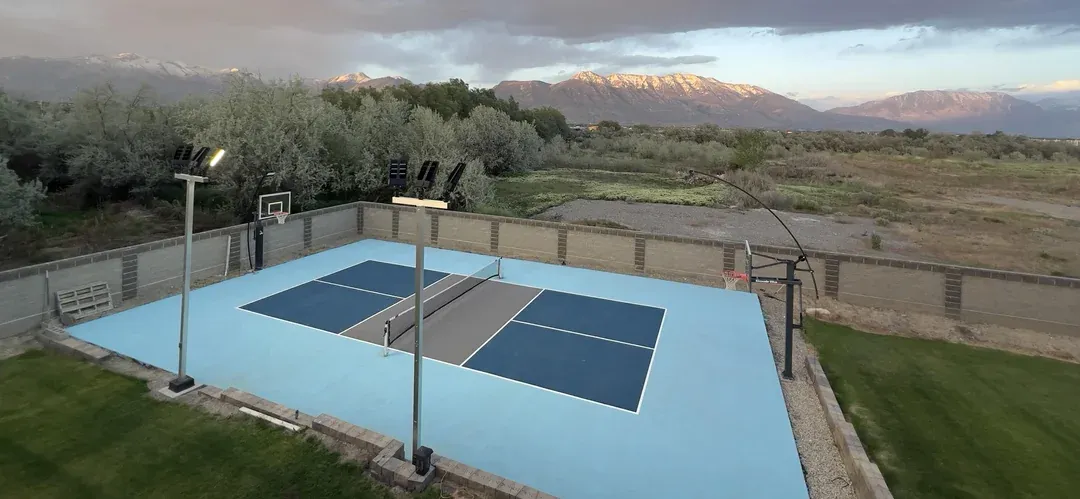
Pickleball Court Dimensions: Every Measurement You Need
Standard pickleball courts are 20′ x 44′. Each side of the net features a 7′ non-volley zone, commonly known as the “kitchen.”
 The Dink PickleballThe Dink Media Team
How Pickleball Court Lines Affect Serve Rules
The serve is where pickleball court lines create the most specific, enforceable rules. Here's the complete picture for a legal serve:
- The server stands behind the baseline, within the imaginary extension of the centerline and sideline
- The serve travels diagonally cross-court and must clear the net
- It must land in the service box, bounded by the sideline, baseline, and centerline
- It cannot land on the kitchen line or anywhere in the NVZ
- The centerline and sideline are in if the ball lands on them
Miss any part of that framework and it's a fault, with the serve turning over to the other team (or partner).
Weaponizing your serve becomes a lot more effective when you understand exactly how much of the service box you can target.
The diagonal geometry of the service court is actually larger than most players visualize.
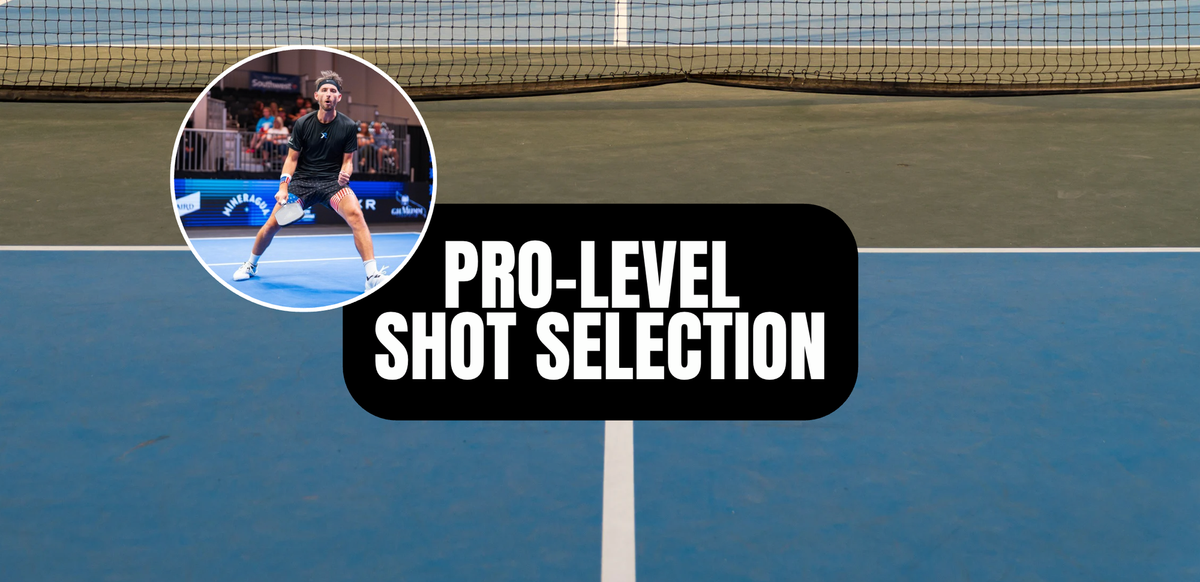
Pickleball Shot Selection: Ball Height & Court Positioning
Advanced pickleball means constantly analyzing the height of the ball and the court positioning off all four players in real time – and keeping this one rule sacred: just because you can hit a more aggressive shot doesn’t mean you should
 The Dink PickleballEric Roddy
What's the Difference Between Pickleball and Tennis Court Lines?
The layouts look similar at a glance, but the court dimensions and line functions are different in key ways.
A standard pickleball court is 44 feet long and 20 feet wide, while a tennis singles court is 78 feet long and 27 feet wide, nearly double the length.
There's no "service line" in pickleball the way there is in tennis. In tennis, the service box is defined by both a service line and the centerline.
In pickleball, the non-volley zone line functions somewhat like a service line in that it defines the front boundary of the service box, but it has an entirely separate purpose for in-rally play.
Tennis courts also have doubles alleys that widen the court for doubles play. Pickleball doesn't.
The court dimensions stay the same regardless of whether you're playing singles or doubles, which is one of the reasons transitioning from tennis to pickleball can require resetting your spatial instincts.
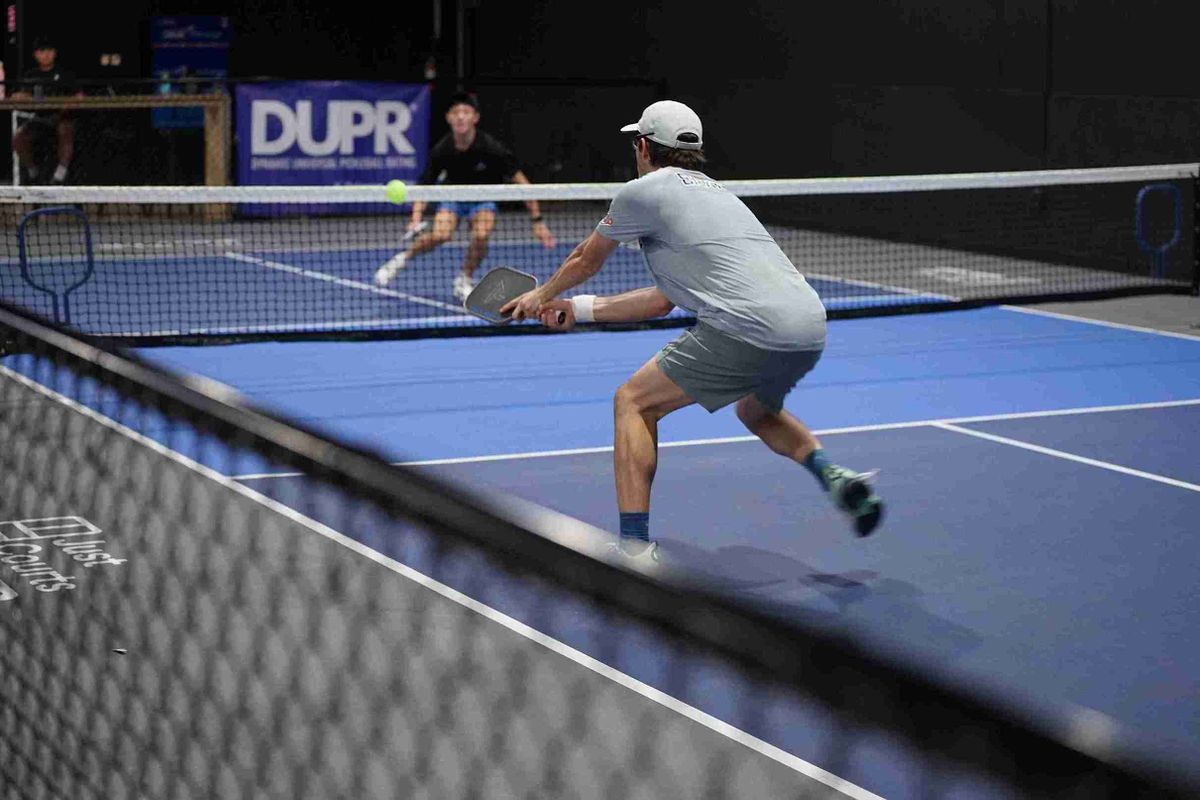
Pickleball vs Tennis: 9 Key Differences to Know
Pickleball vs tennis isn’t just a debate about noise complaints — the two sports differ in court size, scoring, serve mechanics, and strategy in ways that surprise even experienced athletes. If you’re a tennis player thinking about making the switch, here’s exactly what you need to know.
 The Dink PickleballThe Dink Media Team
Pickleball Court Lines: The Full Breakdown
Line | Distance from Net | Purpose |
Non-volley zone line | 7 feet | Defines the kitchen; faults volleys from inside |
Centerline | N/A (runs perpendicular) | Splits service court; defines serve landing zone |
Sideline | N/A (outer boundary) | Lateral out-of-bounds marker |
Baseline | 22 feet | Back boundary; serve position reference |
Every one of these lines works together. Know where each sits, know the in/out ruling for each context, and you'll never lose a point to confusion again.
Beginners especially benefit from learning the court geometry before worrying too much about shot mechanics, because the lines will govern every exchange you ever have.
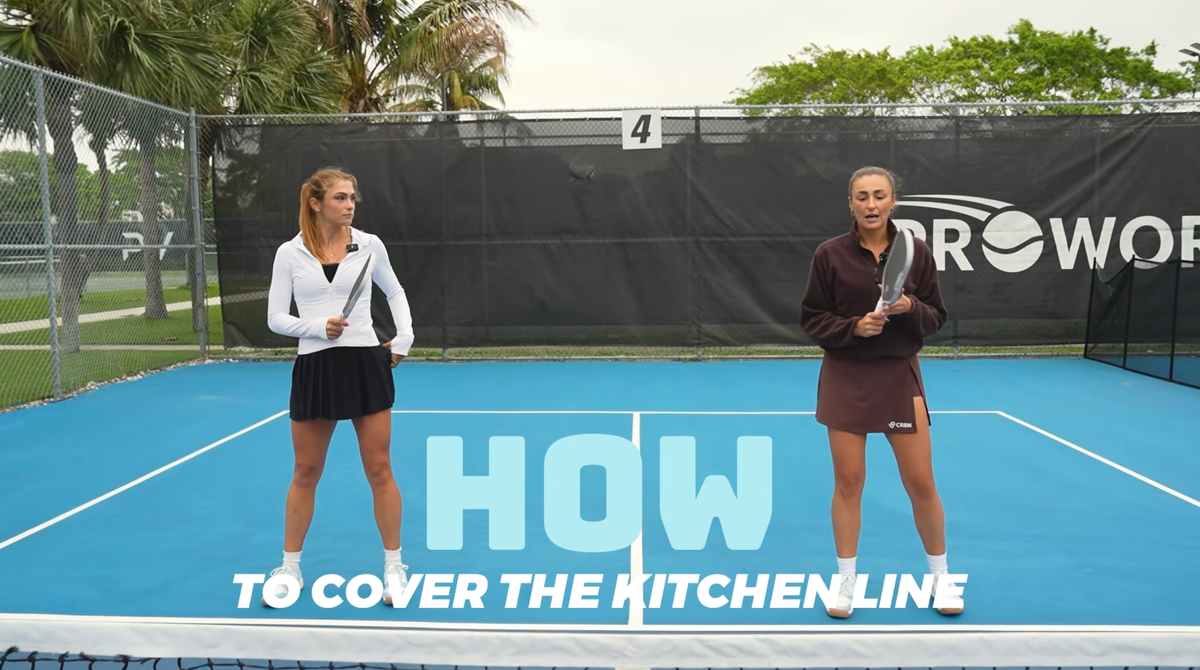
Master Court Coverage in Pickleball Doubles
Court coverage is one of the most misunderstood aspects of pickleball doubles, but the Walker Sisters break down exactly how to fix your positioning at every level of the court. From the baseline to the kitchen line, here’s what you need to know about court coverage to instantly level up your game.
 The Dink PickleballThe Dink Media Team
Key Takeaways
- A standard pickleball court measures 20 feet wide by 44 feet long, identical in dimension for both singles and doubles play, per USA Pickleball's official rulebook.
- The non-volley zone line (the kitchen line) sits 7 feet from the net on each side and is the most contested line in the game.
- All lines are considered "in", a ball landing on any line is live, except during a serve when the ball landing on the non-volley zone line is a fault.
- The centerline divides each service court and determines which diagonal box the serve must land in.
- Court line width is 2 inches, and all lines must be the same width, per USA Pickleball standards.
💡
Heads up: hundreds of thousands of pickleballers read our free newsletter.
Subscribe herefor cutting edge strategy, insider news, pro analysis, the latest product innovations and more.
Frequently Asked Questions
What are the pickleball court lines called?
The standard pickleball court lines are the baseline, sidelines, non-volley zone line (kitchen line), and centerline. Each line has a specific function tied to rules governing serve placement, in/out calls, and the non-volley zone. All lines are 2 inches wide per USA Pickleball official specifications.
Is the kitchen line in or out in pickleball?
The kitchen line is in during a rally, a ball landing on it is considered live and in bounds. However, on a serve, a ball landing on the kitchen line (or anywhere in the non-volley zone) is a fault. This is one of the most misunderstood rules in recreational pickleball.
How wide are pickleball court lines?
All pickleball court lines are 2 inches wide, per USA Pickleball's official court standards. The court dimensions (20 feet wide by 44 feet long) are measured to the outer edge of the lines.
What happens if the ball lands on the centerline during a serve?
A serve landing on the centerline is considered in and play continues. The centerline, sideline, and baseline are all valid landing zones on a serve. Only the non-volley zone line and anything in the kitchen create a fault on a serve.
How far is the kitchen line from the net?
The non-volley zone line (kitchen line) is 7 feet from the net on both sides of the court, per USA Pickleball official rules. The entire zone between the net and the kitchen line, all 7 feet, is the non-volley zone, meaning no volleys can be struck while standing in it.
Anuncie Aqui / Advertise Here
Sua marca para o mundo Pickleball! / Your brand for the Pickleball world!





 English (US) ·
  Portuguese (BR) ·