
 English
  Spanish
  Portuguese
  German
  Italian
  Japanese
  French
  Polish
  Russian
  Netherlands
  Hungarian
  Turkish
  Videos
  Thedink Pickleball

Your DUPR rating is the most accurate skill measurement in the sport. Here's exactly how DUPR calculates it and how to get yours.
Your DUPR rating is the most honest thing about your game. Not your opinion of yourself. Not how you feel after a hot streak. Not others' perception of your skills or potential.
The number.
DUPR (Dynamic Universal Pickleball Rating) is the global standard for player skill measurement in pickleball, used by over 1.5 million players across more than 60 countries.
It's backed by the PPA Tour and Major League Pickleball, trusted by tournament directors, and increasingly required for competitive play.
If you're serious about the game, your DUPR rating is your pickleball identity.
Here's everything you need to know about how it works, what your rating actually means, and how to get yours.
Love pickleball? Then you'll love our free newsletter. We send the latest news, tips, and highlights for free each week.
What Is a DUPR Rating in Pickleball?
A DUPR rating is a number between 2.000 and 8.000 that represents your current skill level based on match results.
Unlike self-reported ratings (like the old USAPA skill assessment), DUPR is calculated entirely from outcomes: who you played, whether you won or lost, and by how much.
The algorithm factors in:
- Win/loss results from every logged match
- Score margins (winning 11–2 affects your rating differently than winning 11–9)
- The rating of your opponents (beating a 5.0 moves your number more than beating a 3.0)
- Recency weighting, your most recent matches carry more influence
💡
Need some new pickleball gear? Get 20% off select paddles, shoes, and more with code THEDINK at
Midwest Racquet SportsThink of it like an Elo rating system used in chess or tennis, but built specifically for pickleball's doubles-heavy format.
DUPR tracks both singles and doubles separately, which means your numbers can differ significantly between formats.
According to DUPR's official methodology, the system updates continuously as new match results are submitted.
How the DUPR Rating Scale Actually Breaks Down
Here's what each rating range looks like in practice. These aren't official DUPR designations, but they reflect the competitive reality you'll find at any tournament.
- 2.0 – 3.0: Brand new players who are still learning the rules, scoring, and basic shot mechanics. Most players don't stay here long.
- 3.0 – 3.5: You understand the game. You're keeping rallies going, hitting most serves in, and starting to develop a consistent dink. But decision-making under pressure? Still a work in progress.
- 3.5 – 4.0: This is the largest chunk of recreational players. You have a third shot drop attempt, you know where the kitchen line is, and you win points against weaker opponents by playing smart. This range covers a lot of ground.
- 4.0 – 4.5: You're playing competitive recreational pickleball. Consistent dinks, solid resets, and actual court strategy. Players at this level start thinking differently about doubles and using positioning intentionally.
- 4.5 – 5.0: This is where the game gets serious. You have a reliable third shot drop, you win points by construction (not just reaction), and you understand speed-up sequences. You're probably playing in local tournaments regularly.
- 5.0 – 5.5: Elite amateur to semi-professional. You're winning open tournaments and beating most recreational players comfortably. Physical athleticism starts to separate players here.
- 5.5+: Professional and elite competitive play. Ben Johns sits around a 6.8 singles DUPR. The gap between a 5.5 and a 6.0 is enormous.
New DUPR Features: Career High, Age-Based Ratings & More
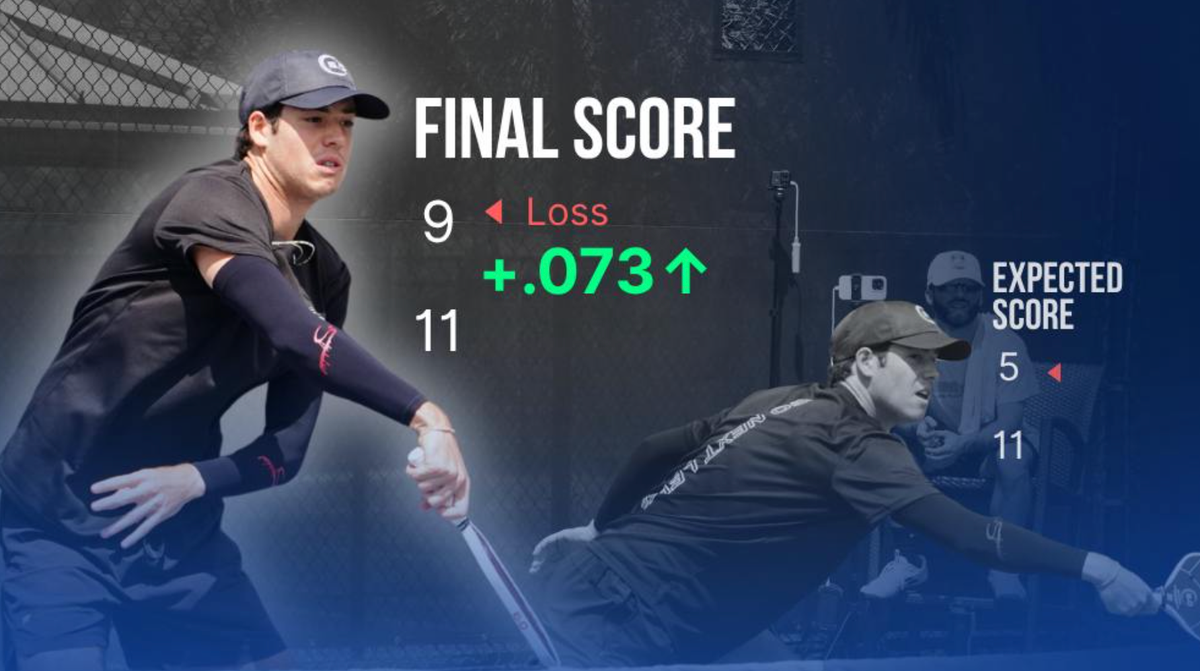
See the breakdown of your ratings by format and age, track your highest level achieved, and see how scorelines could impact your rating pre-game.
 The Dink PickleballAlex E. Weaver

How Do You Get a DUPR Rating in Pickleball?
Getting your DUPR rating is straightforward. Here's the process:
- Create a free account at myDUPR.com or download the DUPR app
- Submit match results, you can log recreational matches yourself, or have a club/league submit them for you
- Play rated matches, your rating becomes more accurate the more results you log. DUPR requires a minimum number of matches before your rating is considered "reliable"
The initial rating is calculated after your first few matches. Before that, you'll see a provisional number.
Reliability is the key word in DUPR's system: the more matches you log, the tighter the confidence band around your rating, and the more accurate that number becomes.
DUPR's app update from 2023 made it significantly easier to log matches, find players near you, and track your progress over time.
Worth downloading if you haven't already.
Win or Lose, Your DUPR Rating Could Now Take a Hit
DUPR’s new algorithm update rewards performance based on predictions – not just final game results. The reactions online are mixed.
The Dink PickleballAlex E. Weaver
Why Does Your DUPR Rating Matter More Than Self-Rating?
Self-reported ratings are notoriously inflated.
Ask anyone who runs open-level tournaments: "4.0" means something different to every person who fills out that bracket form.
DUPR solves this. Because the rating is tied to actual match results rather than self-assessment, it produces a genuinely universal standard.
A 4.2 DUPR in Phoenix is equivalent to a 4.2 DUPR in New York.
That portability matters when you're traveling to play, entering tournaments in new regions, or competing in DUPR-rated league play.
Tournament directors are increasingly requiring verified DUPR ratings for competitive brackets.
If you want to avoid the mistakes that hurt amateur players, understanding your real rating and playing up to it is at the top of the list.
The Pickleball Prison Experiment | Inmate DUPR Ratings Smooth Re-Integration Upon Release
Creativity offers inmates a chance to establish DUPR ratings anonymously, smoothing transition into society, and pickleball, upon release.
The Dink PickleballThe Dink Media Team

Can Your DUPR Rating Go Down?
Yes. And it should.
Your DUPR rating is dynamic. Losing to players rated below you will pull your number down.
Taking a long break from competitive play can also cause your rating to "decay" slightly as recency weighting kicks in.
This is a feature, not a flaw. A system where ratings only go up is useless for accurate matchmaking.
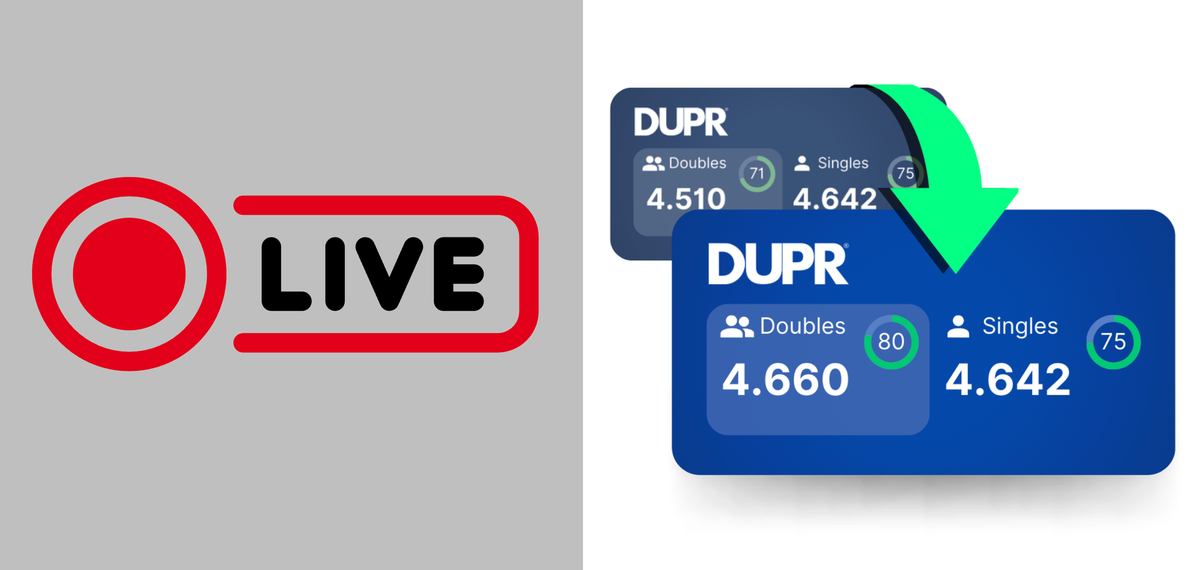
DUPR Reset Is Live: What Pickleball Players Need to Know
DUPR’s new Reset period runs March 16 to May 17, giving players a limited-time chance to update their rating using only recent match results — with zero downside.
The Dink PickleballAlex E. Weaver
The honest reality is: if you're sandbagging (playing in lower brackets than your skill level to win easier matches), DUPR will eventually catch up with you.
Here's what actually moves your rating up:
- Play up. Compete against players rated higher than you. Even a close loss to a 4.5 player will do more for your number than crushing 3.5s.
- Win by enough. Score margins matter. A 11–5 win signals more than an 11–9 squeaker.
- Log everything. Recreational matches count. Drill with purpose, but make sure you're getting rated match reps in. Working on advanced shot selection in practice only matters if you can execute it in real match conditions.
- Play consistently. DUPR rewards players who play regularly. Sporadic play gives the algorithm less data to work with.
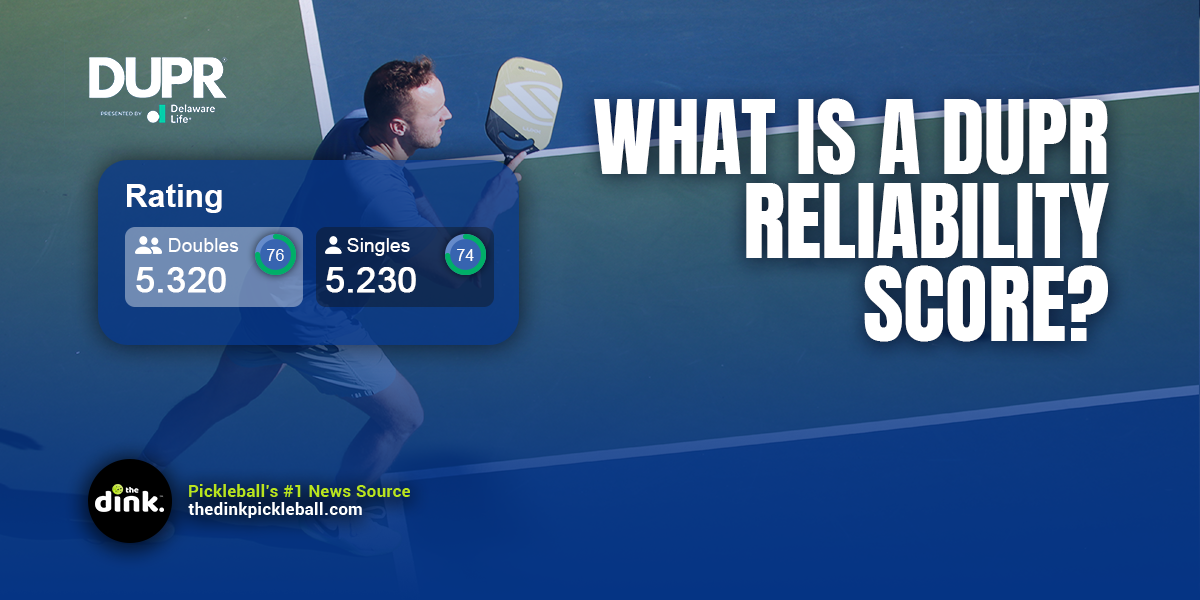
Introducing the DUPR Reliability Score and What It Means for Your Rating
DUPR has released the DUPR Reliability Score, its newest metric to help you better understand your rating.
The Dink PickleballThe Dink Media Team
How to Raise Your DUPR Rating Faster
Raising your DUPR rating pickleball number isn't just about playing more. It's about playing smarter.
A few things that actually work:
- Find a regular group that's slightly above your level. Playing up consistently is the fastest path to improvement and rating growth.
- Enter tournaments. Tournament results carry more statistical weight than casual matches in DUPR's system. Even if you don't win, the competitive data is valuable.
- Work on your weakest link. If your mid-court play keeps costing you points, that's where your rating is leaking. Fix the leak.
- Practice intentional skills. Solo drills build mechanics, but make sure you're translating those reps into match situations.
- Track your data. Use DUPR's app to review your match history. If you're consistently losing to players in a certain rating range, you know exactly where to focus.
💡
Heads up: hundreds of thousands of pickleballers read our free newsletter.
Subscribe herefor cutting edge strategy, insider news, pro analysis, the latest product innovations and more.
Frequently Asked Questions
What is a good DUPR rating in pickleball?
A good DUPR rating pickleball score depends on your goals. For recreational players, reaching a 4.0 puts you in the competitive recreational tier. For competitive amateurs, a 4.5 to 5.0 range signals serious skill. Anything above 5.5 is elite or professional-level play. Most club-level players fall between 3.5 and 4.5.
How many matches do I need to get a DUPR rating?
DUPR will generate a provisional rating after just a few matches, but the system recommends a minimum of 10–15 logged matches for your rating to be considered "reliable." The more match data you have, the more accurately the algorithm reflects your true skill level.
Does DUPR track singles and doubles separately?
Yes. DUPR maintains separate ratings for singles and doubles play. Your doubles rating is based solely on doubles match results, and your singles rating is based on singles results. Many players have noticeably different numbers in each format, which is expected given how differently the two games play.
Is DUPR free to use?
Creating a DUPR account and logging matches is free. DUPR offers a premium tier with additional features like detailed match analytics and leaderboards. The core rating system, however, is accessible to all players at no cost.
Can recreational matches count toward my DUPR rating?
Yes, and this is one of DUPR's biggest advantages over other rating systems. Recreational matches can be logged through the DUPR app or by a club/facility that has integrated DUPR into their management system. Tournament matches still carry more statistical weight, but recreational results absolutely count toward your rating.
Anuncie Aqui / Advertise Here
Sua marca para o mundo Pickleball! / Your brand for the Pickleball world!







 English (US) ·
  Portuguese (BR) ·