
 English
  Spanish
  Portuguese
  German
  Italian
  Japanese
  French
  Polish
  Russian
  Netherlands
  Hungarian
  Turkish
  Videos
  Thedink Pickleball

Pickleball lateral movement training is less about strength than about where your body sits when the load arrives. Here's what cutting-mechanics research says about plant width, trunk lean, and why your hips matter more than your quads.
Smart pickleball lateral movement training is the difference between reaching a wide dink and paying for it the next morning.
You know the feeling.
Someone drops one at your outside foot, you lunge to chase it down along the non-volley zone, and your knee files a complaint that lasts three days.Most players file that under getting older. It's usually a mechanics problem, and mechanics change a lot faster than cartilage does.
Love pickleball? Then you'll love our free newsletter. We send the latest news, tips, and highlights for free each week.
Pickleball Lateral Movement Training Starts With One Ugly Step
The step that hurts is almost always the plant step, not the shuffle before it.
When you stop your body's sideways momentum and redirect it, one leg absorbs the whole bill.
That's where pickleball lateral movement training should begin, and it's the moment most knee-focused prep work is aimed at.
Quick definition, because the research language is unhelpful.A cutting maneuver is any plant-and-change-direction step: moving one way, dropping a foot, going another.
Sports science studies it in soccer players. You do it four times a rally.
A systematic review of cutting biomechanics found that knee joint loads drop meaningfully when three things happen: less sideways trunk lean toward the direction of the cut, plant steps that aren't excessively wide, and more knee bend when the foot hits the ground.Notice what's absent from that list. Nothing about being stronger, which is why pickleball lateral movement training is a technique project first.
It's all about where your body is when the load arrives, which is why your stance is worth auditing before you buy a single resistance band.Why Do Your Knees Complain After a Side Shuffle?
Because the knee is a hinge being asked to behave like a swivel. It bends and straightens well.
It handles sideways force poorly, and lateral play sends sideways force through it on every direction change, especially when you're stretched into a wide lunge instead of a controlled step.
Here's the part that surprises people. The problem usually isn't in the knee at all, and it's the piece pickleball lateral movement training tends to skip.A large review of knee-disorder research found that people with knee pain tended to lean more to the affected side during single-leg squatting compared to people without it.
That's trunk control, sitting well above the joint that hurts.Lean your shoulders out over a wide plant foot and you've stacked your body weight sideways across the knee, which is exactly what nobody wants happening in the transition zone at speed.
💡
Need some new pickleball gear? Get 20% off select paddles, shoes, and more with code THEDINK at
Midwest Racquet SportsThe Glute Nobody Trains, Doing the Most Work
Your gluteus medius is the muscle on the side of your hip, and it's the quiet hero of this whole story.
Biomechanical modeling suggests it opposes inward knee collapse more than any other muscle in the lower limb during weight-bearing tasks like sidestep cutting.
Think of it this way. Any pickleball lateral movement training worth doing starts at the hip, because the glute medius is the guy wire keeping the tent pole upright.When it's doing its job, the knee tracks over the foot. When it's asleep, the knee drifts inward and everything downstream gets loaded wrong.
That's why general off-court work matters more than people playing four times a week want to admit.Where Quad-Heavy Pickleball Lateral Movement Training Backfires
Here's the catch, and it's a good one: hammering the quads may work against you.
The same modeling work found that dominant quadriceps and calf contraction increased forward shear force at the shin, which raises strain on the ACL.Leg extensions are not the answer to a knee that hurts during lateral play.
Balanced work across the hips and hamstrings looks like the better bet, and it pairs well with actual muscle care between sessions.
How to Play Pickleball With Bad Knees
Playing pickleball with bad knees is possible with the right modifications. These 8 adjustments protect your joints, reduce pain, and keep you competing longer.
 The Dink PickleballThe Dink Media Team
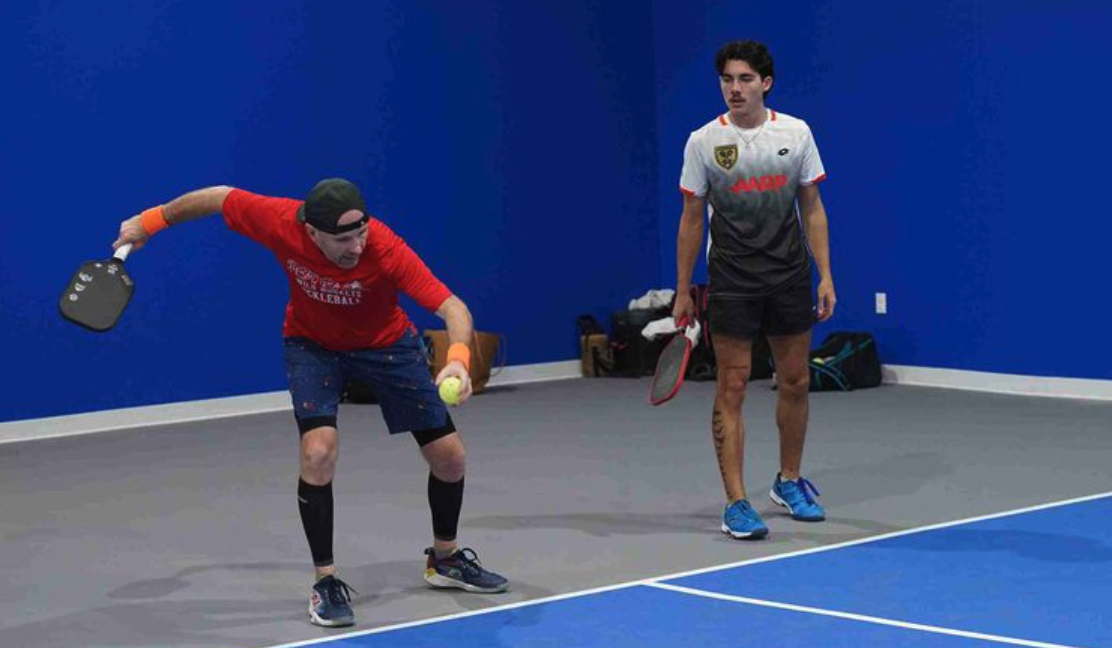
How Do You Build Pickleball Lateral Movement Training Into a Real Session?
Fold pickleball lateral movement training into drilling you're already doing, rather than treating it as separate gym homework.
Four changes, in order of how much they'll return:
- Shuffle, don't cross. Crossover footwork puts you in a rotated position with a wide plant. Keep feet under your hips on anything inside two steps of reach.
- Narrow the plant. That last wide reaching step is where load spikes. Take one more small shuffle instead of one big lunge.
- Bend more on contact. Deeper knee flexion on the plant was one of the review's protective factors. Stay low from the split step onward, not just when the ball arrives.
- Keep your chest square. Fight the instinct to lean your shoulders toward the ball. Move your feet there instead.
You can drill all four alone. Solo work is ideal for this because you're not chasing a winner, so you can watch your own footwork honestly.
The figure-8 drill is a natural fit since it forces repeated direction changes at a controlled tempo, and pairing it with court coverage patterns means you're rehearsing the movement in the shape it actually happens.
Hips First: Where Pickleball Lateral Movement Training Should Start
Strengthen above the joint before you fuss with the joint.
In one study of runners with kneecap pain, a three-week hip abductor program raised hip strength by roughly a third and significantly cut reported pain, even though peak knee angle during running didn't really change.
Read that second half carefully, because it's the honest version. The hip work didn't straighten anyone's knee out. Pain still improved.Whatever's happening has more to do with load tolerance than with fixing your geometry, a useful expectation for any fitness routine you keep up between sessions.
And none of it works cold, so warm up like you mean it.
Pickleball Stretching Routine for Better Court Movement
A pickleball stretching routine is the fastest, most overlooked way to improve your court movement and stay injury-free. These 10 stretches target the exact muscles you use every time you step on the court.
 The Dink PickleballThe Dink Media Team
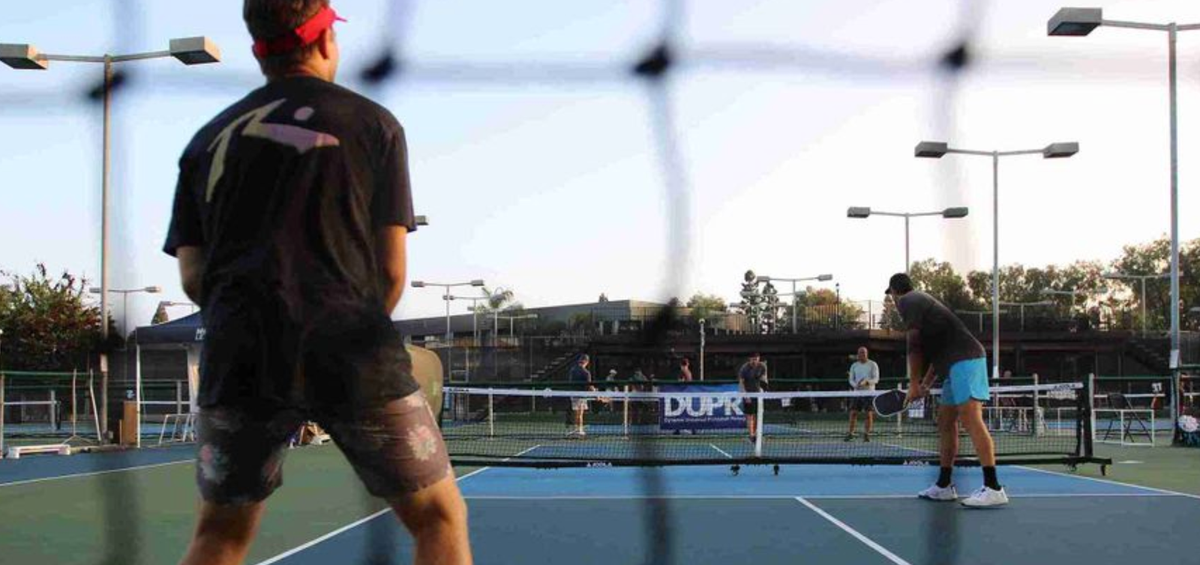
The Court Stuff That Makes Pickleball Lateral Movement Training Easier
The cheapest way to protect your knees is to move less.
Not lazier: smarter. Half of pickleball lateral movement training is really a positioning problem wearing a fitness costume.Every foot of unnecessary court you cover is another plant step your knee pays for.
Positioning yourself properly at the kitchen line shrinks the distance you have to cover on a wide ball.
So does knowing who covers the middle, because two players lunging at the same ball is two knees taking load that only one needed to.
Then there's what's on your feet.Court shoes with real lateral support and a proper heel lock keep your foot from sliding inside the shoe on a hard plant, and if you're still playing lateral points in running shoes, that's worth reconsidering.
What About After You Play?
Recovery isn't a substitute for better mechanics.
Still, managing the aches after a heavy session keeps you drilling consistently, and consistency is what changes movement patterns.Some players swear by cold exposure; others just drink more water than they think they need.
How to Improve Footwork Off Court for Pickleball
If you want to improve footwork off court for pickleball, the gym and your living room are more useful than you think. Off-court agility and speed training builds the lateral quickness and explosive first-step that wins rallies before you even swing.
 The Dink PickleballThe Dink Media Team
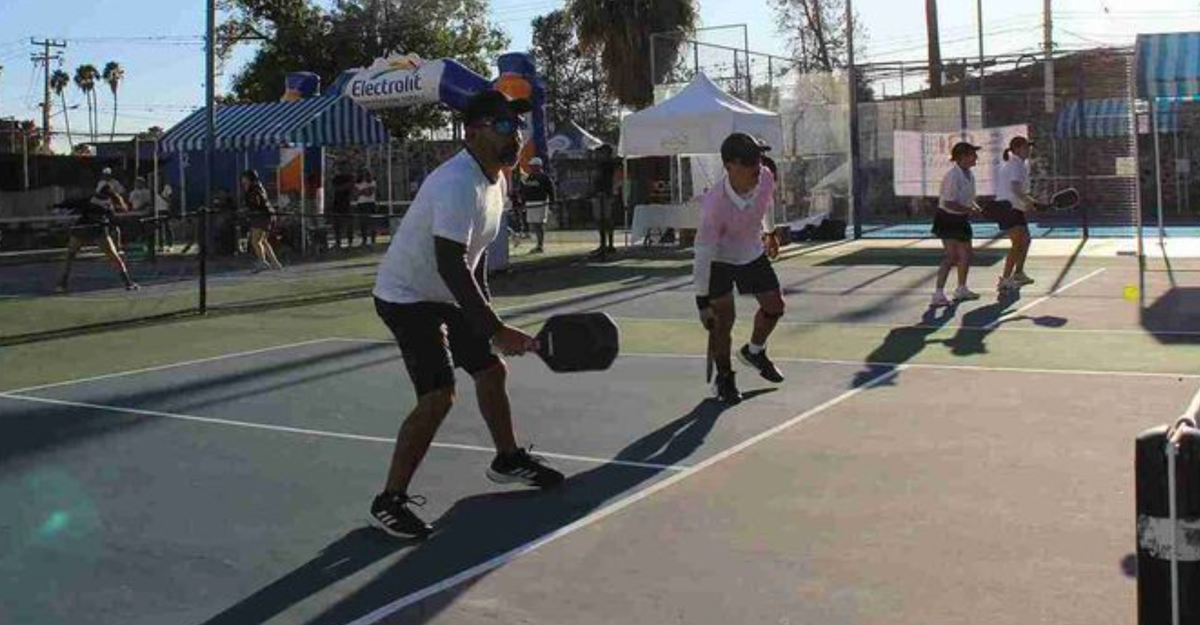
Does Any of This Change After 60?
Honest answer: the biomechanics research here wasn't run on older players.
The cutting studies looked at athletes, and one sidestep study used male basketball players, which is not exactly the 4.0 rec crowd on a Tuesday morning.What that means practically is that the mechanics of pickleball lateral movement training travel, but the claims shouldn't.
A narrower plant step and a squarer chest reduce sideways knee load for the same physical reasons at any age.
Whether older players get more or less benefit from that is a question the available research doesn't answer.
The sport keeps showing up in conversations about active aging and longevity for reasons worth taking seriously without overselling.
US Senior Pickleball: The Only Tour Built by Seniors for Seniors
Everything you need to know about US Senior Pickleball, how to get involved, and why this year’s National Championship will be their biggest one yet
 The Dink PickleballAlex E. Weaver
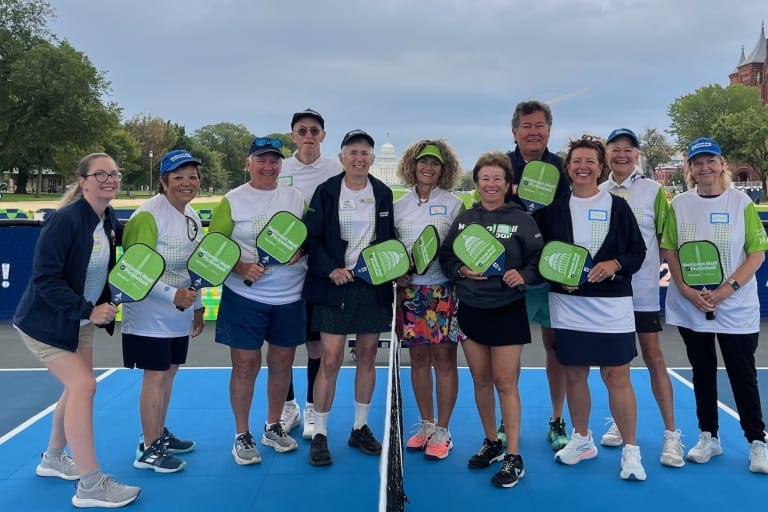
Key Takeaways
- The plant step is the problem, not the shuffle. Load spikes when you stop and redirect, not while you're moving sideways.
- Trunk lean and plant width are the two biggest levers. A review found knee loads drop when both are controlled, along with more knee bend on contact.
- Hips beat quads. Modeling suggests the gluteus medius opposes inward knee collapse better than anything else, while quad-dominant force raises ACL strain.
- Better positioning is knee protection. The most underrated pickleball lateral movement training is covering less court, which means fewer hard plants per session.
💡
Heads up: hundreds of thousands of pickleballers read our free newsletter.
Subscribe herefor cutting edge strategy, insider news, pro analysis, the latest product innovations and more.
Frequently Asked Questions
Why do my knees hurt after playing pickleball?
Lateral direction changes load the knee sideways, which is the direction it handles worst. Research on cutting mechanics points to trunk lean, wide plant steps, and a stiff, straight-legged landing as factors that raise that load. Technique changes tend to address it more directly than strength work alone.
Is pickleball bad for your knees?
The sport itself involves shorter distances and less full-sprint running than tennis, but it still asks for repeated plant-and-change-direction steps. That movement pattern is what research links to knee loading, so the mechanics you use matter more than the sport you choose.
How do you strengthen your knees for pickleball?
Most of the useful work isn't at the knee. Studies point toward hip abductor strength, particularly the gluteus medius, and toward balanced hamstring involvement rather than quad-dominant training. One hip-focused program significantly reduced knee pain in runners without changing their knee angles at all.
What is a split step in pickleball?
It's the small hop or weight settle you make just before your opponent contacts the ball, landing with feet roughly shoulder-width and knees bent. It puts you in a loaded, balanced position so your first move goes sideways instead of upright, which keeps plant steps shorter and more controlled.
Should I wear a knee brace for pickleball?
Braces are common among rec players, and preferences vary widely. There's no single answer that fits everyone, and anything involving a specific knee issue is a conversation for a qualified professional rather than a blog post.
Anuncie Aqui / Advertise Here
Sua marca para o mundo Pickleball! / Your brand for the Pickleball world!



 English (US) ·
  Portuguese (BR) ·