
 English
  Spanish
  Portuguese
  German
  Italian
  Japanese
  French
  Polish
  Russian
  Netherlands
  Hungarian
  Turkish
  Videos
  Thedink Pickleball

Your paddle grip isn't a one-time decision. It changes based on where you are on the court and what you're trying to do.
Most pickleball players think they have slow hands. The truth? They're probably just holding their paddle wrong.
Coach Austin Hardy from Pickleball Playbook breaks down the ultimate guide to paddle grip and positioning, revealing how small adjustments can transform your game at every court position.
Love pickleball? Then you'll love our free newsletter. We send the latest news, tips, and highlights for free each week.
The Grip Changes Everything
Pro players have figured something out that most recreational players haven't: your grip isn't one-size-fits-all.
When you're back on the baseline, you want your hand hanging off the end of the paddle. This gives you leverage and lets you snap through the ball with more power and spin.
But up at the kitchen line? That's when you choke up, bringing your hand higher on the grip for faster hands and better control.
The difference is dramatic once you feel it. Hanging off the paddle at the net actually slows you down when you need speed most.
Why Pro Pickleball Players Are Choking Up on Their Paddles
They can use anticipation and footwork to compensate for the slight reduction in reach while the vast improvement in maneuverability and hand speed is worth its weight in gold.
 The Dink PickleballAlex E. Weaver
Finding Your Grip Style
Before you worry about where to hold the paddle, you need to know which grip to use. Flip your paddle on its side and you'll see eight bevels forming a stop sign shape.
Most players go continental, but Hardy prefers the hybrid grip. It sits right between continental (bevel two) and eastern forehand (bevel three). Align the inside of your index knuckle and the bottom of your palm pad on that corner, and you've got the hybrid grip that pros are using.
The Three Pickleball Grips (& When to Use Them): Continental, Eastern & Western
Whether you’re crushing forehands from the baseline or executing delicate volleys at the kitchen line, your grip determines what’s possible.
 The Dink PickleballThe Dink Media Team
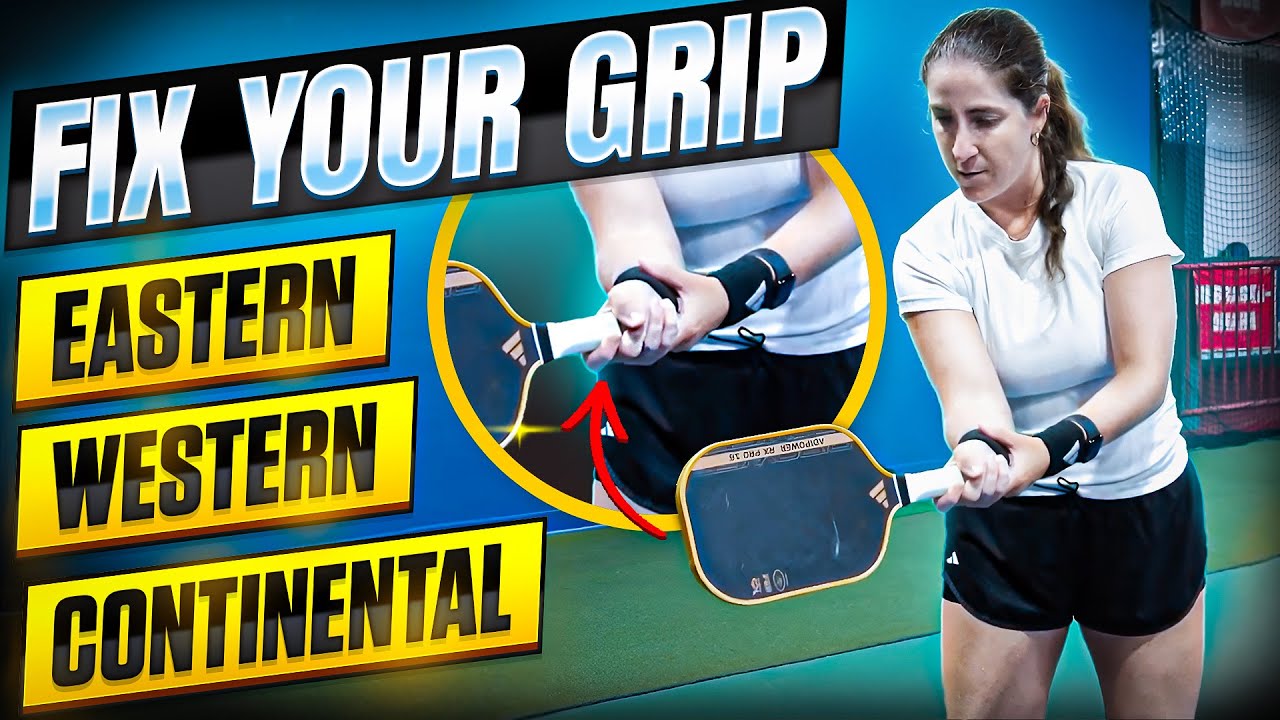
- Continental grip: Favors your backhand but makes forehands feel awkward.
- Eastern forehand grip: Closes the paddle face toward your forehand side.
- Hybrid grip: Balances both sides perfectly for consistent play.
Baseline Power vs. Kitchen Control
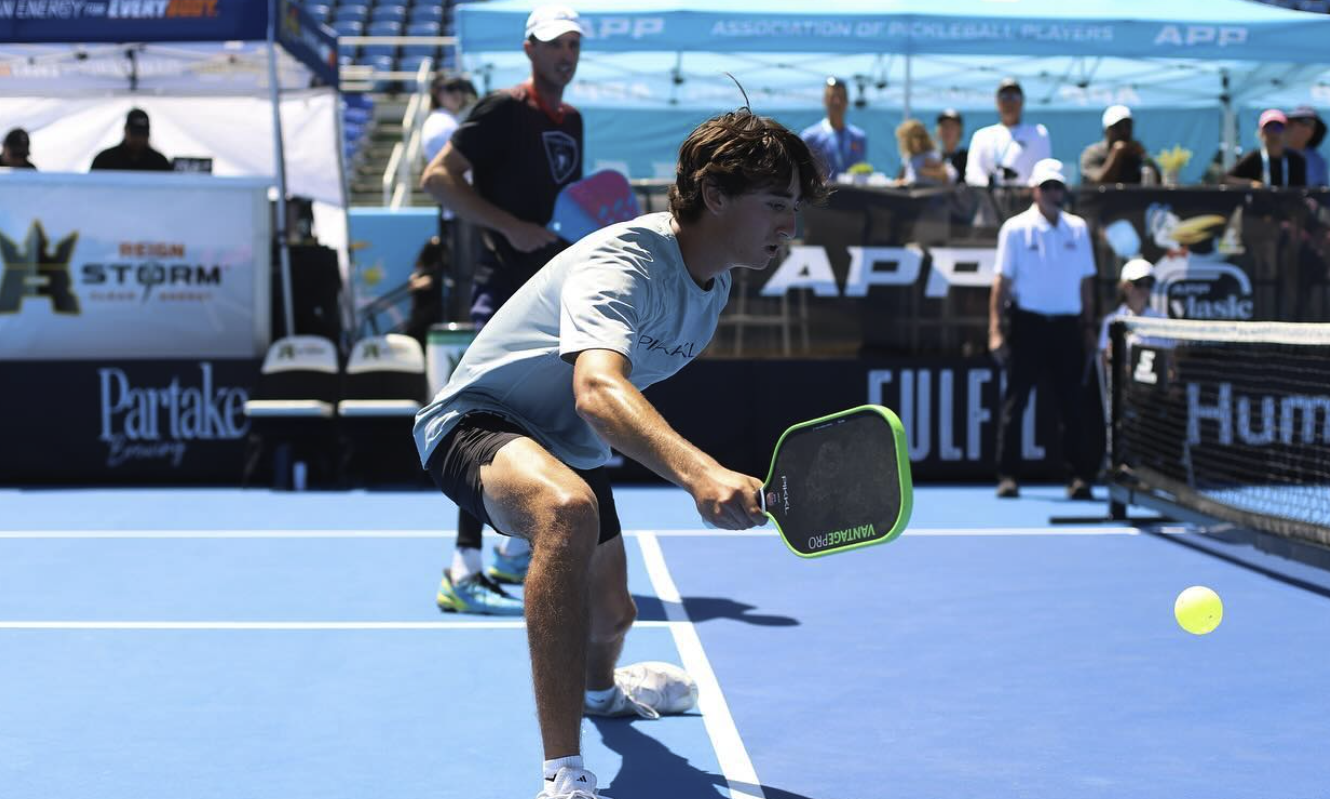
At the baseline, hanging off the paddle isn't just a style choice. You can easily gain another 10 mph on your serves and drives just by adjusting where your hand sits on the grip.
The weight distribution changes everything. More weight at the tip of the paddle means more power and spin. But if your drives are spraying long, choke up slightly. Some players prefer staying choked up the entire time for consistency, and that works too. It's about what your game needs.
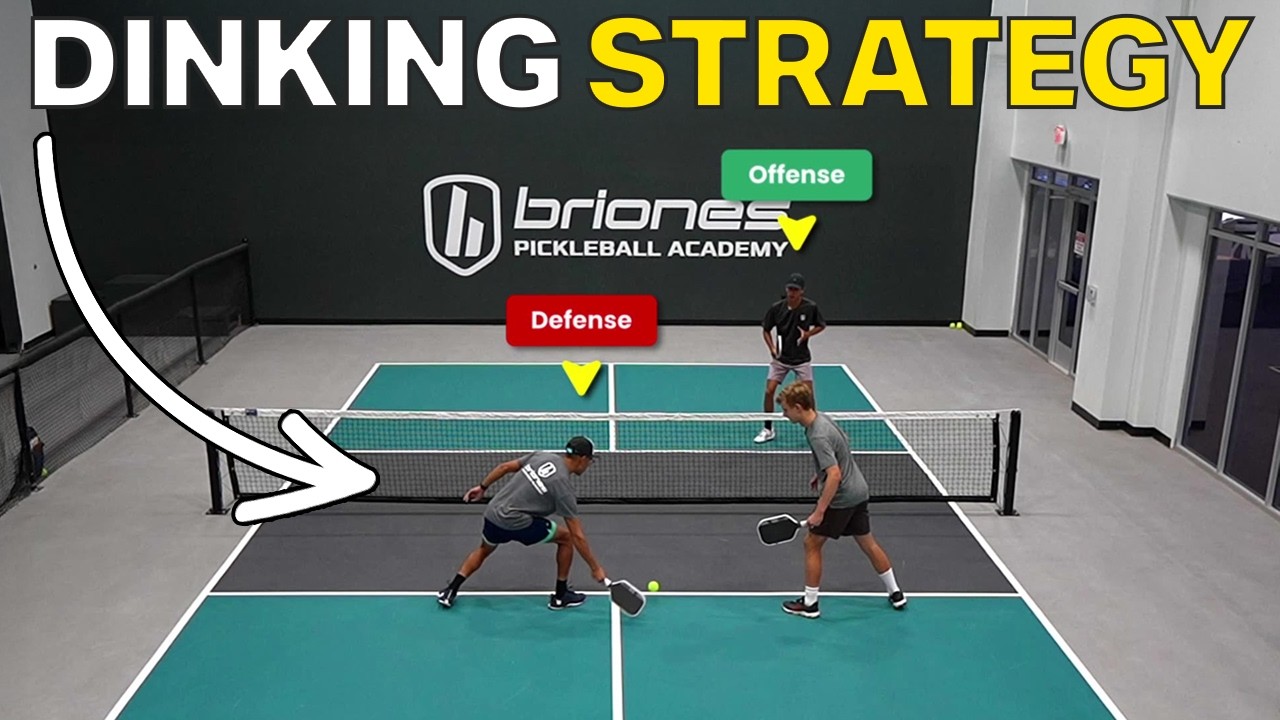
Up at the kitchen, the story flips. You want that weight closer to your hand, not the paddle tip. This makes the paddle feel like an extension of your arm, giving you the hand speed and control that wins dink battles.
Master Dink Placement: The Secret to Controlling the Kitchen Line
When you’re at the kitchen line, your goal is simple: make your opponents uncomfortable
 The Dink PickleballThe Dink Media Team
The Transition Zone Technique
Midcourt is where most players get confused. You're not just moving forward; you're also transitioning your grip from baseline power to kitchen control.
Here's the simple move: put your paddle tip up, release your bottom three fingers, and slide your hand up the grip. Let gravity do the work. You don't need to think about it once you practice it a few times.
The key is not going too far up. You shouldn't feel like you're strangling the paddle. You want the bottom of the paddle hanging just slightly below the bottom of your palm. That sweet spot gives you control and hand speed without sacrificing reach or power.
The Critical Kitchen Line Skill Most Rec Pickleball Players Are Missing
By attacking the ball in the air, you’re stealing time from your opponents and shifting the dynamic of the rally in your favor
 The Dink PickleballThe Dink Media Team
Two-Handed Backhands Still Work
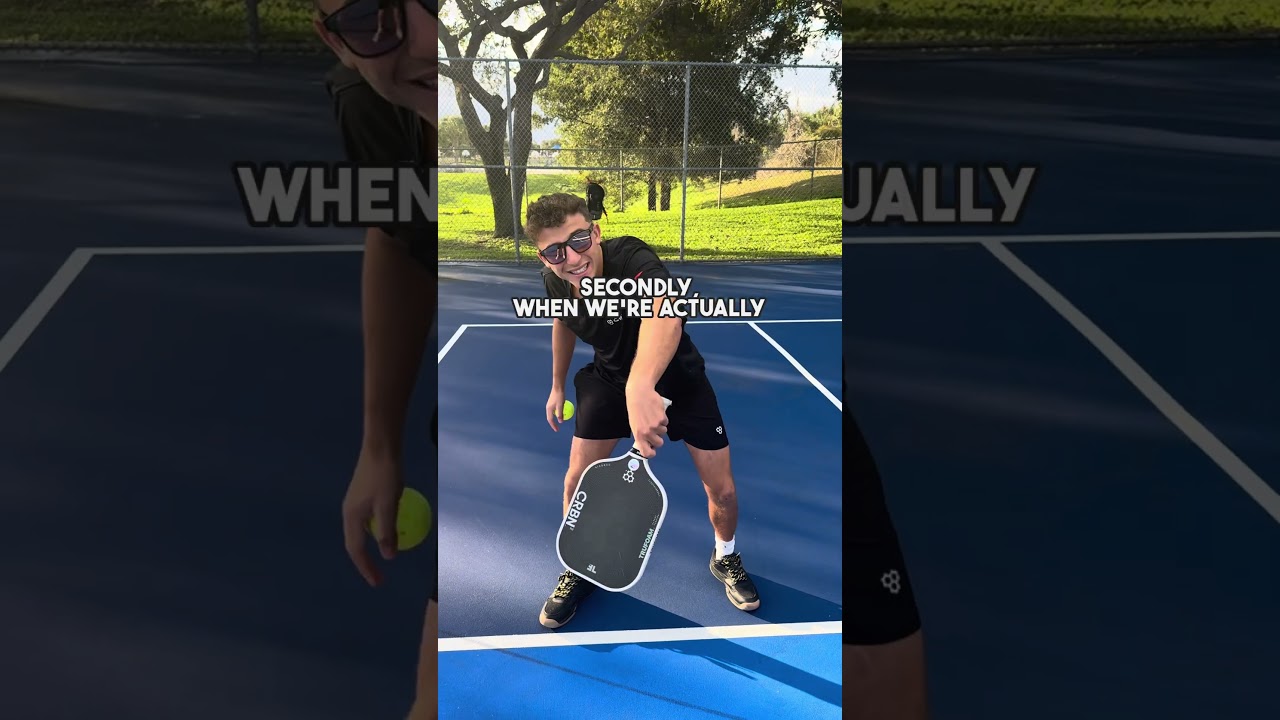
A lot of players ask if they can still hit a two-handed backhand with this choked-up grip. The answer is absolutely yes, and you'll actually have more control.
Just grab around your hand with your non-dominant hand, and add a trigger finger up top for stability if you want. You get all the control benefits of choking up plus the extra power and stability of two hands.
Top players like Gabe Tardio use this strategically. If the ball's coming directly at you, one hand is better. If you have to reach for it, two hands give you the control you need to stay aggressive.
Make Practice Skills Stick: The 70% Rule for Match-Proof Pickleball
Smooth, repeatable drills can make you look great in the moment, but they often create fragile skills that do not hold up when the ball, timing, opponent, and stakes change
 The Dink PickleballThe Dink Media Team
The Hands Battle Fundamentals
When you're in a hands battle at the net, the team that hits down first usually wins. That means leaning forward, not back on your heels.
Lean forward as you make contact. Yes, it feels counterintuitive when the ball's coming fast, but tilting forward tilts your paddle face downward. That's how you get the ball down on your opponent.
If you feel uncomfortable, take a step back and give yourself more space. But keep that forward lean. You're on the balls of your feet, ready to react, and you're hitting down. That's the formula.
💡
Need some new pickleball gear? Get 20% off select paddles, shoes, and more with code THEDINK at Midwest Racquet Sports
A Small Tweak for Consistency
Here's a bonus tip: weighted tape on your paddle can make a real difference. Hardy uses tungsten tape on the throat of his paddle, and it shifts your sweet spot down slightly.
The more weight you have closer to your hand, the more control you get. The more weight at the tip, the more spin and power. Weighted tape brings that weight distribution closer to your hand, which means faster hands and a wider sweet spot.
You don't have to use it, but if you're looking for an easy consistency boost, it's worth trying.
Anuncie Aqui / Advertise Here
Sua marca para o mundo Pickleball! / Your brand for the Pickleball world!



 English (US) ·
  Portuguese (BR) ·