
 English
  Spanish
  Portuguese
  German
  Italian
  Japanese
  French
  Polish
  Russian
  Netherlands
  Hungarian
  Turkish
  Videos
  Thedink Pickleball

Most players think there's only one third shot drop, but mastering all three variations is the key to winning more points. Learn the push drop, shovel drop, and drip drop to close gaps in your game.
The third shot drop isn't just one shot.
It's actually three different shots disguised as one, and if you're only hitting the basic version, you're leaving points on the table.
That's the central message from Troy Akin, the pickleball coach behind the popular Troy Akin Pickleball YouTube channel, who recently broke down the push drop, shovel drop, and drip drop in a comprehensive tutorial.
Here's the uncomfortable truth: most recreational players think they've got the drop shot figured out.
Hit it soft, arc it over the net, land it in the kitchen. Done, right? Not even close.
According to Akin, that oversimplified approach is exactly why so many thirds get attacked again and again.
The solution isn't hitting more drops. It's understanding which drop to hit and when.
Love pickleball? Then you'll love our free newsletter. We send the latest news, tips, and highlights for free each week.
Why Does the Third Shot Drop Matter So Much?
Let's get something straight before we break down the variations.
The third shot drop is one of the most fundamental shots in pickleball because it solves a positioning problem that every serving team faces.
Your opponents are already at the kitchen waiting for you while you're stuck at the baseline.
And here's a fun tip from Akin: "It is impossible for you to win a high-level pickleball game from the baseline."The drop shot forces your opponent to hit up on the ball because it lands low in their kitchen.
That upward contact gives you time to move through the transition zone and get yourself to the kitchen line, where points are actually won.
Watch the full video here: Watch on YouTube
Think of the third shot drop as your ticket from the cheap seats to the front row. Without it, you're playing defense all day.
With it, you're neutralizing your opponent's advantage and setting yourself up to compete at the net.
If you're still figuring out which shots to prioritize first, this one belongs at the top of that list.
1. The Push Drop: Your Reliable Workhorse
The push drop is the bread and butter of your third shot drop arsenal.
This is the shot you'll hit roughly 70% of the time when you have a normal ball and can get your feet set behind it.
Akin calls it "Mr. Consistent" for good reason.When executed properly, it produces a high-arcing, easy ball that lands at your opponent's feet while you glide forward behind it.
💡
Need some new pickleball gear? Get 20% off select paddles, shoes, and more with code THEDINK at
Midwest Racquet SportsHow Should You Grip the Paddle for a Push Drop?
Start with a continental grip, or even a slightly eastern grip. Akin describes it like you're about to hammer a nail into a wall.
Hold the paddle with the tip facing up and relax your wrist until you see what he calls the "chair pose."
Grip pressure matters here. Think three or four out of ten on the squeeze scale. Light pressure allows for better feel and control on these touch shots.
What's the Biggest Mistake Players Make on the Third Shot Drop?
Wrist snapping. Both amateurs and pros fall into this trap, thinking their wrist will generate the precision they need.
US Senior Pickleball: The Only Tour Built by Seniors for Seniors
Everything you need to know about US Senior Pickleball, how to get involved, and why this year’s National Championship will be their biggest one yet
 The Dink PickleballAlex E. Weaver

Instead, they either dump the ball into the net or pop it up for an easy overhead.
"We really want to get into this relaxed wrist position," Akin explains. "Keep a straight wrist. It just starts down here and ends up up here."The stance matters too. Tennis players especially tend to turn sideways and take big backswings. That makes it nearly impossible to hit the ball soft consistently.
Keep an open stance, hop or gently place yourself behind the ball, and use a compact swing you can repeat over and over.
Tennis players transitioning to pickleball almost always need to unlearn this habit first.
Akin offers two great mental images for the push drop.
- First, imagine you're an infielder for the San Francisco Giants fielding a ground ball. You want to keep that ball between your legs.
- Second, picture yourself playing cornhole, just trying to drop the ball into that circle across the way.
Contact point? Keep the ball in front of your right knee on forehands, left knee on backhands. Give yourself a 45-degree paddle angle, like a wedge in golf.
You're not trying to crush it over the bunker. You're just trying to land it softly on the green.
Master the Push Drop: The Simplest Pickleball Shot the Pros Use to Dominate
In a sport where everyone’s trying to hit harder, spin more, and execute increasingly complex shots, the push drop is a reminder that consistency and positioning often beat flash.
 The Dink PickleballThe Dink Media Team
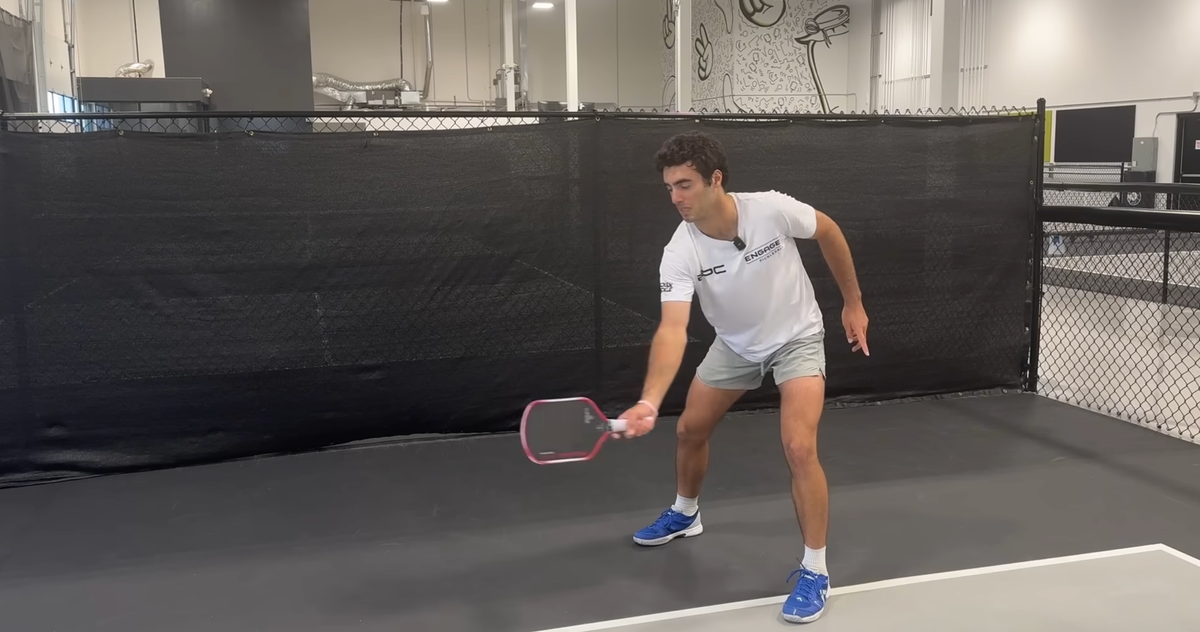
2. The Shovel Drop: Your Get-Out-of-Jail Card for the Third Shot Drop
Here's where consistency goes out the window and a lot of players struggle. The shovel drop is your emergency shot when the ball gets behind you or to your side.
Sometimes your opponent crushes a return that pushes you off balance. Sometimes your partner hits a high third that doesn't let you move forward.
In these situations, the push drop isn't available. You need a different tool.
Knowing your options from the baseline is exactly what separates reactive players from smart ones.What Makes the Shovel Drop Different?
Instead of the relaxed wrist position, you're going to lock your wrist.
Akin describes it like your arm becomes a shovel, or a scoop, coming out through the paddle.
That locked position lets you get underneath the ball and lift it back into the kitchen.
The grip stays the same as the push drop, but the wrist mechanics change completely.
When you go to the forehand, lock that wrist in a position that creates a 45-degree wedge angle.
For backhands, lock your wrist in a backhand position with that continental or slightly eastern grip.
Here's the key insight: you're using your legs and shoulders, not your wrist muscles. The shoulder acts as a hinge.Your strong legs and strong shoulders do the lifting while your wrist stays quiet and stable.
When Should You Actually Use This Shot?
The contact point for a shovel drop tends to be behind you, and that's okay.
If you tried to make contact in front of you with a locked wrist, your paddle face would point straight up and the ball would go vertical.
By meeting the ball behind you, you naturally have better loft on the paddle for a perfect drop.
Use it when someone hits a very strong return that pushes you off balance, or when you need a fifth or seventh shot drop because earlier shots didn't land.
If you keep getting pinned deep and struggling to reset, these transition zone escape tactics are worth studying alongside this shot.
One major mistake Akin sees? Lazy footwork.
Players stick to the shovel drop when they could have taken one extra step and hit a more consistent push drop instead.
The shovel drop is your backup plan, not your default. Move your feet first, then decide which drop you need.
Third Shot Drop Pickleball: 3rd Shot Guide
The 3rd shot pickleball play is the most important shot you’ll hit on every single rally. This step-by-step guide breaks down the mechanics, common mistakes, and drills to help 3.0 to 4.0 players master it fast.
 The Dink PickleballThe Dink Media Team
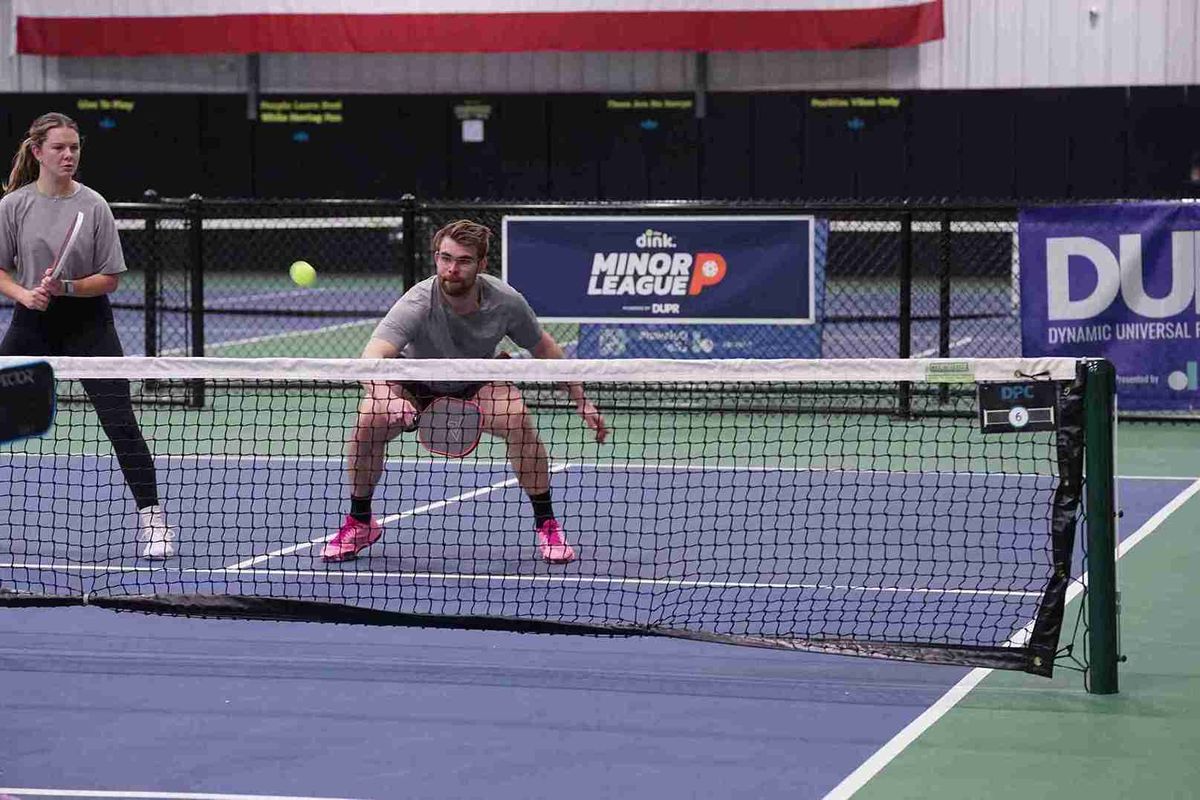
3. The Drip Drop: Your Secret Weapon in the Third Shot Drop Game
Now we're getting to the fun stuff.
The drip drop might be the most underused shot in pickleball, and it could be the missing piece in your third shot drop game.
What exactly is a drip? It's a combination of a drive and a drop. You're still dropping the ball into the kitchen, but you're adding heavy topspin.
The result is a much more aggressive drop that puts serious pressure on your opponents as you move forward.
Understanding how to hit a heavy topspin drive gives you the mechanical foundation to execute the drip drop consistently.How Do You Execute the Drip Drop?
Akin recommends a slightly eastern grip for this one, maybe a little less continental than the other drops.
You want to generate topspin and roll on the ball, which requires a slightly different paddle position.
Keep both feet square and take the ball in front, almost like you're setting up for a push drop.
But then brush up on the ball with a specific motion: think six o'clock to three o'clock to twelve o'clock.
That path creates the topspin-sidespin combination that makes the drip so effective.
Another way to visualize it? You're picking up a phone.
Go from six to two on the clock face to generate that side topspin that drops into your opponent's feet and kicks into them.
What's the Risk-Reward Calculation on This Third Shot Drop Variation?
The drip is a higher-risk, higher-reward shot. Because you're hitting with more power than a traditional push drop, you need to keep the net clearance low.
Otherwise, the ball sits shoulder height to your opponent and they'll crush you.
The biggest mistake Akin sees? Overhitting. Players think it's a drive-drop when it should be a drip.
The ball sits too high, and suddenly you're scrambling for a shovel drop on the next shot.
Arc matters here. For a push drop, Akin aims for a ball that peaks around 5'5" to 6 feet, maybe a little over his opponent's head.
For the drip? Keep it lower, somewhere in the 4-foot to 5'7" range. The topspin will bring it down.
The one downside of hitting the drip so low and fast? You better be quick getting to the kitchen.
If you're not moving forward immediately, you'll be stuck in the transition zone or back at the baseline while your opponent attacks.
Getting to the kitchen is a skill in itself, and mastering the transition from baseline to kitchen line is the complement to every great drop shot.
Master the Drip Shot in Pickleball: A Complete Guide
The drip shot is a hybrid between a drop and a drive that gives you the best of both worlds on the court. Master this versatile third shot with step-by-step mechanics and proven drills.
 The Dink PickleballThe Dink Media Team
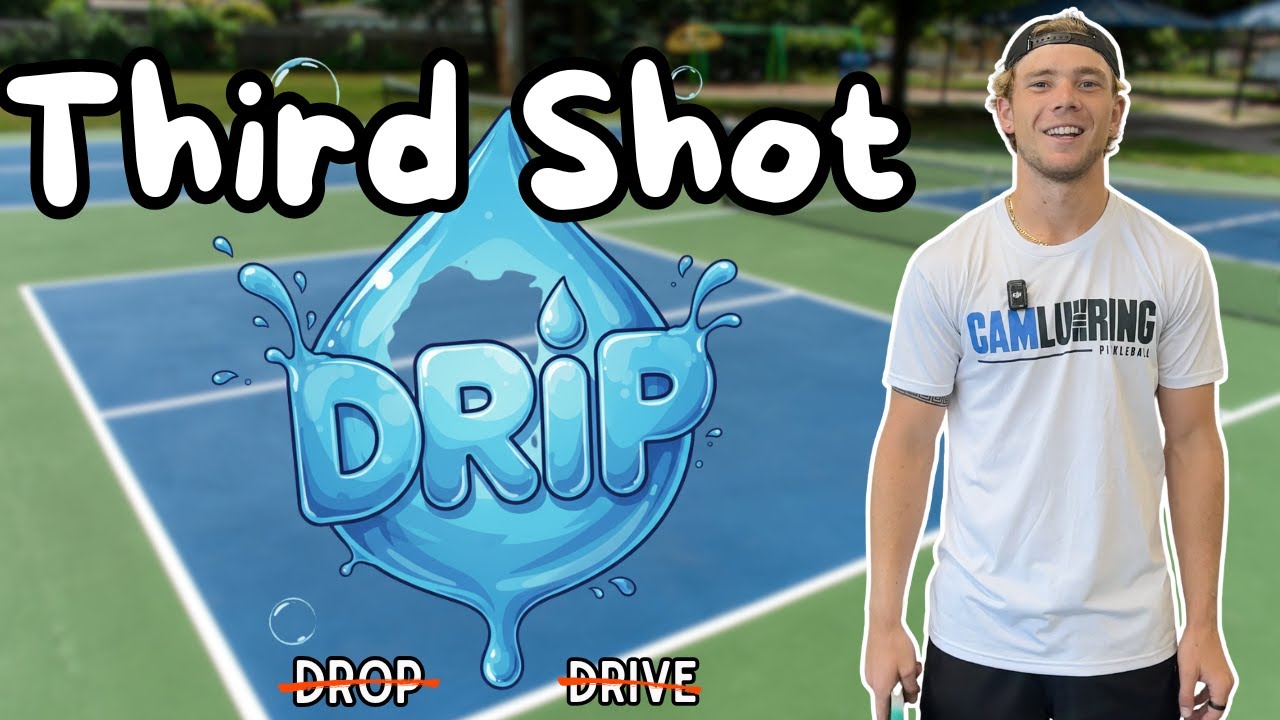
Putting It All Together: Third Shot Drop Selection in Real Time
You've just hit a massive serve. Now you're getting a third shot back. Here's Akin's decision tree for selecting the right third shot drop variation.
- If it's an easy ball, hit the push drop. This should be your go-to roughly 70% of the time. Get your feet set, use that relaxed wrist, and drop it consistently into the kitchen.
- If your opponent crushed a return and that ball gets behind you, use the shovel drop. Lock that wrist, use your legs and shoulders, and scoop yourself out of trouble.
- If you hit a bomb serve and get an easy third, consider the drip. Get behind the ball, dip that paddle head, brush up with topspin, and move forward to attack. Players who master these five third shot options can read any situation and respond with the right weapon.
What's the Final Pro Tip on Third Shot Drops?
Shot recognition determines what happens next. If you hit a good drip or drop, bust your booty up to that kitchen line.
But if you don't hit a good drop? That's okay.
Plant your feet in a split step. Make the next ball a fifth shot drop. Or a seventh shot drop. Or a 33rd shot drop if that's what it takes.
Eventually, you need to get up to the kitchen.The drop is your vehicle for getting there, not a single make-or-break moment.
Learning to get to the kitchen line consistently separates intermediate players from advanced ones.
And understanding all three drop variations, not just the basic push drop, closes a massive hole in your game that opponents will otherwise exploit.
If you're serious about leveling up, the 12 drills you need for your best pickleball in 2026 will lock these mechanics in for good.
According to research covered by ESPN on the rise of recreational sports skill development, the players who see the fastest improvement are those who break complex skills into their component parts, exactly what Akin does here.
Meanwhile, CBS Sports has noted that pickleball's growing competitive scene is pushing even recreational players to treat fundamentals like the third shot drop with serious intent.
Want to see how the pros build their entire game around consistent third shot drops?The 4-step system pros use to win more games breaks down that decision-making at a higher level.
💡
Heads up: hundreds of thousands of pickleballers read our free newsletter.
Subscribe herefor cutting edge strategy, insider news, pro analysis, the latest product innovations and more.
Frequently Asked Questions
What is the difference between a third shot drop and a third shot drive?
A third shot drop is a soft, arcing shot that lands in your opponent's kitchen, forcing them to hit up on the ball. A third shot drive is a hard, flat shot aimed at your opponent's body or feet, designed to keep them on defense. The drop helps you advance to the kitchen; the drive keeps pressure on your opponent. Most players benefit from having both in their arsenal.
When should I use the shovel drop instead of the push drop?
Use the shovel drop when the ball gets behind you or to your side and you can't set up for a proper push drop. It's also useful when a strong return pushes you off balance or when you need a fifth or seventh shot drop after a previous shot sat up. The locked wrist position helps you scoop the ball back into the kitchen from difficult positions. Think of it as your emergency eject button, not your go-to shot.
How do I add topspin to my third shot drop?
The drip drop adds topspin by brushing up on the ball from six o'clock to three o'clock to twelve o'clock. Use a slightly eastern grip and keep the ball in front of you to generate that rolling topspin-sidespin combination. The topspin causes the ball to drop faster after crossing the net and kick into your opponent when it bounces, making it much harder to attack. It's the most aggressive drop in your bag, and when executed well, it's nearly unattackable.
Why does my third shot drop keep getting attacked?
Your drop is probably sitting too high over the net or landing too far from the kitchen line. For push drops, aim for a peak height around 5'5" to 6 feet; for drip drops, keep it lower at 4 to 5'7" feet. Also check your grip pressure, since squeezing too hard reduces touch and control on soft shots. One extra inch of net clearance on a third shot drop is often the difference between an attackable ball and a reset.
Can I use these drop shot variations on both forehand and backhand?
Yes, all three third shot drop variations work on both sides of the court. The push drop and shovel drop use similar grips and mechanics for forehand and backhand. The drip requires more wrist action and may feel more natural on your dominant side at first. Practice each variation on both sides to eliminate the weaknesses your opponents will absolutely find and target.
Anuncie Aqui / Advertise Here
Sua marca para o mundo Pickleball! / Your brand for the Pickleball world!




 English (US) ·
  Portuguese (BR) ·