
 English
  Spanish
  Portuguese
  German
  Italian
  Japanese
  French
  Polish
  Russian
  Netherlands
  Hungarian
  Turkish
  Videos
  The Pickler

Many volley mistakes come down to poor shot selection. Choosing the wrong shot at the wrong moment can hand momentum to your opponent before you even touch the ball. At the kitchen line, success isn’t measured by how hard you hit the ball. It’s measured by how well you control the point and force your opponents into uncomfortable positions. That’s where understanding the difference between a punch volley and a swing volley makes all the difference.
The Punch Volley Keeps You Safe While Applying Pressure
The punch volley is your controlled offense. You have a little more time or space than a block volley, but the goal isn’t to overplay the ball. Most punch volleys are hit on the backhand side, and the paddle moves only about twelve to eighteen inches in a shoulder-driven “punching” motion. Keep your elbow stable, your paddle face flat, and your weight shifting subtly toward your paddle-side hip. You apply pressure without risking your position or overcommitting. After the strike, return immediately to the pickleball ready position so you’re prepared for the next shot.
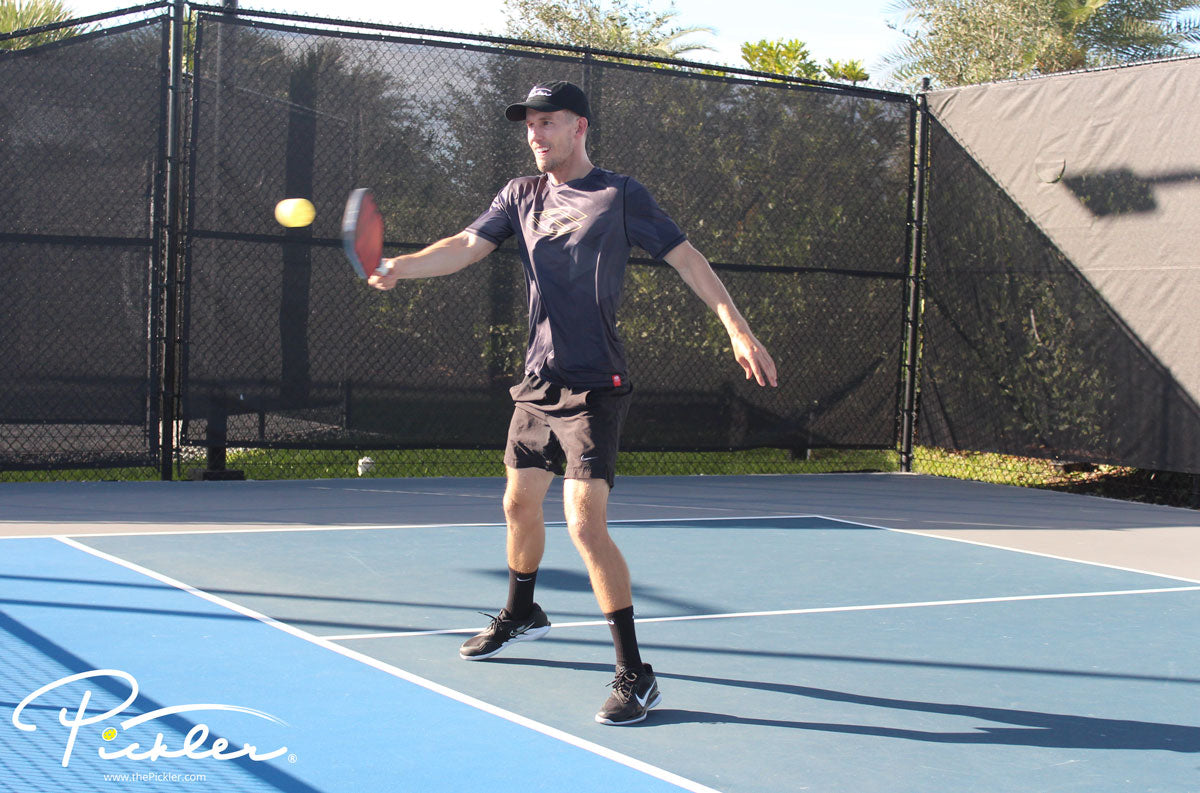
The Swing Volley Is a Decisive, Point-Ending Shot
Swing volleys are for moments when you see a clear opportunity to finish the point. They require a ball that is comfortably above net height and in front of you. The motion is longer, about four to six feet from backswing to follow-through, powered by legs and core, but still initiated from your shoulder rather than your wrist. When executed well, swing volleys allow you to close the point efficiently, but they leave you extended longer and require careful timing. If the ball comes back, you must be ready to recover quickly.
The Four Questions That Decide Your Volley Choice
Before you volley, consider these four questions to slow down your game and sharpen your decisions.
Question 1: How Much Time Do You Actually Have?
Time is the first filter. If the ball is moving quickly through the kitchen or coming off a hard drive, your window is small. That’s where the punch volley thrives.
A punch volley is built for moments when you have some time, but not enough to load up safely. The motion stays compact, roughly twelve to eighteen inches, driven from the shoulder with minimal wrist. Because you are not taking a full backswing, you can strike cleanly and still recover.
If you truly have time from a slower ball, a higher bounce, or an opponent caught out of position, that’s when a swing volley becomes an option. Swing volleys require preparation. If you can’t pull the paddle back by your ear and still feel balanced, you don’t have the time you think you do.
Rule of thumb:
Limited time favors the punch. Clear time favors the swing.
Question 2: Is the Ball Truly Attackable?
Height matters, but clarity matters more.
A swing volley is a decisive shot. It requires a ball that is clearly above net height and comfortably in front of your body. The paddle travels four to six feet, with a longer backswing and follow-through, and power comes from the legs and core. If the ball is even slightly below ideal height, a full swing increases your risk dramatically.
The punch volley lives in the gray area. It’s used when the ball is attackable enough to apply pressure, but not clean enough to justify full commitment. The paddle face stays controlled and readable, especially on the backhand, where most punch volleys occur. You gain depth, pace, and placement without overplaying the shot.
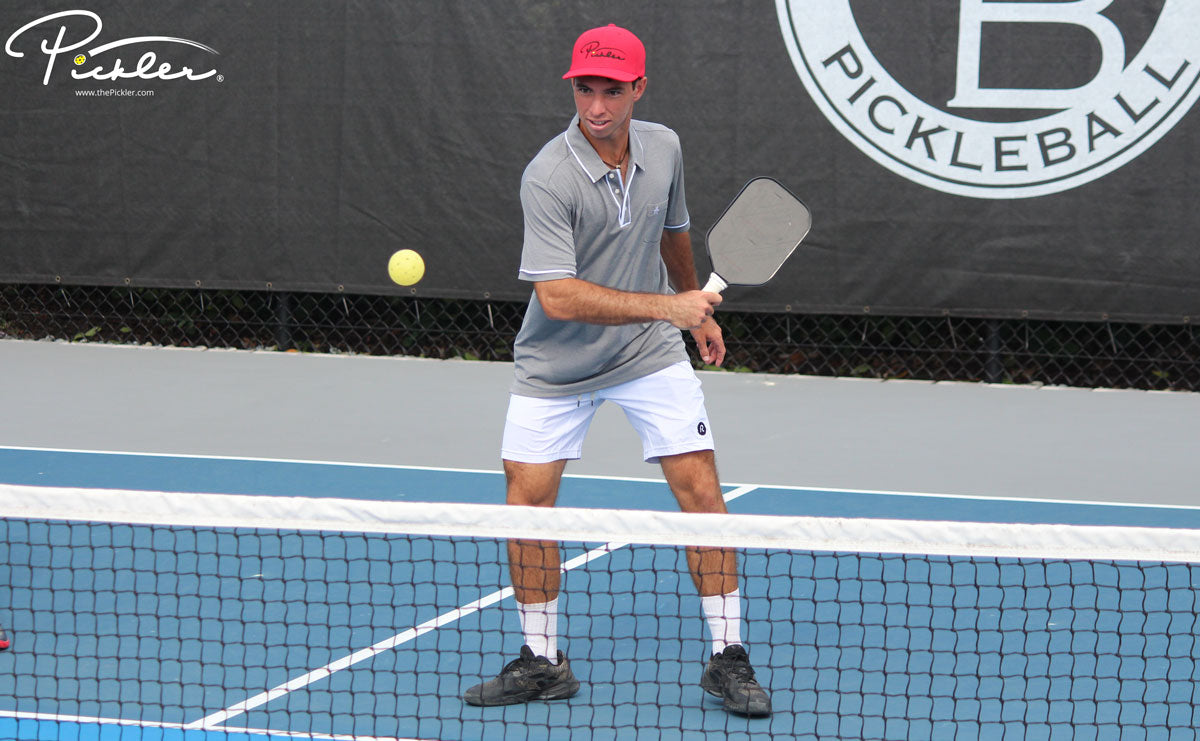
If you have to convince yourself the ball is a winner, it probably isn’t.
Question 3: Where Are Your Opponents Positioned?
Volley choices don’t happen in isolation. They happen in relation to the other side of the net.
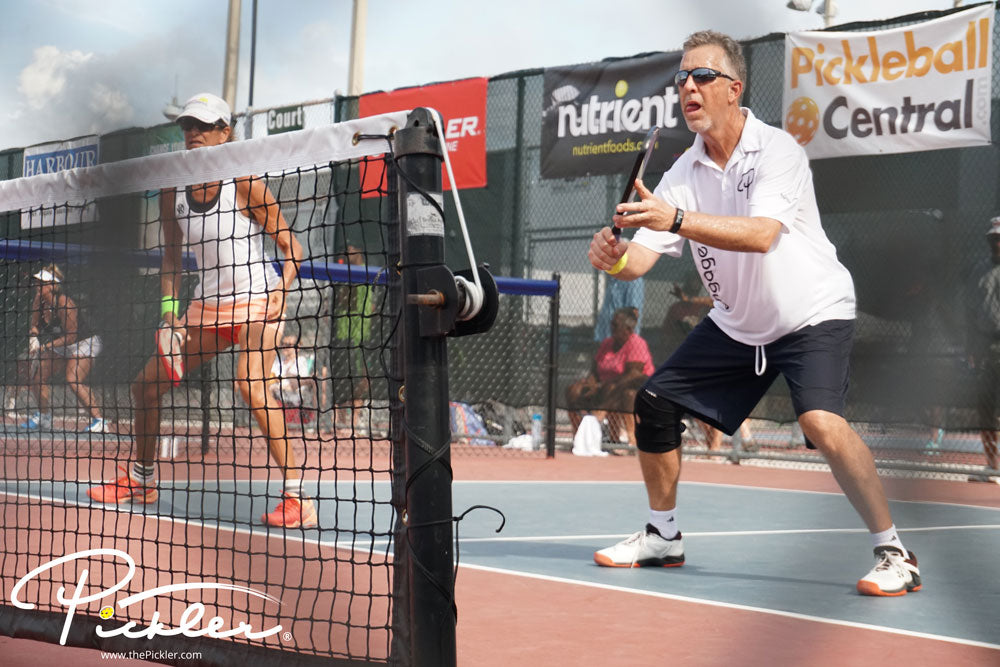
If your opponents are balanced at the kitchen line, swinging often plays right into their hands. Even a solid swing volley can come back fast, putting you immediately on defense. In these situations, a punch volley aimed at the feet or body keeps pressure on without exposing you.
When opponents are stretched, late, or leaning the wrong direction, the swing volley becomes more attractive. A full swing makes sense when it shortens the point and takes advantage of poor positioning.
Punch when opponents are set. Swing when they’re compromised.
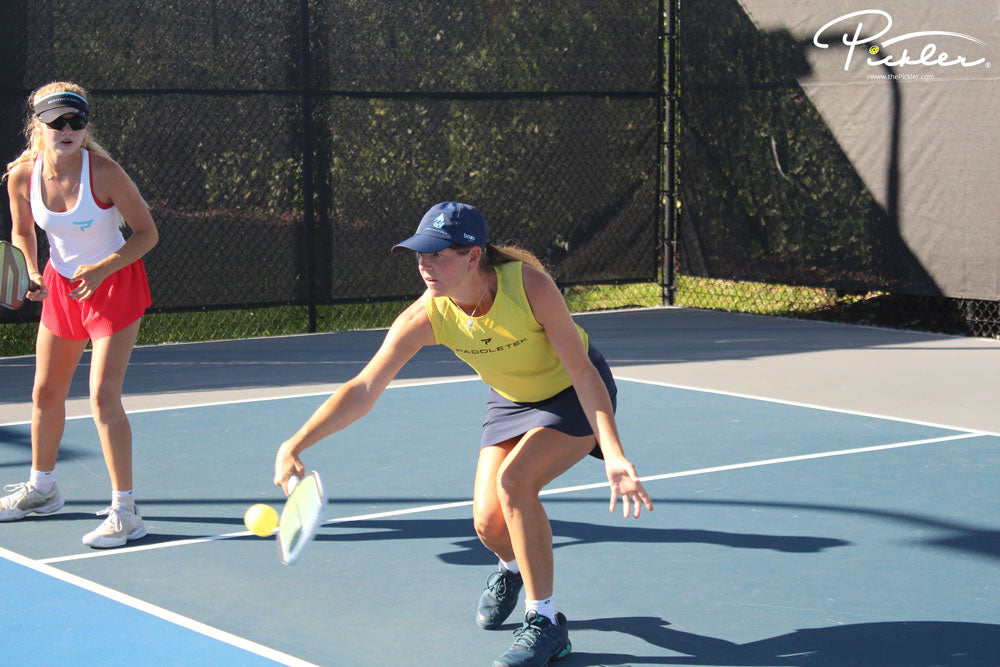
Question 4: What Happens If This Ball Comes Back?
This is the question most players skip, and it’s often the most important.
A punch volley is designed with recovery in mind. The compact motion allows you to strike the ball and return quickly to the ready position, prepared for the next exchange. That’s why it pairs so naturally with fast kitchen rallies and hand battles.
A swing volley is a commitment. Even executed well, it leaves you extended longer. If the ball comes back, you must be ready for a fast counter. Swinging without accounting for the next shot is how players lose control of rallies they were winning.
If you’re not comfortable with the next ball, choose the punch.
Practice the Decision, Not Just the Shot
The best way to reinforce these decisions is through drills that combine recognition with execution. Start with tosses at different speeds and heights. Call out whether you’re using a punch or swing volley before you hit. Switch between forehand and backhand sides. Over time, your brain learns to read the ball and choose intelligently, not just react instinctively.
Remember, the best kitchen players don’t swing more; they choose better. Make controlled, confident decisions that win more points than sheer power ever will.
WANT MORE PICKLEBALL TIPS AND STRATEGIES?
Want to set yourself up for success at the Kitchen Line? Check out our tips to Perfect Your Pickleball Volleys by Focusing on Your Paddle Face & Follow-Through.
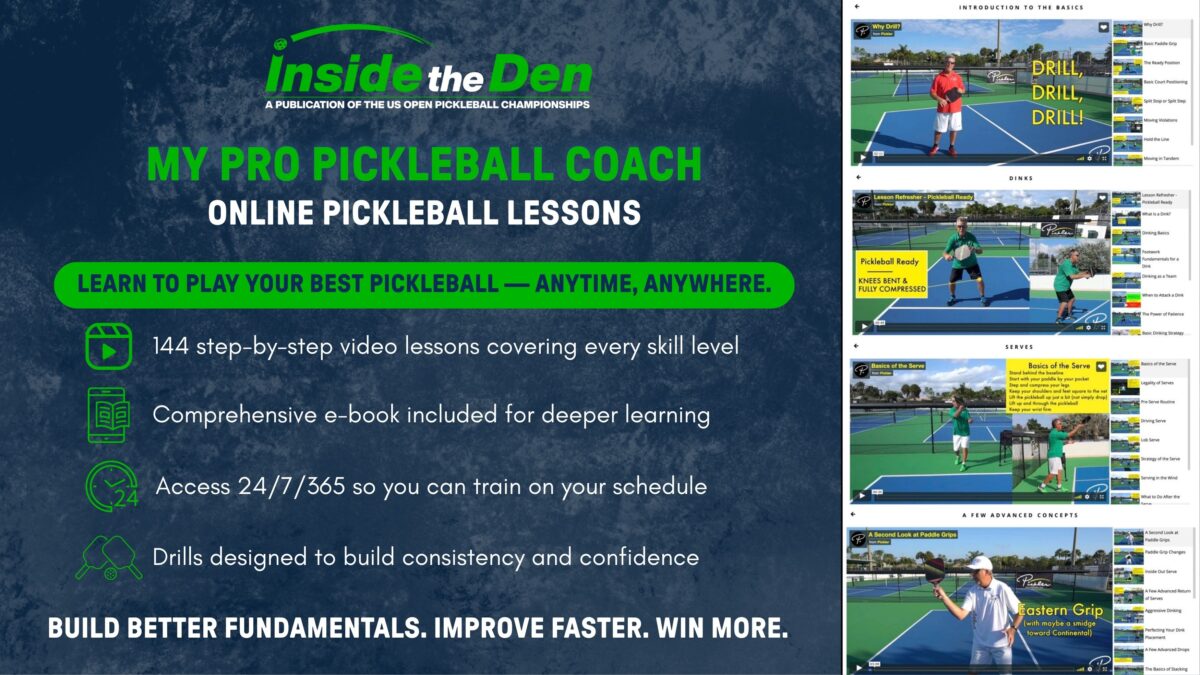
If you want more pickleball tips and strategies on every aspect of your pickleball game, check out Inside the Den’s online video lesson collection called My Pro Pickleball Coach. My Pro Pickleball Coach is a fraction of the price of one clinic or even one lesson, and features over 140 video lessons (over 7 hours of instruction!), as well as a corresponding e-book. These online video lessons are available on demand 24/7 and breakdown every aspect of the sport of pickleball, including pickleball drills, strategy, and advanced concepts, so you will play your best pickleball.
Anuncie Aqui / Advertise Here
Sua marca para o mundo Pickleball! / Your brand for the Pickleball world!



 English (US) ·
  Portuguese (BR) ·