
 English
  Spanish
  Portuguese
  German
  Italian
  Japanese
  French
  Polish
  Russian
  Netherlands
  Hungarian
  Turkish
  Videos
  Thedink Pickleball

Many top players jump on their pickleball serve, and it is not for show. Here is how jumping into contact adds power, plus the rules you need to know.
Your pickleball serve has felt stuck at the same speed for months, and no matter how hard you swing your arm, the ball lands soft and short.
The problem usually is not your arm. It is that every ounce of power is coming from above your waist while your legs do nothing.
Watch almost any pro at the baseline and you will see the same thing: they leave the ground.
As coach Austin Hardy puts it, "all the pros do is they actually jump after contact." That small hop is doing a lot of quiet work.Below are five keys to jumping into your pickleball serve the right way, plus the rule details that keep it legal and the drills that make it automatic.
Love pickleball? Then you'll love our free newsletter. We send the latest news, tips, and highlights for free each week.
Should You Jump on Your Pickleball Serve?
Yes, you should jump on your pickleball serve, because it lets your legs and core add power that your arm cannot create on its own.
Almost every touring pro does it, and it is one of the simplest upgrades available to a recreational player.
The reason is leverage.
When you push up and forward off the ground, you chain your legs, hips, shoulders, and arm into one motion instead of relying on a single body part.
That chain is where free racquet speed comes from.
It also adds margin.
A faster serve in pickleball with the same swing effort means you can aim deeper and still clear the net comfortably, which is exactly what a strong modern serve is built to do.
5 Keys to a Powerful Jumping Pickleball Serve
The jump is not a separate skill you bolt on. It is the finish of a good serve motion. Here are the five keys that make this pickleball serve upgrade work.
1. Jump after contact, not before
The single most common mistake is leaving the ground too early. Hardy is direct about the timing: the pros "jump after contact." Your feet should still be grounded or just leaving as the paddle meets the ball, so the energy from your legs transfers through the hit rather than getting wasted in the air.
If you jump first and swing second, you lose the connection between the ground and the ball. Stay down a beat longer than feels natural, then release.
2. Jump forward into the court, not up
This is the detail that separates a useful jump from a flashy one. "We're not jumping up. We're jumping forward," Hardy explains. "Our momentum is going forward into the court."
Think of it as falling into the baseline, not springing toward the ceiling. A low, forward hop sends your body weight in the same direction as the ball. A high jump just makes you airborne and throws off your contact point on the pickleball serve.
💡
Need some new pickleball gear? Get 20% off select paddles, shoes, and more with code THEDINK at
Midwest Racquet Sports3. Let your rotation come through
A good pickleball serve is a rotational move, and the jump only helps if you let your hips and shoulders turn. Hardy describes feeling it: "I'm allowing that rotation to come through as I jump into the court."
Load slightly with your shoulders coiled away from the target, then unwind through contact as your back foot lifts. If your chest is already facing the net before you swing, you have spent your rotation early.
4. Drive up from your legs
The power comes from the ground. The whole point of jumping is that it forces you to "push from their legs," as Hardy says of the pros, instead of arming the ball over.
Bend your knees during your load and feel like you are pressing the court away from you at contact. That leg drive is the same hidden source of speed described in serve lag, and it is what most amateurs leave on the table. If you want a structured progression for your pickleball serve, our guide to increasing serve speed walks through it step by step.
5. Land balanced and ready
Your serve is not finished when the ball leaves the paddle. You jumped forward, so use that momentum: land inside the baseline with your weight controlled and your paddle back up in front of you.
This matters because the return is coming. Treating recovery as part of the serve is the same mindset that makes the return of serve so valuable, just from the other side of the net.
5 Pickleball Serves That Win More Points
Adding even one of these serves into your game can transform your effectiveness instantly.
 The Dink PickleballThe Dink Media Team

Why James Ignatowich Jumps on Every Shot
The clearest model for this pickleball serve technique is pro James Ignatowich, who has one of the fastest serves in the sport.
Hardy credits him directly as the player who introduced him to the technique, noting that James "utilizes his legs and he jumps into his contact."
What makes Ignatowich worth studying is the consistency.
"It's no surprise that James jumps because he jumps on literally every single shot," Hardy points out.The serve is just one example of a player using the ground on everything.
That is the bigger lesson. The jump is not a serve trick.
It is an athletic habit that shows up on drives, speed-ups, and overheads too, which is why pros build it into serves that create instant pressure rather than treating it as a separate move.
Roll, Lunge, Jump: The Anna Bright Method for Warming Up Right
Take a page out of the pro book. Move your spine, lunge deep, and jump a little. Your knees and your win-loss record will thank you.
 The Dink PickleballThe Dink Media Team
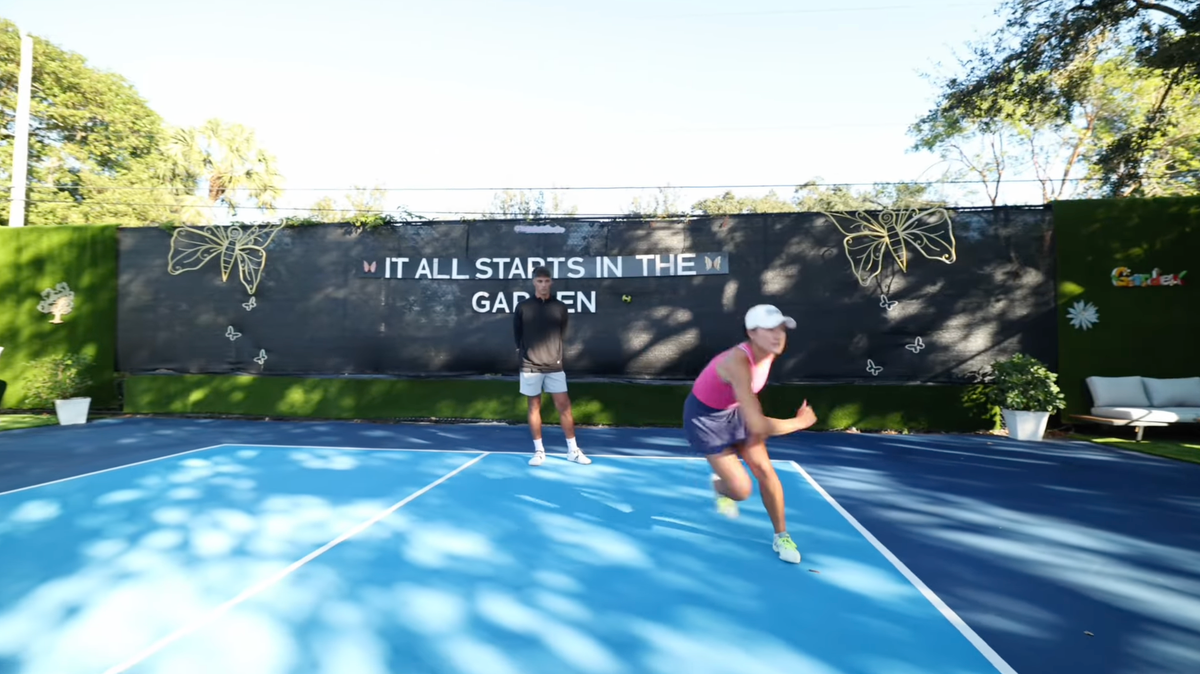
Is It Legal to Jump on Your Pickleball Serve?
Jumping on your pickleball serve is legal, as long as your contact still meets the volley serve rules and you do not touch the baseline or the court before you hit the ball.
The jump itself is fine. The motion around it is what gets scrutinized.
For 2026, USA Pickleball clarified the volley serve wording so that you must "clearly" contact the ball below your waist, with the paddle head below your wrist, using an upward motion.
Jumping forward does not break any of that, but a rushed jump can pull your contact point up and out of legality.
There is one foot rule that matters here: at the moment you strike the ball, neither foot may touch the baseline or the court inside it.
Because a jumping serve sends you forward, you have to time your takeoff so you are still behind the line at contact.
If you are fuzzy on what counts as a serving fault, our breakdown of every type of fault is worth a read, and the beginner glossary covers the baseline and kitchen terms you will see referenced.
It helps to remember how much the serve rules have tightened over the years.
The same committee that banned the one handed spin serve in 2023 has steadily pushed the legal serve back toward a clean, repeatable motion.
A forward jump fits that direction because it adds power through legal mechanics, not through manipulation.
Erne Pickleball: Setup, Jump & Legal Landing Explained
The Erne pickleball shot is one of the most disruptive weapons at the net, letting you volley the ball outside the kitchen line while your opponent has nowhere to go. Here’s exactly how to set it up, execute the jump, and land legally every time.
 The Dink PickleballThe Dink Media Team
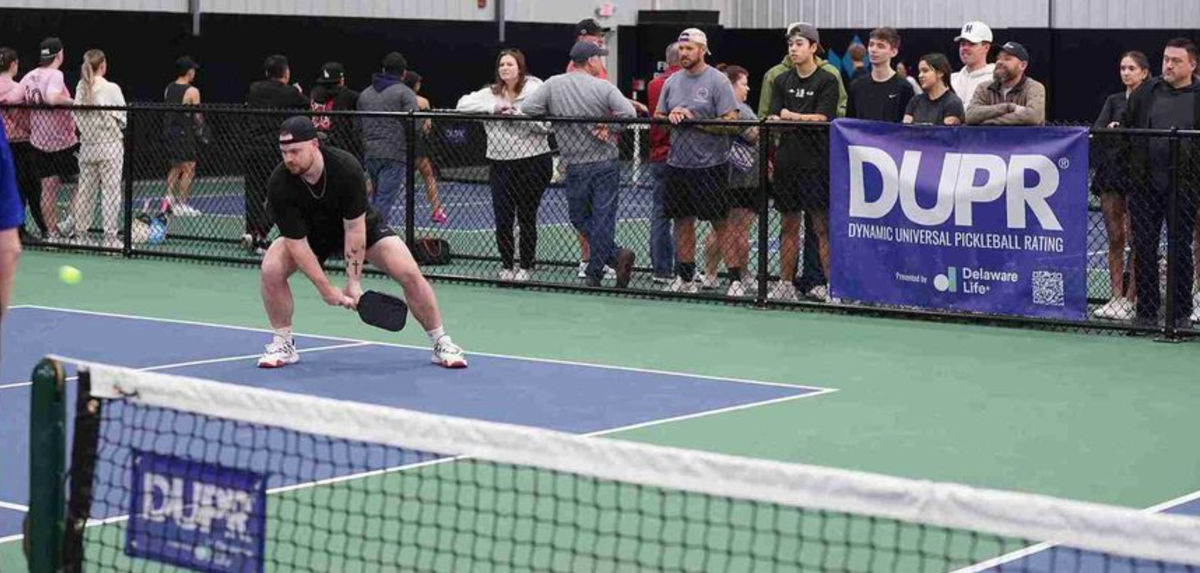
How Do You Practice the Jumping Serve?
Practice the jumping pickleball serve by isolating the timing first, then adding the swing, so the jump never gets ahead of your contact.
Rushing both at once is how players end up airborne and inaccurate.
Start with these steps:
- Shadow the motion. With no ball, load your legs, swing, and let your back foot lift after your arm finishes. Repeat until the late takeoff feels normal.
- Serve at half power. Add the ball but only commit to a small forward hop. Prioritize clean, legal contact below the waist over speed.
- Aim at targets. Place a towel deep in each service box and serve to it. Our three target serve drill pairs perfectly with the jump because it forces accuracy under the new motion.
- Build the hop up gradually. Only increase how far you jump once your contact point stays consistent and behind the line.
One more thing most players skip: warm up your legs before you ask them to launch you forward.
A jumping serve loads your knees and hips, so a quick pre match warm up protects you and helps the motion feel springy from the first serve.
Give it a few sessions before you judge it. The jump feels awkward at first because you have spent years serving flat footed.
Once the timing clicks, the extra pace will feel like it appeared out of nowhere, and you will wonder why you ever served standing still.
💡
Heads up: hundreds of thousands of pickleballers read our free newsletter.
Subscribe herefor cutting edge strategy, insider news, pro analysis, the latest product innovations and more.
Frequently Asked Questions
Does jumping really add power to a pickleball serve?
Yes. Jumping forward links your legs, hips, and core to your arm so the whole body drives the ball instead of just the shoulder. That added chain of motion is where the extra racquet speed and the heavier feel of a pro pickleball serve come from.
Is jumping on your serve legal in pickleball?
It is legal, provided you still make contact below your waist with an upward motion and neither foot touches the baseline or the court before you strike the ball. The jump is allowed, but a sloppy one can cause a foot fault or an illegal contact point.
Why do pros jump forward instead of straight up?
Jumping forward sends your body weight in the same direction as the ball, which adds usable power and keeps your contact point stable. Jumping straight up just makes you airborne and tends to throw off your timing and accuracy.
When should I jump during my serve motion?
Jump after contact, not before. Your feet should be grounded or only beginning to lift as the paddle meets the ball, so the energy from your legs transfers into the hit rather than getting lost in the air.
Will a jumping serve hurt my consistency?
It can at first, which is why you build it gradually with shadow swings and half power reps. Once the timing is grooved, most players keep the same accuracy they had before and simply add serve speed.
Anuncie Aqui / Advertise Here
Sua marca para o mundo Pickleball! / Your brand for the Pickleball world!




 English (US) ·
  Portuguese (BR) ·