
 English
  Spanish
  Portuguese
  German
  Italian
  Japanese
  French
  Polish
  Russian
  Netherlands
  Hungarian
  Turkish
  Videos
  Thedink Pickleball

Improve your pickleball dinking consistency with 5 simple, knee-friendly drills for senior players. Learn evidence-based techniques to stop popping up the ball, reduce overuse injury risks, master shoulder-driven control, and boost your kitchen game with just two 20-minute sessions a week.
Most pickleball dinking drills handed to senior players are just cardio with a paddle, and that's exactly why they don't stick.
You hit 200 balls, your shoulder gets tired, and the sixth dink of every rally still floats up like a gift. The problem isn't effort.It's that volume alone doesn't fix a contact point, and it definitely doesn't fix footwork you're compensating for.
Here's the thing: the players who get sharper after 60 aren't the ones grinding the most reps.They're the ones drilling five specific things and ignoring everything else. The pickleball dinking drills below are built around that idea.
Love pickleball? Then you'll love our free newsletter. We send the latest news, tips, and highlights for free each week.
Why Do Pickleball Dinking Drills Break Down After 60?
Most pickleball dinking drills fail after 60 because the ball keeps arriving a half-step later than your feet expect.
That's it. That's the whole failure.When contact happens beside your hip instead of in front of you, the paddle face opens, and the dink pops up into somebody's wheelhouse.
The safety math matters here too.
One dataset of emergency-department pickleball injuries, collected between 2010 and 2019, found that players aged 60 and older accounted for 83% to 85.8% of hospital-treated cases, with slips, trips, falls, and sudden direction changes driving 64.3% of them.So any drill that has you scrambling backward off the kitchen line is working against you twice: it wrecks your dink and it stacks risk.
Good kitchen line positioning solves both at once.
What Counts as a Consistent Dink, Anyway?
A consistent dink is one you can repeat on demand to a chosen spot, not just one that clears the net.
Worth defining, because "consistent" gets used loosely at every rec court in America.USA Pickleball's official skill ratings lay out the ladder cleanly. At 3.0, you can sustain a dink rally but placement is mostly luck.
At 3.5 to 4.0, you control height, depth, and direction. At 4.5 and up, you're placing dinks patiently enough to force the error rather than hoping for it.That's the actual target, and it's a habit set the best dinkers share.
💡
Need some new pickleball gear? Get 20% off select paddles, shoes, and more with code THEDINK at
Midwest Racquet SportsFive Pickleball Dinking Drills That Won't Punish Your Knees
These five pickleball dinking drills take under five minutes each and none require backpedaling. Run them in order.
- The planted-feet crosscourt. Set your feet in an athletic stance and dink crosscourt for 30 balls without moving them. Sounds restrictive. That's the point: it forces your shoulder and torso to do the reaching instead of your legs, and it kills the backward step that shows up in the fall data above.
- The contact-point gate. Drop a towel on the court about 15 inches in front of your lead foot. Every dink has to be struck over it. Contacting the ball 12 to 18 inches in front of your body is the single fastest fix for late, floaty dinks, and it's the foundation of every dinking technique checklist worth reading.
- The loose-grip check. Hold the paddle at roughly a 4 out of 10 on grip pressure. Squeeze it like a bird you don't want to hurt but don't want to drop. Death-gripping the handle deadens your feel for the paddle face, which is why so many players lose touch on the soft game as they tighten up under pressure.
- The call-out dink. Your partner shouts "line" or "middle" a half-second before you make contact. This one's uncomfortable, and it's the most valuable of the five. Pairing physical reps with a verbal cue trains decision speed, not just stroke mechanics, which is the same principle behind our reaction time drills for seniors.
- Bounce-and-hold. When a dink lands deep in the kitchen, let it bounce and reset from a planted position instead of stepping back to take it early. Holding your dinks is a legitimate weapon anyway, so you're gaining strategy while removing the riskiest movement pattern on the court.
No partner today? The solo versions of one, two, and three work fine against a wall.
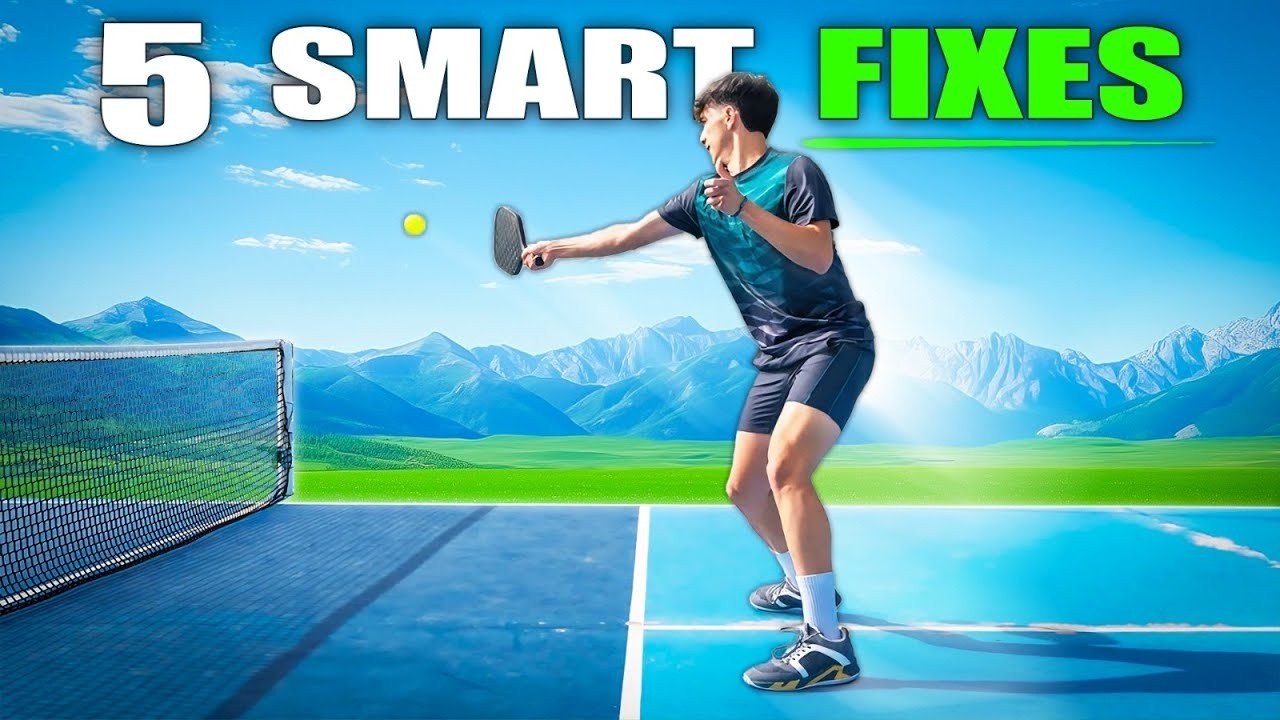
5 Pickleball Drills That Will Transform Your Game in 2026
Five simple yet powerful pickleball drills can completely reshape how you play. These mechanics focus on consistency, footwork, and positioning to help you see immediate results on the court.
 The Dink PickleballThe Dink Media Team
How Many Reps Should Pickleball Dinking Drills Actually Take?
Two focused sessions of 20 to 25 minutes per week, not daily grinding. Pickleball dinking drills reward precision, not mileage.
More is not better here, and the injury research backs that up rather than the folklore.
A 2025 cross-sectional study of pickleball players found that overuse accounted for 78% of reported injuries while acute trauma made up just 22%, with the knee, elbow, and shoulder taking the most damage.The same study found higher self-rated skill was associated with lower injury risk. Read that twice. Sloppy mechanics repeated 500 times a week is the risk profile.
Clean mechanics repeated 200 times isn't. That's an argument for shorter, sharper sessions and for drilling smarter than you play, not longer ones.
Warm up first, too; the roll, lunge, jump routine takes four minutes.
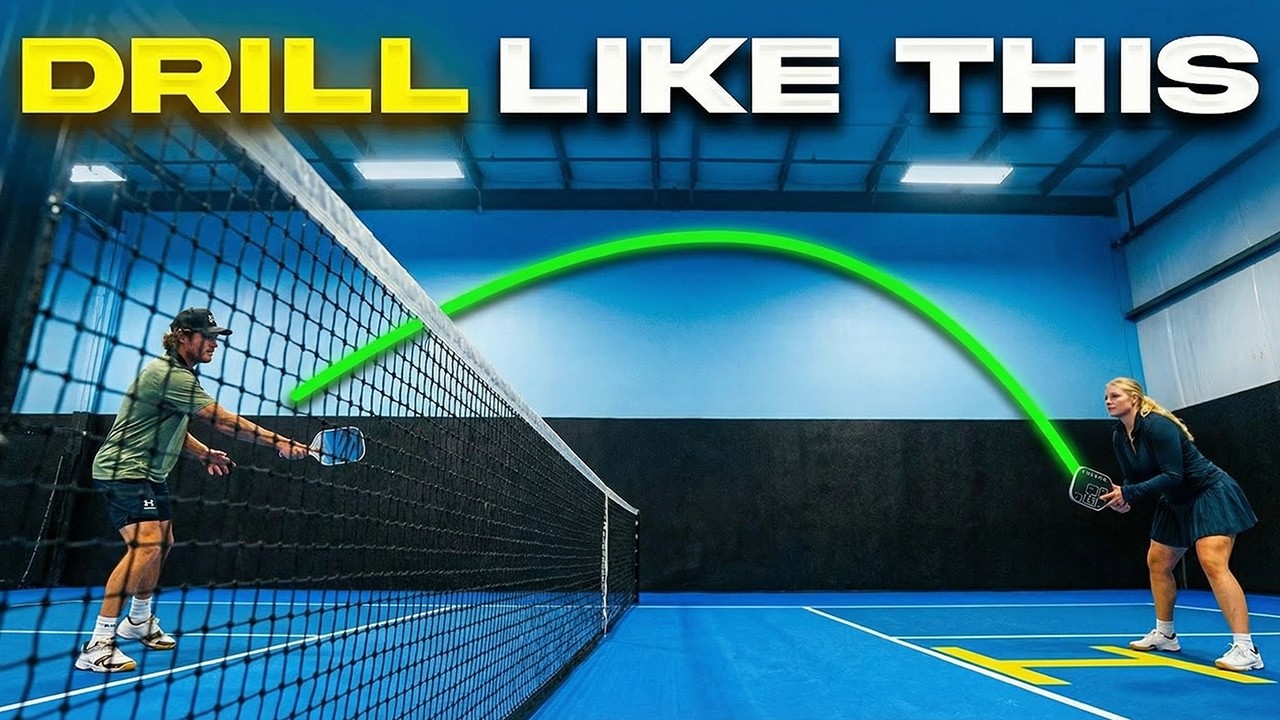
7 Pickleball Drills That Work for Every Level
Pro player Michael Loyd shares 7 pickleball drills designed to build real consistency and fix the weaknesses keeping you stuck.
 The Dink PickleballThe Dink Media Team
The Wrist Flick Is Quietly Ruining Your Dink
Every one of these pickleball dinking drills assumes one thing: drive the dink with your shoulder, keep the wrist stable through contact, and keep the swing compact.
Simple to say. Brutally hard to hold when a rally goes 14 balls deep.
Here's why it matters. The wrist is a small, fast joint, so tiny variations in how it fires produce big variations in paddle face angle.
Your shoulder is a bigger, slower, more repeatable engine. Flick the wrist and you're rolling dice on the face angle at the exact moment precision matters most.
Push through the shoulder and the face stays where you put it.
Senior players who tidy up their grip, footwork, and net play usually find their pop-ups disappear before their fitness changes at all.That compact stroke also keeps you honest when the ball gets nasty.
An aggressive dink at your feet is a reset problem, not a power problem, and the reset shot is built on the same stable-wrist mechanics as the dink itself.
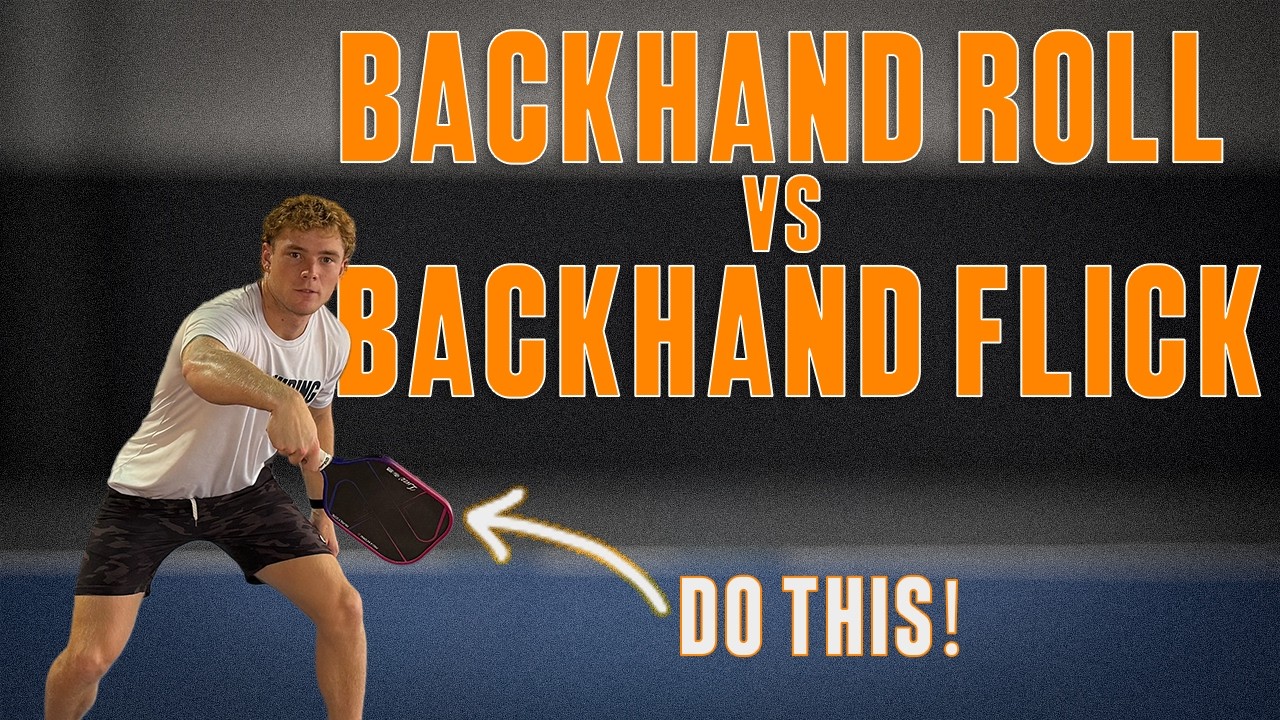
Pickleball Kitchen Attack Strategy: Roll vs Flick Explained
Choosing the wrong backhand attack out of the air costs you more points than you realize. Here is exactly when to roll, when to flick, and the one mistake that kills both shots.
 The Dink PickleballThe Dink Media Team
Do These Pickleball Dinking Drills Transfer to Real Matches?
Pickleball dinking drills transfer when you practice with intent and a target, which is the whole reason the call-out drill is on the list.
A small six-week program with inactive middle-aged and older adults in rural Utah reported improvements in lower-body power, cognitive processing speed, and self-reported pain, with strong adherence.It was a feasibility study with a small rural sample, so treat it as encouraging rather than settled.
Still, the direction is consistent with what coaches see: structured practice changes match behavior faster than casual open play does.The bridge from drill to game is decision-making.
Once your dinks are landing where you aim, the next skill is knowing when to attack and when to reset, and then learning to read your opponent's shot early.
That's how a patient senior player beats a younger banger, and it's the same logic behind the three-part scoring strategy we've written about before.
Honestly, it's the most underrated edge in the 60-plus game.
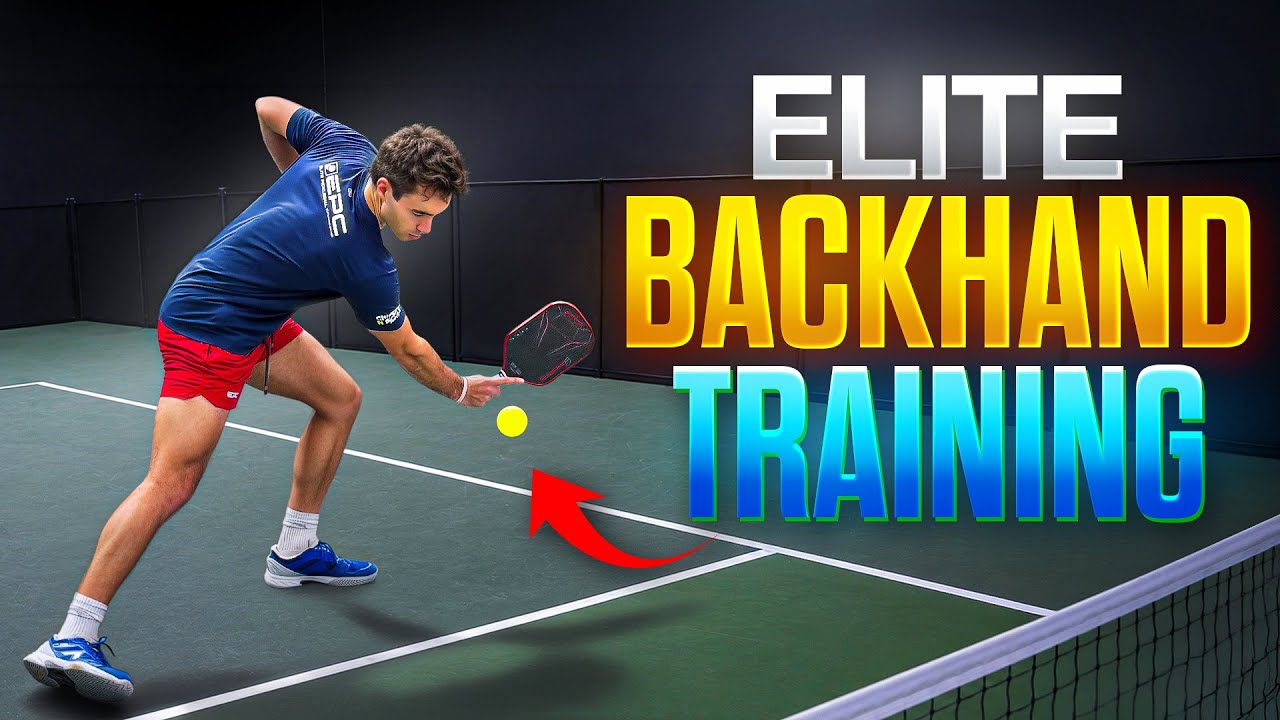
3 Backhand Dink Drills to Master the Kitchen
Your backhand dink is costing you points at the kitchen line, and most players don’t know why. These 3 drills fix the most common backhand dink mistakes and add new-age shots to your game.
 The Dink PickleballThe Dink Media Team
Key Takeaways
- Pickleball dinking drills for senior players should be short and specific, roughly two sessions of 20 to 25 minutes per week rather than daily volume.
- Contact the ball 12 to 18 inches in front of your body. Late contact is the root cause of most pop-ups.
- Keep grip pressure around 4 out of 10 and drive the stroke from the shoulder with a stable wrist.
- Stop backpedaling. Data collected from 2010 to 2019 shows players 60 and up made up 83% to 85.8% of ED-treated pickleball injuries, most from falls and direction changes.
- Add a verbal cue to your dinking drills. Pairing a called target with the rep trains decisions, not just strokes.
💡
Heads up: hundreds of thousands of pickleballers read our free newsletter.
Subscribe herefor cutting edge strategy, insider news, pro analysis, the latest product innovations and more.
Frequently Asked Questions
How often should senior players do pickleball dinking drills?
Two structured sessions of pickleball dinking drills lasting 20 to 25 minutes per week is a sensible starting point. Research on pickleball injuries has linked overuse to 78% of reported cases, so short focused blocks tend to serve older players better than daily high-volume hitting. Quality of contact matters more than the number of balls hit.
What's the fastest way to stop popping up dinks?
Move your contact point forward. Striking the ball 12 to 18 inches in front of your body keeps the paddle face from opening, which is what sends the ball high. A towel placed on the court as a visual gate makes the correction obvious within one session.
Should seniors dink with a firm or loose grip?
Loose, around a 4 out of 10. Lighter grip pressure gives you better feel for the paddle face and more control over a soft shot. A tight grip stiffens the whole arm and turns a delicate touch shot into a punch.
Is backpedaling at the kitchen line dangerous for older players?
Backward movement and sudden direction changes are among the most common mechanisms in pickleball fall injuries for players over 60, according to emergency-department data collected between 2010 and 2019. Letting a deep dink bounce and resetting from a planted stance avoids that pattern. It's also the better tactical choice most of the time.
Can you practice dinking drills without a partner?
Yes. Most pickleball dinking drills adapt to solo work. Wall reps cover the contact-point and grip-pressure versions well, and shadow reps let you groove the shoulder-driven stroke without a ball. The call-out drill is the one that genuinely needs a second person, since the whole point is reacting to an external cue.
Anuncie Aqui / Advertise Here
Sua marca para o mundo Pickleball! / Your brand for the Pickleball world!



 English (US) ·
  Portuguese (BR) ·