
 English
  Spanish
  Portuguese
  German
  Italian
  Japanese
  French
  Polish
  Russian
  Netherlands
  Hungarian
  Turkish
  Videos
  Thedink Pickleball

There's a moment in every pickleball player's journey when they realize something uncomfortable: their opponents keep hitting the ball to them.
Not their partner. Them. It's like being the weakest link in a chain, except the chain is on a court and everyone's watching.
This isn't personal. It's tactical. Good news, though: there's a specific reason it happens and, more importantly, a way to stop it.
Love pickleball? Then you'll love our free newsletter. We send the latest news, tips, and highlights for free each week.
The Problem: You're Making Yourself an Easy Target
Let's start with the uncomfortable truth. When opponents consistently target one player, it's usually because that player is doing something that makes them vulnerable.
Think about it: if you're standing in a certain spot on the court, or if your paddle isn't ready to react quickly, you're essentially sending a signal to your opponents. "Hit it here," you're saying without words. The best players in pickleball read these signals like a book.
The positioning issue is particularly sneaky because it often feels like you're in the right place. You're not. You're in what Richard calls "the pigeon hole," a spot where you feel boxed in and your partner can't really help you out. Your partner extends themselves to the middle of the court, but there's still this gap where you're vulnerable. It's frustrating because you feel stuck, like there's nowhere to go.
The Shot You're Probably Making Worse
Here's where most players make a critical mistake: when they feel targeted, they bump the ball down the line. It seems logical, right? Get the ball away from yourself, move it to a different part of the court. Except it's actually the worst thing you can do.
Why? Two reasons.
- First, your opponent can easily Ernie (that's a shot hit from outside the court, for those keeping score at home).
- Second, you're likely to create a dead ball, putting both you and your partner at risk of attack.
You're not solving the problem; you're making it worse.
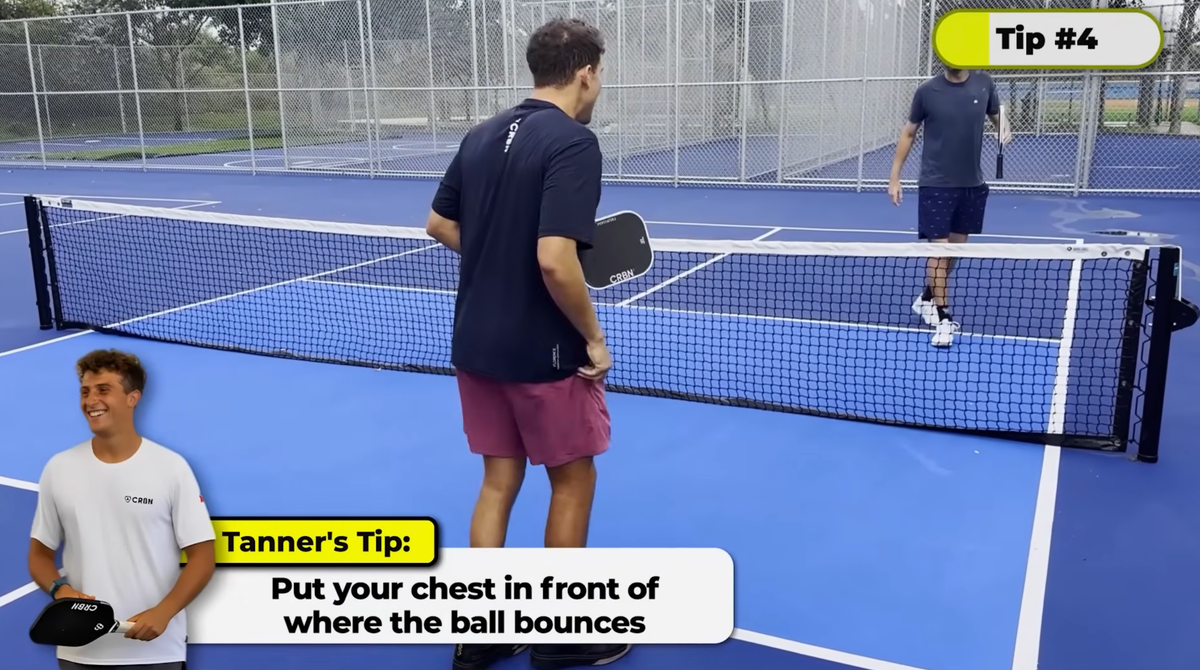
Pickleball Kitchen Line: 6 Skills to Become Unattackable
Tanner Pickleball breaks down how six simple adjustments in positioning and awareness can make you nearly impossible to attack at the kitchen line
 The Dink PickleballThe Dink Media Team
Richard's key insight is this: the best place to hit the ball when you're being targeted is to the inside foot of the player in front of you. This sounds technical, but the reasoning is elegant.
When you hit the ball to the inside foot, the opponent has to drop step their right foot (or left, depending on which side). This makes it incredibly hard for them to return the ball in the same direction it came from. Instead, they're forced to go with the ball, which naturally redirects toward your partner. Suddenly, your partner is back in the rally instead of watching from the sidelines.
Even if your opponent manages to hit it back to you, they're now out of position. They've moved their partner out of the way to take that shot. The court opens up. You're no longer in that pigeon hole.
💡
Need some new pickleball gear? Get 20% off select paddles, shoes, and more with code THEDINK at Midwest Racquet Sports
But what happens when your opponent is really good? What if they can keep the ball in the kitchen even when you hit it to their inside foot? That's when you need a different weapon: the lob.
The lob is huge, according to Richard, because of a simple principle. When opponents are consistently targeting you, they're also leaning heavily into the kitchen. Their body weight is shifted forward. They're reaching in. This means they're vulnerable to a lob because jumping back to get it becomes nearly impossible.
The lob should look exactly like your dink. Same setup, same motion, until the moment of contact. Then you open the paddle face and swing up slightly. Richard uses what he calls the "knee to same shoulder" motion, swinging from his knee up to his same shoulder instead of across his body. This takes a little power off and adds spin, which helps shape the ball and bring it down quicker.
There are two specific spots where the lob is most effective: right on the T (which stretches your opponent's forehand out) or down the line over their backhand. Most players struggle to produce power on a backhand overhead, so that's a particularly vulnerable spot.
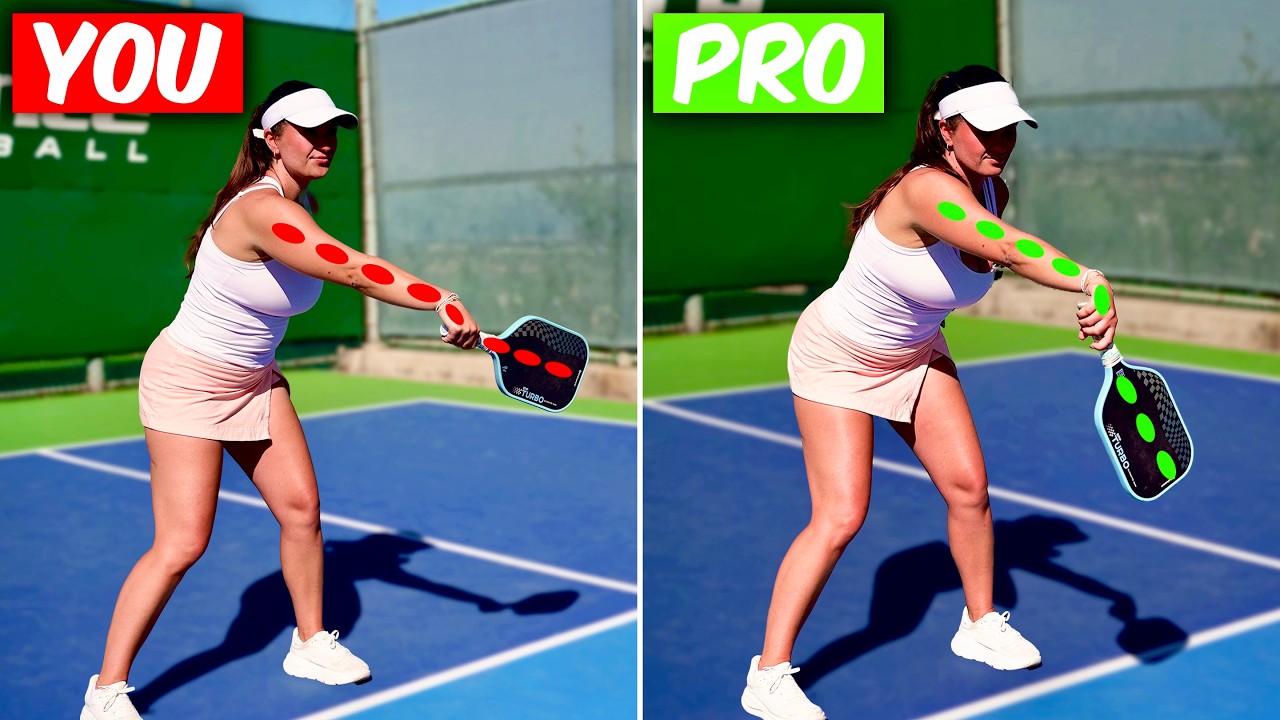
Pickleball Tips: 7 Habits of Pro Players
None of these habits are complicated. Start with one or two, get them solid, then add another. That’s how pros build their game.
 The Dink PickleballThe Dink Media Team
The Bigger Picture: Control vs. Chaos
What Richard is really talking about here goes beyond just these specific shots. It's about control.
When you're being targeted, you feel like you're reacting to everything your opponents do. You're on your heels. You're defensive. The lob and the inside foot shot are ways to flip that script, to take control of the rally instead of letting your opponents control you.
This is the kind of tactical thinking that separates good players from great ones. It's not about hitting harder or faster. It's about understanding court geometry, reading your opponent's positioning, and making smart decisions about where to place the ball.
The Takeaway
Getting picked on in pickleball is a solvable problem. It's not a reflection of your skill level or your worth as a player. It's a tactical issue, and tactical issues have tactical solutions.
The next time you feel like every ball is coming to you, remember: hit it to the inside foot of the player in front of you. If that doesn't work, lob it. And suddenly, you're not the weak link anymore. You're the player making smart decisions.
For more detailed breakdowns and on-court examples, check out Richard Pickleball's full video on the topic. He walks through multiple scenarios and shows exactly what these shots look like in action, which is invaluable if you're trying to implement these strategies in your own game.
Frequently Asked Questions
Why do opponents target me in pickleball?
Opponents target players who appear out of position or slow to react. Improving your pickleball strategy and paddle readiness makes you a harder target.
What is the best pickleball strategy when being targeted?
The best pickleball strategy is to hit to your opponent’s inside foot. This forces awkward returns and brings your partner back into the rally.
Should I hit down the line when under pressure?
No, hitting down the line often creates attackable balls. A smarter pickleball strategy is to control placement and avoid giving opponents easy opportunities.
When should I use a lob in pickleball strategy?
Use a lob when your opponent is leaning forward at the kitchen line. This exploits their positioning and forces them to retreat quickly.
How do I stop getting stuck in the “pigeon hole”?
Adjust your positioning and focus on controlling the middle of the court. Strong pickleball strategy keeps you balanced and prevents isolation.
Anuncie Aqui / Advertise Here
Sua marca para o mundo Pickleball! / Your brand for the Pickleball world!

 English (US) ·
  Portuguese (BR) ·