 English
  Spanish
  Portuguese
  German
  Italian
  Japanese
  French
  Polish
  Russian
  Netherlands
  Hungarian
  Turkish
  Videos
  Thedink Pickleball

The old method of driving and then pushing to the net is no longer enough. The new pickleball drive combo rolls the next ball and crashes behind it for free points.
The pickleball drive combo most players use is outdated, and it is costing them easy points every single game.
For years, the standard play was simple: drive the ball hard, then push a safe shot to the kitchen as you moved forward. It worked fine at most levels.But the game has evolved, and that second shot is leaving a massive opportunity on the table.
This piece breaks down the new method, why rolling and crashing behind it beats the old push approach, and exactly how to build this combo into your game.
The concept comes straight from Richard Pickleball on YouTube, who has been collecting free points with this exact sequence.
Love pickleball? Then you'll love our free newsletter. We send the latest news, tips, and highlights for free each week.
Why the Old Pickleball Drive Combo Is Costing You Points
The traditional transition play works like this: you drive from the baseline to apply pressure, then hit a controlled, soft push shot as you move toward the kitchen line.
The push gives you time to get in position. It keeps the ball low and manageable.
For players learning to transition, it is a solid foundational tool.But here is the problem.
When you push that second ball softly, you are giving your opponent exactly what they want: time to reset, get comfortable, and neutralize any advantage your drive created.You did the hard work on the drive and then handed the momentum right back.
If you want to understand why the third shot drive matters more than ever, you also need to understand what to do immediately after it lands.
What Is the New Method, Exactly?
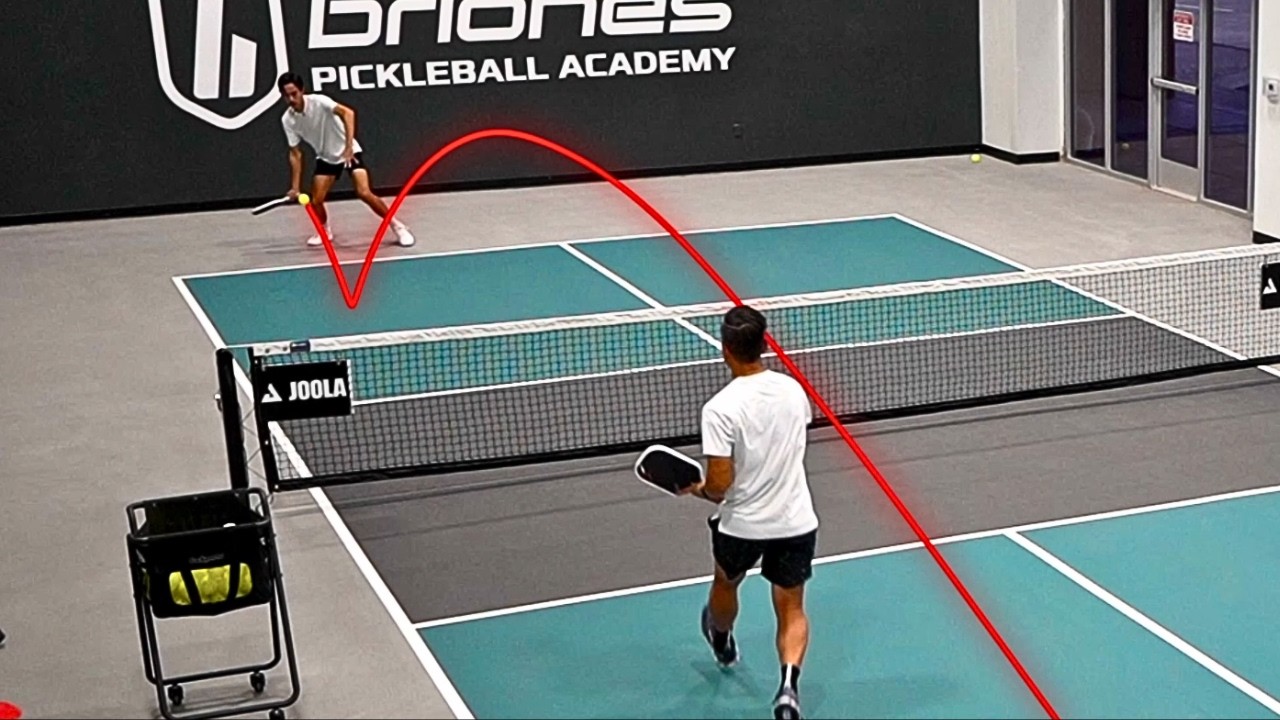
The new approach is straightforward: drive the ball, and when you get a soft volley back, roll your next shot with topspin and crash the net immediately behind it.
That is the whole combo. Drive, receive a soft reply, roll aggressively, and move forward hard.
The roll puts pace and spin on the ball at a moment when your opponent is already off balance from your initial drive.
Crashing right behind it means you arrive at the kitchen with momentum and a compromised opponent in front of you.
The result is a short window where they have almost no good options.The new approach is straightforward: drive the ball, and when you get a soft volley back, roll your next shot with topspin and crash the net immediately behind it.
That is the whole combo. Drive, receive a soft reply, roll aggressively, and move forward hard.
The roll puts pace and spin on the ball at a moment when your opponent is already off balance from your initial drive.
Crashing right behind it means you arrive at the kitchen with momentum and a compromised opponent in front of you.
The result is a short window where they have almost no good options.💡
Need some new pickleball gear? Get 20% off select paddles, shoes, and more with code THEDINK at
Midwest Racquet SportsWhy Does Rolling Beat Pushing Here?
When your opponent gives you a soft volley after your drive, they are already in a defensive position. They are not attacking. They are managing.
A push shot in that moment lets them recover.A topspin roll does not. The roll dips fast, forces a low contact point, and makes a clean reset extremely difficult.
Think about what your opponent has to do when you roll that ball with pace: they have to bend low, manage topspin, keep it below the net tape, and deal with you physically closing the gap at the same time.That is a lot to handle simultaneously. Most players at the 3.5 to 4.5 range simply cannot execute that under pressure.
You can learn more about how the roll vs flick decision works at the kitchen to sharpen your read in these moments.
The push, by contrast, gives them time. Time is the one thing you do not want to give a player who is already in a neutral defensive crouch.
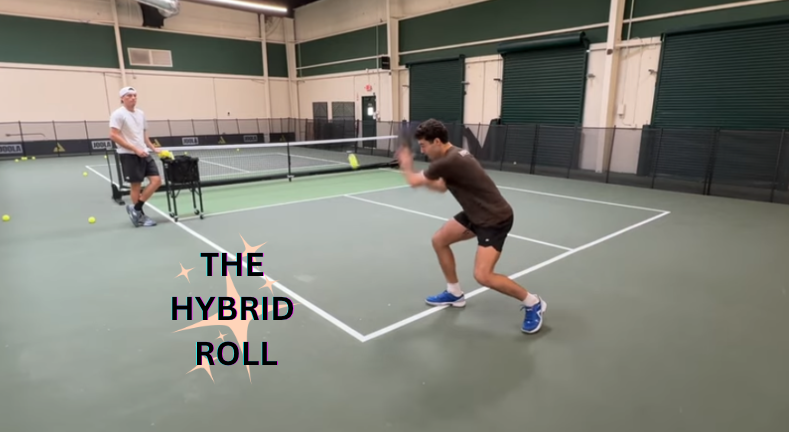
Master the Hybrid Roll: Advanced Third-Shot Drop
Having this shot in your arsenal is typically worth three points per game, a massive advantage when you’re playing to 11
 The Dink PickleballThe Dink Media Team
How to Execute the Drive and Roll Crash Combo
Here is the step by step breakdown of how to run this pickleball drive combo correctly:
- Drive from a strong position. Your drive needs to have enough pace to force a soft reply. A weak drive gives them a comfortable volley, and you will not get the slow ball you need to roll aggressively.
- Read the reply immediately. The moment you see a soft volley coming back, that is your trigger. This is the ball you are going to roll, not push.
- Roll with topspin through the ball. Make contact out in front, brush up the back of the ball, and finish with a low to high swing path. The goal is pace plus dip, not just pace.
- Crash forward immediately after contact. Do not stand and watch the shot. The moment the paddle clears contact, your feet should already be moving toward the kitchen line. Arriving right behind a hard rolling ball is what creates the pressure.
- Be ready at the kitchen. You are not sprinting in to be aggressive randomly. You are arriving because the ball you just hit has put your opponent in a nearly impossible spot. Stay balanced and be prepared to put away whatever floats back.
This is a premeditated sequence, not a reactive guess.
Recognizing the soft volley and knowing your response before it arrives is what separates players who execute this from players who hesitate.
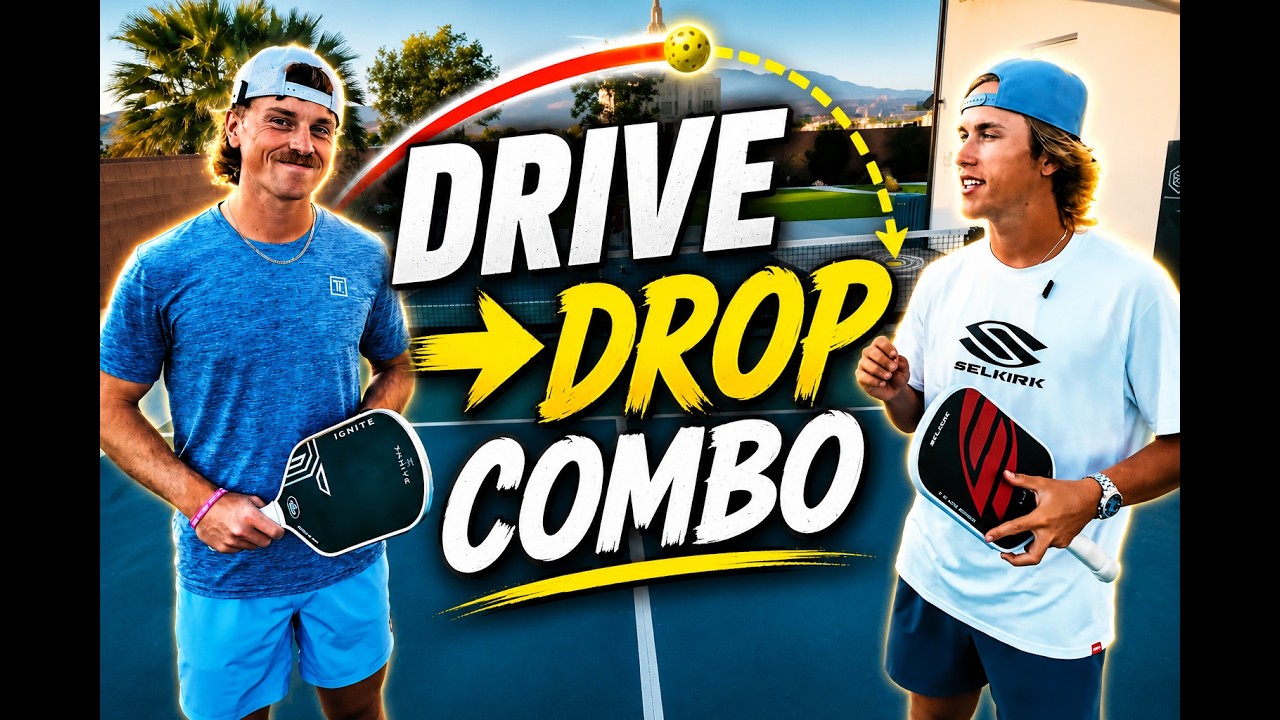
Master the Drive-Drop Combo in Pickleball
The drive-drop combo is the number one way to get to the kitchen line consistently in pickleball. Learn how to execute this high-percentage strategy that even world number one players rely on.
 The Dink PickleballThe Dink Media Team
What Makes the Crash Behind the Roll So Effective?
Crashing behind the roll is the piece most players skip, and it is the most important part of the pickleball drive combo.
When you roll and stay back, your opponent still has space and time to manage the ball even if the roll is good.
But when you crash the net right behind your roll, you are collapsing that space before they can fully recover.
It works for two reasons:
- Physical pressure. A player who sees you closing the net fast tends to rush their shot. Rushed shots pop up. Popped up shots end points.
- Angle pressure. At close range, your put away angles become much sharper. You can drop the ball into spots that are simply unreachable from the baseline.
This is exactly why two shot combinations that set up easy attacks are so valuable.
You are not trying to win with one spectacular shot. You are setting up a situation where winning is almost automatic.
The Pickleball Drive Crash Course: Pro Tips for Powerful Shots
The drive is one of pickleball’s most important shots: it’s your way to take the initiative, put pressure on your opponents, and finish points.
 The Dink PickleballThe Dink Media Team
Is There a Risk to This Approach?
Yes, and you should know about it before you start throwing rolls and crashing blindly.
The main risk is rolling into the net or pushing the ball wide when you are trying to generate topspin under pressure.
If your roll mechanics are shaky, the combo falls apart on the second shot before you ever get to crash.
The fix is to work on your roll contact point specifically. You want to be making contact out in front of your body, not beside your hip.
If the contact gets late, your swing path flattens out and you lose the dip that makes the roll dangerous.Check out this breakdown on how to hit a roll shot in pickleball with fast topspin to clean up the mechanics before you try this in a match.
The second risk is crashing without being ready.
If your roll somehow gives them a comfortable reply instead of a difficult one, you could be caught moving forward into a hard shot. Read the ball as you crash.
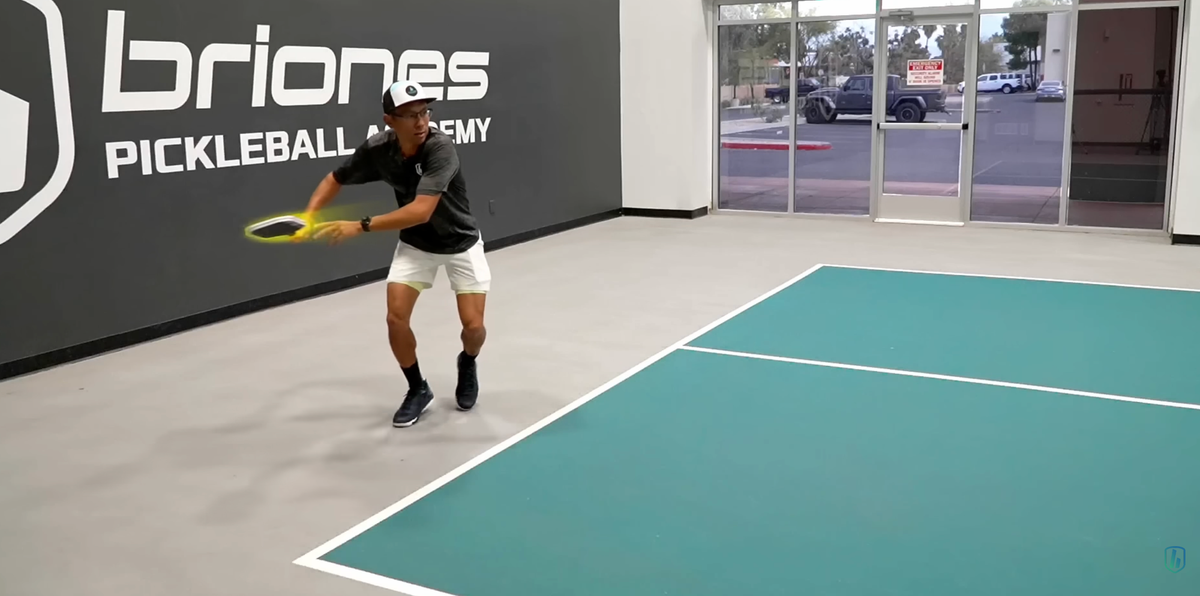
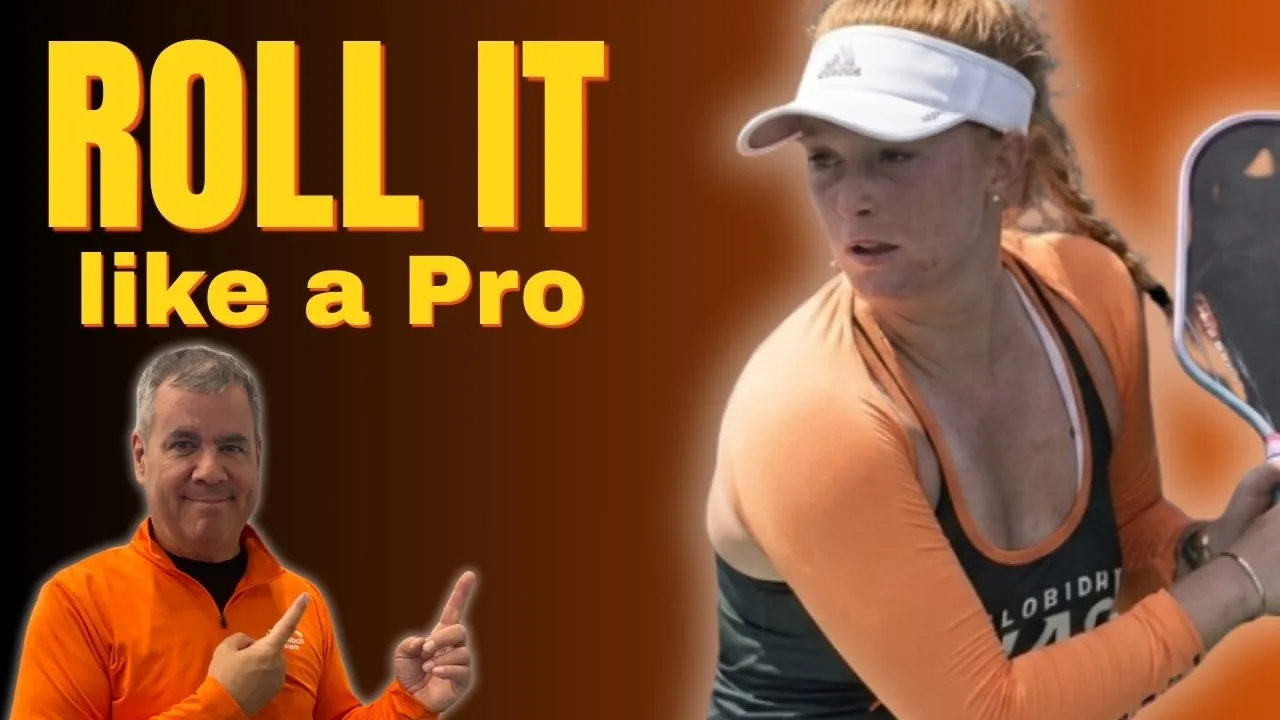
If something looks wrong, be prepared to absorb rather than attack.Advanced Pickleball: How to Hit the Third Shot Roll Drop
The third shot drop roll is one of pickleball’s most advanced shots, and mastering it can transform your game. PPA pro Paula Rives walks through the exact mechanics, grip pressure, and footwork needed to execute this powerful shot consistently.
 The Dink PickleballThe Dink Media Team
How Does This Fit Into Your Broader Transition Strategy?
The drive and roll crash is one specific combo inside a larger transition game. It does not replace everything else.
It replaces the push in one very specific situation: when you drive and receive a soft volley back.
When you drive and get a hard counter, you are not rolling and crashing. You are defending or resetting. Context matters.The trigger for this pickleball drive combo is exclusively the soft reply. Anything else and you stay patient.
Building a complete transition game means having answers for multiple scenarios.
If your pickleball fitness and movement drills are strong, you will find the physical side of crashing much easier to sustain over a full match.You should also understand when to drop versus drive using the three zone system so you are not driving from positions where a drop would serve you better.
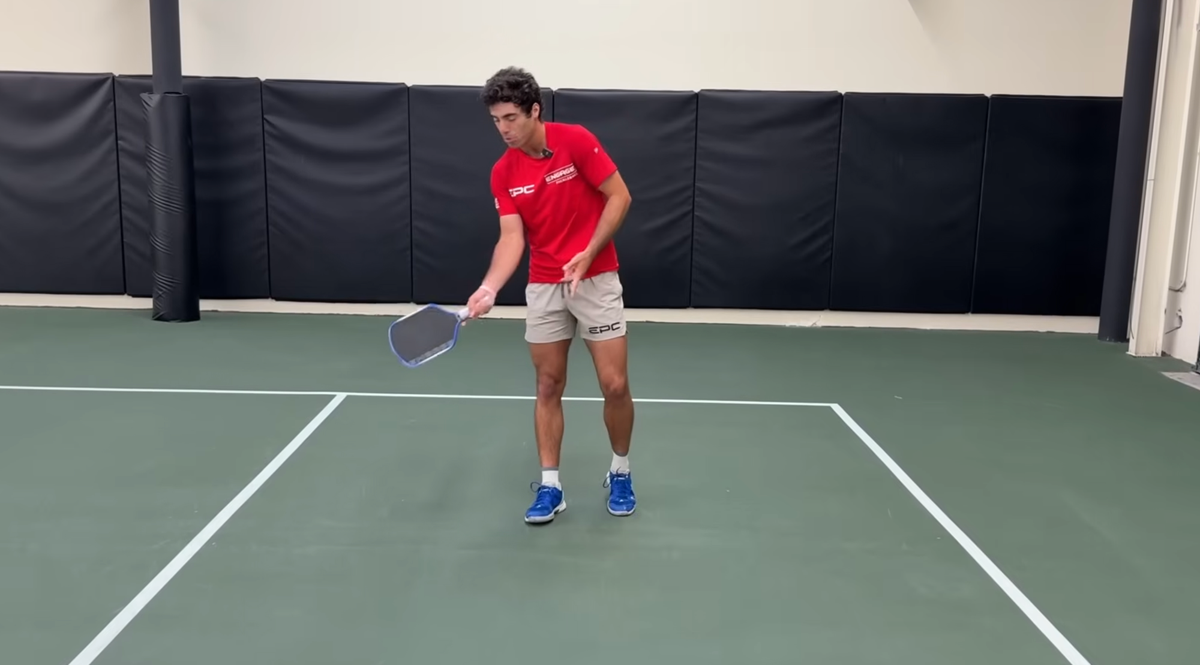
Fix Your Feet: The Pickleball Technique That Transforms Your Transition Game
You can have perfect shot technique, but if your feet aren’t in the right place when you need them to be, you’re fighting an uphill battle.
 The Dink PickleballThe Dink Media Team
Common Mistakes Players Make With This Combo
Even players who understand the theory make predictable errors when they first run this combo in a live game.
- Rolling too early. If you roll before they give you the soft reply, you are attacking from a neutral exchange, not an advantageous one. Wait for the trigger ball.
- Not committing to the crash. Half-crashing is worse than not crashing at all. If your movement forward is tentative, you get none of the angle and physical pressure benefits. Commit fully or stay back.
- Rolling too hard without spin. Pace alone does not make this work. The topspin is what makes the ball dip below a comfortable contact point. A flat hard ball is easier to handle than a spinning one at pace.
- Ignoring where to aim the roll. Rolling down the middle or at the body is usually safer than going wide cross court where your margin is smaller. Keep the ball away from their dominant shoulder when possible.
For related technique, mastering the two handed backhand roll gives you a second weapon to run this same combo from the backhand side.
Once you are comfortable with the mechanics, start layering in awareness of where your opponent is positioned when the soft reply comes back.If they are crowding the kitchen line already, aim the roll at their feet. If they are caught in transition themselves, use the middle.
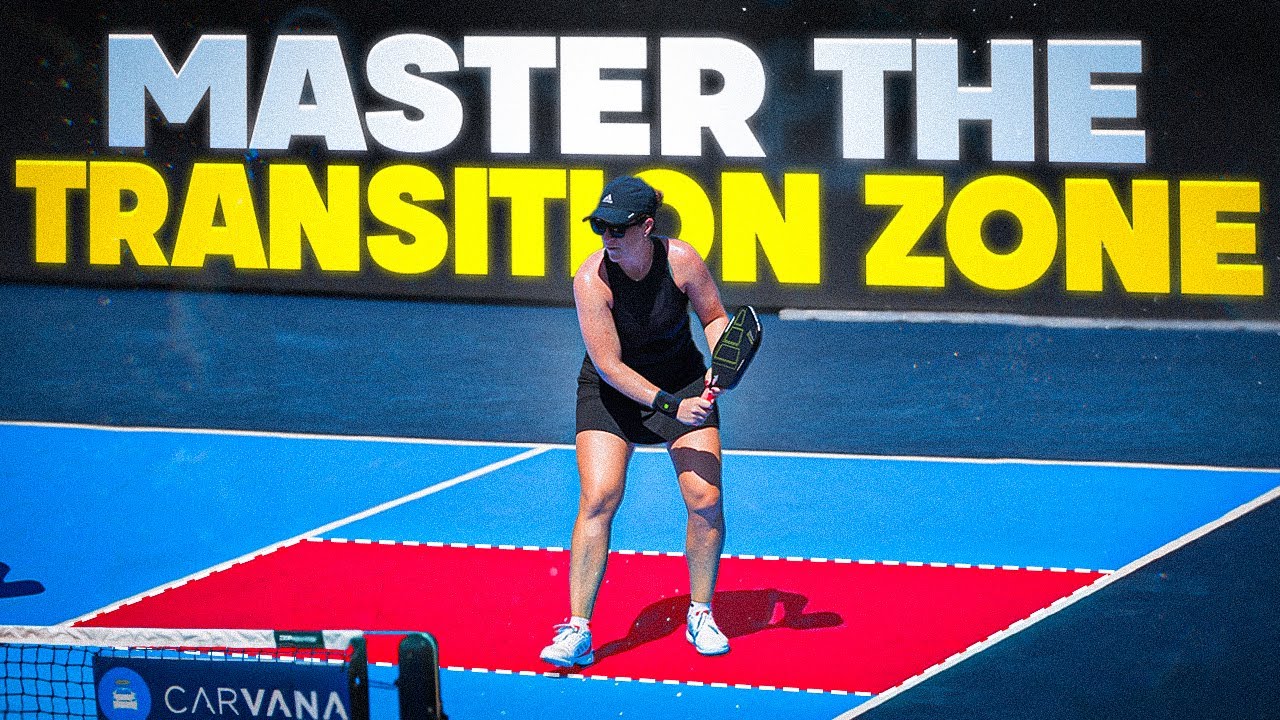
Why Most Pickleball Mistakes Come From the Transition Zone
Mari Humberg breaks down her complete transition zone drill sequence, featuring five essential drills that will transform how you move from baseline to kitchen. Master the transition zone drill and become a more complete pickleball player.
 The Dink PickleballThe Dink Media Team
Drilling This So It Works Under Pressure
You will not execute this pickleball drive combo reliably in a competitive game if you have only tried it casually during open play.
It needs repetition in a structured setting.Here is a simple drill setup to ingrain the pattern:
- Have a partner feed you a deep ball from the kitchen side while you start at the baseline.
- Drive the feed with pace back toward them.
- Your partner immediately gives you a controlled soft reply, simulating the defensive volley you are trying to create.
- Roll that soft reply with topspin and crash the kitchen line immediately.
- Your partner tries to handle the roll and keep the rally going. Finish whatever comes back.
Run this sequence 20 to 30 times in a session. Focus on the feel of recognizing the soft ball and switching mentally from neutral into attack mode.
That mental switch is what the drill is training, not just the physical mechanics.
If you want to build out a full practice structure, look at the best drills for advanced pickleball players and fit this combo into a longer session.The drive and roll crash is one of the most reliable free point combos available right now because most players have not trained against it.
Use that window while it lasts.💡
Heads up: hundreds of thousands of pickleballers read our free newsletter.
Subscribe herefor cutting edge strategy, insider news, pro analysis, the latest product innovations and more.
Frequently Asked Questions
What is the drive and roll crash combo in pickleball?
The drive and roll crash combo means you drive the ball hard from the baseline, and when your opponent gives you a soft volley back, you roll your next shot with topspin and immediately crash the kitchen line behind it. The combination of a fast dipping ball and your physical presence at the net creates extreme pressure. Most opponents at recreational levels cannot handle both at the same time.
When should I roll instead of push after a drive?
Roll instead of push specifically when your drive produces a soft, slow reply from your opponent. That soft reply is your signal that they are in a defensive position and cannot counter your aggression. Pushing in that moment wastes the advantage your drive just created.
How do I keep the roll from going into the net?
Contact point is the main fix. Make sure you are hitting the ball out in front of your body with a clear low to high swing path. If contact gets late or beside your hip, the swing flattens and the ball has no topspin to pull it down safely on the other side.
Is it risky to crash the net after every drive?
Crashing after every drive is not the right read. You should only crash when the second ball you hit is a strong roll that puts your opponent under genuine pressure. If your roll is weak or neutral, crashing puts you in a bad spot.
The crash works because of the roll, not instead of it.
What do I do if my opponent handles the roll well?
If your roll comes back as a controlled shot rather than a popup, stay balanced and do not panic. Your job at the kitchen line is to be ready for whatever arrives. Reset if the ball is difficult, and look for the next opportunity rather than forcing a put away from a neutral position.
Anuncie Aqui / Advertise Here
Sua marca para o mundo Pickleball! / Your brand for the Pickleball world!



 English (US) ·
  Portuguese (BR) ·