
 English
  Spanish
  Portuguese
  German
  Italian
  Japanese
  French
  Polish
  Russian
  Netherlands
  Hungarian
  Turkish
  Videos
  Thedink Pickleball

Most 4.0 pickleball players plateau not because of technique but because of three repeatable court habits. Fix these and you will start moving toward 4.5.
If you are a 4.0 pickleball player and you feel like your rating has been frozen for months, you are not alone.
The jump from 4.0 to 4.5 is one of the most common plateaus in recreational pickleball, and it rarely comes down to shot-making ability.
It comes down to court habits. Small, repeatable decisions that feel fine in the moment but cost you points over and over again.
These three mistakes come from tanner.pickleball on YouTube, who breaks them down fast and calls out the common wisdom that is actually hurting your game.
Here is what you need to fix.
Love pickleball? Then you'll love our free newsletter. We send the latest news, tips, and highlights for free each week.
Mistake 1: Treating the Center Line Like a Barrier
The center line is not a wall. It is a reference point.
Here is a situation you have definitely been in. Your partner hits a weak return of serve. They are late getting to the kitchen line.
You are already there. And instead of helping, you stand on your side and watch them get attacked.
That is the wrong move.
When your partner is late transitioning, your job is to step across, protect the space they cannot cover, win the point or reset it, and then return to your side.
This is not poaching. It is basic court awareness.
Covering your partner without leaving gaps is a skill, and it starts with understanding that the center line exists to organize positioning, not to restrict your movement.
4.0 players who refuse to cross that line are essentially playing half the court while their opponents play the whole thing.
What Does "Protecting your Partner" Actually Look Like?
When your partner is stuck at the baseline or caught in transition, the attacking team will almost always target the open space near the middle.
That is where you need to be.
Step into that space. Take the ball if it comes to you. Then slide back to your natural position as your partner recovers.
Think of it as a temporary shift, not a permanent trade. Knowing when to shift and when to stay is one of the fastest ways to improve as a doubles team.
💡
Need some new pickleball gear? Get 20% off select paddles, shoes, and more with code THEDINK at
Midwest Racquet SportsMistake 2: The Forehand Priority Rule Is Not Universal
This one is going to contradict something you have probably been told a hundred times.
The common advice is that the forehand always takes priority in the middle. That sounds reasonable.
Forehands are usually more reliable than backhands, especially under pressure.
But that rule only applies in one specific situation.
It only works when the ball is coming in slowly and you have enough time to move laterally and set up your forehand.
When the ball is moving fast, when you are in a firefight, when there is no time to reposition, you play the diagonal.That means the player whose backhand is in the middle takes the ball, because the geometry of the court puts them in the best position to reach it.
Waiting for a forehand you cannot get to is a losing play. The shots that move you from 4.0 to 4.5 are not always the flashy ones.
Sometimes it is just taking the ball that is actually yours to take.
How Do You Decide Which Rule Applies in Real Time?
Use speed as your trigger. Here is a simple framework:
- Slow ball, time to move: Forehand takes priority. Call it, move to it, attack it.
- Fast ball, no time to reposition: Play the diagonal. Whoever is lined up takes it.
- Unclear situations: Communicate early. A quick "mine" or "yours" before contact beats silence every time.
Most 4.0 players apply the forehand rule in fast situations and end up either jamming each other or leaving the ball untouched. Both outcomes kill the point.
Talking with your partner on the court is not optional at this level. It is a core skill.
7 Forehand Speedup Secrets From Pro John Cincola
John Cincola owns one of the most feared forehand speedups in pro pickleball. Here are the seven secrets behind it, from setup checklist to last-second deception.
 The Dink PickleballThe Dink Media Team

Mistake 3: Dinking Like It Is a Solo Sport
This is the biggest one. And it is the mistake that is hardest to see in your own game.
Most 4.0 players treat dinking as an individual responsibility.
You hit your dink, your partner hits their dink, and you both just kind of manage your own half of the court.
That is not dinking. That is just taking turns.Real dinking at higher levels is a team action.
When one player hits a ball wide to pull their opponent off the court, the other player has to shift in the same direction to apply pressure.
Both players move together, closing off the opponent's bail-out angle.
Here is what happens when you do not do this. Your partner hits a great dink wide. Their opponent is stretched out.
But instead of collapsing toward that side with your partner, you stay put. Now the opponent has a huge open court to reset into.
The pressure evaporates, and the rally continues on their terms.
Why Does Moving Together Matter So Much at the Kitchen?
When both players shift toward the ball, you eliminate the opponent's recovery angle.
They cannot just push a safe cross-court dink and get back into a neutral position.
That is where points come from at higher levels.
Not from one perfect shot, but from two players working together to shrink the court until the opponent runs out of safe options.
Understanding how to step in on dinks is directly connected to this. The step is not just about moving forward. It is about moving in coordination with your partner.
This is also why drilling your backhand dink matters so much. When you are comfortable with the backhand, you can shift and cover without hesitating.
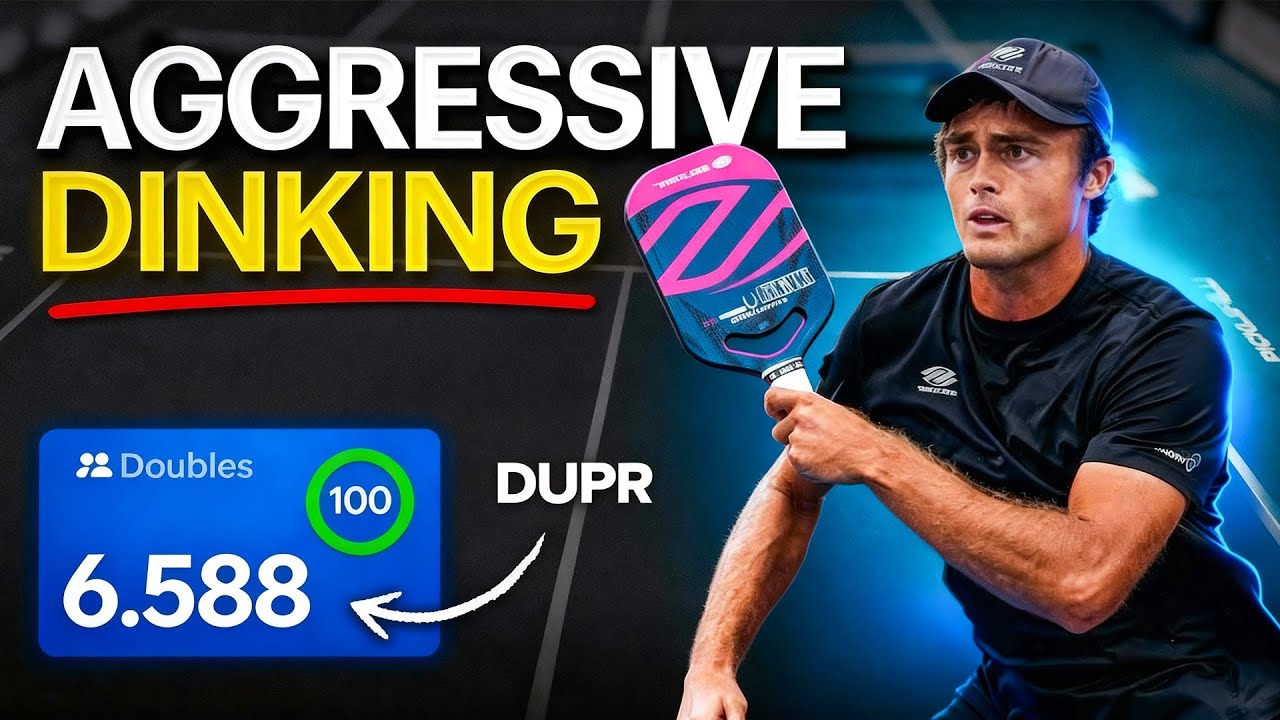
Avoid These 3 Deadly Mistakes to Master Aggressive Dinking
The aggressive dink isn’t about overpowering your opponent. It’s about creating pressure through placement, using deception to keep them guessing, and understanding when to attack versus when to reset
 The Dink PickleballAlex E. Weaver
Why These Three Mistakes Are Linked
Look at all three of these habits together and you will notice a pattern. Each one is a version of the same mistake: thinking about yourself instead of the team.
- Staying on your side when your partner needs help is prioritizing your position over the point.
- Waiting for a forehand you cannot reach is prioritizing comfort over effectiveness.
- Standing still while your partner dinks wide is prioritizing habit over pressure.
Doubles pickleball is a team sport.
That sounds obvious, but the habits that develop at 3.5 and early 4.0 are often self-contained habits from singles thinking or recreational play where coordination did not matter as much.
To move up, you have to start reading your partner as much as you read the ball.
There are doubles strategies that almost nobody talks about, and most of them come back to this exact principle: move as a unit.
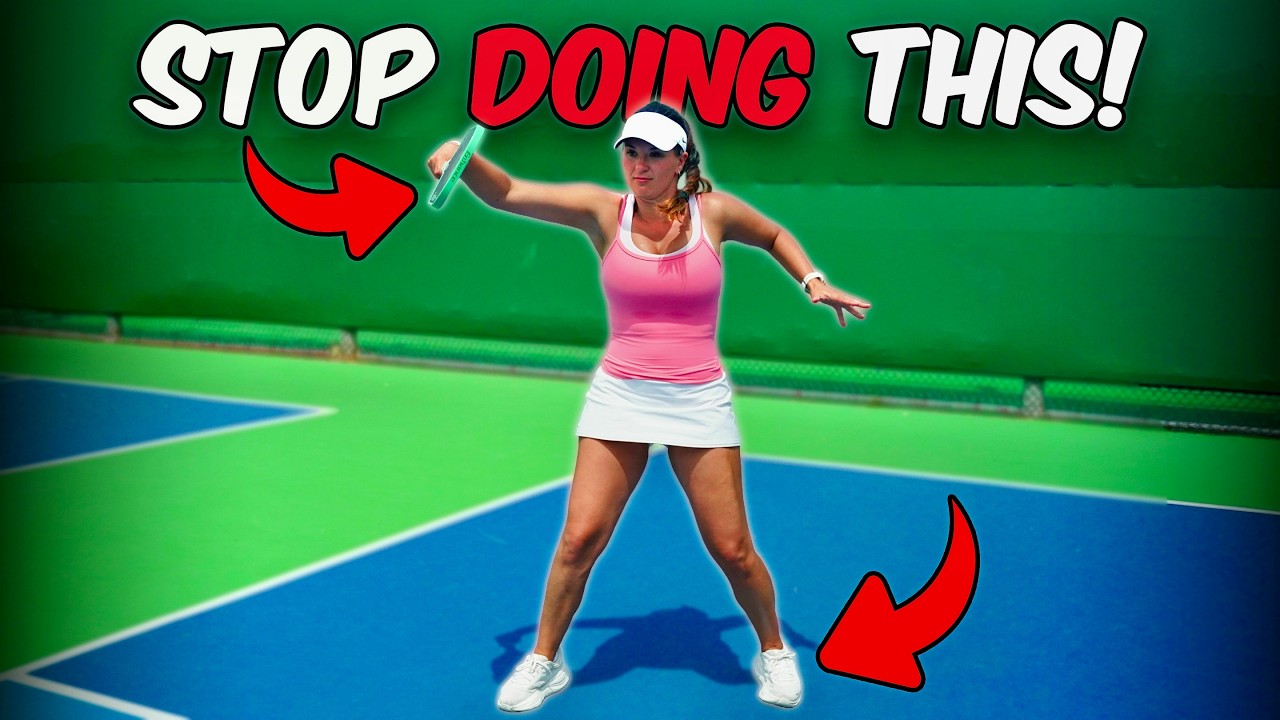
5 Pickleball Mistakes Trapping You at 3.0-4.0
Most pickleball players plateau at the 3.0-4.0 level because they’re making the same five critical pickleball mistakes over and over. Enhance Pickleball breaks down exactly what those mistakes are and how to fix them.
 The Dink PickleballThe Dink Media Team
How to Actually Fix These Habits in Practice
Knowing the mistakes is one thing. Changing them under pressure takes deliberate repetition.
Here is a practical approach for each one:
- Center line awareness: Before each point, remind yourself that your job is to cover the court, not just your side. If your partner is late, move. Make it a rule in practice games before it becomes instinct in real ones.
- Middle ball decisions: Agree with your partner before you play on the speed trigger. Slow ball equals forehand priority. Fast ball equals diagonal. Say it out loud so you are both on the same system.
- Dinking as a team: Pick one drill where you and your partner focus only on shifting together. When one of you goes wide, the other calls it and moves. Using your dinks as weapons starts with this kind of synchronized movement.
These fixes do not require better hands or more power. They require better habits and clearer communication.
If you are working on your overall game, it is also worth reviewing the habits that keep intermediate players stuck at every level. A lot of what holds back 4.0 players was built in earlier stages and never corrected.
And if your dinking feels inconsistent, check out these topspin dink keys for turning a soft shot into something your opponents actually have to respect.
The gap between 4.0 and 4.5 is not about talent. It is about making smarter decisions faster, more consistently.
These three fixes put you directly on that path.
💡
Heads up: hundreds of thousands of pickleballers read our free newsletter.
Subscribe herefor cutting edge strategy, insider news, pro analysis, the latest product innovations and more.
Frequently Asked Questions
Why do 4.0 pickleball players stop improving?
Most 4.0 players plateau because their court habits stop evolving, not because their shot-making does. Treating the center line as a barrier, misapplying the forehand priority rule, and dinking as individuals instead of a team are the three most common reasons progress stalls.
When should the forehand take priority in the middle?
The forehand takes priority in the middle only when the ball is moving slowly and you have time to move laterally and set up. On fast balls with no time to reposition, you should play the diagonal, meaning the player already lined up takes the ball regardless of which side it falls on.
What does it mean to dink as a team in pickleball?
Dinking as a team means both players shift together when one of them hits a ball wide. If your partner pulls an opponent wide with a dink, you move in the same direction to close off the recovery angle. Staying stationary while your partner moves kills the pressure you just created.
Is it allowed to cross the center line to help your partner in doubles?
Yes, crossing the center line is completely legal and often the correct play. When your partner is late getting to the kitchen or caught in transition, stepping across to cover the open space is smart doubles positioning. The center line is a reference point, not a rule about where you have to stay.
What is the fastest way to move from 4.0 to 4.5 in pickleball?
The fastest path from 4.0 to 4.5 is fixing your doubles coordination habits before worrying about adding new shots. Players who move together, communicate in the middle, and apply shared pressure during dinking rallies will see their results improve quickly. The skills that separate 4.0 from 5.0 players are mostly decisions and positioning, not raw power.
Anuncie Aqui / Advertise Here
Sua marca para o mundo Pickleball! / Your brand for the Pickleball world!






 English (US) ·
  Portuguese (BR) ·