
 English
  Spanish
  Portuguese
  German
  Italian
  Japanese
  French
  Polish
  Russian
  Netherlands
  Hungarian
  Turkish
  Videos
  Thedink Pickleball

The dink isn't just a defensive shot. It's the foundation of offensive pickleball. Master these three habits, and you'll start controlling rallies instead of just surviving them.
The dink. It's the shot that separates casual players from serious competitors in pickleball. But here's the thing: most players treat it like a defensive necessity rather than a weapon.
They keep the ball in play, sure, but they're not actually controlling anything. They're just hoping their opponent makes a mistake.
That's not how elite dinkers operate.
In a recent video from Richard Livornese, Zach Marceau breaks down the habits and techniques that separate average players from those who truly dominate at the kitchen line, offering a masterclass in dinking strategy that goes way beyond just keeping rallies alive.
Love pickleball? Then you'll love our free newsletter. We send the latest news, tips, and highlights for free each week.
Understanding Aggressive Dinking (And Why It's Ruining Your Game)
Let's start with the problem most intermediate players face: aggressive dinking.
Your opponent is hitting topspin dinks that move you around, create pressure, and force mistakes.
- You feel uncomfortable.
- You're getting pushed back.
- You're not in control.
This is what aggressive dinking looks like in practice. Your opponent dictates the kitchen with topspin, rolling the ball to your inside foot, your outside foot, moving you around the court. You can't get comfortable. They're setting the tempo, and you're just reacting.
The question becomes: how do you neutralize that?
The Power of the Reach: Taking Back Control
Here's where most players get it wrong. They let aggressive dinks bounce, then try to slice them back. This is a losing strategy. By the time the ball bounces, you've already lost ground. You're pushed off the line, moving into the midcourt, and suddenly it's really hard to keep the ball in the kitchen.
The solution? Reach.
When your opponent is rolling the ball deeper into the kitchen, you have the ability to take it out of the air.This is crucial. By reaching and taking the ball early, you cut off your opponent's time and space. You're no longer reacting to their aggression; you're dictating the rally.
But here's the nuance: it's not just about reaching. It's about where you're placing the ball when you reach. Mix up your spots. Go middle, go wide. Keep your opponent uncomfortable. If they're receiving the same ball in the middle of the box every time, they'll set up and roll it perfectly. But if they have to move to different locations, they'll start making mistakes. They'll push one, slice another. Suddenly, you're the one in control.
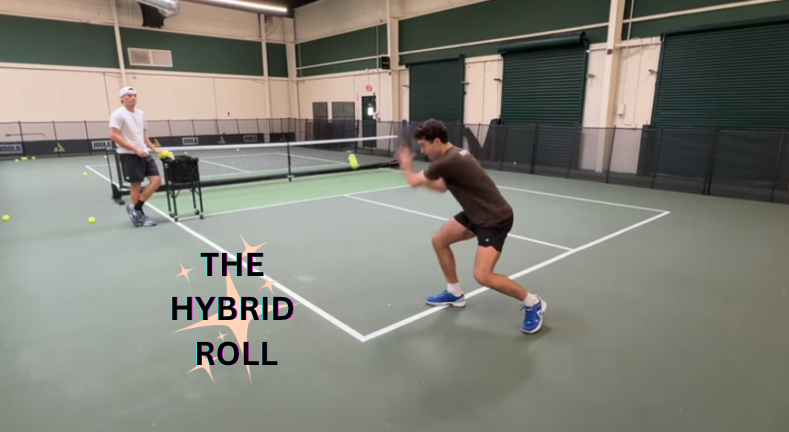
Master the Hybrid Roll: The New Essential Third-Shot Drop in Advanced Pickleball
Having this shot in your arsenal is typically worth three points per game, a massive advantage when you’re playing to 11
 The Dink PickleballThe Dink Media Team
The Short Hop: Your Secret Weapon Against Clean Topspin
Now, let's be honest. Sometimes your opponent is going to hit a really good, clean topspin dink that you can't reach. It's going to bounce in the kitchen, and you need a way to neutralize it.
Enter the short hop.
This isn't a power shot. There's no huge backswing. All you're doing is using a half volley, hitting the ball right off the ground and directing it to your opponent's inside foot, right to the middle of the court.
The beauty of this shot is that it reduces all the angles your opponent can attack. Even if you leave a slightly dead ball, your opponent is sitting backhand. If they try to attack you, great. If they try to attack your forehand, the ball's going out.
This is especially valuable if you're a shorter player or not comfortable using your reach as much. The short hop flips the script on who's dictating play at the net. Suddenly, you're the one controlling the rally, not your opponent.
💡
Need some new pickleball gear? Get 20% off select paddles, shoes, and more with code THEDINK at Midwest Racquet Sports
Creating Offense From Dead Balls: The Real Game-Changer
Here's where elite dinkers separate themselves from everyone else. They don't just neutralize aggressive play. They create offense from it.
Think about what Anna Leigh Waters and Anna Bright have been doing recently. They change their depth and positioning based on what they're reading from their opponent.
- If they hit a really good dink and they see their opponent is going to slice it, they don't reach in preemptively.
- Instead, they take a half step back, preparing to attack.
- Now they have a dead ball sitting in the court, and they're already ready to go on offense.
This is called early preparation, and it's a game-changer.
Decision Matrix: When to Attack or Reset in Pickleball
Pickleball is really all about two key factors: your court positioning and the height of the ball. This matrix decodes the game for you.
 The Dink PickleballThe Dink Media Team
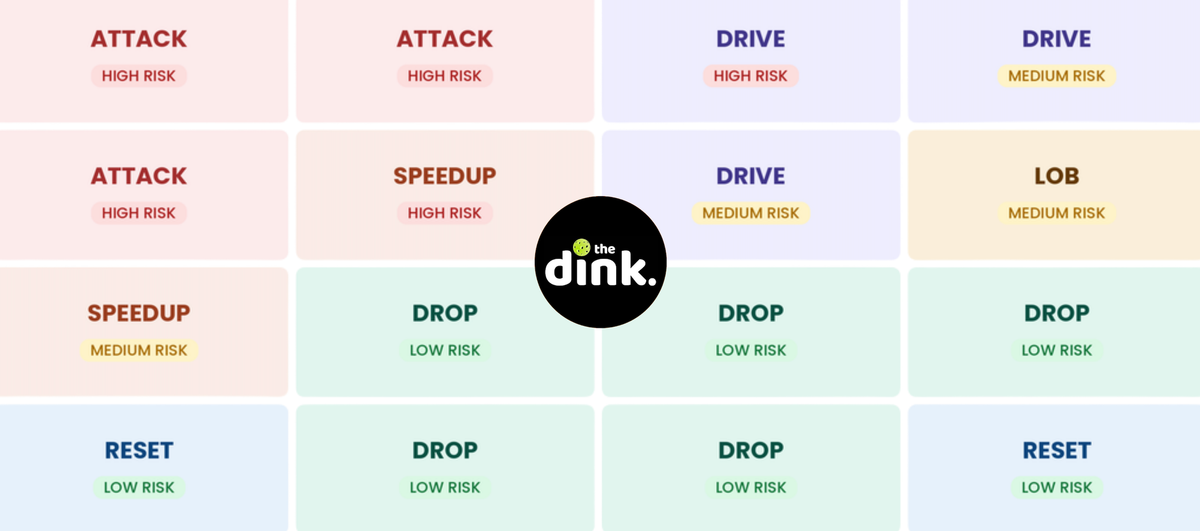
The key is reading your own ball. If you hit a quality dink and you know your opponent is either short hopping it or stretching to slice it, that's when you prep early. You take that half step back. You're ready to attack with speed-ups, aggressive dinks, or even a lob. You have endless options when you have early preparation.
But here's the catch: you can't do this every time. If your opponent is mixing up their shots, hitting some topspin and taking some out of the air, you need to be more selective. Only prep early when you're confident you've hit a quality ball and you're getting a dead ball back. If you prep early on a mediocre ball and your opponent is capable of hitting topspin, they'll roll it right on top of your feet.
Heads up: hundreds of thousands of pickleballers read our free newsletter. Subscribe here for cutting edge strategy, insider news, pro analysis, the latest product innovations and more.
The Recap: Three Habits of Elite Dinkers
According to Zach Marceau's breakdown, there are really three main things that separate elite dinkers from everyone else:
- First, when your opponent is being aggressive with topspin, you reach in and move them around by cutting off their time and spacing. This is the biggest thing you can do at the net.
- Second, when your opponent is hitting good topspin balls, remember that they can't do it every time. Use the short hop, get it to their inside foot, cut off the angles, and sit heavy on your backhand side.
- Third, when your opponent is giving you dead balls in the kitchen, prep early. You know you can't reach it, so take a half step back and set up for your attacks. Use your speed-ups, your aggressive dinks, everything in your arsenal.
The dink isn't just a defensive shot. It's the foundation of offensive pickleball. Master these three habits, and you'll start controlling rallies instead of just surviving them. You'll move from being a player who keeps the ball in play to being a player who dictates the kitchen.
And honestly, that's the difference between intermediate and elite.
Anuncie Aqui / Advertise Here
Sua marca para o mundo Pickleball! / Your brand for the Pickleball world!



 English (US) ·
  Portuguese (BR) ·