
 English
  Spanish
  Portuguese
  German
  Italian
  Japanese
  French
  Polish
  Russian
  Netherlands
  Hungarian
  Turkish
  Videos
  Thedink Pickleball

Most players overcomplicate pickleball strategy and lose games they should win. This three-step formula simplifies the game so you can dominate opponents consistently.
Most players make pickleball strategy way more complicated than it needs to be.
They chase fancy shots, rush the net at the wrong time, and wonder why they keep losing to players who seem to do less.
The truth is, winning pickleball comes down to a simple formula.
Three steps, applied consistently, will make you a problem for almost every opponent you face.
This formula comes straight from tanner.pickleball on YouTube, and it is one of the cleaner breakdowns of practical match strategy you will find for recreational players.Love pickleball? Then you'll love our free newsletter. We send the latest news, tips, and highlights for free each week.
Why Simple Strategy Beats Complicated Strategy Every Time
Here is something most recreational players get wrong: they think winning requires a bigger shot arsenal.
They spend time working on speed-ups and trick shots while ignoring the basic patterns that actually decide games.Tournaments and rec games are won by the player who makes fewer mistakes, controls the tempo, and forces the opponent into bad positions.
You do not need ten advanced shots to do that. You need three reliable principles executed consistently.If you have ever felt your game fall apart under pressure, this pickleball strategy is specifically what fixes that. Let's break down each step.
Step 1: Make the Ball Bounce on Your Opponent's Side From Everywhere
This is the most important habit you can build in pickleball.
Every time you make the ball bounce on your opponent's side of the court, you take away their ability to speed up effectively.
When a ball bounces before your opponent hits it, they have to generate their own pace.That means they have to create a clean attack from a ball that is already dropping, which is much harder than attacking a ball in the air.
Pickleball and the Pursuit of Flow
Pickleball gives people movement, competition, connection, improvement, and joy. But more than anything, it gives them a place to put their full attention.
 The Dink PickleballBenjamin Grant
Think about where this applies on the court. It is not just about dinking from the kitchen line. This principle covers every area.
- From the baseline: Drive or drop the ball so it lands in the kitchen or just behind it, forcing a bounce before your opponent can attack.
- In transition: Keep the ball low and targeted toward the feet, making a clean speed-up nearly impossible.
- At the kitchen line: Dink with enough depth and consistency that your opponent has to bend and lift, rather than meeting the ball at a comfortable attack height.
- On your third shot: Whether you drive or drop, the goal is the same: get the ball to bounce before it reaches your opponent in an attackable position.
The safety net this creates is significant. If the ball bounces first, your opponent's speed-up will not be as dangerous.
They are working from a lower contact point with less leverage.
This is a core reason why consistent, patient players beat aggressive players more often than the score might suggest.It is also the backbone of modern pickleball at every rating level.
You can read more about how to approach third shot strategy in doubles to see how this principle connects from the very first shots of each rally.
💡
Need some new pickleball gear? Get 20% off select paddles, shoes, and more with code THEDINK at
Midwest Racquet SportsWhy Does Making the Ball Bounce Matter So Much?
The answer is physics and court positioning working together.
A ball that bounces gives your opponent less time at the peak of their swing window.It forces them lower, which reduces their angle, and it slows the ball down slightly before contact.
Players who constantly attack out of the air are working from a position of advantage.Take that advantage away by making them hit up on the ball every single time.
According to research on racket sport contact mechanics, lower contact points reduce both racket-head speed and shot angle, which is exactly the disadvantage you want to create.
This is not passive play. This is deliberate control of the rally.If you struggle with keeping the ball low and forcing those bounces, check out these forehand drop techniques that will sharpen your consistency from anywhere on the court.
5 Pickleball Speed-Up Fixes for Instant Offense
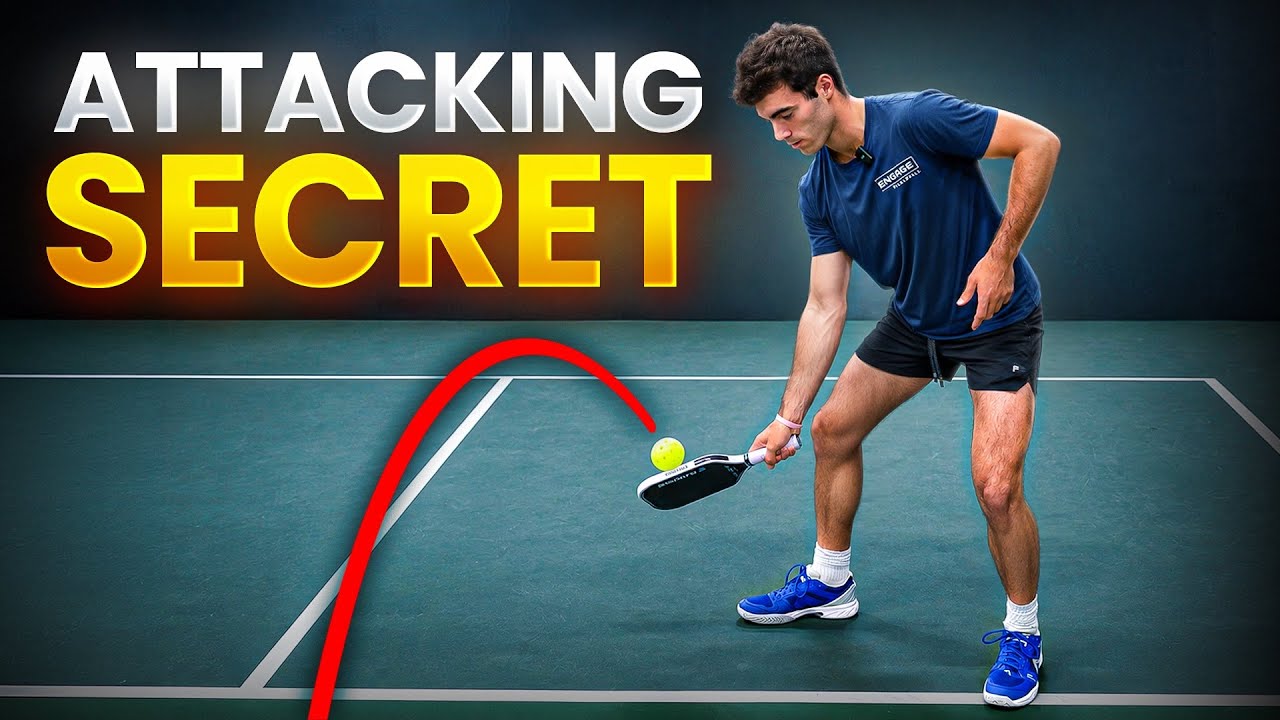
The best pickleball speed up comes from hitting less of the ball, not swinging harder. Here are five fixes that put the ball down fast off the bounce.
 The Dink PickleballThe Dink Media Team
Step 2: Use the Third Shot Drive When You Feel Nervous
Nervousness in a match is real, and most advice about it is useless. Telling yourself to "stay calm" does not work when you are down 8-10 in a tight game.
What works is shifting the pressure from yourself to your opponent.The third shot drive is the tool for that moment.
Instead of trying to execute a technically demanding drop shot when your hands are tight, you drive the ball hard and put your opponent on defense immediately.
There are a few things that make the third shot drive so effective as a pressure release.
- It is aggressive. You are taking the first swing and forcing your opponent to react. That mental shift matters more than most players realize.
- It can score free points. At recreational levels, a well-placed hard drive catches opponents who are not expecting it, especially early in a game when they have not yet seen your patterns.
- It is lower-risk mentally. When you are nervous, a drive requires less fine motor control than a drop. You are swinging with intention rather than trying to finesse a soft shot.
A drive that lands at the feet of a player at the kitchen line is extremely difficult to handle cleanly.
Understanding why the third shot drive matters more than ever in modern pickleball will help you use this weapon with more confidence and at the right moments.
If nervousness is a recurring issue for you in matches, there are also specific mental approaches worth exploring.
Stopping nervousness during pickleball games is a skill you can actually train, not just a personality trait you are stuck with.
Why the Third-Shot Drive Matters More Than Ever
The drive isn’t replacing the drop. It’s setting it up. In today’s ultra-fast-paced game, that matters more than ever.
 The Dink PickleballAndrei Daescu
Should You Always Drive on the Third Shot?
No. The drive is a specific tool for a specific situation.
When you are comfortable, patient, and in a position to execute a quality drop, the drop is often the smarter play because it allows you to advance to the kitchen line more safely.
The drive is your go-to when anxiety is affecting your touch. It redirects your energy outward instead of letting it tighten your grip and shorten your swing.
Use it strategically, not as a default.For a more complete breakdown of when each shot makes sense, this three-zone system for choosing between a drop and a drive is one of the most practical guides available.
5 Pickleball Drive Techniques That Force Easy Pop-Ups
A great pickleball drive is not a winner, it is a setup. Here is the technique, the targets, and the drills that turn your drive into instant offense.
 The Dink PickleballThe Dink Media Team

Stop Rushing the Net. Use Resets to Work Your Way In
This is the step that separates improving players from players who are stuck.
Rushing to the kitchen line without earning your position is one of the most common and costly mistakes in recreational pickleball.
When you sprint toward the net after your third shot, you often catch yourself mid-transition when your opponent attacks.
That puts you in no man's land: too far from the baseline to reset comfortably, and too far from the kitchen to defend well.The correct approach is to move forward incrementally, using resets to control the pace of your advancement.
- Hit your third shot, then pause and read the response. If the ball comes back low and manageable, take a step forward. If it comes back hard, hold your ground and reset.
- Reset aggressively when needed. A good reset is not passive. It is a deliberate soft shot that neutralizes a speed-up and resets the rally to a dinking exchange, giving you time to continue moving forward.
- Only advance when you have given yourself a safe ball. A low dink that forces your opponent to lift gives you the green light to take another step toward the kitchen.
- Arrive at the kitchen line ready to attack. The goal of the entire transition is to get to that line in a balanced, ready position so you can capitalize on the first ball you can put away.
Players who master this step tend to win longer rallies because they are always in a strong defensive position while still moving forward.
They never give their opponents an easy target at their feet.
Demystifying the Third Shot Drop: 3 Simple Tips from a Pro
A pro pickleball player reveals the three most common mistakes that are sabotaging your third shot drop. Here’s what you need to fix to improve consistency and control.
 The Dink PickleballThe Dink Media Team
What Exactly Is a Reset in Pickleball?
A reset is a soft, controlled shot hit with an open paddle face that takes pace off an incoming attack and returns the ball low over the net, ideally landing in the kitchen.
The goal is not to win the point with a reset.The goal is to neutralize your opponent's attack and return the rally to a neutral state. In this pickleball strategy, the reset is the shot that buys you everything else.
Resets are the most underrated skill in pickleball.
Players obsess over speed-ups and drives while ignoring the shot that keeps them alive in the rally long enough to actually win.
If your resets keep popping up, here is a breakdown of why that happens and how to fix it.
Once you can reset reliably, your transition game transforms completely.
You stop feeling rushed, your opponents' attacks feel less threatening, and you start arriving at the kitchen line with confidence instead of desperation.
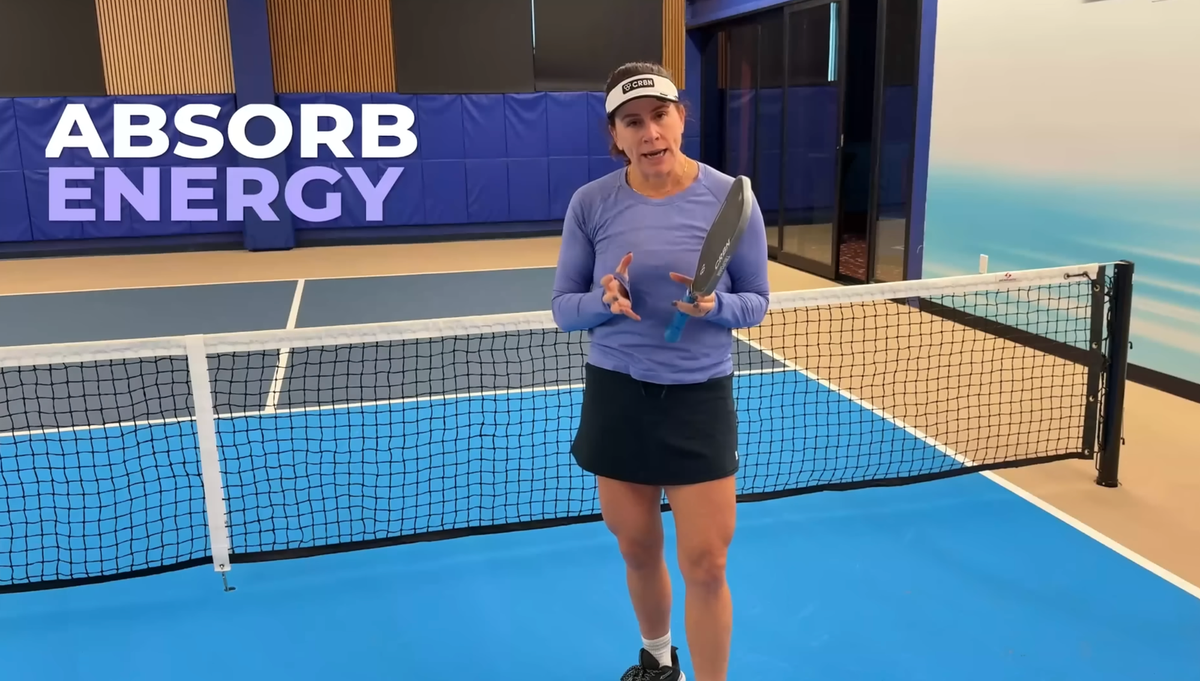
The Pickleball Reset: The One Skill That Takes You Beyond 3.5
By softening pace, controlling trajectory, and stabilizing through transition, players can use the reset to regain the kitchen and compete with stronger opponents
 The Dink PickleballThe Dink Media Team
How the Three Steps Work Together
These three steps are not independent techniques. They are a connected system that builds on itself throughout every rally.
You make the ball bounce to remove your opponent's attack advantage. You use the drive when nerves threaten your execution.And you use resets to advance methodically rather than gambling on a rushed approach to the net.
When all three work together, you become a frustrating opponent to play against.
You are consistent, you are hard to attack cleanly, and you never give away cheap points by rushing into bad positions.This is exactly the kind of structured pickleball strategy that helps players break through rating plateaus.
If you recognize yourself making similar mistakes regularly, these four reasons why 3.5 players stay stuck will give you even more to work on.
You can also look at strategies for beating every type of pickleball player to see how this formula adapts depending on who is across the net from you.
It pairs well with this 4-step system to win more pickleball games if you want a second framework to layer on top.
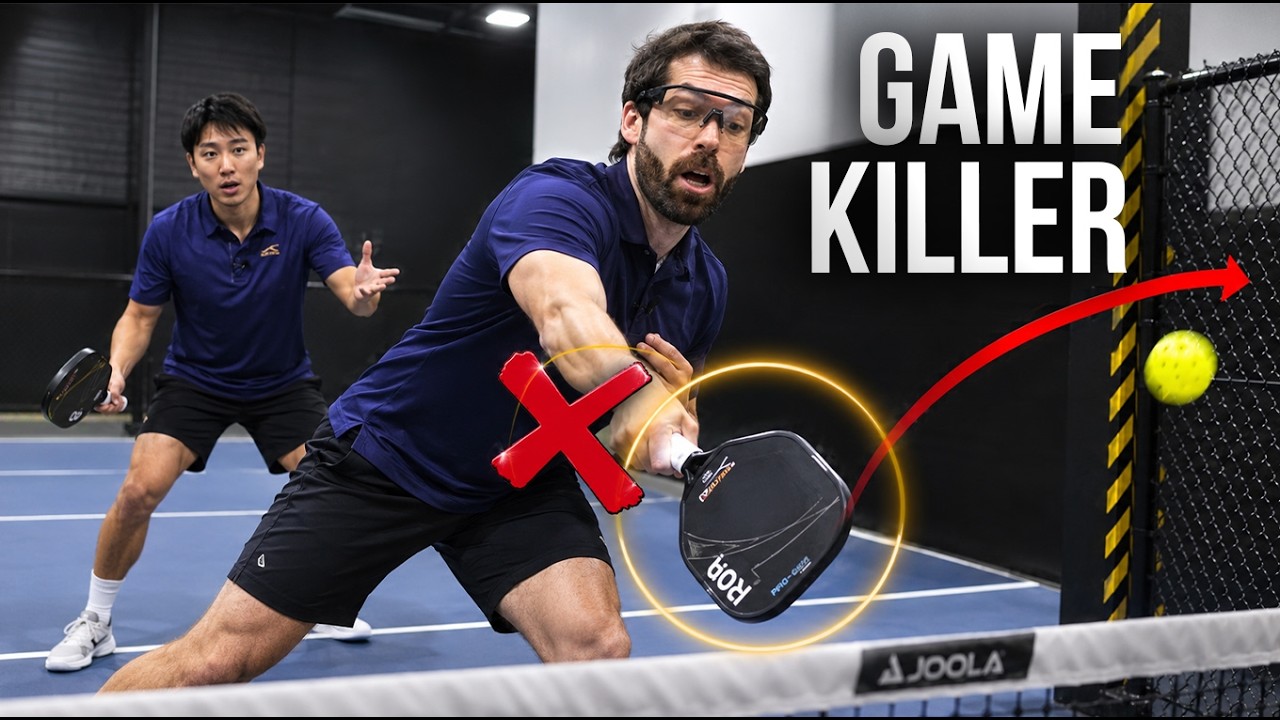
Anticipation in Pickleball: 3 Steps to Stop Reacting Late
Anticipation in pickleball is the skill that separates players who always look rushed from players who always look ready. Here are the three steps coaches use to build it.
 The Dink PickleballThe Dink Media Team
Putting the Formula Into Practice
The fastest way to internalize this formula is to focus on one step per session.
Spend one full practice session only thinking about making the ball bounce. Do not worry about anything else.
Just make every shot land on your opponent's side before they can attack it in the air.Next session, practice the drive on the third shot from different positions on the court.
Notice how your body feels when you drive with intention versus when you tentatively push a drop. The drive should feel decisive, not desperate.
In your third session, work specifically on resets and transition footwork.Practice stopping at various points between the baseline and kitchen and resetting hard shots back into the kitchen.
Escaping no man's land is a skill, and you can get good at it faster than you think. These 12 drills are a good place to build those reps.After three focused sessions, start combining all three in match play.
You will be surprised how quickly these steps become automatic when you have practiced them in isolation first.
Pickleball is now the fastest-growing sport in the United States based on participation data reported by the SFIA, which means the field is getting better every season.A simple, repeatable pickleball strategy is how you stay ahead of it.
For players who want to push even further with their overall game development, these five keys to pickleball defense mastery pair perfectly with this formula and cover the defensive side of exactly the same principles.
💡
Heads up: hundreds of thousands of pickleballers read our free newsletter.
Subscribe herefor cutting edge strategy, insider news, pro analysis, the latest product innovations and more.
Frequently Asked Questions
What is the most important part of a pickleball strategy for beginners?
Making the ball bounce on your opponent's side of the court is the single most impactful habit for beginners to build. It removes your opponent's ability to attack easily and forces them to generate their own pace from a lower contact point. Start there before adding anything else to your game.
When should I use a third shot drive instead of a third shot drop?
Use the third shot drive when you are feeling nervous, when you want to apply immediate pressure, or when you are in a position to generate real pace on the ball. The drop is better when you are composed and want to advance safely to the kitchen line. Both shots serve the same purpose: neutralizing the net team's advantage.
Why do I keep losing points during the transition from baseline to kitchen?
Most players lose points in transition because they rush forward without controlling each step of the approach. You need to hit a ball that forces your opponent to lift before you move up, not move up and then hope they hit it softly. Use resets to neutralize attacks and advance only when you have created a safe ball.
What is a reset shot and when should I use it?
A reset is a soft, controlled shot that removes pace from an incoming attack and returns the ball low into the kitchen. Use it any time your opponent attacks during your transition to the net. A good reset keeps you in the rally and buys you the time to continue advancing toward the kitchen line.
How do I stop feeling nervous during close pickleball games?
Shift the pressure outward by hitting a third shot drive and forcing your opponent to react. Nervousness tightens your touch and hurts your ability to execute soft shots, so driving is often the smartest play in that mental state. Taking an aggressive action redirects your energy and can earn you free points when your opponent is not expecting it.
Anuncie Aqui / Advertise Here
Sua marca para o mundo Pickleball! / Your brand for the Pickleball world!




 English (US) ·
  Portuguese (BR) ·