
 English
  Spanish
  Portuguese
  German
  Italian
  Japanese
  French
  Polish
  Russian
  Netherlands
  Hungarian
  Turkish
  Videos
  Thedink Pickleball

Most players show up, grab a paddle, and wonder why their first few games feel rough. This 3-step pickleball warm up routine fixes that before you even start the first rally.
A good pickleball warm up is the difference between feeling locked in from the first dink and spending two games shaking off rust.
Most players skip straight to hitting, maybe do a few casual rallies, and wonder why their drops are floaty and their resets keep popping up.
The problem isn't your technique. It's that your body and your touch weren't ready to perform.This pickleball warm up routine comes from Ava Ignatowich on YouTube, a PPA Tour professional who treats warming up as non-negotiable.
The framework breaks into three distinct steps: warm up your physical body, warm up your touch, and warm up your reaction time.Get all three right and you will play better immediately.
Love pickleball? Then you'll love our free newsletter. We send the latest news, tips, and highlights for free each week.
Why Most Pickleball Warm Ups Fail
Showing up five minutes early and hitting a few slow dinks is not a warm up. It's a ritual that makes you feel prepared without actually preparing anything.
Your ankles, knees, hips, and spine are not ready to move laterally at full speed after you've been sitting in a car.Your forearms and wrists have not been primed to absorb a hard speed up. And your touch on soft shots takes repetitions to find, not seconds.
The pickleball warm up framework here solves all three of those problems in a specific order.
Skip any step and you're leaving performance on the court.
Step 1: Warm Up Your Physical Body (Ground Up)
Always start from the ground and work your way up.
Your feet, ankles, and calves take the most abuse during lateral movement and split steps, so they need the most attention.
Here is the exact sequence to follow:
- Ankle circles: Lean against a fence or wall, extend one foot, and circle the ankle in both directions about 10 times each. Repeat on both feet.
- Calf raises in three positions: Feet neutral, toes pointed inward (pigeon toe), then toes pointed outward. About 10 reps in each position.
- Toe heel walks: Walk heel to toe, back and forth, to warm up the full length of the foot.
- Knee circles (stanky leg): Roll out the knees in both directions before loading them with squats.
- Assisted squats: Hold the net or a fence for balance and drop into a squat with a few pulses. Stand and repeat.
- Leg swings: Side to side and front to back, both legs. This is your hip mobility work.
- World's greatest stretch: Step into a deep lunge position and rotate each side. Get as low as your body allows.
- Walking lunges with rotation: Add a torso turn at the bottom of each lunge. Then do lateral side lunges.
- Hamstring sweeps: Point your toe up, sweep the ground, step forward, and repeat.
- Knee to chest walks: Pull each knee up with both hands while you walk forward.
- Spine mobility: Standing cat cow. Arch your back, then round your spine. Do this standing if lying on a hot court isn't practical.
- Wrist and forearm circles: Circle your wrists in both directions, then flex the wrist down and up repeatedly to prime the forearm tendons.
- Arm circles and shoulder loosening: Large backward arm circles, then move into whatever shoulder rotation feels right. This is the area players underestimate most.
If you only have time for one step, this is the one to prioritize. Injury prevention in pickleball starts before you ever step onto the court.
The forearm and wrist section deserves extra attention. Pickleball puts repetitive stress on that area and players chronically skip it.
Thirty seconds of wrist circles costs you nothing.
💡
Need some new pickleball gear? Get 20% off select paddles, shoes, and more with code THEDINK at
Midwest Racquet SportsWhat Does "Warming Up Your Touch" Actually Mean?
Touch refers to your feel on soft game shots.
Drops, resets, and dinks all require the same fundamental skill: a soft, controlled paddle face that absorbs pace rather than redirecting it.
The reason your touch feels off early in a session is that it genuinely is off. Your nervous system hasn't recalibrated to the ball yet.You need repetitions, not just time.
Here is the key insight: warming up your resets improves all your soft shots at once. The reset is the hardest soft shot in the game.When you train it, your dinks naturally feel softer because you've raised your baseline feel.
If you want to understand why resets keep failing for most players, this breakdown on why your reset keeps popping up is worth reading before your next session.
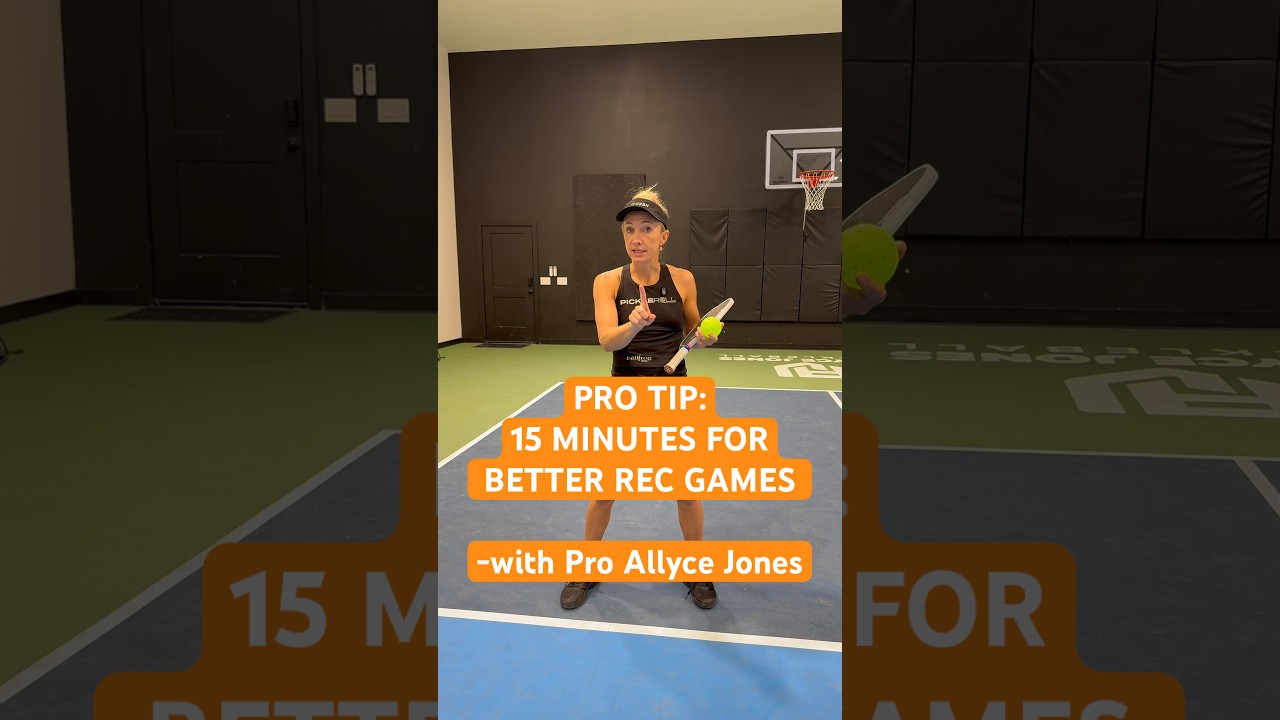
Pre-Game Drill: Transform Your Rec Game in 15 Minutes
An intentional pre-game drill focused on one skill can transform your performance and help you win more points.
 The Dink PickleballThe Dink Media Team
Step 2: Warm Up Your Touch the Right Way
Do not warm up your drops stationary. This is the mistake almost every intermediate player makes.
In a real game, you are hitting your third shot drop while moving forward toward the kitchen.
Warming up by standing still and feeding balls to yourself does not replicate that. It trains a movement pattern that never shows up in competition.Instead, use a moving drop and reset drill:
- Start at the baseline and drop the ball toward the kitchen while moving forward.
- Your partner meets the ball at the kitchen line and resets or counters it.
- You move back, repeat, and work both directions continuously.
This is similar to the slinky drill, where you move back and forward in rhythm with your partner.
The movement makes every rep more specific to what you'll actually face in a point.
The other thing to warm up that most players forget: putaways.There is nothing worse than getting a perfect setup in game one and shanking the overhead into the fence because you never warmed up aggressive swings.
Have your partner feed you attackable balls during the drop and reset drill and actually try to finish them.
This also warms up your partner's defense, which makes the whole drill more realistic. They might be mildly annoyed for thirty seconds. They'll play better for it.
For players working on turning soft game reps into actual weapons, these three reset fixes pair well with this warm up approach.
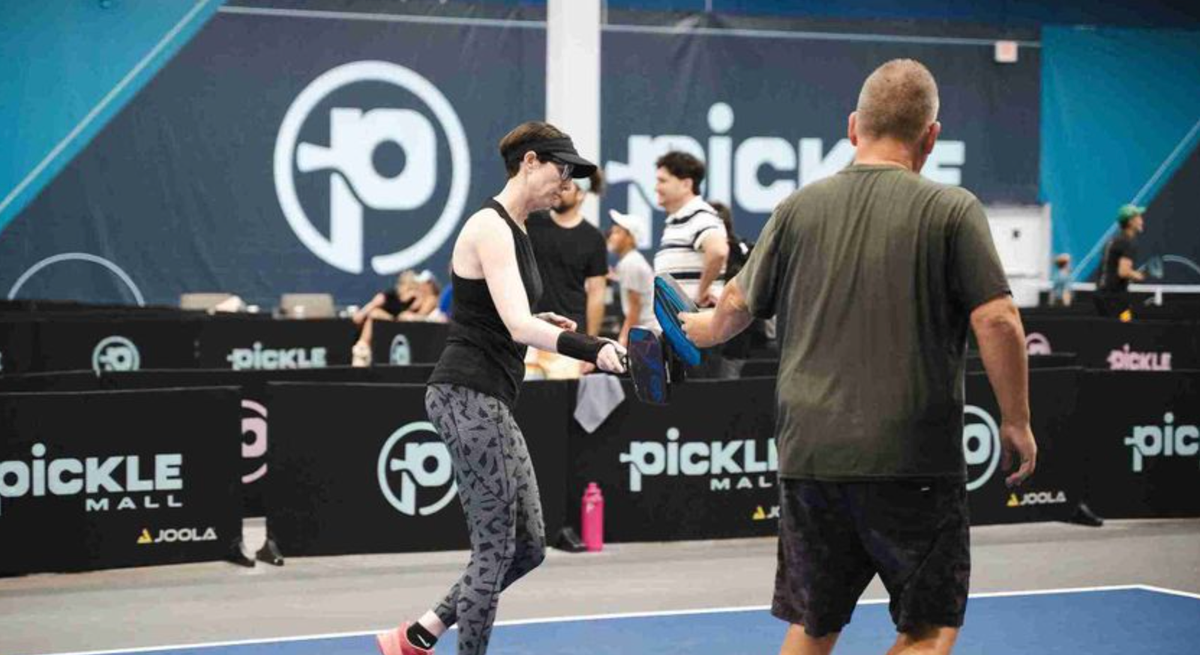
Pickleball Pre-Match Warm-Up: The 8-Minute Routine
A proper pickleball warm up before match play is the difference between your best game and a pulled muscle on point one. This 8-minute routine walks you through exactly what to do before you step on the court.
 The Dink PickleballThe Dink Media Team
Step 3: Warm Up Your Reaction Time Before the First Point
Reaction time does not warm itself up through casual rallies. You have to train it deliberately, even during warm up.
The approach here is simple. When you start dinking with your partner, do not just cooperate. Mix in speed ups and counters from the very first exchange.
Speed up the ball, have your partner counter, then return to dinking. Repeat.You are training your hands to be ready for fast exchanges before the game starts. This is what separates a 5.0 warm up from everyone else's.
Building fast hands in pickleball requires this kind of deliberate pressure, even in warm up.
Players who only cooperate during warm up dinks then get caught off guard by the first aggressive speed up in the game.
Their hands were never ready for it. Don't let that be you.
Pickleball Reaction Time: Why Speed Beats Experience
Pickleball reaction time might be the single most important skill in modern professional play, and it’s reshaping who wins at the highest levels. Younger players with faster reflexes and better pattern recognition are already dominating the PPA tour.
 The Dink PickleballThe Dink Media Team

Is There a Short Version If You're on a Time Crunch?
Yes, and the priority order matters.
If you only have two minutes, do step one first. Always.A body that hasn't moved is an injury risk regardless of how good your touch is.
If you have five minutes, do steps one and three. Get your body moving and mix speed ups into your dinks from the start.
Your touch will come around faster once your hands are already responding to pace.The full routine is worth doing every single time you can.
Better pickleball performance starts before 0-0-2 and this routine is exactly how you make that happen consistently.
For players who want to connect warm up quality to actual rating improvement, these habits of a 5.0 player show how preparation patterns compound over time.
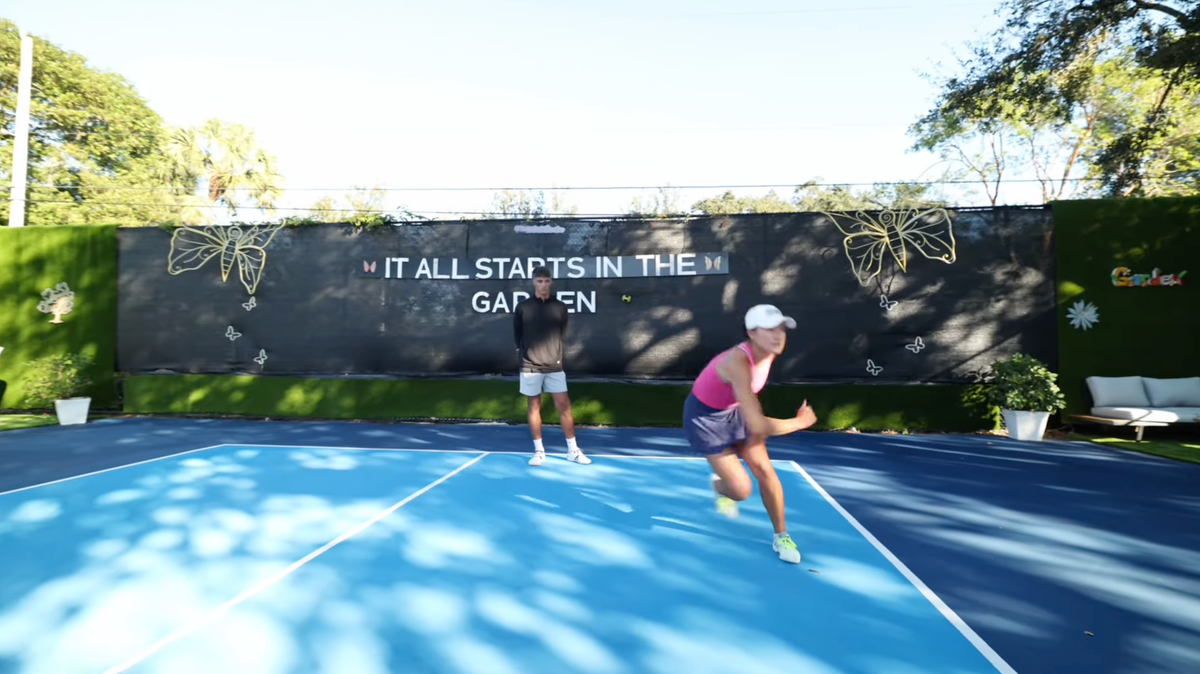
Roll, Lunge, Jump: The Anna Bright Method for Warming Up Right
Take a page out of the pro book. Move your spine, lunge deep, and jump a little. Your knees and your win-loss record will thank you.
 The Dink PickleballThe Dink Media Team
The Shots You Should Always Warm Up (And In What Order)
Here is a practical sequence for your on-court warm up time:
- Dinks with speed ups mixed in from the start. No purely cooperative rallying.
- Moving third shot drops toward the kitchen, not stationary.
- Resets from the transition zone, moving back to receive and forward to attack.
- Putaways and attackable balls so your partner is feeding you high balls and you are finishing them.
Every rep should mirror what actually happens in a game.
Static, cooperative drilling is fine for skill building, but your warm up should feel close to competition speed.
If you want to see how pros like Tyra Black apply kitchen line mechanics built on a foundation like this, her kitchen line secrets are directly relevant.
And if the dinking portion of your warm up keeps exposing a specific flaw, these three fixes for popping up dinks will help you identify and correct it fast.
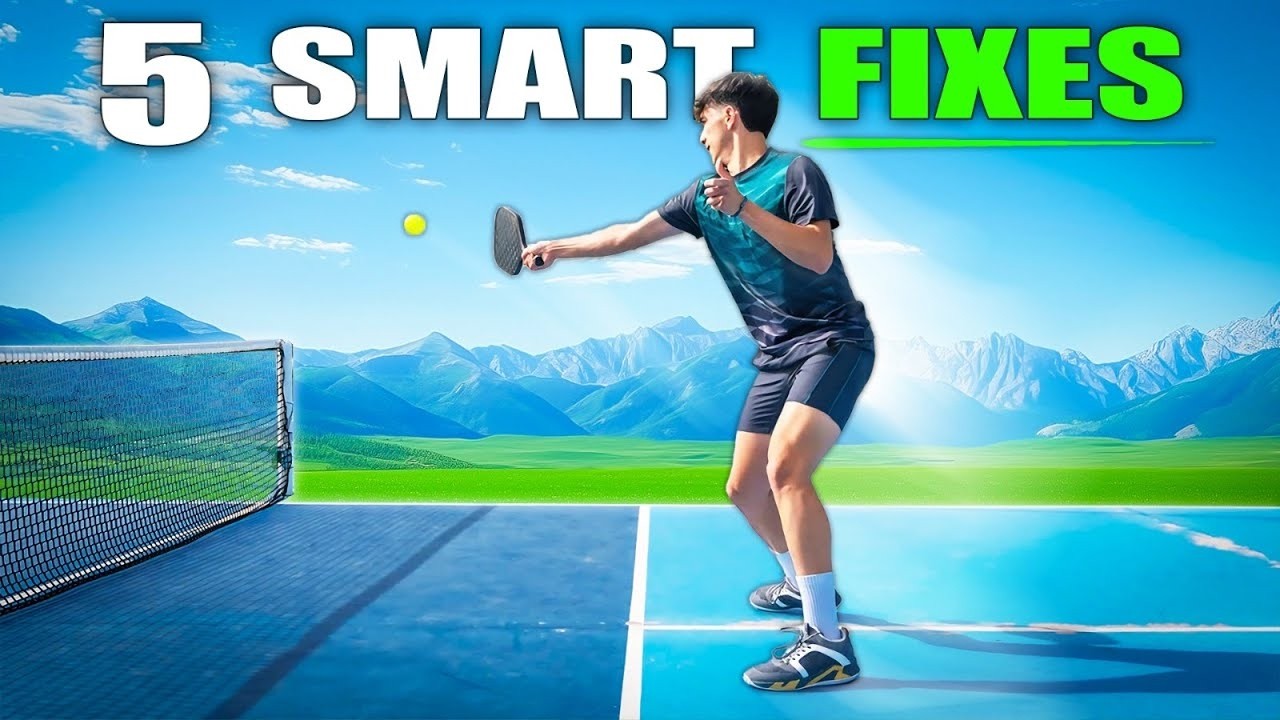
5 Pickleball Drills That Will Transform Your Game in 2026
Five simple yet powerful pickleball drills can completely reshape how you play. These mechanics focus on consistency, footwork, and positioning to help you see immediate results on the court.
 The Dink PickleballThe Dink Media Team
The three steps work together. A warm body moves better and reduces the chance of tweaking something in the first five points.
Warmed touch means your soft shots are functional from rally one. Warmed reaction time means you won't get burned by the first fast exchange.None of this requires extra court time. It requires structure. Most players warm up randomly and then wonder why their first game feels inconsistent.
PPA pros still use specific drills every single practice for exactly this reason. Repetition with intention builds the readiness that casual hitting never will.
Do the three steps in order. Don't skip the body warm up. Mix speed ups into your dinks from the first exchange.Warm up your drops while moving. And make sure you hit at least a few putaways before the first game starts.
That is a 5.0 warm up. It works at every level.
💡
Heads up: hundreds of thousands of pickleballers read our free newsletter.
Subscribe herefor cutting edge strategy, insider news, pro analysis, the latest product innovations and more.
Frequently Asked Questions
How long should a pickleball warm up take?
A full warm up takes about 10 to 15 minutes when you include all three steps. If you only have 5 minutes, prioritize the physical body warm up first, then mix speed ups into your dinking to cover reaction time in the same reps.
What is the most important part of a pickleball warm up?
Warming up your physical body is the most critical step because it prevents injury and affects every movement you make on the court. Touch and reaction time matter for performance, but an unwarmed body is a genuine safety risk.
Should I warm up my drops stationary or while moving?
Always warm up your drops while moving toward the kitchen, not stationary. In a real game your drop happens in transition, so training it stationary builds a pattern that never shows up under match conditions.
Why does my touch feel off at the start of a session?
Your nervous system needs repetitions to recalibrate its feel for the ball. Warming up resets specifically is the fastest way to restore touch across all soft game shots because the reset requires the most precise feel of any soft shot in pickleball.
How do I warm up reaction time before a match?
Mix speed ups and counters into your dinking warm up from the very first exchange. Do not wait until the middle of your warm up to introduce pace. The goal is to have your hands already responding to fast balls before the first point starts.
Anuncie Aqui / Advertise Here
Sua marca para o mundo Pickleball! / Your brand for the Pickleball world!





 English (US) ·
  Portuguese (BR) ·