
 English
  Spanish
  Portuguese
  German
  Italian
  Japanese
  French
  Polish
  Russian
  Netherlands
  Hungarian
  Turkish
  Videos
  Thedink Pickleball

The 3rd shot drop is one of the hardest shots in pickleball to master, but it's absolutely essential if you want to become an advanced player. This comprehensive guide breaks down the technique, positioning, and practice drills you need to hit consistent drops every time.
The 3rd shot drop is probably the hardest shot in pickleball to master, but here's the thing: you'll never become an advanced player without it.
This isn't just another technique to add to your arsenal. It's the foundation that separates casual players from serious competitors.
Love pickleball? Then you'll love our free newsletter. We send the latest news, tips, and highlights for free each week. Subscribe to our free newsletter
Why Does the 3rd Shot Drop Matter So Much?
Let's start with the basics. After you hit your serve and your opponent returns it, you're facing a critical moment: the third shot.
You can either drive it hard or drop it softly into the kitchen. Most players know they should drop it, but when they try, the ball either flies too high or lands in the net.
The goal of the 3rd shot drop is simple but demanding: make your opponents at the kitchen have to hit up on the ball. When they're forced to hit upward, you gain the advantage to move forward and take control of the net. That's the entire game right there.
According to Enhance Pickleball, a leading YouTube channel dedicated to pickleball instruction, the reason so many players struggle is that they don't understand the mechanics. They're using the wrong swing, the wrong grip pressure, and the wrong footwork. Fix those three things, and your drop game transforms.
The Technique: Less Is More
Here's what most players get wrong: they take a big backswing. On your serve or a drive, that makes sense because you need power. But the 3rd shot drop is a shot of accuracy, not power. A big backswing actually works against you.
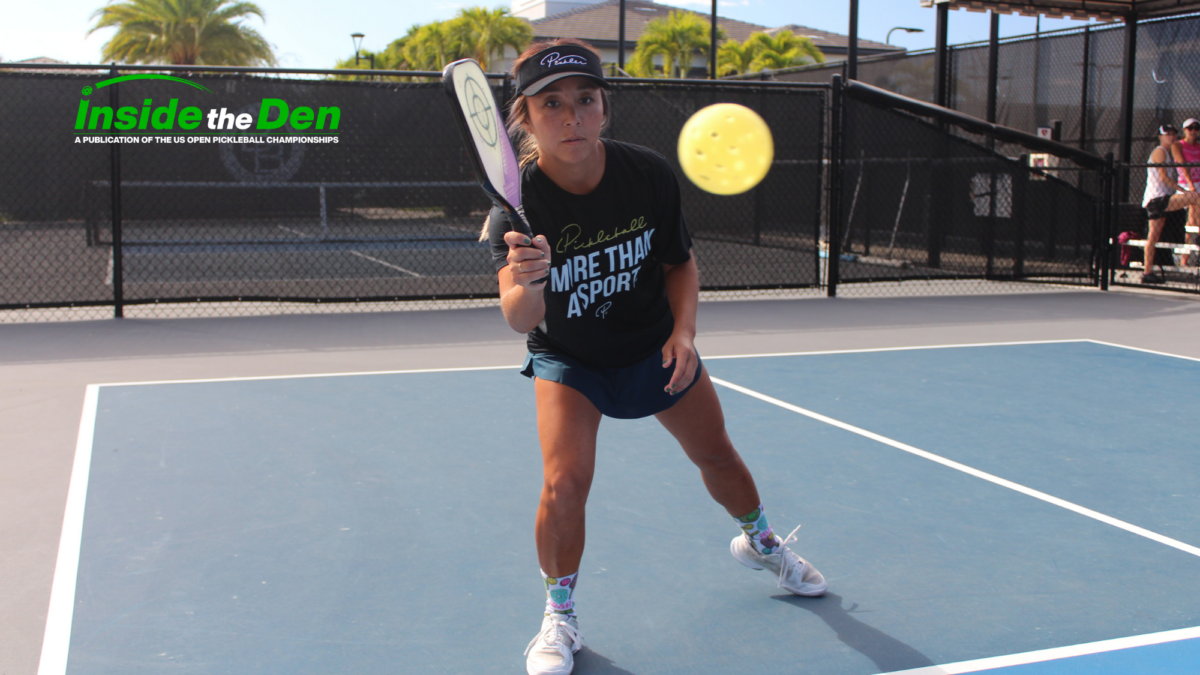
Instead, use a compact motion. Think of it like tossing the ball gently into the kitchen rather than smashing it. Your Continental grip stays the same on both forehand and backhand, and your swing path should feel effortless.
The most critical part? Your wrist and hand tension.
- You want a loose grip, around a 3 out of 10 in terms of tension.
- This makes your paddle more forgiving and gives you better touch and control.
- But here's the catch: a loose grip doesn't mean a floppy wrist. Keep your paddle steady as you move forward. Your wrist should stay firm even though your grip is relaxed.
When you hit the ball, aim for the center of the paddle. Miss the sweet spot, and you lose just enough accuracy to either hit the net or sail it long. In real-time, your forehand and backhand techniques should look nearly identical: simple, controlled, and repeatable.
10 Pickleball Mistakes Holding You Back
From forcing points too early to avoiding your backhand, here’s exactly what to fix to get to the next level.
 The Dink PickleballThe Dink Media Team

Where Should You Actually Aim?
This is where most coaching gets it wrong. Players think they should aim for the middle of the kitchen. That's a mistake.
You want to aim for the back portion of the kitchen, closer to the baseline side of the kitchen line.
Why? Because aiming for the back gives you the best margin for error. Your opponent might still volley it, but they'll have to hit up on the ball. That's all you care about. If it bounces in front of them instead, that's fine too. You've still accomplished your goal.
When the ball crosses the net, think about height. Ideally, it should be about a foot and a half over the net. This gives you the most margin for error and decreases your chances of missing into the net. The apex (the highest point of the ball's trajectory) should be around the kitchen on your side of the court, not above the net.
Here's a basketball analogy that works perfectly: if you shoot directly at the rim, you'll hit the rim. To make it go in, you need an arc. Same thing with the 3rd shot drop. You need that good arc so the ball goes down over the net and forces your opponent to hit up.
💡
Need some new pickleball gear? Get 20% off select paddles, shoes, and more with code THEDINK at Midwest Racquet Sports
The Spin Question: Keep It Simple
There are two main types of spin you can use on a drop: topspin and slice.
- Topspin is when you brush up behind the ball and make it roll away from you. Pros use it all the time. But if you're just getting started, it's trickier to master because there's more going on.
- Slice is simpler. You come under the back of the ball and make it spin toward you. If you have a Continental grip and don't think about spin, you'll naturally get slice on your drops.
So here's the advice: focus on using that simple technique and don't worry about spin. Whatever spin you get naturally is fine. What matters more is where you're aiming the ball.
Heads up: hundreds of thousands of pickleballers read our free newsletter. Subscribe here for cutting edge strategy, insider news, pro analysis, the latest product innovations and more.
Footwork might seem boring, but it's probably the most important aspect of hitting the 3rd shot drop consistently. The drop is a shot of accuracy, so if your positioning isn't perfect, you'll struggle to make your shots consistently.
The goal of your footwork is to catch the ball out in front in the same spot every single time. You want to rock forward through the ball, never hitting it behind you. Always nice and out in front.
There are three key rules to follow:
Rule One: Don't move forward after your serve. Obviously, you have to let your opponent's return bounce. But if you move forward after hitting your serve, you're making that shot more challenging for yourself. Stay back behind the baseline until you see where the return is going.
Rule Two: Get into position early. The second you see where your opponent's return is heading, move to that spot as quickly as you can. Don't arrive just in the nick of time. Get there and wait for the shot. Take a few extra adjustment steps if needed so you can catch it perfectly where you want it.
Rule Three: Back up early on deep returns. If your opponent hits a really deep return (which happens a lot), back up early so you can still rock forward through the ball. What you don't want to do is back up and hit this shot on your back foot. You'll lose all your accuracy if you're falling backward. Keep your momentum going forward whenever you can.
The main thing with footwork is isolation. You want to isolate every variable you can so you're hitting the same shot every time. When you're getting started, get really good at hitting the drop one way. That's how you'll get consistent with it.
5 Pro Pickleball Tips That Fix 95% of Errors
The pros know something most recreational players don’t: a few fundamental adjustments eliminate the vast majority of mistakes. These 5 pickleball tips from elite players will transform how you approach every shot on the court.
 The Dink PickleballThe Dink Media Team

Aiming Strategy: Go Crosscourt or Down the Middle
Most coaches don't mention this, but going crosscourt or down the middle actually gives you a little bit more margin for air when you're hitting a 3rd shot drop. If you draw an angled line in the kitchen, that line is much longer than if you draw a straight line down the middle.
By going crosscourt, you give yourself more space to work with and make your opponent hit up on the ball. The ball also spends more time in the air, which gives you more time to move forward. The crosscourt drop can be highly effective regardless of which side you're on.
Another effective strategy is aiming for your opponent's backhand. A lot of the time, it makes sense to go down the middle to the player on the right side (assuming they're right-handed). The middle is their backhand, and you can force them to hit a backhand drop, which is tougher for most players. Going middle can also confuse your opponents about who should take the shot.
Heads up: hundreds of thousands of pickleballers read our free newsletter. Subscribe here for cutting edge strategy, insider news, pro analysis, the latest product innovations and more.
The Two Drills You Need to Master This Shot
If you just watch a video and go back to your normal playing schedule, your progress will be slow. You need to practice with specific drills. There are two that matter most.
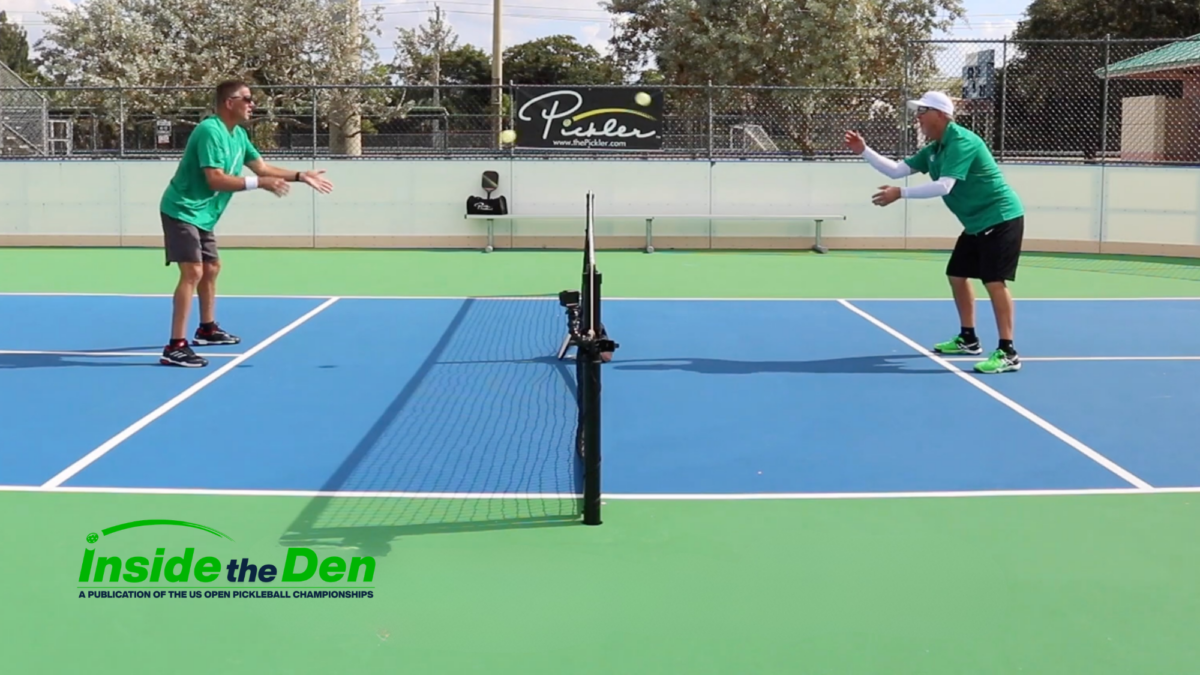
Drill One: The Progression Drill. Start at the kitchen with a partner and slowly back up using your drop. Once you start to miss, stop there until you get the hang of it. Then slowly progress back, doing your drops and maintaining consistency as you get closer to the baseline. Something important to note: if you can't dink, you can't drop. They're very similar shots. The goal for both is to make the ball land somewhere in or near the kitchen so your opponent can't hit hard.
Start by dinking and slowly back up. If you're getting good at it, you can do this until you're all the way at the back. It's easier to start up close rather than starting all the way at the back because it's a little bit easier to get the ball in the kitchen when you're close to it.
Drill Two: One Up, One Back. This is probably the most important drill once you kind of have the shot down but need to get consistent with it. Focus on your footwork while your partner starts to make things more and more difficult as the rally progresses. When you're getting these shots in games, they're not always going to be easy. As the rally goes on, your partner should make their shots harder and harder, which forces you to get in position quicker and respond to more challenging shots.
It's totally fine if you miss in this drill. You just want to make sure you're trying your best and doing everything you can to stay consistent.
How to Break Through a Pickleball Plateau
Stuck at 4.0 in pickleball? A pickleball plateau is frustrating, but it’s also fixable. Here are three proven strategies to level up your game and start winning again.
 The Dink PickleballThe Dink Media Team

The Two Biggest Mistakes Players Make
The two main places where players go wrong with the 3rd shot drop are using too big of a swing and using too much wrist. Both of these mistakes destroy your control and make it hard to get the shot to land where you want it.
Remember: compact swing and very little wrist. That's the formula. Then there's footwork. If you neglect your footwork on this shot, everything becomes more difficult. You're never going to be in the right position, and you'll rarely hit consistent drops.
The bottom line? The 3rd shot drop requires a lot of practice to get really good at it. But once you master it, you'll move from being a casual player to someone who can actually compete at a higher level.
Love pickleball? Then you'll love our free newsletter. We send the latest news, tips, and highlights for free each week.
Frequently Asked Questions
What's the difference between a 3rd shot drop and a dink?
A dink and a drop are very similar shots with the same goal: make the ball land in or near the kitchen so your opponent can't hit hard. The main difference is when you use them. A dink is used during a rally when you're already at the net or near it. A 3rd shot drop is specifically the third shot of the point, hit from further back on the court after your serve and your opponent's return.
Can I use topspin on my 3rd shot drop?
Yes, you can use topspin on your 3rd shot drop, and pros do it all the time. However, if you're just learning, it's trickier to master because there's more going on with the brush motion. Start with a simple technique and let the spin come naturally. Once you're consistent, you can experiment with topspin.
How far back should I stand when hitting a 3rd shot drop?
You should stand behind the baseline after you hit your serve. Don't move forward until you see where your opponent's return is going. Once you identify the ball's location, move to that spot as quickly as you can so you can catch it out in front of you.
Why do I keep hitting my 3rd shot drop into the net?
The most common reason is that you're aiming for the middle of the kitchen instead of the back portion. Aiming for the back gives you more margin for error. Also check your grip pressure (it should be loose, around 3 out of 10) and make sure you're using a compact swing, not a big backswing.
How long does it take to master the 3rd shot drop?
It depends on how much you practice, but the 3rd shot drop is one of the hardest shots in pickleball to master. Most players see significant improvement within a few weeks of consistent practice using the drills mentioned above. However, true mastery takes months of dedicated work.
Anuncie Aqui / Advertise Here
Sua marca para o mundo Pickleball! / Your brand for the Pickleball world!


 English (US) ·
  Portuguese (BR) ·