
 English
  Spanish
  Portuguese
  German
  Italian
  Japanese
  French
  Polish
  Russian
  Netherlands
  Hungarian
  Turkish
  Videos
  Thedink Pickleball

Most players never think about their pickleball paddle setup beyond which model to buy. The right grip layers and lead tape placement can change how stable and consistent your paddle feels on every ball.
Your pickleball paddle setup matters more than most players realize.
You can have the best paddle on the market and still fight it every single rally because the grip is too thin, the weight is wrong, or both.
The good news is that none of this is complicated. It just takes a clear process, done the same way every single time.This breakdown comes directly from Richard Pickleball on YouTube, where he walks through his full paddle customization routine step by step.
Here is exactly what he does, and why each piece of it matters for your game.
Love pickleball? Then you'll love our free newsletter. We send the latest news, tips, and highlights for free each week.
Why Your Paddle Setup Is Probably Inconsistent
Most players skip the setup process entirely.
They grab whatever grip came with the paddle, slap on a single overgrip if they think about it, and never touch the weight distribution at all.
The result is a paddle that feels different every time you pick it up.That inconsistency costs you at the kitchen line, on resets, and on any shot that requires precise touch.
The fix starts before you ever hit a ball.
Step One: Strip the Stock Grip
The first thing Richard does is remove the grip that came installed on the paddle. This is not about the quality of that grip. It is about consistency.
When you always start from bare handle, you control the final thickness every single time.If you just wrap on top of whatever came stock, your grip size will vary paddle to paddle and replacement to replacement.
Starting from the bare handle gives you a repeatable baseline. That matters more than most players expect.
💡
Need some new pickleball gear? Get 20% off select paddles, shoes, and more with code THEDINK at
Midwest Racquet SportsWhat Are Over Grips and Why Do They Work?
Richard applies two layers, and the technique for each one is different on purpose.
- First layer: Applied tight. This creates the firm base that sets the thickness and keeps the grip from shifting during fast exchanges.
- Second layer: Applied slightly looser. This adds cushion on top of the firm foundation, giving the handle a softer feel without sacrificing control.
The two-layer approach is not about making the grip thick for the sake of thickness.
It is about finding the exact feel that works for your hand, and then being able to reproduce it every time you regrip.If you have been using a single overgrip and wondering why your paddle feels a little dead or hard to hold during long sessions, this is likely the fix.
You can read more about how paddle shape and grip size interact and why handle feel is one of the most underrated parts of equipment choice.
Modern Pickleball Grip Techniques for Better Control
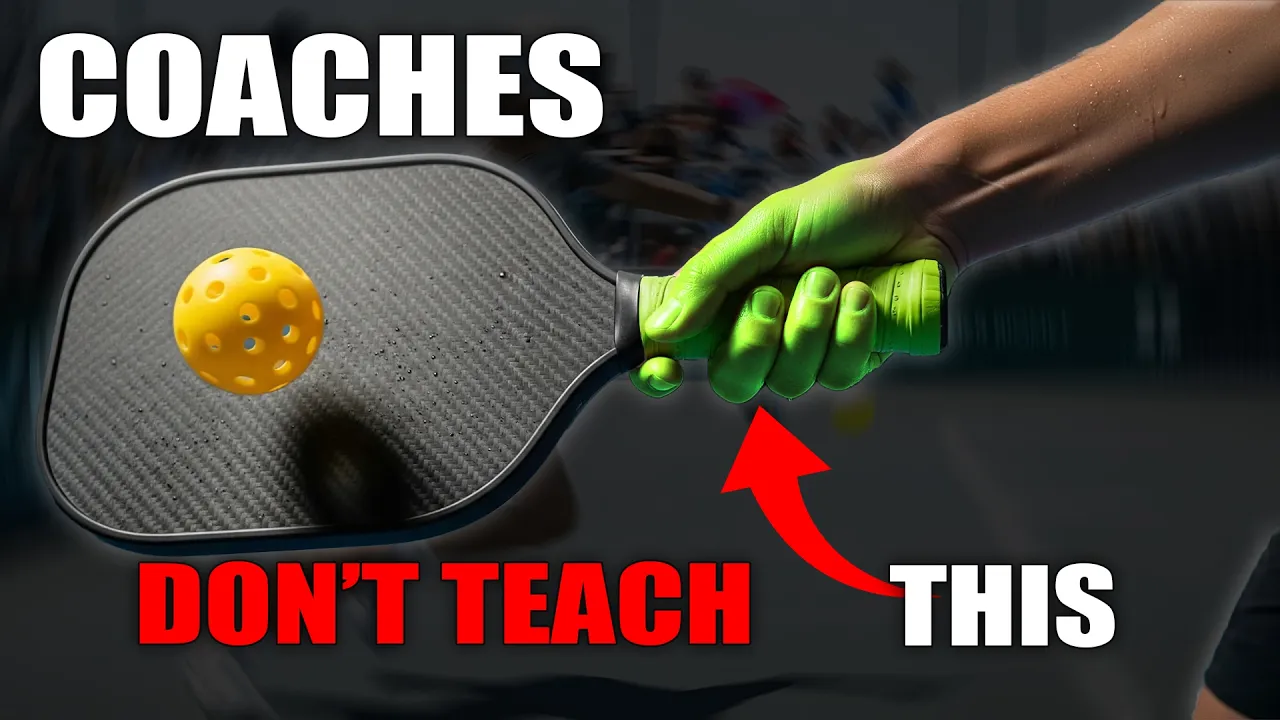
High-level pickleball players are making subtle but impactful adjustments to their pickleball grip that separate them from recreational players. These modern techniques focus on choking up on the paddle, adjusting grip styles at the kitchen, and improving positioning for faster reactions.
 The Dink PickleballThe Dink Media Team
How Much Should Your Paddle Weigh?
Richard's target weight for his paddle is 85 grams. That number is specific for a reason.
He weighed everything before committing to a configuration, which means the lead tape amounts he uses are calculated, not guessed.
Precision here is exactly what the sport's paddle certification standards are built around.
Getting precise about weight is something most recreational players skip entirely.
They just add tape until the paddle feels different, with no reference point for what they are actually changing.You need a small scale. It costs almost nothing, and it is the only way to know what you actually built.
Because his paddles come in matching weights, Richard uses one paddle as the reference to set up the other.
This keeps both paddles dialed in identically, which matters if you ever switch mid-match.
A Paddle Challenge, a Failed Test Result — Now, a Possible Rule Change for Pro Pickleball
Travis Rettenmaier challenged Liz Truluck’s paddle during their matchup in Mesa. Now the results are in -- and a possible rule change is in the works.
 The Dink PickleballAlex E. Weaver

Where You Put Lead Tape Changes Everything
This is the part of the setup process where most players get it backwards.
The instinct is to add weight to the top of the paddle because that is where you make contact on drives and hard shots.More weight at the top feels like more power.
But Richard specifically keeps his weight away from the top of the paddle, and his reasoning is worth understanding completely.
What happens when you add weight to the top of the paddle?
Weight at the top of the paddle increases swing weight, which adds power and spin potential on aggressive shots.
The tradeoff is that your hand speed slows down.
At the kitchen line, where fast hands decide who wins the exchange, a head-heavy paddle can absolutely work against you.
You need the paddle to respond immediately, not lag through the contact zone.
What does weight lower on the paddle actually do?
Moving weight down toward the handle end of the paddle produces three specific benefits:
- Wider effective sweet spot. The paddle is more forgiving when you catch the ball off-center, which happens constantly in real rallies.
- Improved stability on off-center hits. When you hit a ball toward the edge of the paddle face, a heavier lower section resists twisting. The paddle stays where you put it instead of rotating in your hand.
- Better balance feel. The paddle does not feel head-heavy or like it is pulling your wrist forward on fast exchanges. You keep more control without sacrificing the ability to accelerate when you need to.
That stability point is critical. If your paddle is twisting on wide balls, you are not dealing with a technique problem. You are dealing with a setup problem.
Adding a little weight lower on the frame can fix mishits that no amount of drilling will address on their own.
This connects directly to a concept worth understanding: why controlled swing speed beats raw power in most pickleball situations.A balanced paddle helps you stay in that controlled range more consistently.
Pickleball Paddle Customization: Lead, Twist & More
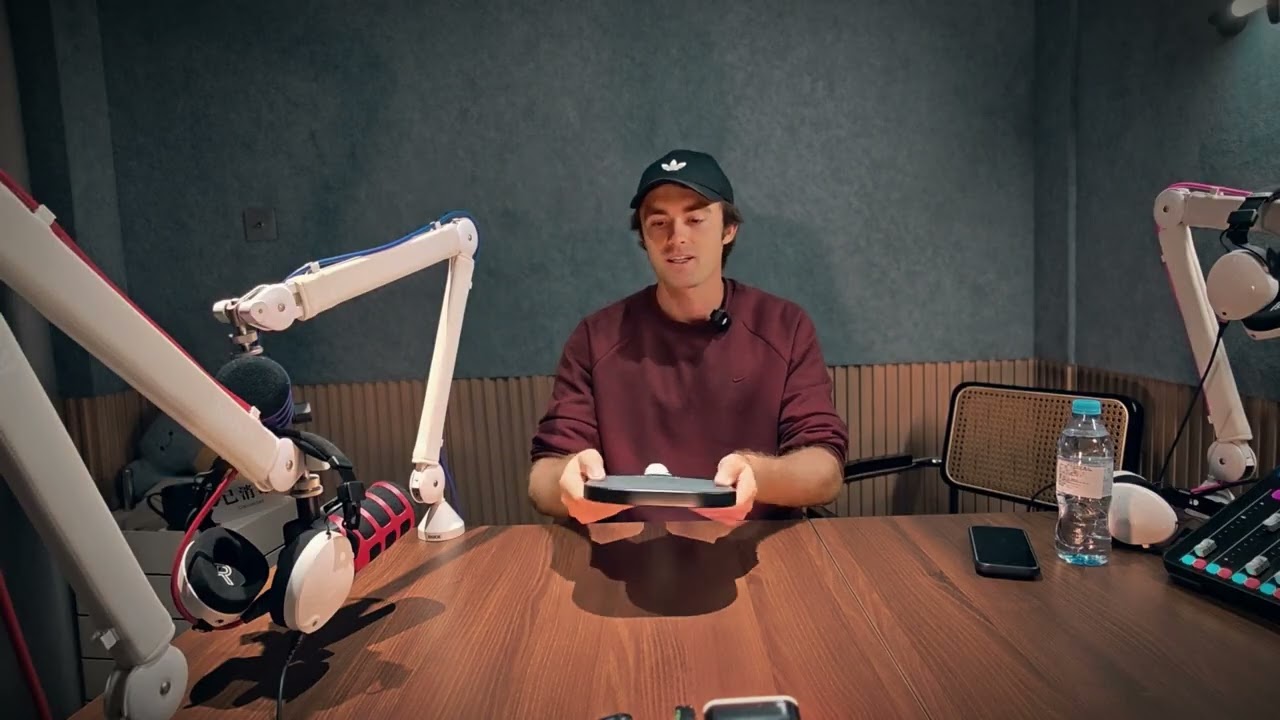
James Ignatowich breaks down the science behind paddle customization and performance in a way that’ll change how you think about your equipment.
 The Dink PickleballThe Dink Media Team
How to Actually Apply Lead Tape Correctly
Here is a simple process for applying lead tape without guessing:
- Weigh the bare paddle first. Know your starting number before you add anything.
- Set a target weight. Richard uses 85 grams as his total target. Pick a number and commit to it.
- Cut strips with scissors. Small strips placed symmetrically on both sides of the lower frame give you even weight distribution. Uneven tape placement will create a paddle that pulls to one side.
- Weigh after each addition. Do not try to estimate by feel. Add tape, weigh, repeat until you hit your target.
- Use the first paddle as your reference for the second. If you carry a backup, you want both feeling identical.
The scissors comment in the video is worth noting. It sounds small, but having the right tools nearby means you actually do the setup carefully instead of rushing it.
A clean cut on lead tape sits flatter and stays on longer.
Six Zero Pioneered Paddle Innovation, Now It’s Rethinking Pickleball Apparel
Rather than lazily repurposing clothing already designed for a different sport or activity, this gear was designed, tested, and proven specifically for pickleball
 The Dink PickleballAlex E. Weaver
Does the Paddle Model Matter for This Setup?
Richard uses the Kaiwin paddle and notes that his particular model has a lot of natural power built in.
Because of that, he keeps his weight placement conservative and lower, rather than amplifying the top-end power the paddle already has.This is a smart way to think about customization. You are not just adding weight to a neutral object.
You are adjusting a paddle that already has a specific character, and your tape placement should work with that character, not fight it.If your paddle already has a stiff, fast feel, adding weight to the top will make it harder to control.
If your paddle feels soft and slow, a little weight at the top might bring it to life. The setup should match the tool you are starting with.
Understanding how paddle construction affects performance can help you make smarter decisions about where to start with your tape placement.
USA Pickleball Quietly Delists Several Paddle Models
Hundreds of paddles receive USAP certification every year. What you don’t hear about is the ones that don’t make the cut.
 The Dink PickleballAlex E. Weaver
The Balance Point Argument for Lower Weight
One of the most important things Richard mentions is the concept of balance point.
A paddle that feels balanced in your hand is one you can hold comfortably through a long match without your wrist or forearm fatiguing.A head-heavy paddle demands more from your forearm to control during fast exchanges.
You might not notice it in a warmup, but after two hours of play it adds up.
Keeping weight lower does not mean the paddle feels lifeless. It means the paddle feels like an extension of your hand rather than something you are fighting.That is exactly what you want when you are resetting a hard ball at your feet or defending a fast speed-up.
For more on building that kind of control, check out how to fix common reset problems that are often blamed on technique but are actually equipment-related.
If you are working on stopping popup dinks, a balanced, stable paddle makes that work much easier.
The paddle does not pull your wrist up on soft shots the way a heavy-headed paddle can.
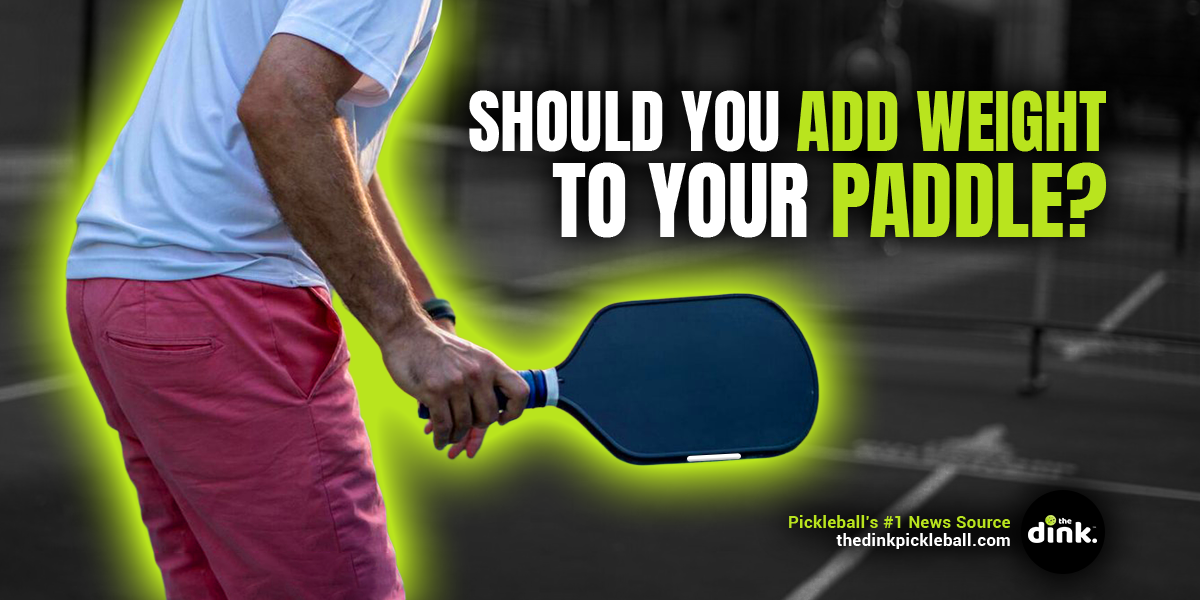
A Comprehensive Guide to Adding Weight to Your Pickleball Paddle
Did you know that adding just a few ounces to your pickleball paddle could make a huge difference in the quality of your shots? We have your guide to adding weight.
 The Dink PickleballJason Flamm
The Full Setup at a Glance
Here is Richard's complete process in order:
- Remove the stock grip completely for a consistent baseline
- Apply one over grip tightly as the foundation layer
- Apply a second over grip slightly looser for cushion and feel
- Weigh the paddle before adding any lead tape
- Set a specific weight target and work toward it methodically
- Place lead tape on the lower section of the paddle frame for stability and balance
- Use a reference paddle to match the weight on your backup
None of these steps are complicated. But doing all of them, in order, every time, is what separates a paddle that feels right from one that just feels okay.
Your setup should feel like it disappears in your hand.
When the grip is right and the weight is where it belongs, you stop thinking about the paddle and start thinking about the game. That is the whole point.If you want to build on this kind of attention to detail, here is what separates pro-level players from everyone else, and a lot of it starts with exactly this kind of preparation before you step on the court.
Once your paddle is dialed in, the next thing worth reviewing is your warmup routine.
A great setup paired with a smart warmup is how you start every session ready to perform instead of still finding your game in the third set.
💡
Heads up: hundreds of thousands of pickleballers read our free newsletter.
Subscribe herefor cutting edge strategy, insider news, pro analysis, the latest product innovations and more.
Frequently Asked Questions
What is the best weight for a pickleball paddle?
Most competitive players target a total paddle weight between 7.5 and 8.5 ounces, which converts to roughly 213 to 241 grams. Richard targets 85 grams after customization with his specific paddle model. The right number depends on your swing speed, play style, and how much you value control versus power.
Where should I put lead tape on my pickleball paddle?
Placing lead tape lower on the paddle frame, toward the handle end, improves stability and widens the effective sweet spot. Weight at the top of the paddle adds power and spin potential but slows hand speed and can make the paddle feel head-heavy. Most control-focused players keep weight toward the lower third of the frame.
How many over grips should I use on my pickleball paddle?
Using two over grip layers, one tight and one slightly looser, gives you a consistent grip size and a better feel than a single layer over the stock grip. Starting from the bare handle before wrapping ensures your grip thickness is the same every time you regrip. One layer is fine if the size works for your hand, but two layers give you more cushion and control for longer sessions.
Does paddle customization actually make a difference?
Yes, and the difference is most noticeable on off-center hits and during long matches. A properly weighted and balanced paddle resists twisting on wide balls, reduces wrist fatigue over time, and gives you a consistent feel you can reproduce every session. Skipping customization means you are playing with whatever the factory decided, which may not match your style or hand size at all.
Anuncie Aqui / Advertise Here
Sua marca para o mundo Pickleball! / Your brand for the Pickleball world!






 English (US) ·
  Portuguese (BR) ·