
 English
  Spanish
  Portuguese
  German
  Italian
  Japanese
  French
  Polish
  Russian
  Netherlands
  Hungarian
  Turkish
  Videos
  Thedink Pickleball

One pickleball mindset shift separates players who give away free points from those who earn them. Learning to let out balls go is harder than it sounds, but it is one of the highest-value changes you can make.
Every pickleball player has done it. A ball sails toward the baseline, you hold back, you let it go, and then you spin around and watch it land in. Your stomach drops.
That moment gets into your head. And from that point forward, you start swinging at everything, just in case.That reaction is one of the most common reasons players give away free points.
This article breaks down the pickleball mindset shift you need to make around out balls, why it matters more than most players realize, and how to build the discipline to stick with that decision even when it stings.This concept comes from Better Pickleball on YouTube, where they break down the mental side of the game with the same precision most coaches save for technique.
Love pickleball? Then you'll love our free newsletter. We send the latest news, tips, and highlights for free each week.
The Real Problem Is Not the Ball You Let Go
When a ball lands in after you let it go, that is not actually the problem. The problem is what you do next.
Most players react by overcorrecting.
They start chasing every ball that comes near the baseline, swinging on shots that were going out, and turning would-be free points into unforced errors in pickleball.One let-in ball creates a chain reaction of bad decisions.
This is where pickleball mindset work becomes more valuable than any technical drill.
Your mechanics can be perfect, but if your mental framework is broken, you are going to keep losing points you should never be playing.That is the same reason the four key strategies to winning now lean as hard on decisions as they do on mechanics.
Why Do We Feel Guilty for Letting the Ball Go?
It comes down to fear of being wrong. When you let a ball go and it lands out, you feel like a genius. When it lands in, you feel like you cost your team the point.
But here is the math that most players never stop to think about.If a ball is genuinely tracking out, and you let it go, you win that point the majority of the time. Occasionally, you will misread one and it will land in.
That is unavoidable.The question is not whether you will ever be wrong. You will be.
The question is whether your overall decision-making process is producing more winners than errors across the full game.
Letting out balls go is almost always the higher-percentage play.
💡
Need some new pickleball gear? Get 20% off select paddles, shoes, and more with code THEDINK at
Midwest Racquet SportsWhat Actually Happens After You Let a Ball In?
This is the moment that separates improving players from players who stay stuck. After a ball you let go lands in, you have two choices.
- Choice one: you spiral. You start second-guessing every read, swinging at balls you should not, and chasing shots that were heading well past the baseline. This compounds your error into three or four more bad decisions, which is exactly the pattern behind the mistakes keeping you from 5.0.
- Choice two: you acknowledge it and move on. You remind yourself that the decision to let the ball go was still the right call based on the information you had. The outcome was unlucky, not wrong.
This is the pickleball mindset reset that high-level players do automatically, and that recreational players almost never practice.
If you want to understand how mental errors stack up and hurt your game, the patterns around what causes unforced errors and how to address them are worth studying closely.
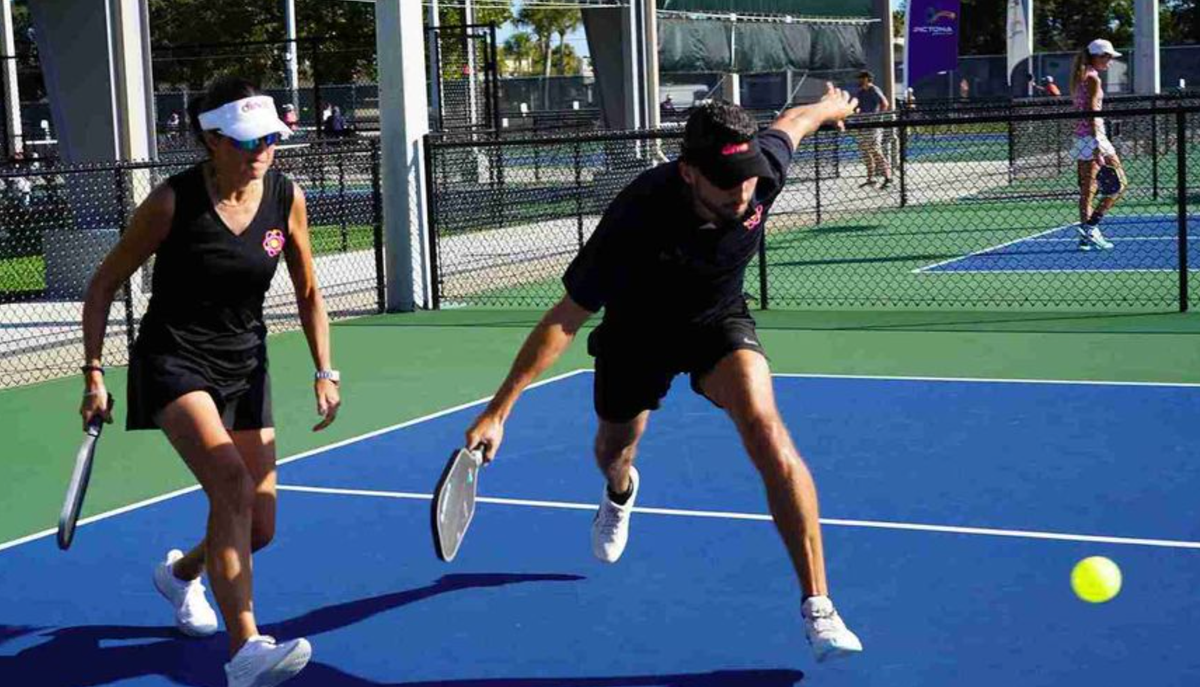
How to Improve Pickleball Footwork: 5 Pro Drills
Pickleball footwork drills are the fastest way to close the gap between your shot-making ability and your actual on-court results. Here are five drills that competitive players use to move faster, recover quicker, and stop giving away free points.
 The Dink PickleballThe Dink Media Team
How to Build the Habit of Letting Out Balls Go
This is not just a pickleball mindset tip. It is a trainable skill. Here are the steps to actually build it into your game.
- Watch the trajectory early. Start reading the ball from the moment it leaves your opponent's paddle. If it is rising steeply and heading toward your baseline, start making your decision before it gets to you, not after.
- Use a verbal or physical cue. Some players say "out" quietly to themselves as the ball passes. Others drop the paddle slightly. Find a cue that tells your body not to swing, and practice using it consistently.
- Trust your first read. The moment you second-guess yourself is the moment your paddle starts moving. Commit to the read early and hold it.
- Separate the outcome from the decision. After the point, evaluate whether your read was reasonable given what you saw. If it was, the decision was correct, even if the ball landed in.
- Track it over sessions, not points. One let-in ball means nothing. What matters is whether you are winning more free points by letting out balls go than you are losing by occasionally misreading one.
This connects directly to the broader idea of winning more points through smarter strategy, not just better shots.
7 Habits Keeping Every Intermediate Pickleball Player Stuck
Most intermediate pickleball players think they just need more time on the court. The real problem is specific habits that guarantee you stay stuck at 3.5 or worse.
 The Dink PickleballThe Dink Media Team
What Does an Out Ball Actually Look Like?
Players often struggle with this because they are trying to decide at the last second. Instead, you want to be reading these cues throughout the ball's entire flight path.
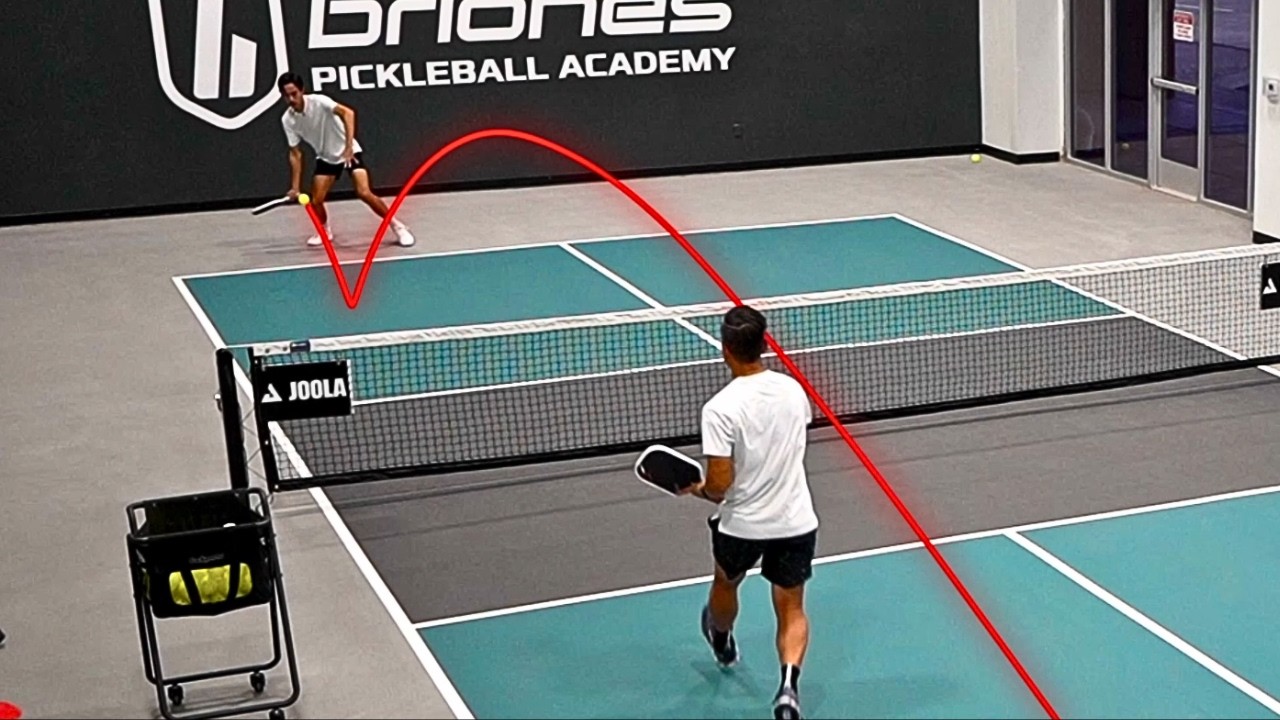
- The ball is rising as it crosses the net and continues rising toward you at the baseline
- The ball has little to no topspin, which means it will not drop quickly and is likely to carry long
- The ball is coming off a hard drive from deep in the court, which adds pace and reduces control
- The trajectory angle points to a landing spot behind the baseline when you mentally trace it forward
- Your opponent made contact above the net tape with a full swing, generating natural depth
The more of these cues stack up, the more confident you should be in letting the ball go.
None of them are perfect in isolation, but together they give you a strong read.
Understanding how flat drives tend to carry long can also sharpen your ability to read pace off the opponent's paddle.It also helps to know why the pros walked away from the slice, because spin choices at the top of the game change how deep balls behave.
The Dodgeball Pickleball Drill That Stops You Hitting Out Balls
If you keep swinging at balls that were always going to fly out, this pickleball drill is built for you. The Walker Sisters’ Dodgeball drill trains your body to step aside and let the point come to you.
 The Dink PickleballThe Dink Media Team

Why This Mindset Shift Is Especially Hard in Competitive Play
In casual games, letting a ball go feels lower stakes. But in tournament play or close competitive matches, every point feels enormous, and that pressure makes your instinct to swing much stronger.
This is exactly when the pickleball mindset discipline has to kick in.The players who hold their composure in tight moments are the ones who have trained their pickleball mindset the same way they train their backhand.
It is not about being passive. It is about understanding that chasing a ball that was heading out is one of the least efficient things you can do on a pickleball court.
You are trading a free point for a coin flip.The way you bounce back from a bad shot matters just as much as the shot itself, and the same principle applies to let-in balls.
It is also worth knowing the rules that govern line calls, because confidence in the call is half the battle.
The 4th Shot Mindset: Stop Inviting Your Opponents to the Kitchen Line
Stop playing the fourth shot like it’s a formality. Instead, recognize it for what it is: your last chance to apply pressure before your opponent gets a chance to attack.
 The Dink PickleballThe Dink Media Team
Is It Ever Right to Hit an Out Ball?
Yes, but the bar is high. If you genuinely cannot tell whether the ball is going to land in or out until it is already past you, that is a different situation.
The issue is when players know the ball is likely going out but swing anyway out of anxiety or habit, which is a pickleball mindset problem, not a technique problem.
The rule of thumb is simple. If your gut is telling you it is out, trust it.If you are genuinely unsure, the answer is still usually to let it go, because a swinging error costs you more than a let-in ball in most scenarios.
The 2025 rule book language on line calls is worth a read if you want the technical backing.Pair this with a sharper read on shot selection in pickleball and you will start building a pickleball mental game that costs your opponents points instead of gifting them.
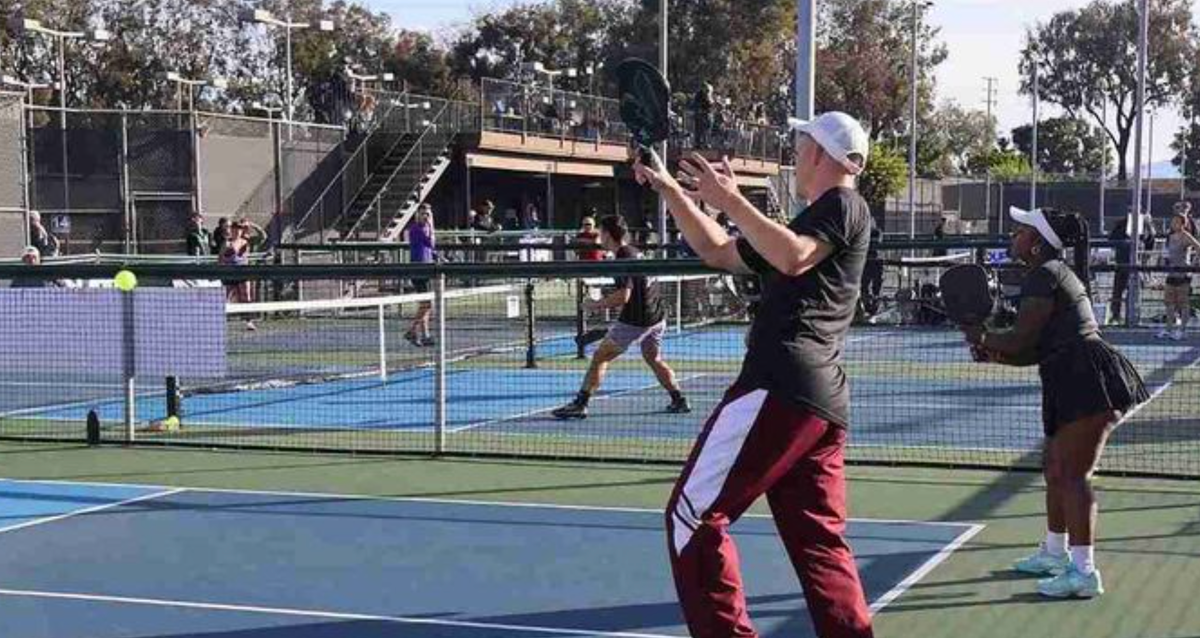
Why Hitting the Pickleball Out of Bounds Keeps Happening
If you keep asking why hitting pickleball out of bounds happens to you specifically, the answer usually lives in your paddle face, not your luck. Here’s what’s actually going wrong and how to stop it shot by shot.
 The Dink PickleballThe Dink Media Team
The Bigger Picture: Mental Errors Are Costing You More Than Technical Ones
Most players spend all their practice time on strokes and almost none on pickleball mindset work.
But at the recreational and club level, a significant chunk of lost points comes from decisions, not mechanics.
That gap shows up in participation and performance data too.According to the SFIA's most recent pickleball participation reporting, the sport's growth is concentrated in recreational players, exactly the group least likely to train the mental side.
Chasing out balls is one of the most consistent and fixable decision errors in the game. You do not need a lesson to fix it.
You need awareness, a process, and the willingness to accept that you will occasionally let a ball in and that is still the right play.If you want to clean up the decision errors that are silently costing you games, the strategy mistakes killing your game are a strong starting point, and so are the shots worth mastering next.
Players who build this habit see an immediate reduction in gift points they hand to opponents. That shift does not require faster hands or better footwork.
It requires a cleaner pickleball mindset.Your job in pickleball is not to hit every ball. Your job is to hit the right balls. Giving yourself permission to let a ball go is not passive play.
It is smart play.Work on this alongside your technical game and you will be surprised how quickly your win rate moves.
The points were always there. You were just giving them away.For players who want to keep building a smarter pickleball mindset alongside their physical game, exploring mental lessons from pro pickleball players can offer some of the clearest perspective available.
The mindset shift is free. The points it saves you are real.💡
Heads up: hundreds of thousands of pickleballers read our free newsletter.
Subscribe herefor cutting edge strategy, insider news, pro analysis, the latest product innovations and more.
Frequently Asked Questions
What does it mean to let an out ball go in pickleball?
Letting an out ball go means making a deliberate decision not to swing at a shot you believe will land beyond the baseline or sideline. It is a strategic choice, not a passive one. The goal is to win a free point rather than risk hitting an error on a ball that was never going to land in.
How do I know if a pickleball is going out before it lands?
Watch the ball's trajectory from the moment your opponent makes contact. Key cues include a rising arc past the net, high pace from a deep drive, and little visible topspin. The more of those signs you see stacking up, the more likely the ball is going long.
Is it a mental mistake to feel bad after letting a ball in?
Feeling bad is natural, but reacting by changing your strategy is the real mistake. A single let-in ball does not mean your read was wrong. Evaluate the decision based on the information you had at the time, not the outcome.
How does chasing out balls hurt my pickleball game?
Chasing out balls turns free points into unforced errors. When you swing at a ball that was going out, you are taking on all the risk of making an error in exchange for nothing. Over a full game, this habit gifts opponents multiple points they did not earn.
How do I stop the spiral after letting a ball in during a match?
Use a quick mental reset between points. Remind yourself that the decision to let the ball go was based on a sound read, and that one bad outcome does not change the math. Keeping a short memory on individual points and focusing on your process is the same tool that competitive players use to stay sharp in close matches.
Anuncie Aqui / Advertise Here
Sua marca para o mundo Pickleball! / Your brand for the Pickleball world!





 English (US) ·
  Portuguese (BR) ·