
 English
  Spanish
  Portuguese
  German
  Italian
  Japanese
  French
  Polish
  Russian
  Netherlands
  Hungarian
  Turkish
  Videos
  Thedink Pickleball

Your pickleball serve is the only shot where your opponent has zero influence over the outcome. Here is how to stop wasting it and start winning points from the very first ball.
Most players treat the pickleball serve like a formality. Step up, hit it in, wait to see what happens. That approach is leaving free points on the table every single game.
The serve is the one shot in pickleball where your opponent has no say in how you execute it. No pace to react to, no angle to answer.You control everything, yet most recreational players have no real plan when they walk up to the line.
This breakdown covers the exact system BK Pickleball uses to build a serve that forces weak returns, including your pre-serve routine, how to generate real depth, and the footwork trick that lets you aim without changing your swing.
Love pickleball? Then you'll love our free newsletter. We send the latest news, tips, and highlights for free each week.
The Pre-Serve Ritual Most Players Skip
The biggest mistake amateurs make on the serve happens before the ball even leaves their hand.
They rush. They walk up and swing without a target, without a breath, without any kind of reset.A pre-serve ritual sounds simple, but it is one of the most effective tools you can add to your game right now.
It only needs to take 5 to 10 seconds. That small window is where you make all your decisions so your body can execute without thinking.
Here is what that ritual should include:
- Set your feet exactly where you want them before anything else
- Take two or three bounces with the ball to settle your breathing
- Look at your opponent and pick your target zone: forehand, body, or backhand
- Take a slow breath out before you begin your backswing
That is it. The whole thing should feel calm and repeatable. When your routine is consistent, your serve becomes consistent.
Never just walk up and immediately rip the ball.
That is where misses happen. These are the exact serve mistakes that cost players the most points, and rushing is at the top of the list.
Why Depth Matters More Than Power
Depth is the most important quality of an effective serve. Not speed. Not spin. Depth.When you push your opponent back behind the baseline, you give them more ground to cover before reaching the kitchen line.
That extra distance often leads to a short return, which puts you in an attacking position on the third shot.
Topspin is your best tool for generating depth consistently. A heavy topspin serve dips fast, bounces deep, and kicks up higher off the court surface.
Your opponent ends up jammed or pushed back further than a flat serve would ever manage.
The mechanics are straightforward. Take a short backswing, then drive through with a big, upward follow through, similar to how you would hit a forehand drive.That combination creates the topspin that sends the ball deep and makes the bounce more difficult to handle.
For more on generating depth from the service line, this guide on the three-step serve system for instant depth is worth your time.
💡
Need some new pickleball gear? Get 20% off select paddles, shoes, and more with code THEDINK at
Midwest Racquet SportsWhat Are the Three Legal Requirements for an Air Serve?
Before you start experimenting with spin and placement, you need to know the legal framework.
There are exactly three rules that govern an air serve in pickleball:
- The paddle head must be below the wrist at the point of contact
- Contact must happen below the waist
- The swing path must move in an upward direction through the ball
Hit all three and you have a legal serve, every time.
The air serve is preferred over the drop serve because it gives you more spin options and more offensive potential.
If you want to compete at higher levels, make the air serve your standard.
Also worth knowing: you can fix your serve and return together since most of the same mechanical principles apply to both.
The Pickleball Serve Basics: Rules, Technique & Pro Tips from Michael Loyd
Fix your serve, and your entire game gets easier. You start points on offense instead of defense. Your opponent’s return is weaker. Your third shot is simpler. It all flows from that one shot you control completely.
 The Dink PickleballThe Dink Media Team
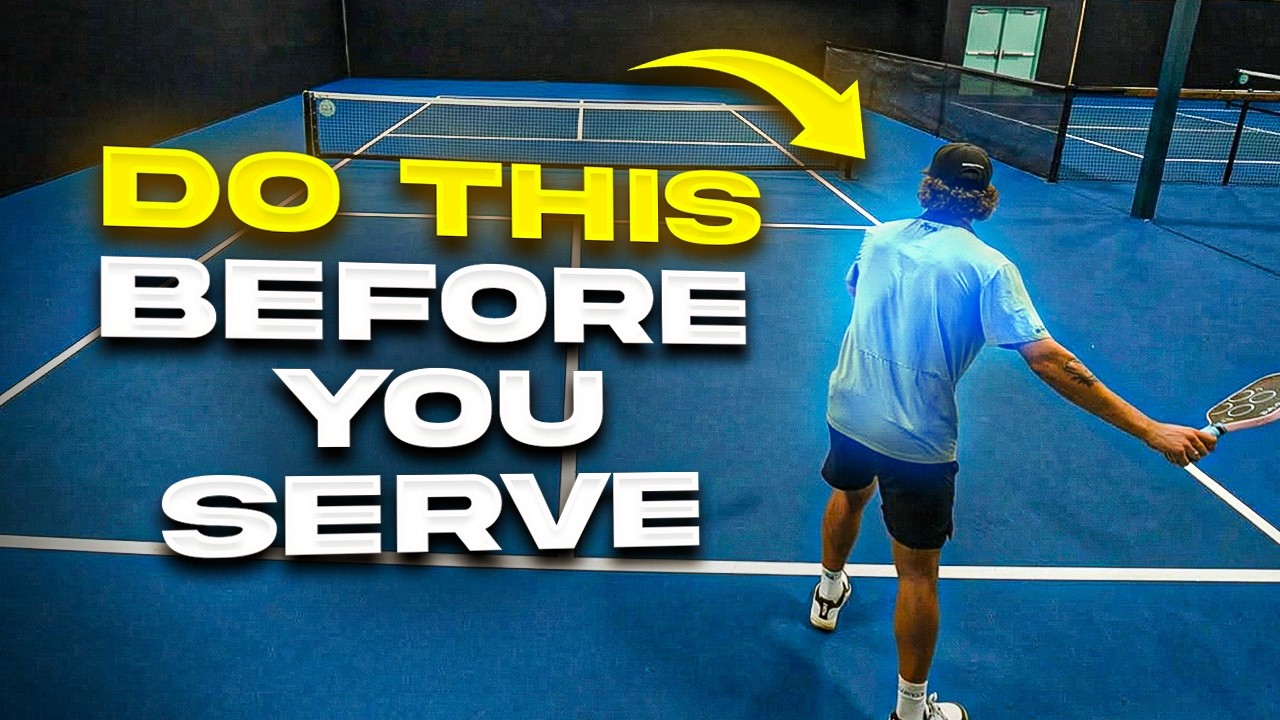
Closed Stance vs. Open Stance: Which Generates More Power?
Both stances work. The question is which one matches how your body naturally generates power.
Closed stance means your feet are roughly in line with each other, perpendicular to the net. Power comes from weight transfer.
You load onto your back foot, then shift forward into the ball as you swing.
That momentum transfers directly into the serve.If you use a closed stance and skip the weight transfer, you are leaving significant pace on the table. The shift from back foot to front foot is where the power lives.
Open stance means your feet are squared toward the net.
You cannot transfer weight side to side from this position. Instead, power comes entirely from hip and core rotation.
You load your core to the right (for right-handed players), then explode through the ball by rotating your hips and torso forward.
Tyson McGuffin is one of the best examples of this at the pro level.He generates serious pace on his serve entirely through that rotational motion, with almost no weight transfer.
Pick the stance that feels natural. Then learn to use it correctly.
Pickleball Serve Footwork Stance: Load & Weight Transfer
Your pickleball serve footwork stance is the foundation of every point you start: get it wrong and no amount of arm swing will save you. This guide breaks down exactly how to set your feet, load your hips, and transfer weight for a serve that’s both powerful and repeatable.
 The Dink PickleballThe Dink Media Team
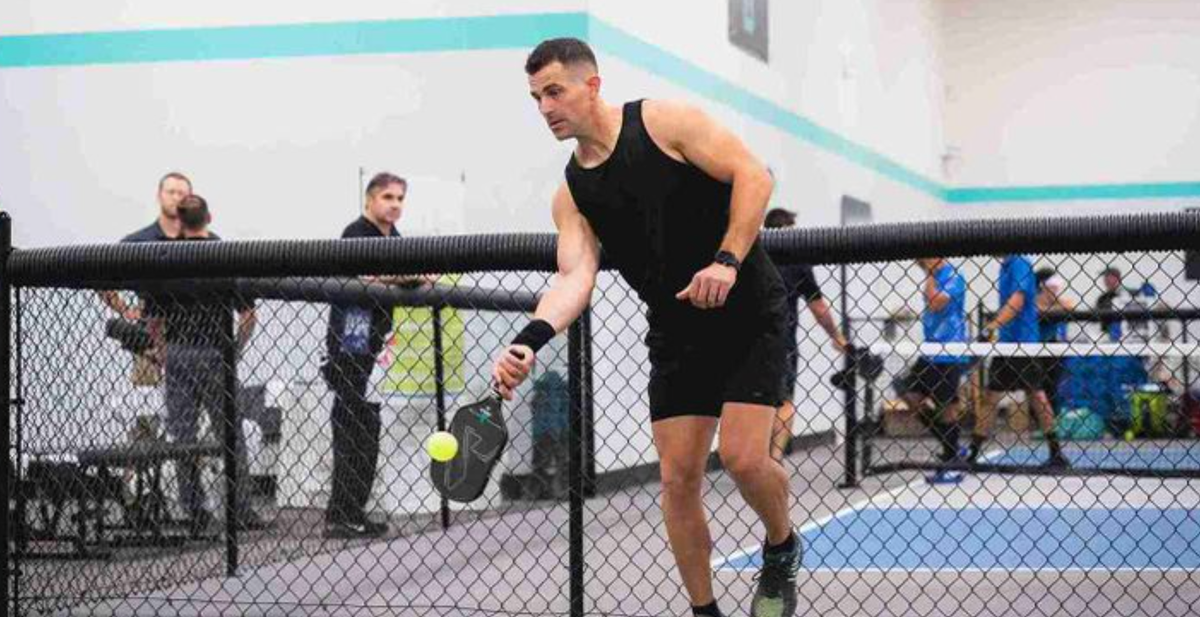
How Do You Aim Your Serve Without Changing Your Swing?
This is the part most amateurs get completely wrong. They try to aim by adjusting their paddle face or changing their swing path mid-motion.
That introduces inconsistency and leads to errors.
The real answer is simpler: aim with your feet, not your paddle.Your shoulder line dictates where the ball goes. Draw an imaginary line through both shoulders and extend it out into the court.
That is roughly where your serve will land.
Change the shoulder line, change the direction. The swing stays the same.Here is how to apply it in practice:
- Serving to the body (center zone): Stand in your normal position. Shoulders naturally point toward the middle of the service box. Swing through and the ball goes there.
- Serving to the backhand (corner): Take your back foot and move it slightly to the right. Your shoulders now rotate to point at the backhand corner. Swing the same way.
- Serving to the forehand (wide angle): Move your back foot slightly to the left. Shoulders shift, angle changes. No paddle adjustment needed.
This method keeps your swing repeatable and your serve consistent. You are not manufacturing a new motion for each target. You are just repositioning your body.
One more positioning tip: serving from near the center line is smart if you want to cover the return more easily, especially on the left side of the court.
If you want to create a sharper angle out wide, slide toward the corner of the baseline before you serve.Just make sure you recover back toward the middle immediately after contact.
These three serve patterns are proven to force weak returns and work with this exact footwork system.
Where to Aim Your Third Shot Drop Every Time
Most players hit third shot drops without a specific target in mind, and that’s exactly why they keep getting attacked. Here’s a position-by-position guide to where your third shot drop should land every time.
 The Dink PickleballThe Dink Media Team
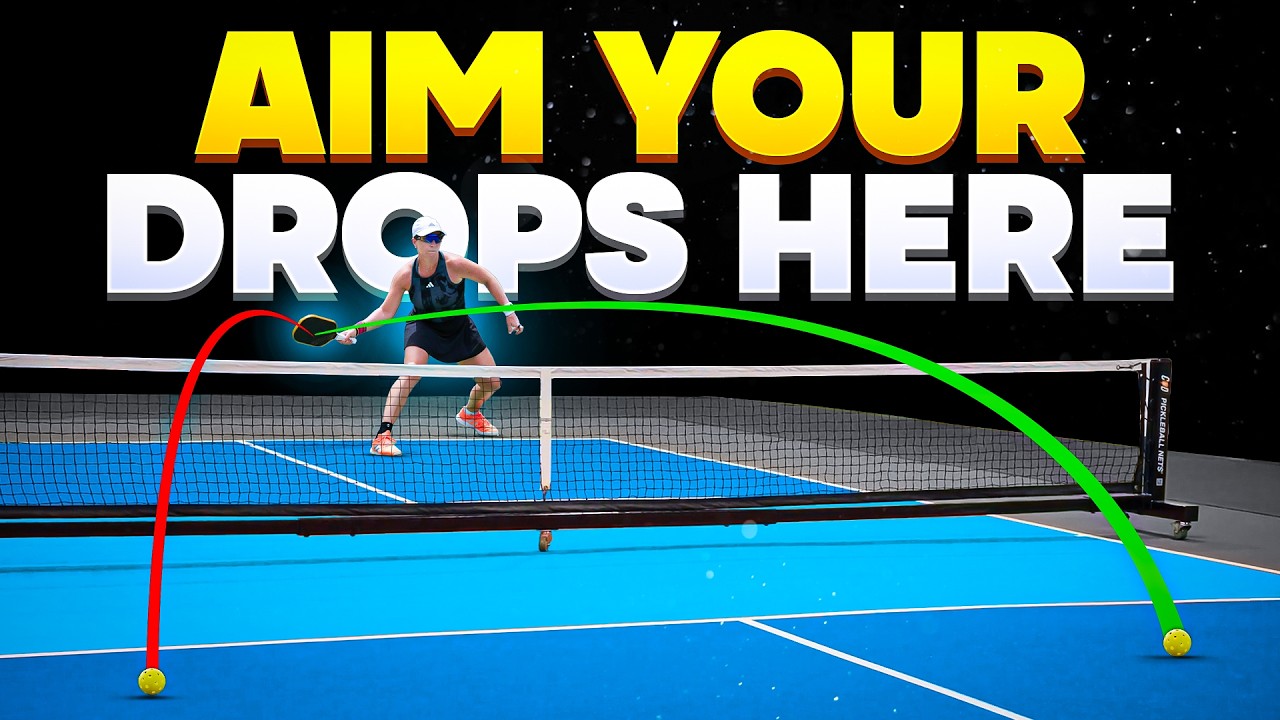
Where Should You Target Your Serve?
There are three zones worth attacking: the forehand, the body, and the backhand. That is your menu every single time you step up to the line.
Most players default to the same zone every serve. That predictability makes it easy for your opponent to get into a rhythm on the return. Mix it up intentionally.
The backhand is a strong default target because most players have a weaker backhand return. But the body serve is underused and extremely effective.
A ball hit directly at the hip jams your opponent and forces an awkward, rushed return.
The serve placement question connects directly to what happens next.Where your third shot drop lands becomes much more manageable when you start the point with a serve that pushes your opponent deep and off-balance.
Understanding how your serve affects the full rally is also part of how to control momentum throughout a point, not just the first shot.
Attack the Right Spots: Win More Points in Pickleball
You can’t go to the same spot every single time you go on offense – eventually, your opponent will catch on. And make you pay for it.
 The Dink PickleballEric Roddy
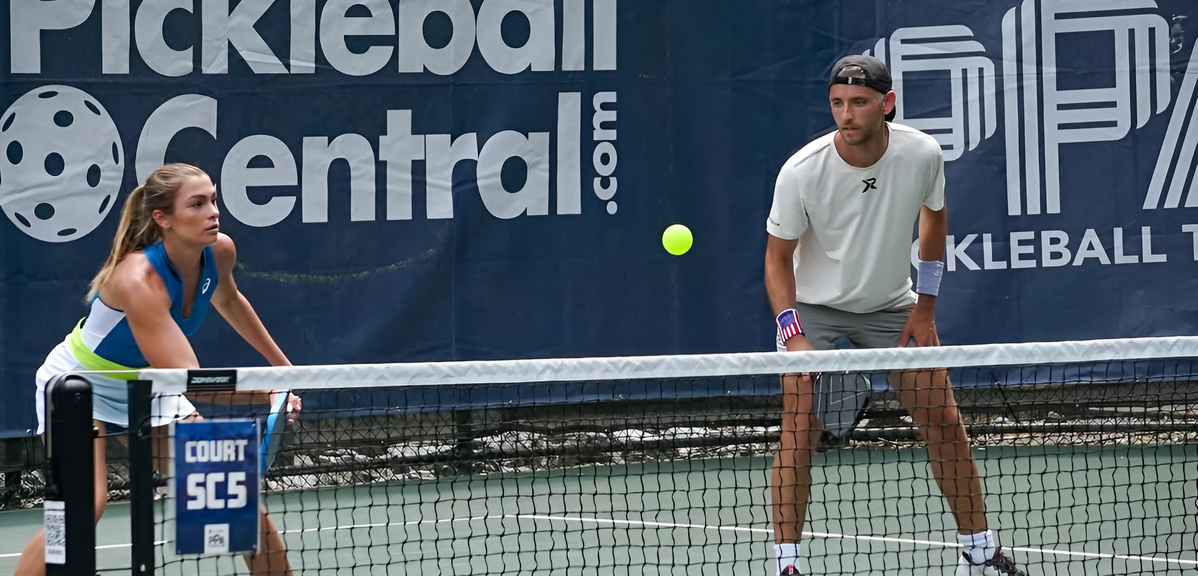
Putting It All Together on the Court
Here is what a well-constructed serve looks like in real time.
You walk up to the baseline. You set your feet, take a couple of ball bounces, identify your target, exhale, and swing.The whole pre-serve ritual takes under ten seconds.
You have already decided before you toss the ball whether you are going to the backhand corner, the body, or wide to the forehand.
Your feet are already pointed in that direction. Your swing path is the same as always.The ball goes where you planned, lands deep, kicks up hard because of the topspin, and your opponent is scrambling to get to the kitchen in time.
That is the serve working as a weapon.If your returns are also giving you trouble, this resource on fixing your return of serve covers the same principles from the other side of the court.
And if you want to take your overall game up a notch, these drills for moving from 4.0 to 5.0 will push you in the right direction.
The serve is the only shot in pickleball where you start with full control. Stop giving that advantage away.Build your routine, pick your target, and make every serve count.
For players who want to understand how the return side responds to a heavy topspin serve, this breakdown of how to counter topspin in pickleball gives you both perspectives.Knowing what your serve does to your opponent makes you a smarter server.
💡
Heads up: hundreds of thousands of pickleballers read our free newsletter.
Subscribe herefor cutting edge strategy, insider news, pro analysis, the latest product innovations and more.
Frequently Asked Questions
What is the most important thing to focus on when serving in pickleball?
Depth is the single most important quality of an effective pickleball serve. A deep serve forces your opponent further behind the baseline, giving them more ground to cover before reaching the kitchen line. That extra distance often produces a short or weak return.
What are the legal rules for hitting an air serve in pickleball?
There are three requirements for a legal air serve: your paddle head must be below your wrist at contact, the contact point must be below your waist, and your swing must travel in an upward direction through the ball. Hit all three and your serve is legal regardless of spin or pace.
How do I aim my pickleball serve to specific zones without changing my swing?
Move your back foot to redirect your shoulder line toward your target instead of adjusting your paddle face or swing path. Your shoulder line naturally determines where the ball travels, so repositioning your feet changes the angle while keeping your swing consistent. This is the most reliable way to place your serve accurately under pressure.
Should I use a closed stance or open stance on my pickleball serve?
Both work, but each requires a different power source. A closed stance generates power through weight transfer from the back foot to the front foot. An open stance requires hip and core rotation, similar to the technique used by pro player Tyson McGuffin, to generate the same level of pace.
How long should my pre-serve routine take in pickleball?
A good pre-serve ritual takes between 5 and 10 seconds. Use that time to set your feet, pick your target zone, and settle your breathing before you swing. Skipping this routine is one of the most common causes of unforced errors on the serve.
Anuncie Aqui / Advertise Here
Sua marca para o mundo Pickleball! / Your brand for the Pickleball world!




 English (US) ·
  Portuguese (BR) ·