
 English
  Spanish
  Portuguese
  German
  Italian
  Japanese
  French
  Polish
  Russian
  Netherlands
  Hungarian
  Turkish
  Videos
  Thedink Pickleball

The return sets up the point. The third shot drop gets you to the net. The fourth shot volley finishes it. Master these three, and you'll move up levels faster than you think.
Jordan Briones, the founder of Briones Pickleball Academy and a coach who's spent the last decade teaching players from age three to professional level, just dropped a masterclass on YouTube that breaks down the three shots that'll actually move the needle in your game: the return, the third shot drop, and the fourth shot volley.
If you're stuck at your current level, it's probably not because you're missing some secret technique that only the pros know. It's because you're making the same mistakes over and over again on these fundamental shots.
Briones walks through exactly what those mistakes are and, more importantly, how to fix them.
Love pickleball? Then you'll love our free newsletter. We send the latest news, tips, and highlights for free each week.
The Return: Stop Standing Too Close to the Baseline
Let's start with the return of serve, because honestly, this is where a lot of players sabotage themselves without even realizing it.
The most common mistake Briones sees? Players positioning themselves way too close to the baseline when they're preparing to return. Sounds counterintuitive, right? You'd think being closer to the net would help, but it actually does the opposite. When you're standing that close, you don't have enough space to build momentum.
The fix is simple: give yourself some breathing room.
Back up a bit, especially when you're facing a server who's got a big, consistent serve.
That extra space lets you move forward into the ball, which means you can actually generate some pace and depth on your return.But there's a second piece to this puzzle that Briones emphasizes: preparation. The moment the server releases the ball, you need to identify whether it's coming to your forehand or backhand. And the first thing you do? Rotate your shoulders. This "full body turn" is what separates players who hit clean returns from players who hit late, weak ones.
You can hit the deepest return in the world, but if you're not moving forward into the court as you hit it, you'll spend the next shot sprinting to catch up.The third mistake is one that'll keep you stuck in transition forever: returning without forward momentum. The goal isn't just to get the ball back in play; it's to get the ball back in play while you're moving toward the net. That's how you end up in a position to actually win the point.
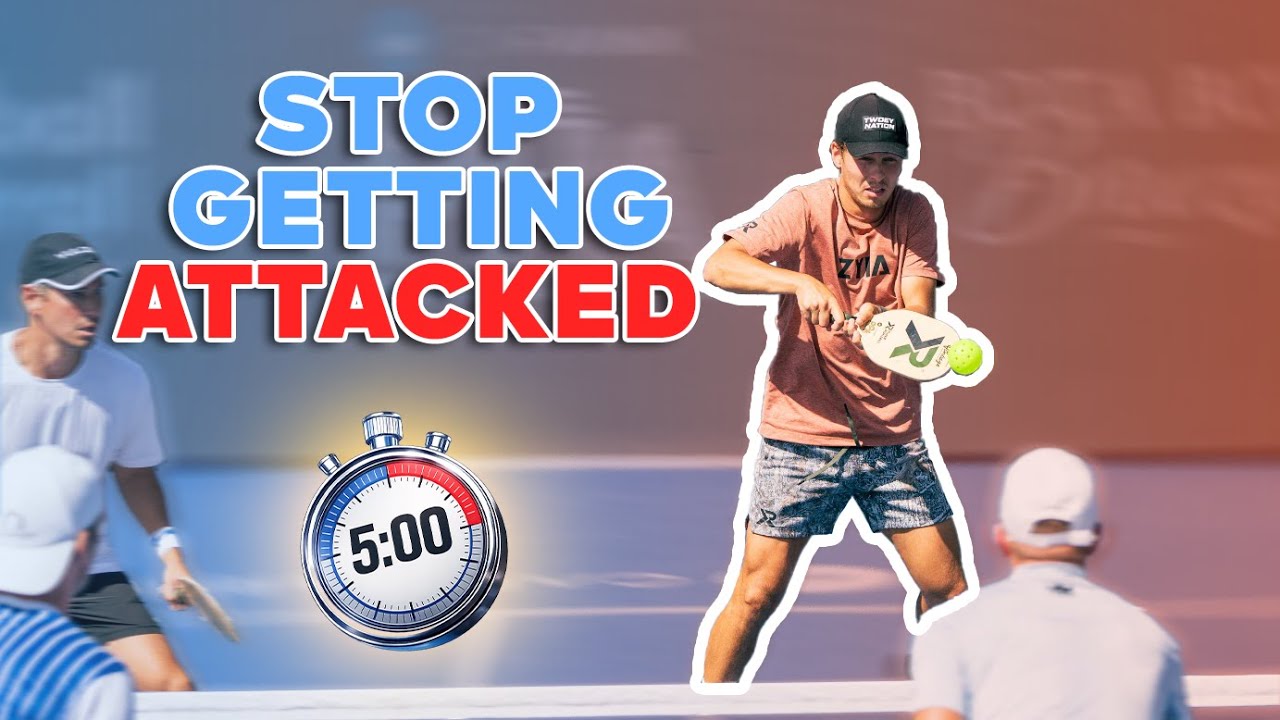
Perfect Pickleball’s Clutchest Shot, the Midcourt Forehand Reset, in 5 Minutes
The midcourt is where points – and games – are won or lost... this shot decides if you’re on the winning or losing end
 The Dink PickleballThe Dink Media Team
The Third Shot Drop: Space and Swing Speed Are Everything
Now we're getting into the shot that separates the 3.0s from the 4.0s and beyond: the third shot drop.
Briones sees two major issues here.
- First, players aren't creating enough space between themselves and the bounce. You've probably heard the advice a thousand times: hit the drop at the apex or just after. But to actually do that, you need to move your feet and create room. Too many players just stand there and try to reach for it, which means they're hitting it late and high. When you're hitting late, the ball's got nowhere to go but up, and your opponent's waiting at the net to put it away.
💡
Need some new pickleball gear? Get 20% off select paddles, shoes, and more with code THEDINK at Midwest Racquet Sports
- The second issue is swing speed. You're trying to hit a soft shot that lands in the non-volley zone, so logically, you'd think you need a slow swing, right? But the problem is that if your swing is too fast, the ball just flies off your paddle and you lose control of the depth. What Briones recommends is a swing speed somewhere between slow and medium. You're still making a full swing; you're not jabbing at it, but you're controlling the pace so the ball lands where you want it.
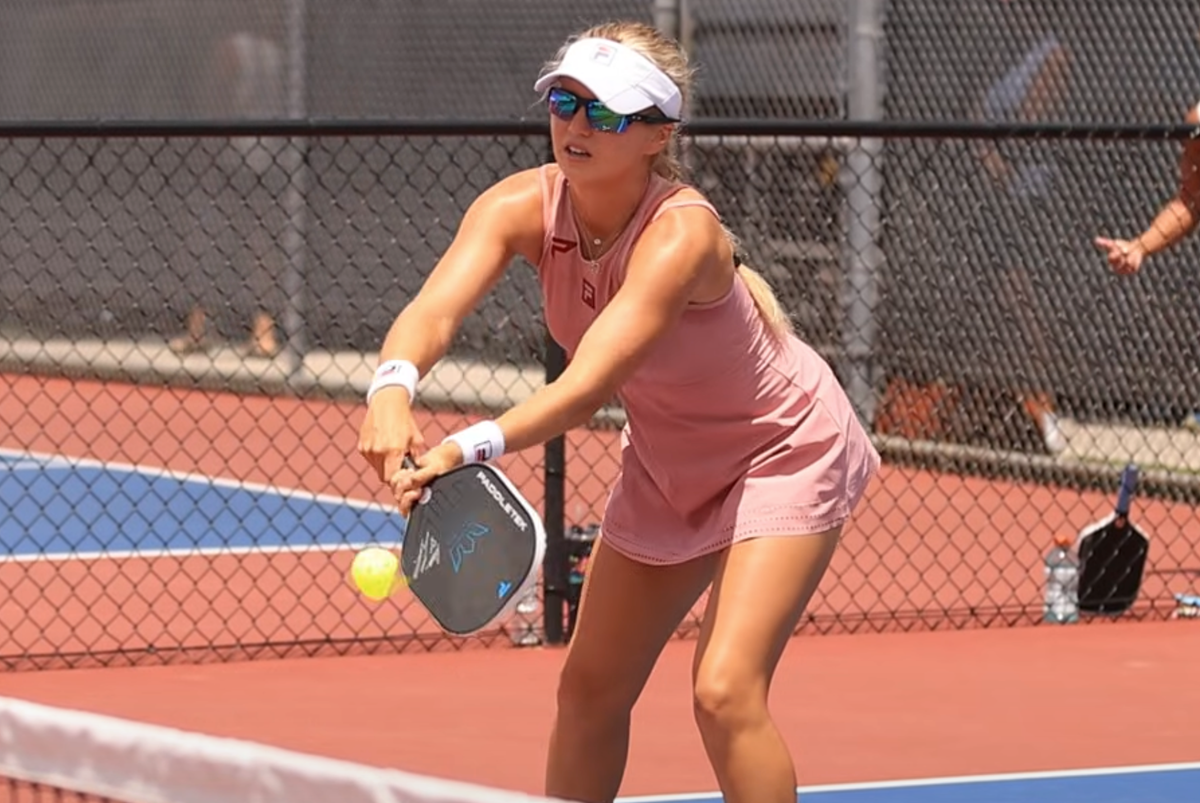
Mesmerizing Footage of 4K Slow-Motion Pro Pickleball | Visualizing Expert Swing Mechanics
Enjoy this footage of pro pickleball’s top talent exhibiting the nuances of elite swing mechanics, only observable in slow-motion.
 The Dink PickleballJamie Simon
Don't try to hit a perfect drop every single time. Leave yourself some margin for error. Professional players rarely miss their third shot drops, but they also rarely hit them right on the net tape. They hit them with enough clearance that they can be aggressive without being reckless. If you're constantly trying to thread the needle, you're going to make a lot of errors. Instead, focus on forcing your opponent to make a decision. Get the ball in the non-volley zone, and let them deal with it.
One more thing: make your decision early. Are you hitting a drop or a drive? Decide before the ball comes back to you, and then commit to it. Changing your mind mid-swing is a great way to hit a terrible shot.
The Fourth Shot Volley: Stop Moving and Start Attacking
This is the shot that wins or loses points at the net, and Briones breaks down why so many players struggle with it.
The biggest mistake? Hitting the fourth shot while you're still moving.
After you hit your return, you need to take a split step and get set before your opponent hits their third shot. If you're still moving when they hit it, you're going to make errors. You won't have a stable base, and your timing will be off. Get to the net, plant your feet, and then react.
The second issue is that players are too passive on the fourth shot. They're letting their opponents come to the net for free. If your opponent hits a drop or a drive, you need to make them work for it. Keep the ball deep, keep it in play, and don't give them an easy put-away.
Heads up: hundreds of thousands of pickleballers read our free newsletter. Subscribe here for cutting edge strategy, insider news, pro analysis, the latest product innovations and more.
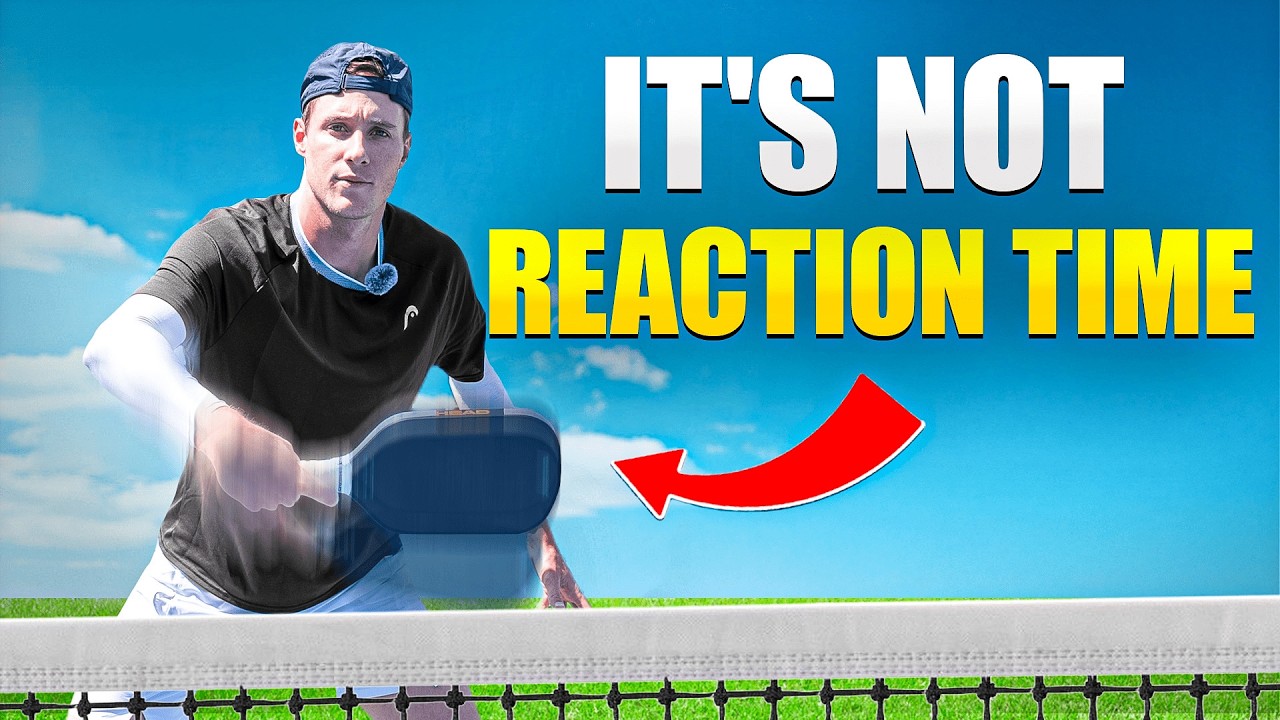
The Four Pillars of Fast Hands in Pickleball
Fast hands aren’t magic. They’re the result of anticipating attacks, preparing your body, reacting efficiently, and staying stable through the exchange.
 The Dink PickleballThe Dink Media Team
Now here's where it gets technical: a lot of players are hitting their volleys with a downward swing path. That's a great way to hit the ball into the net. Instead, you want to keep your paddle face open and push through the ball. You're not chopping down; you're pushing forward. This keeps the ball low and over the net.
The last piece is knowing what type of volley to hit. If your opponent is driving hard and fast, keep your volley compact and use a punch volley. You don't have time for a big swing. But if they're dropping the ball, you've got more time, so you can load up a bit and hit a topspin volley. The key is reading what's coming at you and adjusting accordingly.
Anuncie Aqui / Advertise Here
Sua marca para o mundo Pickleball! / Your brand for the Pickleball world!



 English (US) ·
  Portuguese (BR) ·