
 English
  Spanish
  Portuguese
  German
  Italian
  Japanese
  French
  Polish
  Russian
  Netherlands
  Hungarian
  Turkish
  Videos
  Thedink Pickleball

The push drop is the most consistent third shot drop in pickleball, and most players have never tried it. Here is exactly how to build it from scratch.
Your push drop might be the only thing standing between you and actually getting to the kitchen.
If it keeps sailing long or floating up for an easy put-away, the problem almost certainly starts before you even swing.
Most players think the fix is more spin, more feel, or more repetitions with the same broken mechanics. It is not.The real issue is the approach itself: too much grip pressure, too much swing, and a paddle position that works against you from the start.
This breakdown comes from tanner.pickleball on YouTube, who laid out the push drop in under 60 seconds with the kind of clarity that makes you wonder why nobody explained it this way sooner.
Here is everything you need to build it the right way.
Love pickleball? Then you'll love our free newsletter. We send the latest news, tips, and highlights for free each week.
What Is the Push Drop in Pickleball?
The push drop is a third shot technique that removes the backswing entirely and replaces it with a simple forward push driven by shoulder lift.
Instead of pulling the paddle back and swinging through the ball, you keep the paddle out in front and let your shoulder do the work.
This is not a passive shot. It is a deliberate, compact motion designed to give you maximum margin and minimum variables.Fewer moving parts means fewer ways to go wrong.
Think of it as the opposite of what most rec players do. The typical amateur grips tight, swings back, and hopes for the best.
The push drop gives you a repeatable structure you can actually trust under pressure.
Why Do So Many Third Shot Drops Fail?
The answer is almost always one of two things: too much grip tension or too much backswing.
Most players treat the third shot like a mini groundstroke, and that mindset is exactly what sends the ball long.When you grip the paddle too tightly, you transfer all that tension directly into the shot.
The ball pops off the face harder than you intend, and suddenly it is flying past the kitchen and landing at your opponent's feet as a gift.
Add a backswing to that tight grip and you have compounded the problem. More motion means more speed, and more speed on a drop shot means more errors.If your drops are consistently landing deep, you are likely fighting both issues at once.
💡
Need some new pickleball gear? Get 20% off select paddles, shoes, and more with code THEDINK at
Midwest Racquet SportsHow Do You Build the Push Drop from Scratch?
Start with these four elements and build them in order. Each one feeds into the next.
- Loosen your grip. Your paddle should feel secure but not strangled. A tight grip stiffens your wrist and arm, which kills the soft touch you need to land the ball in the kitchen.
- Eliminate the backswing. Keep the paddle in front of your body as the ball approaches. There is no need to load up. The push drop is not a power shot.
- Keep your paddle tip down. The tip should never be pointing sideways. A downward tip angle gives you the correct paddle face orientation to lift the ball softly over the net.
- Lift with your shoulder. The drive for this shot comes from the shoulder, not the wrist or elbow. A small upward lift from the shoulder is all you need to get the ball airborne and on trajectory.
That is the entire framework. Four steps, and your third shot becomes a tool instead of a gamble.
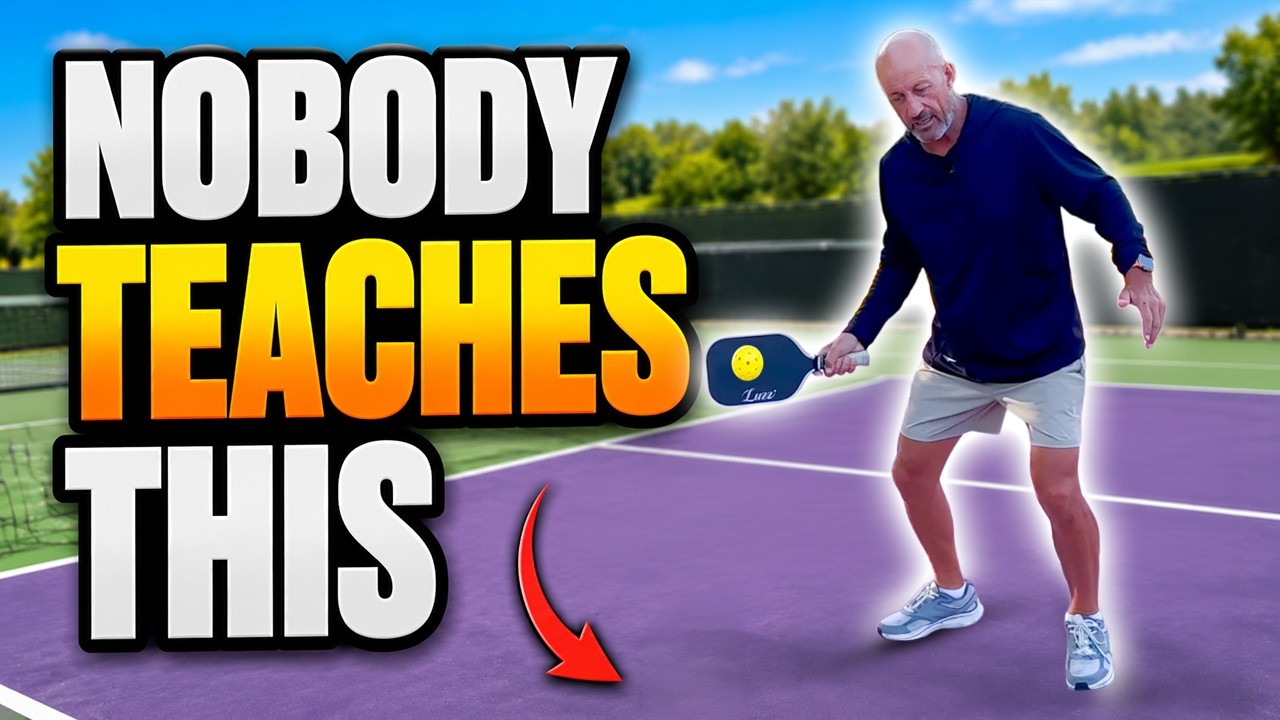
Why Your Third Shot Drop Keeps Failing (Fix This)
The third shot drop doesn’t have to be complicated. The push drop is one simple motion that keeps the ball low, gets you to the kitchen, and works at every level of play.
 The Dink PickleballThe Dink Media Team
What Does "No Backswing" Actually Mean?
No backswing means your paddle stays in its ready position as the ball comes toward you.
You do not pull it back toward your hip or your shoulder. You wait, and then you push forward.This feels strange at first because most players are conditioned to load before every shot.
That habit works on groundstrokes and drives. It actively works against you on the drop.
If you find yourself pulling back out of habit, try practicing with your non-paddle hand on your paddle elbow.It acts as a physical cue to keep the arm quiet and the motion minimal. Fixing your overswing starts with awareness of when the backswing creeps back in.
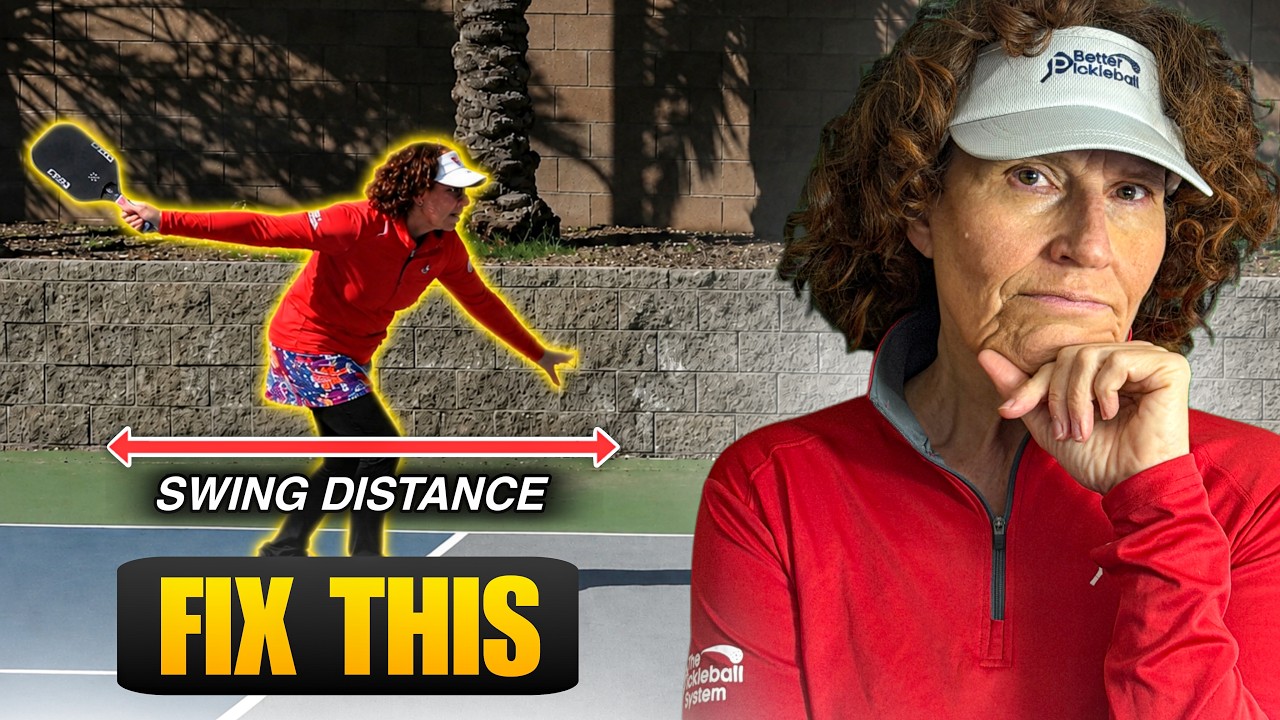
Fix Your Pickleball Backswing to Stop Pop-Ups
Pop-ups aren’t about hitting the ball too high—they’re about energy control. C.J. Johnson from Better Pickleball breaks down why your pickleball backswing is the #1 culprit and shares the exact drill to fix it.
 The Dink PickleballThe Dink Media Team
Where Should You Aim the Push Drop?
Aim toward the center of the kitchen. This is not a vague suggestion. It is a strategic choice that gives you the most margin on the shot.
The net is lowest in the middle, which means aiming center reduces your risk of clipping the tape.It also keeps the ball away from the sidelines, where any slight mis-hit turns into an unforced error.
Hitting toward the middle also pulls opponents inward, which can open angles for your next shot.
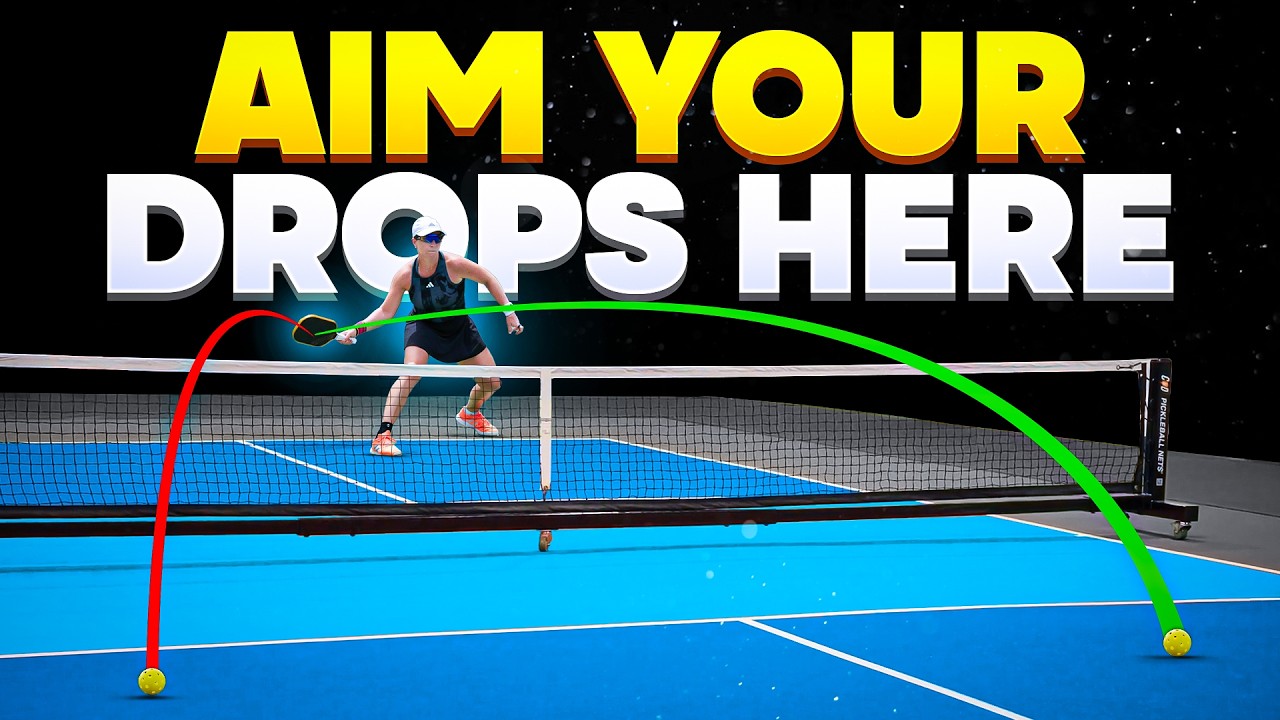
The kitchen line is a target, not just a rule, and the center of it is your highest percentage landing zone.Where to Aim Your Third Shot Drop Every Time
Most players hit third shot drops without a specific target in mind, and that’s exactly why they keep getting attacked. Here’s a position-by-position guide to where your third shot drop should land every time.
 The Dink PickleballThe Dink Media Team
Why Is Paddle Tip Position So Important?
The paddle tip angle controls where the face of the paddle is pointing at contact.
When the tip points sideways, the face tends to open up or close in ways that redirect the ball off your intended line.
Keeping the tip down keeps the paddle face square to your target. That square contact is what produces a clean, predictable trajectory.Without it, even a well-executed push will send the ball in unexpected directions.
This is one of those small mechanical details that players ignore for months and then wonder why their drops feel inconsistent.
Tyson McGuffin has talked about this exact concept in his dinking technique, and the same logic applies to the drop. Tip down is a non-negotiable for clean contact.
Stop Popping the Ball Up: Modern Pickleball Hand Speed and Paddle Positioning
Winning the kitchen today isn’t about swinging harder—it’s about creating space with your coil and controlling contact with smarter paddle positioning
 The Dink PickleballThe Dink Media Team
How Does the Shoulder Drive the Shot?
The shoulder is the engine of the push drop. Not the wrist. Not the elbow.
A small upward lift from the shoulder is what gets the ball up and over the net with the right arc.Using the wrist adds unpredictability because the wrist can rotate slightly on every swing.
Using the elbow adds length to the lever, which adds power you do not want. The shoulder is a larger, more stable joint that produces a more consistent result.
Think of it like pushing a door open. You use your whole arm from the shoulder, not just your wrist snapping at the last second.That same stable, deliberate motion is what the push drop asks for. If your drops keep failing, this is often the mechanical root of the problem.
5 Advanced Pickleball Tips for Third Shot Drive Placement
Most players hit the third shot drive hard and hope. These advanced pickleball tips teach you to pick a target first so the drive sets up the fifth ball instead of ending the point for your opponents.
 The Dink PickleballThe Dink Media Team
Common Mistakes to Avoid When Learning the Push Drop
Even with good intentions, players make a few recurring errors when they first try this technique. Here are the ones that show up most.
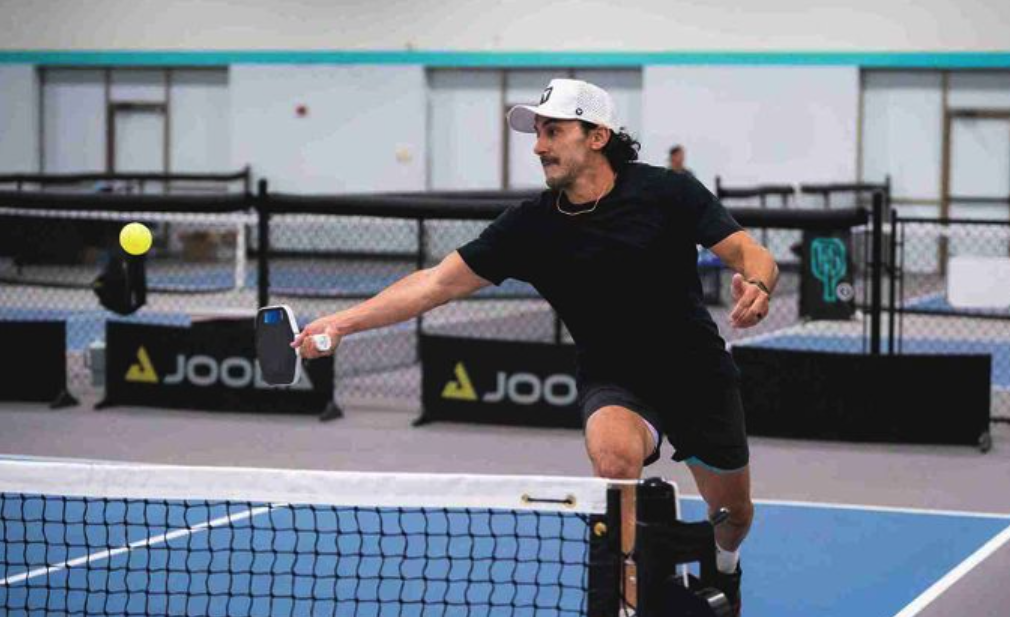
- Re-introducing a mini backswing. It starts small, almost invisible, and then grows back over time. Record yourself to catch it.
- Tensing up at contact. Grip pressure tends to spike right as the ball arrives. Train yourself to stay loose through contact, not just before it.
- Flipping the paddle tip sideways. This usually happens when players feel rushed. Slow your prep down and the tip will stay where it belongs.
- Aiming too close to the net tape. Give yourself room. Aim toward the middle of the kitchen with enough arc to clear the net comfortably.
- Using wrist instead of shoulder. If your drop has a flick quality to it, your wrist is doing too much. Pull it out of the shot and let the shoulder take over.
These are the kinds of mistakes that show up in lesson after lesson, no matter what skill level the player is at. Awareness is the first fix.
5 Common Drop Shot Mistakes in Pickleball
From not getting behind the ball to using too much arm, these are the mistakes most rec players make when hitting a drop shot in pickleball.
 The Dink PickleballThe Dink Media Team
How Does the Push Drop Connect to Getting to the Kitchen?
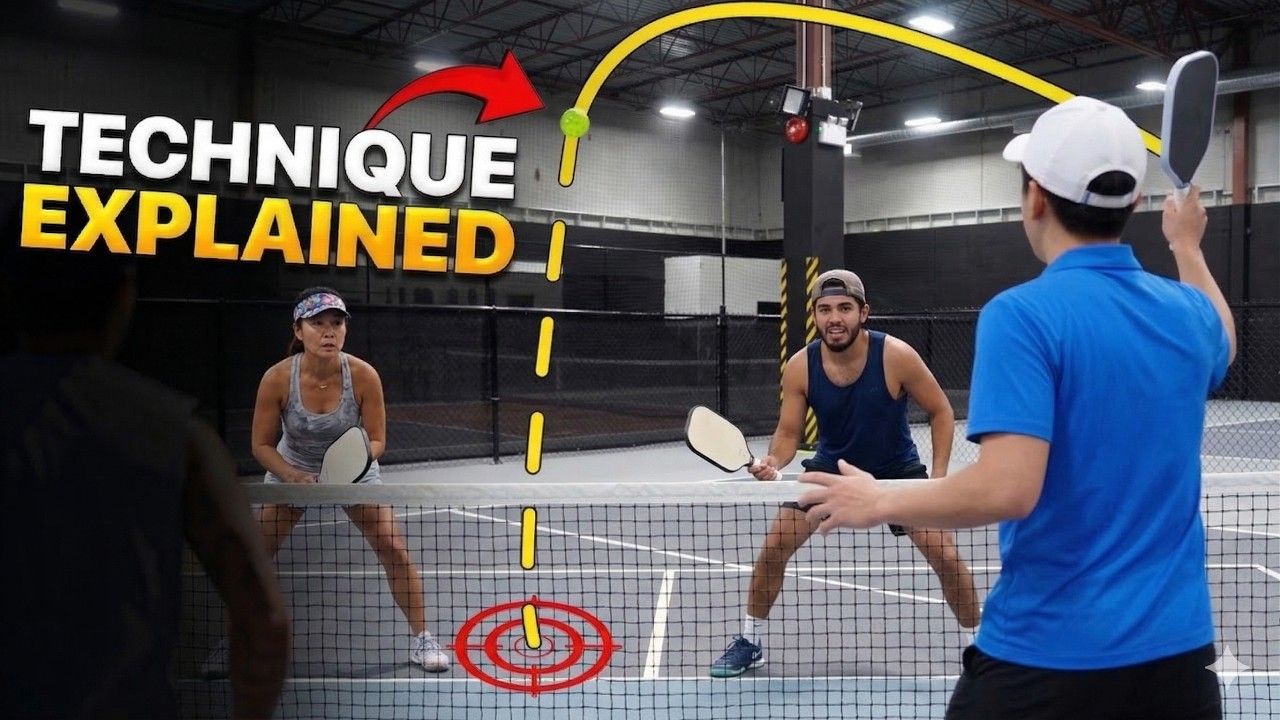
The whole point of the third shot drop is to buy you time to advance toward the kitchen line.
A ball that lands softly in the kitchen forces your opponents to dink up, which gives you the transition window you need.A drop that floats too high or lands too deep does the opposite. It invites a speed-up or an aggressive volley that pins you in no man's land.
Controlling the kitchen line starts with a third shot that actually gets there.
The push drop is specifically designed to give you that landing zone consistently.
Less swing, less error, more time to move forward. That is the trade you are making.Master the Push Drop: The Simplest Pickleball Shot the Pros Use to Dominate
In a sport where everyone’s trying to hit harder, spin more, and execute increasingly complex shots, the push drop is a reminder that consistency and positioning often beat flash.
 The Dink PickleballThe Dink Media Team
Can You Use the Push Drop from Different Court Positions?
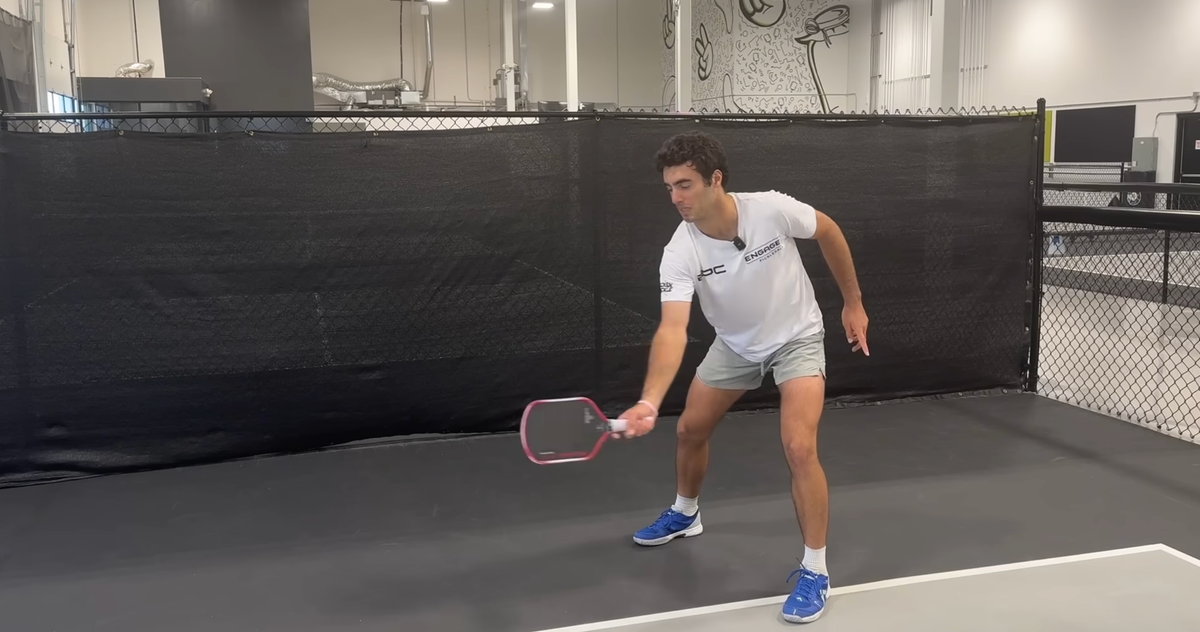
Yes, but the push drop is most effective when you are behind the baseline or in the transition zone.
From there, the angle and arc of the shot work naturally with the shoulder lift motion.
As you move closer to the net, the shot becomes less of a drop and more of a soft push or reset.
The mechanics stay similar, but your target and arc will shift. Understanding the transition zone changes how you think about every drop you hit.The good news is that the push drop foundation, no backswing, tip down, shoulder lift, translates well across positions.
You are building a base skill, not a single-situation trick.
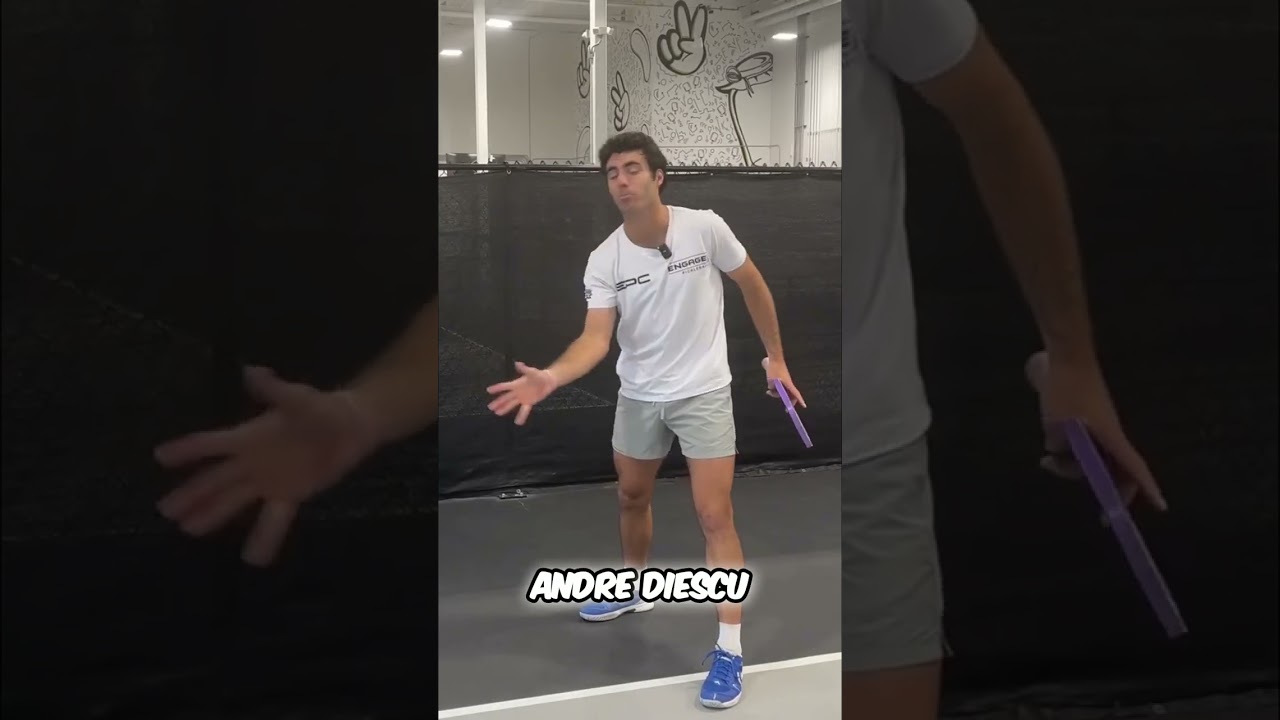
The Push Drop Ben Johns Uses to Get to the Net Every Time
The forehand push drop is the most consistent third shot in pickleball. Learn the exact technique Ben Johns and Andrei Daescu use to get to net almost every single point.
 The Dink PickleballThe Dink Media Team
How Do You Practice the Push Drop Effectively?
The best drill is simple.
Stand at the baseline and feed yourself a gentle toss, then execute the push drop with your focus entirely on keeping the paddle still before contact.
No partner needed to start. Once you can land ten in a row in the kitchen from a self-toss, add a partner who feeds from the kitchen.
This introduces real ball speed and spin, which is where the mechanics get tested. A target drill designed specifically for the third shot drop will accelerate this process.Track where your misses go. Long misses usually mean grip tension or wrist involvement crept back in.
Short misses into the net usually mean the shoulder lift was too small.
Each miss tells you exactly what to adjust.
Also worth checking: your footwork may be hurting your third shot drop more than your mechanics are.A good drop starts with a stable, balanced stance before the ball even arrives.
💡
Heads up: hundreds of thousands of pickleballers read our free newsletter.
Subscribe herefor cutting edge strategy, insider news, pro analysis, the latest product innovations and more.
Frequently Asked Questions
What is the push drop in pickleball?
The push drop is a third shot drop technique that removes the backswing and uses a shoulder lift to send the ball softly into the kitchen. It relies on a loose grip, paddle tip down, and no loading motion before contact. It is designed to give players the most consistent and repeatable third shot possible.
Why does my third shot drop keep going long?
Your third shot drop goes long because of too much grip tension, a backswing that adds unintended power, or wrist involvement at contact. The push drop fixes all three by keeping the motion compact and the contact controlled. Understanding why the miss happens makes it much faster to correct.
Where should you aim your third shot drop?
Aim toward the center of the kitchen on your third shot drop. The center of the net is its lowest point, which gives you the most clearance. Hitting center also reduces the risk of sideline errors and keeps your opponents guessing about your next move.
How do you keep your paddle tip down on a drop shot?
Keep your wrist relaxed and your grip light, which naturally allows the paddle tip to hang downward under gravity. Avoid flicking the wrist at contact, which rotates the tip sideways. Practicing slow-motion reps in front of a mirror helps you see and correct tip drift before it becomes a habit.
Can beginners learn the push drop?
The push drop is actually one of the best shots for beginners to learn because it has fewer moving parts than a traditional third shot drop swing. Less technique means less to go wrong, and the shoulder lift motion is natural and easy to repeat. Beginners who focus on high-percentage shots like this one win more points faster.
Anuncie Aqui / Advertise Here
Sua marca para o mundo Pickleball! / Your brand for the Pickleball world!




 English (US) ·
  Portuguese (BR) ·