
 English
  Spanish
  Portuguese
  German
  Italian
  Japanese
  French
  Polish
  Russian
  Netherlands
  Hungarian
  Turkish
  Videos
  Thedink Pickleball

The third shot drop isn't magic; it's mechanics. Get the science right, and suddenly that impossible shot becomes far more manageable.
Let's be honest: the third shot drop is the shot that separates the weekend warriors from the players who actually win matches.
You've probably heard a dozen different tips on how to hit it. "Soft hands," they say. "Push it, don't hit it," others claim. But what if I told you there's actual science behind the perfect drop? Like, measurable, tested, "this-is-exactly-how-fast-the-ball-should-be-traveling" kind of science.
Love pickleball? Then you'll love our free newsletter. We send the latest news, tips, and highlights for free each week.
The folks over at Enhance Pickleball put the third shot drop under the microscope, literally. They measured ball speeds, mapped landing zones, and tested trajectories to figure out what actually works. And honestly? Some of what they found might surprise you.
The Landing Zone Isn't Just 'Somewhere in the Kitchen'
Most of us have heard that you want the ball to land in the kitchen, or the "non-volley zone," if you're being technical about it. But Enhance Pickleball's testing revealed something more specific:
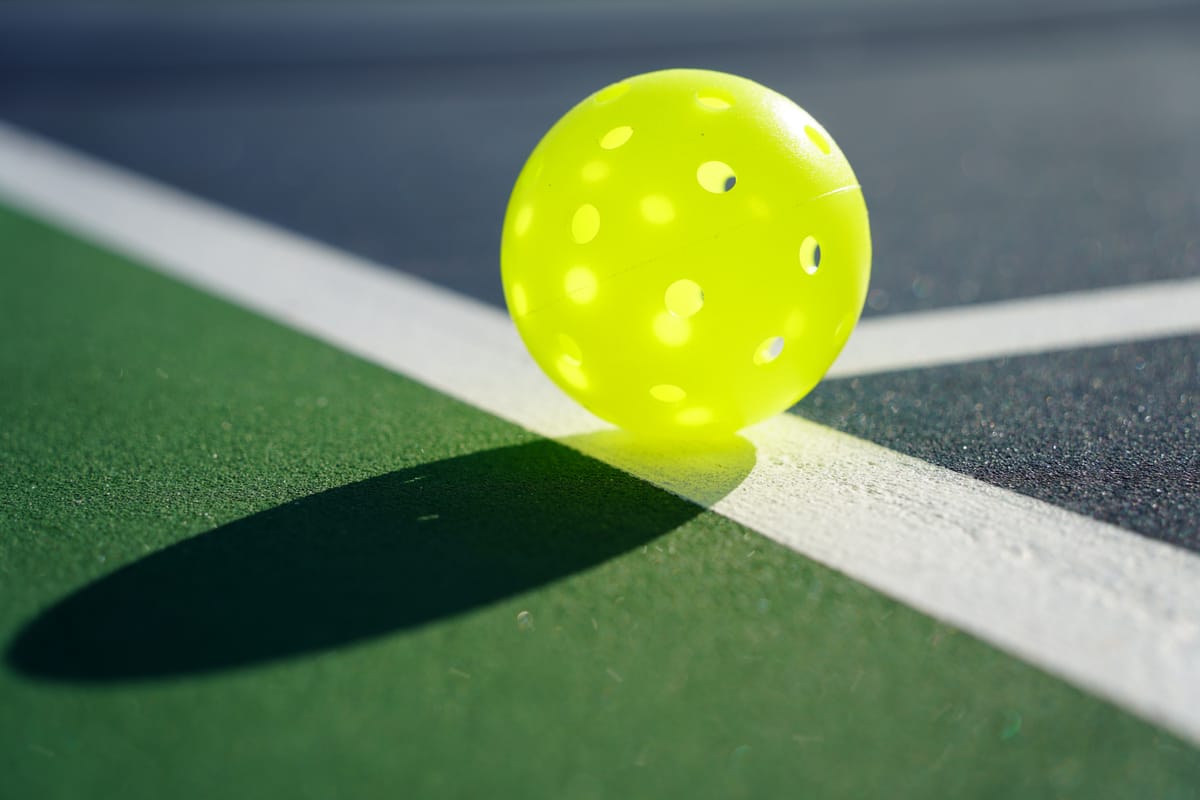
The sweet spot for your landing zone is actually a two-foot block extending from the kitchen line toward the baseline.Think about it like this. If you can land the ball anywhere from the kitchen line to about two feet behind it, you're in good shape. The ideal spot? About a foot from the kitchen line. Hit it there, and your opponent is almost guaranteed to have to hit up on the ball. And when they're hitting up, they can't attack. That's the whole point of the drop, right?
Now, here's where it gets interesting: you can actually expand that landing zone by hitting crosscourt.
When you draw an angle across the court, you're creating more room for error; anywhere from 10% to 25% more space, according to their measurements. It's geometry, plain and simple. A diagonal line across a box is longer than a straight one.
Topspin in Pickleball: The Complete 3-Step Progression Guide
It’s one of those shots that looks effortless when done right, but feels impossible when you’re the one holding the paddle
 The Dink PickleballThe Dink Media Team
The Numbers Don't Lie: Speed and Height Matter
Okay, so you've got the landing zone down. But how do you actually get the ball there consistently? This is where most players wing it. "Just feel it," they say. But Enhance Pickleball actually measured ball speeds, and the results are pretty eye-opening.
When you're hitting down the line from the baseline, your drop should be traveling around 19 to 20 miles per hour. That's it. Not 25, not 15. Nineteen to twenty. Go faster, and you'll likely sail past that landing zone. Go slower, and you guessed it, you're hitting the net.
Hitting crosscourt? The speed bumps up slightly to around 22 or 23 mph. Makes sense, right? You're covering more distance, so you need a bit more juice.
But speed is only half the equation. The height of your shot matters just as much. The testing showed that the ball should pass over the net at about 8 inches to a foot and a half above the net. At its peak trajectory, usually right over the kitchen line, the ball reaches about 5.5 to 6 feet off the ground.
Get these two numbers right – the speed and the height – and you're most of the way there.
7 Pickleball Shortcuts to Reach 5.0 Faster
None of these shortcuts are revolutionary on their own. But stacked together, they create an entirely different player.
 The Dink PickleballThe Dink Media Team
Why Your Drops Keep Missing (And How to Fix Them)
Let's talk about the mistakes. Because we all make them, even the pros. The biggest one? Hitting the net. And there are two ways this happens.
- First, you might be hitting the ball too slow. Your trajectory looks right; that nice, arcing path; but without enough speed, the ball just doesn't get high enough. It dies in the net.
- Second, you might be aiming too low. You hit it with the right speed, but you didn't give it enough loft. No arc, no clearance.
On the flip side, you can hit the ball too high or too far. Too high is dangerous because even if it lands in the right spot, a high bounce gives your opponent an attackable ball. Too far, and they just smash it out of the air before it even bounces.
So how do you find that middle ground? It comes down to technique, and specifically, consistency in your mechanics.
Stop Popping the Ball Up: Modern Pickleball Hand Speed and Paddle Positioning
Winning the kitchen today isn’t about swinging harder—it’s about creating space with your coil and controlling contact with smarter paddle positioning
 The Dink PickleballThe Dink Media Team
The Technical Details That Actually Matter
Here's where we get into the nitty-gritty. To hit consistent drops, you need to control both power and height, and that starts with your paddle contact.
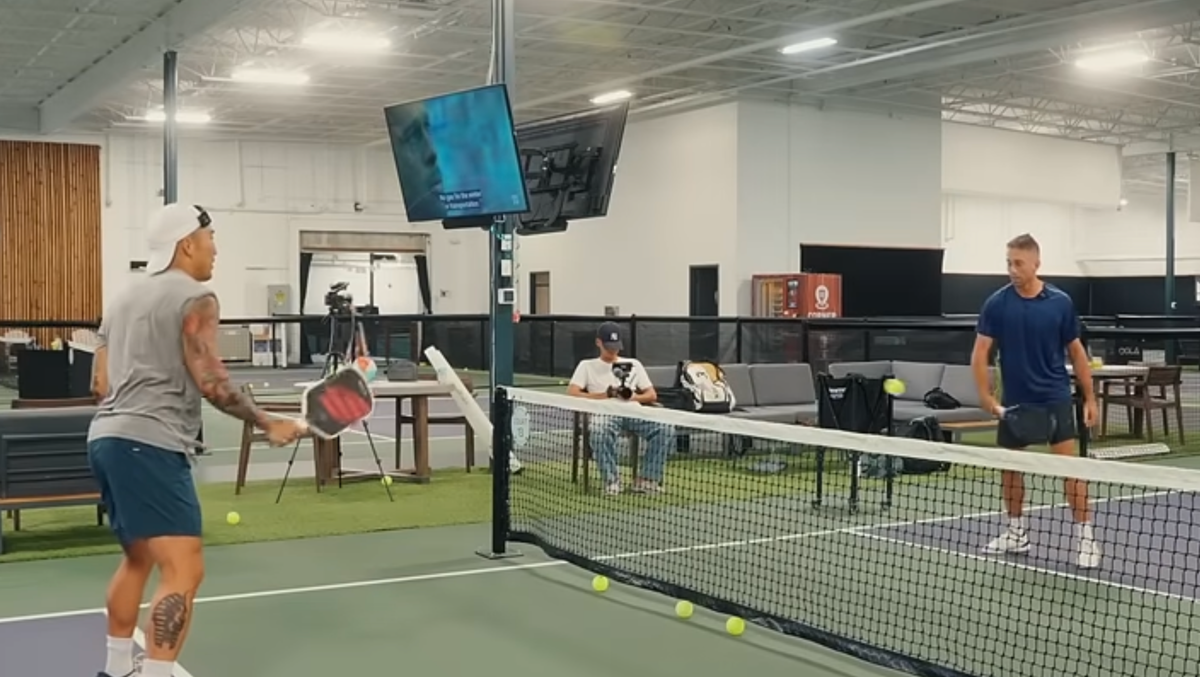
- Hit the center of the paddle. Every time. When you hit off-center, especially toward the edges, you lose speed. Remember, you need that 19-20 mph down the line. Hit the edge, and you might drop to 16 or 17 mph. That's the difference between a perfect drop and one that catches the net.
- Your body mechanics matter too. You want to be moving forward through the ball, not falling back. Think about it like a free throw in basketball. If you're drifting different directions every time, good luck being consistent. Move forward, keep your energy going toward the target.
- Footwork is probably the most overlooked piece. You need to hit the ball from the same height every time, and you want to catch it on the descent, not as it's rising off the bounce. That means being active with your feet, getting into position early. Sometimes you actually need to back up a bit to give yourself time to let the ball fall into your strike zone.
For height control, keep your wrist steady. Don't get too wristy with the shot; that adds variables you don't need. Use your shoulder for power, keep the wrist firm, and take a compact swing. Big swings are harder to time and easier to mishit.
💡
Need some new pickleball gear? Get 20% off select paddles, shoes, and more with code THEDINK at Midwest Racquet Sports
Spin Options and Strategic Targets
Once you've got the basics down, you can start adding spin. You've got three options: slice (cutting under the ball), flat (no spin), and topspin (rolling over the ball).
Slice and flat drops are generally more consistent. The technique is more linear; you're pushing through the ball. Topspin drops require you to come up and over the ball more, which makes power control trickier. But topspin has a major advantage: when it bounces, it stays lower. So even if you hit it a bit higher over the net, the bounce won't pop up as much, making it harder for opponents to attack.
The PPA Tour Is Instituting Stricter Cheating Penalties for Repeat Offenders
The new policy involves in-match penalties, post-match video review, and a running tally of offenses that can culminate in league-level consequences such as greater fines and even suspensions
 The Dink PickleballAlex E. Weaver
Strategically, aim for your opponent's backhand. Most players can't reach as far on their backhand side, and they typically can't attack as aggressively from that wing either. If you're playing a right-handed player on the right side of the court, aim toward the center at their backhand. From the left side, go for the sharper angle to their backhand; you get the most crosscourt benefit and force them into a weaker shot.
Finally, pick one reference point to focus on. Don't try to track everything at once; that'll just confuse you. Some players focus on where the ball lands (aiming for about a foot from the kitchen line). Others focus on the height over the net (about 8 inches to a foot and a half). Find what works for you and stick with it.
The third shot drop isn't magic; it's mechanics. Get the science right, and suddenly that impossible shot becomes well, not easy, but definitely more manageable. And in pickleball, that's often all the edge you need.
Anuncie Aqui / Advertise Here
Sua marca para o mundo Pickleball! / Your brand for the Pickleball world!


 English (US) ·
  Portuguese (BR) ·